
📓 Word of the Week: GEO (Generative Engine Optimization)
/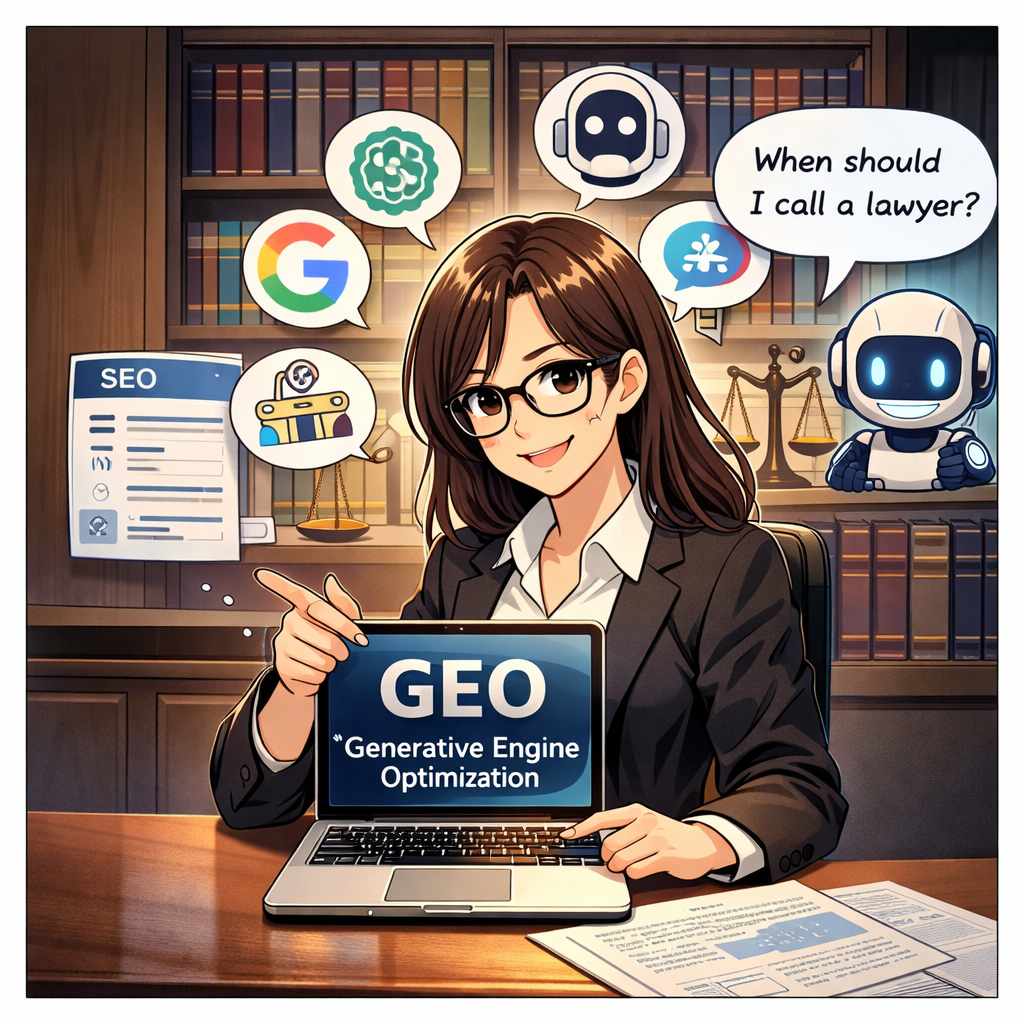
Generative Engine Optimization empowers modern lawyers with AI-driven legal marketing!
In legal marketing, GEO—Generative Engine Optimization—is the next evolution beyond traditional SEO. GEO focuses on making your content understandable, trustworthy, and quotable by generative AI systems like ChatGPT, Gemini, Copilot, Perplexity, and Google’s AI experiences. 🧠
Traditional SEO was about ranking in a list of blue links. GEO is about becoming the source that AI tools cite when a potential client asks a legal question in natural language. For lawyers, this means writing clear, jurisdiction-specific, client‑focused answers that AI can safely lift into its responses.
Under ABA Model Rule 1.1, technological competence now includes understanding the benefits and risks of AI tools you use in practice and in marketing. 📚 GEO is not optional “extra credit” anymore, it is part of staying reasonably up to date with “the benefits and risks associated with relevant technology.”
From SEO to GEO for Lawyers
SEO still matters. You still need solid titles, meta descriptions, and clear on‑page structure so Google and other search engines can crawl and index your site. What changes with GEO is the audience for your content expands from humans and search bots to large language models that want direct, conversational, and well‑structured answers.
Think of it this way:
SEO asks, “How do I rank for ‘divorce lawyer Toronto’?”
GEO asks, “How do I become the answer when someone asks, ‘How does divorce work in Ontario and when should I call a lawyer?’ in an AI chat box?” 🇨🇦
Effective GEO content for law firms tends to share these traits:
Answer‑first summaries at the top of the page.
Clear jurisdiction and practice‑area signals.Plain‑English explanations of specific client questions.
Updated timestamps and trustworthy citations to statutes, rules, and court sites.
For attorneys with limited or moderate tech skills, this is less about learning code and more about tightening how you explain your work online. GEO rewards the same skills you already use in client communications: clarity, precision, and staying within your lane. ✅
GEO and the ABA Model Rules ⚖️

Ethical AI use strengthens confidentiality, competence, and trust in legal practice!
GEO strategy touches several ABA Model Rules that govern how you use AI and publish legal content:
Model Rule 1.1 – Competence. ABA guidance on AI (e.g., Formal Opinion 512) explains that competence includes understanding how AI tools work, their limitations, and their failure modes. If you expect clients to find you through AI answers, you should understand what those systems are likely to say about your practice area and how your content feeds into them.
Model Rule 1.6 – Confidentiality. GEO does not require you to feed client facts into AI systems. You can build GEO‑optimized content using hypotheticals and public information. When you do use AI tools to draft or refine content, you must confirm how the tool handles data, whether it trains on your prompts, and whether additional client consent is needed. 🔐
Model Rule 1.4 – Communication. When AI tools materially affect how a matter is handled, ABA guidance suggests you may need to discuss that with clients. In marketing, that translates to accurate disclaimers: clearly state that your GEO‑friendly pages are “general information, not legal advice,” and that an AI‑generated summary is no substitute for a direct consultation.
Model Rules 7.1–7.3 – Advertising and Solicitation. GEO content must remain truthful, non‑misleading, and consistent with advertising rules. Avoid guarantees, avoid puffery about being “the best,” and ensure that AI‑oriented content still reflects actual experience and jurisdictional limits.
Handled well, GEO can support your ethical duties: it helps you publish accurate, current, and educational information that clients and AI tools can rely on.
Practical GEO Steps for Law Firms

Difference between SEO and GEO shapes modern legal marketing and AI visibility.
Here are concrete ways to start moving from SEO to GEO without overhauling your entire site:
Rewrite key pages with answer‑first structures. Open with a 3–5 sentence plain‑English answer to the main question, then expand with headings and FAQs.
Add jurisdiction markers everywhere it matters. Include the province or state, city, and court level on your practice pages and FAQs.
Build detailed FAQ hubs around real client questions in your niche, using conversational phrasing that mirrors how people talk to AI tools. 💬
Strengthen E‑E‑A‑T signals: list credentials, publications, bar memberships, and awards; link to reputable external sources; keep author bylines current.
Maintain technical SEO basics: fast, mobile‑friendly pages with clear title tags, meta descriptions, headings, and schema markup (e.g., for FAQs and legal services).
Regularly refresh high‑value pages to keep them current with legal changes and to signal freshness to both search engines and AI systems. 🔁
You do not need to do everything at once. Start with one practice area, identify the ten most common questions, and create a GEO‑optimized resource page that you would be comfortable seeing quoted by an AI tool.