Word(s) of the Week: Understanding the Evolution of Artificial Intelligence: From AI to Generative AI to AI LLMs — and Why It Matters for Today’s Legal Professionals ⚖️🤖

lawyers need to understand what AL LLM can and can’t do!

Artificial Intelligence (AI) is transforming the legal industry, yet confusion still exists about what different terms mean — and why they matter. Terms like AI, Generative AI, and AI LLM (Large Language Model) are often used interchangeably, but they describe very different levels of capability. Understanding these distinctions is essential for attorneys navigating new professional responsibilities and compliance expectations under the ABA Model Rules. Let’s break down what each term means, why the progression matters, and what the next step—AI LLMs—means for legal practice.

AI: The Foundation of Machine Intelligence

Traditional AI refers to systems designed to perform tasks that require human-like intelligence. These tasks include pattern recognition, data sorting, predictive analytics, and document classification. For example, early e-discovery tools that identify relevant documents in large datasets use AI algorithms to flag patterns.

In legal practice, this type of AI boosted efficiency but remained narrow in function. Lawyers controlled the inputs and closely supervised the outcomes. Under ABA Model Rule 1.1 (Competence), using such tools responsibly required understanding their purpose and reliability, not their coding. Attorneys had to ensure that outputs were accurate and ethically sound.

Generative AI: Creating, Not Just Sorting

As technology evolved, so did AI’s capabilities. Generative AI differs from basic AI because it creates content instead of just classifying it. These models generate text, images, code, and even legal-style drafts based on training data. Tools like ChatGPT, which fall under this category, can draft letters, summarize cases, or brainstorm argument strategies.

Generative AI introduces profound efficiency benefits. A solo practitioner, for example, can use AI to prepare first drafts of client letters or marketing content quickly. The risk, however, is accuracy. Because these models generate content probabilistically, they can “hallucinate” — producing incorrect or fabricated information that sounds authoritative.
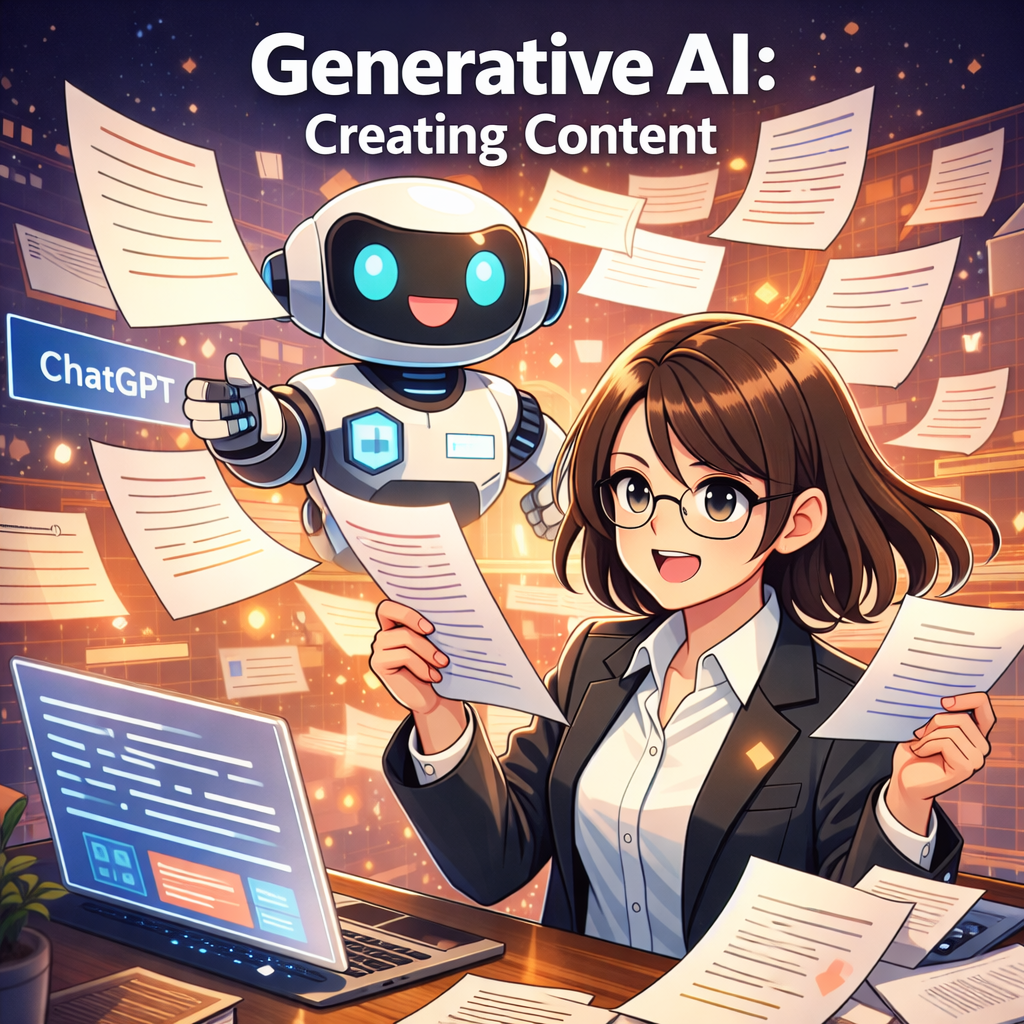
Generative ai is great at creating contENt - just watch out for hallucinations!

Under ABA Model Rule 5.3 (Supervision of Nonlawyer Assistants), lawyers must exercise oversight over tools like these since they function similarly to an assistant. Lawyers must verify all AI-generated output before use, maintaining professional independence and ethical standards.

AI LLMs: The Next Step in Practice Intelligence

AI LLMs — large language models — represent the next and most transformative step. Unlike earlier forms of AI, LLMs process massive datasets and can understand nuance, intent, and context in human language. This allows them to perform legal research, summarize filings, analyze contracts, and even simulate case strategies.

The key difference is scale and sophistication. LLMs learn not only from pre-set instructions but also by understanding the relationships between words and concepts. This contextual learning enables attorneys to interact with these systems conversationally. For example, an LLM-based research assistant can respond to a query such as, “Find Illinois cases interpreting non-compete clauses after 2023,” and then produce accurate summaries or citations.

Yet with great capability comes heightened responsibility. ABA Model Rule 1.6 (Confidentiality) applies when attorneys input client data into online tools. If the platform is public or cloud-based, lawyers must assess data handling, encryption, and privacy policies. Additionally, per Model Rule 1.1, competence now includes understanding how LLMs generate and manage information.

Why the Distinction Matters

The distinction between AI, Generative AI, and AI LLMs matters because it affects how attorneys use the technology within ethical, secure boundaries. A misstep in understanding can result in breached confidentiality, inaccurate filings, or ethical violations.

✅ AI assists.
✅ Generative AI creates.
✅ AI LLMs reason and interact.

In practical terms, lawyers need to update policies, train staff, and disclose use of these tools when appropriate. Law firms that adopt LLM-based platforms responsibly will gain a competitive advantage through increased efficiency and improved client service — without compromising professional duties.

Looking Ahead

Lawyers who use ai llms can save hours of menial work - always check your work!

AI LLMs are not replacing lawyers; they are amplifying their insight and reach. Attorneys who stay informed and practice technological competence will thrive in this next phase of digital legal service. The evolution from AI to Generative AI to LLMs represents not just a technological shift, but a professional one — requiring careful balance between innovation, ethics, and human judgment. ⚖️
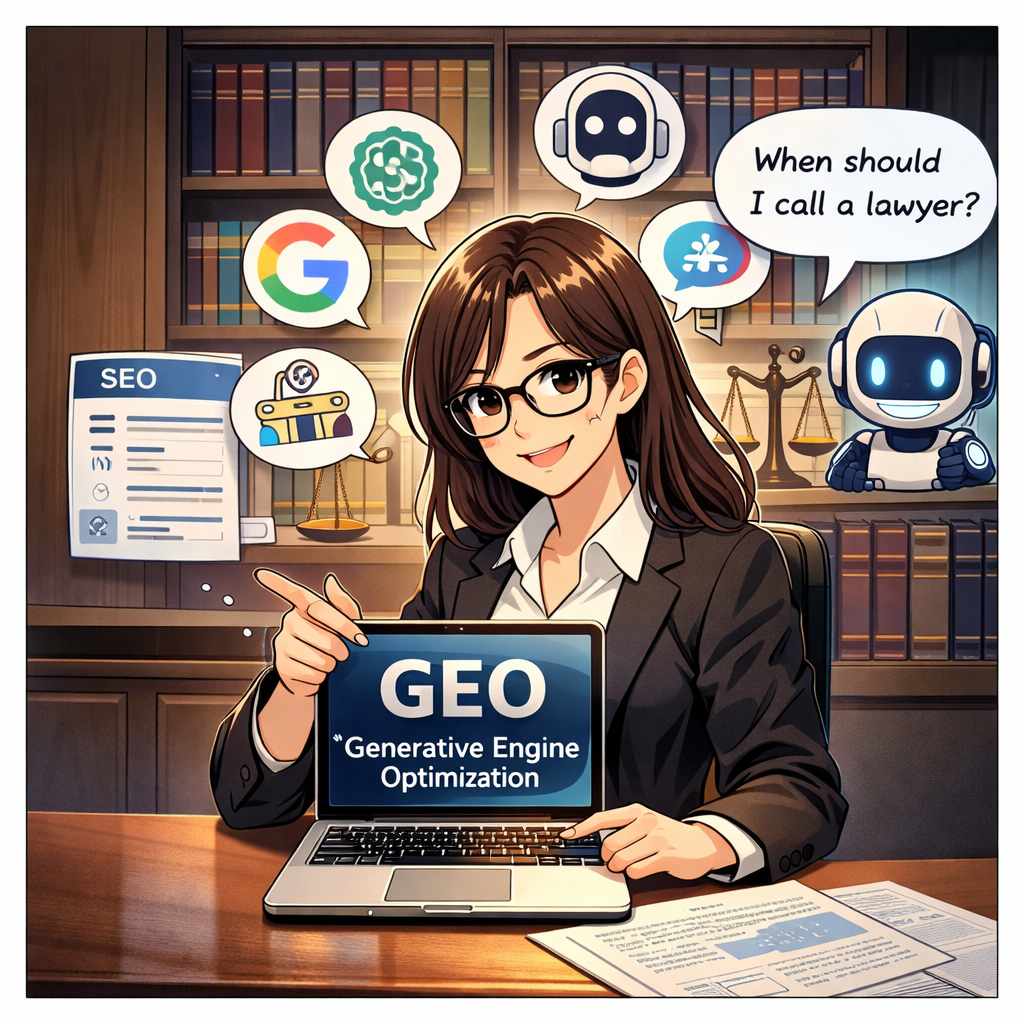

📓 Word of the Week: GEO (Generative Engine Optimization)

Generative Engine Optimization empowers modern lawyers with AI-driven legal marketing!

In legal marketing, GEO—Generative Engine Optimization—is the next evolution beyond traditional SEO. GEO focuses on making your content understandable, trustworthy, and quotable by generative AI systems like ChatGPT, Gemini, Copilot, Perplexity, and Google’s AI experiences. 🧠

Traditional SEO was about ranking in a list of blue links. GEO is about becoming the source that AI tools cite when a potential client asks a legal question in natural language. For lawyers, this means writing clear, jurisdiction-specific, client‑focused answers that AI can safely lift into its responses.

Under ABA Model Rule 1.1, technological competence now includes understanding the benefits and risks of AI tools you use in practice and in marketing. 📚 GEO is not optional “extra credit” anymore, it is part of staying reasonably up to date with “the benefits and risks associated with relevant technology.”

From SEO to GEO for Lawyers

SEO still matters. You still need solid titles, meta descriptions, and clear on‑page structure so Google and other search engines can crawl and index your site. What changes with GEO is the audience for your content expands from humans and search bots to large language models that want direct, conversational, and well‑structured answers.

Think of it this way:

  • SEO asks, “How do I rank for ‘divorce lawyer Toronto’?”

  • GEO asks, “How do I become the answer when someone asks, ‘How does divorce work in Ontario and when should I call a lawyer?’ in an AI chat box?” 🇨🇦

  • Effective GEO content for law firms tends to share these traits:

    • Answer‑first summaries at the top of the page.

    • Clear jurisdiction and practice‑area signals.Plain‑English explanations of specific client questions.

    • Updated timestamps and trustworthy citations to statutes, rules, and court sites.

For attorneys with limited or moderate tech skills, this is less about learning code and more about tightening how you explain your work online. GEO rewards the same skills you already use in client communications: clarity, precision, and staying within your lane. ✅

GEO and the ABA Model Rules ⚖️

Ethical AI use strengthens confidentiality, competence, and trust in legal practice!

GEO strategy touches several ABA Model Rules that govern how you use AI and publish legal content:

  • Model Rule 1.1 – Competence. ABA guidance on AI (e.g., Formal Opinion 512) explains that competence includes understanding how AI tools work, their limitations, and their failure modes. If you expect clients to find you through AI answers, you should understand what those systems are likely to say about your practice area and how your content feeds into them.

  • Model Rule 1.6 – Confidentiality. GEO does not require you to feed client facts into AI systems. You can build GEO‑optimized content using hypotheticals and public information. When you do use AI tools to draft or refine content, you must confirm how the tool handles data, whether it trains on your prompts, and whether additional client consent is needed. 🔐

  • Model Rule 1.4 – Communication. When AI tools materially affect how a matter is handled, ABA guidance suggests you may need to discuss that with clients. In marketing, that translates to accurate disclaimers: clearly state that your GEO‑friendly pages are “general information, not legal advice,” and that an AI‑generated summary is no substitute for a direct consultation.

  • Model Rules 7.1–7.3 – Advertising and Solicitation. GEO content must remain truthful, non‑misleading, and consistent with advertising rules. Avoid guarantees, avoid puffery about being “the best,” and ensure that AI‑oriented content still reflects actual experience and jurisdictional limits.

Handled well, GEO can support your ethical duties: it helps you publish accurate, current, and educational information that clients and AI tools can rely on.

Practical GEO Steps for Law Firms

Difference between SEO and GEO shapes modern legal marketing and AI visibility.

Here are concrete ways to start moving from SEO to GEO without overhauling your entire site:

  1. Rewrite key pages with answer‑first structures. Open with a 3–5 sentence plain‑English answer to the main question, then expand with headings and FAQs.

  2. Add jurisdiction markers everywhere it matters. Include the province or state, city, and court level on your practice pages and FAQs.

  3. Build detailed FAQ hubs around real client questions in your niche, using conversational phrasing that mirrors how people talk to AI tools. 💬

  4. Strengthen E‑E‑A‑T signals: list credentials, publications, bar memberships, and awards; link to reputable external sources; keep author bylines current.

  5. Maintain technical SEO basics: fast, mobile‑friendly pages with clear title tags, meta descriptions, headings, and schema markup (e.g., for FAQs and legal services).

  6. Regularly refresh high‑value pages to keep them current with legal changes and to signal freshness to both search engines and AI systems. 🔁

  7. You do not need to do everything at once. Start with one practice area, identify the ten most common questions, and create a GEO‑optimized resource page that you would be comfortable seeing quoted by an AI tool.