Podcasting for Lawyers: The Truth Behind the Mic at ABA TECHSHOW 2026 🎙️⚖️

🎧 Watch the ABA TECHSHOW 2026 panel: “Podcasting for Lawyers: The Truth Behind the Mic”

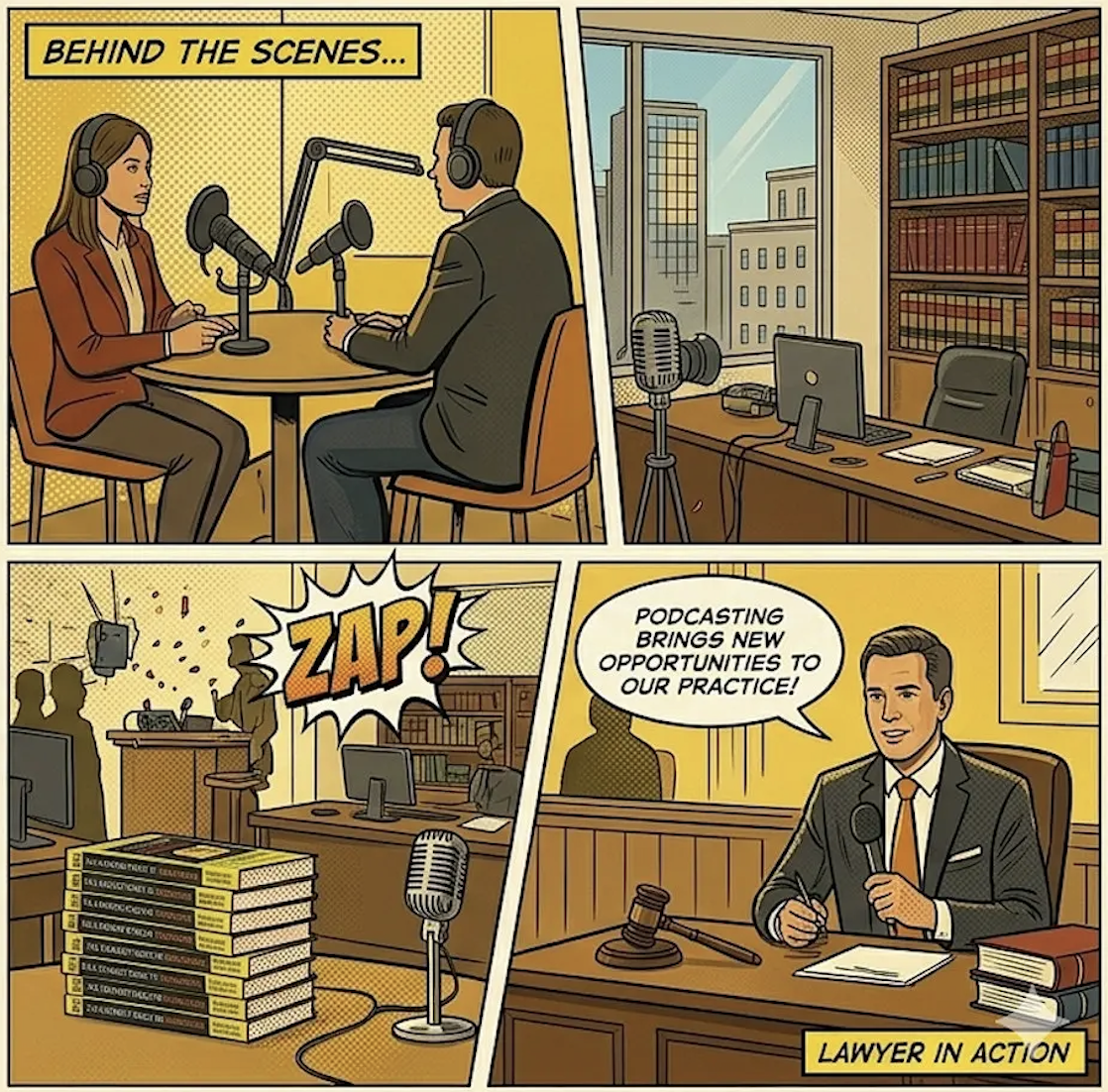
Podcasting has become one of the most powerful ways for lawyers to build authority, strengthen client relationships, and stand out in a crowded online marketplace—if it is done strategically and ethically. I recently had the privilege of serving on the March 26, 2026, ABA TECHSHOW panel, “Podcasting for Lawyers: The Truth Behind the Mic,” alongside moderator Ruby Powers and fellow panelists Gyi Tsakalakis and Stephanie Everett. Together, we walked through how attorneys can use podcasting, video, and legal technology to create consistent, professional content that supports real‑world business development while staying compliant with confidentiality and bar‑advertising rules. 🎧

In this post, you’ll find the recording of our ABA TECHSHOW 2026 session, a brief overview of the topics we covered, and links to tools and resources that can help you start—or sharpen—your own law‑firm podcast.

Brief Outline

1. Why podcasting makes sense for lawyers in 2026

  • How podcasting fits into modern law‑firm marketing and thought leadership.

  • The role of podcasts in SEO, GEO, and building long‑term visibility in your practice area.

  • Why authenticity, consistency, and a clear audience matter more than fancy production tricks.

2. Choosing your podcast’s audience and goals

  • Deciding whether you’re speaking to potential clients, referral sources, or other lawyers.

  • Aligning topics, interview guests, and episode formats with your business and reputational goals.

  • Avoiding the “variety show” trap and staying focused on the problems your audience actually cares about.

3. Building a realistic podcast tech stack for busy attorneys

  • Microphones and basic audio gear that deliver professional sound without breaking the bank.

  • Recording tools such as Zoom, Riverside, and StreamYard to capture both audio and video.

  • Hosting and workflow tools like Libsyn, Descript, Calendly, and Buffer that help you publish consistently and repurpose content efficiently.

4. Ethics, professionalism, and “the truth behind the mic”

  • Key confidentiality and advertising issues to consider when discussing client work or legal topics.

  • How to think about disclaimers, legal information vs. legal advice, and jurisdictional concerns.

  • Why podcasting is not just marketing content but also a professional reflection of how you communicate and practice law.

5. Making podcasting sustainable (and enjoyable) over time

  • Scheduling systems that keep you ahead on episodes without overwhelming your calendar.

  • Guest strategies that expand your network and add value for your audience.

  • How to measure success: client feedback, referrals, and qualitative signals—not just download counts.

Resources

  • 🌐 Session description on ABA TECHSHOW
    https://www.techshow.com/sessions/podcasting-for-lawyers-the-truth-behind-the-mic/

  • 💻 The Tech‑Savvy Lawyer.Page – blog and podcast
    https://www.TheTechSavvyLawyer.page

  • 🎙️ Tools and services mentioned

    • Buffer – https://buffer.com

    • Calendly – https://calendly.com

    • Descript – https://www.descript.com

    • Libsyn – https://libsyn.com

    • Riverside – https://riverside.fm

    • StreamYard – https://streamyard.com

    • Zoom – https://zoom.us

Suggested call‑to‑action paragraph

If you’re a lawyer or legal professional considering a podcast—or looking to refine the one you already have—I invite you to watch the full ABA TECHSHOW 2026 session and explore the resources above. Then connect with me at MichaelDJ@TheTechSavvyLawyer.Page to share what you’re building, ask questions about podcasting workflows and ethics, or suggest future topics you’d like to hear covered. 🎙️⚖️

📢 Special Shout-Out and Thank You to Ruby Powers for the invitation and Gyi and Stephanie for being great co-panelists!

📰 ABA TECHSHOW 2026 Recap: From AI Hype to LLM Reality, Google Workspace, and Ethical Lawyering in the Age of Bots ⚖️🤖

The Real Story Behind ABA TECHSHOW 2026

The techshow is the conference to go to keep your pulse on the technology lawyers should be using every day!

Walking into ABA TECHSHOW 2026 this year, I wasn’t thinking about shiny gadgets; I was thinking about competence, client service, and what it will mean to practice law in an era dominated not just by “AI,” but by large language models (LLMs) quietly shaping almost everything we see and share online. During my work on The Tech-Savvy Lawyer.Page blog and podcast, I keep running into the same pattern: lawyers know they should understand legal technology, yet they worry they’ll break something, breach a rule, or look foolish in front of their staff. TECHSHOW 2026 aimed directly at that anxiety — but this year, the conversation needs to go beyond what AI and generative AI can do and toward how LLMs and search bots are already shaping our professional identities online and offline. ⚖️💻

Keynotes: The “AI Dividend” and Your Time

The keynote lineup captured the tension between promise and risk. Legal market analysts highlighted what some called the “AI Dividend”: when machines take over routine drafting and research, lawyers gain time to think, advise, and advocate at a higher level. The real question — one I’ve been hammering on The Tech-Savvy Lawyer.Page for years — is what you will do with the time technology gives back (some of that time should include reviewing your work, e.g., your case citations). Tech-savvy speakers pushed attendees to look past vendor hype and focus on the broader digital environment, where consumer-facing tools, search engines, and recommendation algorithms are setting new expectations for speed, transparency, and availability.

Practical AI in the Sessions

Inside the conference rooms, the “Taming the Machines” and related AI tracks met baseline concerns (some with hands-on workshops) focused on realistic use cases: assisted drafting, pattern spotting in discovery, and summarizing voluminous documents. These sessions were built for lawyers who live in Word, Outlook, Google Workspace, and practice management systems and who simply want to stop retyping the same paragraphs. The faculty hammered home a critical point: generative AI is an assistant, not a decision-maker; you remain the lawyer, responsible for accuracy, judgment, and ethics under the ABA Model Rules. 🤖📄

Google Workspace, Microsoft 365, and Using What You Already Own

Mathew Krebis’ session on Google Workspace drove that message home in very practical terms. He showed how many firms are only scratching the surface of tools they already pay for: shared Drives with well-structured permissions, real-time collaboration in Google Docs, Gmail automation for intake and follow-up, and Google Calendar combined with Tasks to keep matter timelines under control. When you layer in emerging AI features in Workspace — smart replies, document summaries, suggested outlines — you see how even modest use of these tools can dramatically reduce friction in daily practice, and the tools Mathew discussed are not isolated to “law practice management” systems.

The takeaway was powerful: before you chase a new platform, fully exploit the ecosystem you already have. For many firms, “being more tech-savvy” starts with properly configuring their Google Workspace, Microsoft 365, or other SaaS platform, rather than buying yet another service.

Podcasting, Social Media, and LLM-Driven Visibility

Meanwhile, one other yet important frontier — and one that still feels underexplored — is what happens when LLMs and search bots become the primary lens through which clients, colleagues, and even opposing counsel discover you. That’s where my panel, 🎧 Podcasting for Lawyers: The Truth Behind the Mic, came in.

Ruby L. Powers, Gyi Tsakalakis, Stephanie Everett, and I discussed podcasting and social media not just as marketing channels, but as structured signals fed into LLM-driven engines that are constantly indexing, ranking, and inferring who is an authority on a given topic. Whether you talk about appellate practice, family law, or even a hobby outside the law, your content becomes training data for Generative Engine Optimization/LLM bots that decide which voices surface first when someone types a question into an AI chatbox. 🎙️🌐

In other words, your digital footprint is no longer static. It is being interpreted, reassembled, and presented as answers — often without you ever seeing the intermediate steps. That reality raises a new layer of ethical questions under the ABA Model Rules. Model Rule 7.1’s prohibition on false or misleading communications about the lawyer or the lawyer’s services takes on a new twist when LLMs remix snippets of your posts, podcasts, Google Workspace–hosted client alerts, and blog articles into composite “advice.”

You might be scrupulously accurate in your content, but if an LLM mischaracterizes it or presents it out of context, what then? TECHSHOW 2026 addressed traditional risks like hallucinated case citations, but there is room for a deeper, explicit conversation about how LLM-driven discovery intersects with advertising, communication, and competence duties.

EXPO Hall: Tools, Timekeeping, and Vendor Reality Checks

The EXPO Hall, as always, served as a laboratory of possibilities. Practice management platforms, billing tools, document automation, and a wave of AI-enhanced products competed for attention. Timekeeping tools that automatically capture activity across devices and applications and then propose draft time entries have grown dramatically since last year. For lawyers still reconstructing their days from memory and sticky notes, this is more than a marginal upgrade; it directly affects revenue, work-life balance, and accuracy.

But the fair warning comes here: make sure vendors are showing you what their product can do today, not what they hope it will do someday. In the LLM era, marketing decks are often several steps ahead of deployed reality. 🧾⏱️

Remember, you have an obligation under Model Rule 1.1 (competence) and Model Rule 5.3 (responsibilities regarding non-lawyer assistance) to understand the capabilities and limitations of any tech you “delegate” work to. Asking hard questions about current functionality, data handling, and audit trails is not being difficult; it is part of your duty of care.

Cybersecurity, Confidentiality, and LLM Risk

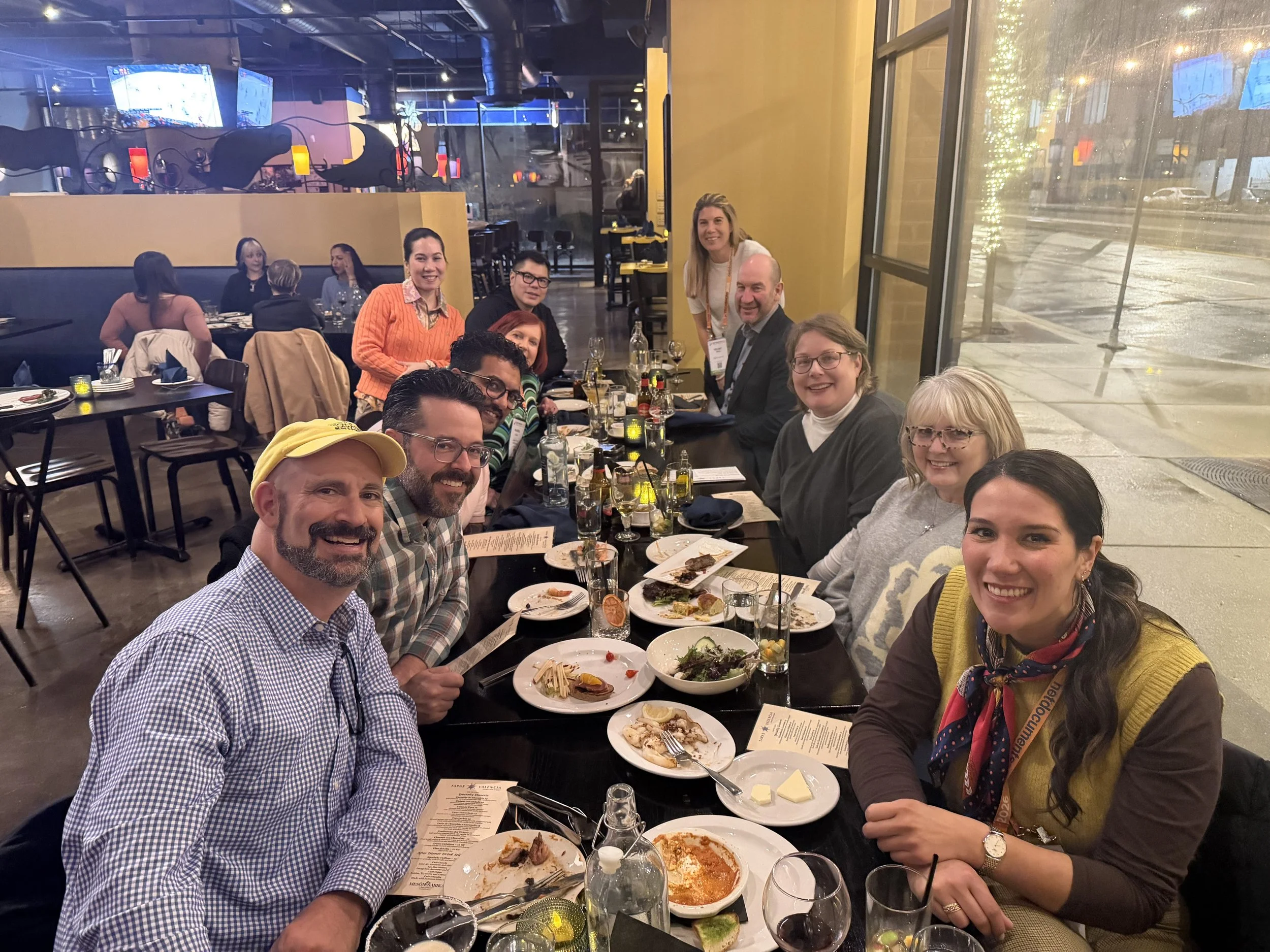
networking oppOrtunities like the taste of tecHshow” is a great way to talk with and learn from other lawyers about using tech in the practice of law.

The sessions on cybersecurity and confidentiality continued to do vital work. Under Model Rule 1.6, our obligation to protect client information extends to cloud storage, email, video conferencing, and the mobile devices we casually use in airport lounges. The “Guardians of the Data” track walked through practical checklists rather than abstract fearmongering: password managers, multi-factor authentication, properly configured backups, and vendor due diligence.

For firms running on Google Workspace, that translated into concrete steps: enforcing two-step verification, tightening Drive sharing settings, using client-specific shared Drives instead of ad hoc personal folders, and monitoring admin logs for suspicious access. The move from generic “AI” to LLM-powered services on any platform increases data risk, because many tools rely on ingesting your content — sometimes including client information — to improve their models. If you don’t understand where your data is going and how it is used, you cannot credibly say you are meeting confidentiality obligations. 🔐☁️

Competence, Human-in-the-Loop, and Everyday Workflows

You have an obligation under Model Rule 1.1 (competence) and Model Rule 5.3 (responsibilities regarding non-lawyer assistance) to understand the capabilities and limitations of any tech you “delegate” work to. Asking hard questions about current functionality, data handling, and audit trails is part of your duty of care.

Balancing this skepticism, though, is an equally important truth: becoming proficient with AI and LLM-based tools is not a spectator sport. You cannot satisfy your duty of technological competence from the sidelines. You have to use the tools first on a small scale, then progressively in more critical workflows, always with appropriate supervision and verification.

That might mean piloting an AI drafting feature in Google Docs and Microsoft Word for internal templates, or testing structured intake forms and automations inside Google Workspace or Microsoft 365 before rolling them out firm-wide. Ignoring AI because it feels uncomfortable is no longer the safer option. In some practices, failing to integrate it intelligently — while peers and opposing counsel do — may itself raise competence concerns as expectations evolve in courts and among clients. 🧩📈

Saturday Sessions: From “Use AI” to “Use AI Responsibly”

On Saturday, the 9 a.m. conversation among ABA President Michelle A. Behnke, Immediate Past President William R. “Bill” Bay, and President-Elect Barbara J. Howard, underscored how all of this ties into the rule of law and access to justice, framing AI as something lawyers now have a responsibility to actually use, not simply watch from the sidelines. The 10 a.m. session with Judge Timothy S. Driscoll then shifted the focus from “use AI or be left behind” to “use AI responsibly,” making it clear that judges, too, are integrating AI into their work and that they are not immune from mistakes when they rely on it.

The message for everyone in the courtroom ecosystem was simple and blunt: “Review, review, and review” any work touched by AI, because AI is a non‑infallible tool that does make errors and can mislead the unwary. Together, these sessions acknowledged the growing digital divide: lawyers and clients who can’t or won’t adopt technology risk falling out of the mainstream of legal services, while those who adopt it recklessly risk eroding confidence in both their own work and the justice system as a whole.

We are not merely debating convenience; we are deciding who gets effective representation and who is left out because the lawyer they might have hired never appeared in their LLM‑driven search results — or appeared with AI‑boosted visibility but poor ethical judgment. Technology, in this sense, is not optional; it is one of the few levers we have to expand meaningful access to legal help, provided we wield it with intent, humility, and rigorous human review. ⚖️🧠

LLM Literacy: The Next Core Competency

That balance — between caution and experimentation — is where TECHSHOW 2026 both excelled and showed its next frontier. Many sessions made AI approachable, breaking down concepts for lawyers with limited to moderate tech skills and providing concrete workflows they could apply on Monday. What I would like to see more explicitly next year is programming that treats LLM literacy as a core competency: understanding how LLMs are built, how they index and surface information, how your content feeds into them, and how that affects everything from client intake to reputation, whether you are working in Microsoft 365, Google Workspace, or a specialized legal platform.

From my vantage point as a legal tech ambassador at The Tech-Savvy Lawyer, the most successful sessions respected that many lawyers are highly capable professionals who simply haven’t had the time or guidance to modernize their workflows. They don’t need to become prompt engineers. They need guardrails, roadmaps, and clear examples of how to align AI, LLM tools, and mainstream platforms like Microsoft 365 and Google Workspace with the ABA Model Rules and local bar guidance. When faculty focused on incremental steps — tightening cybersecurity configurations, adding a layer of AI-assisted drafting under strict human review, building a consistent content strategy that LLMs can reliably recognize — the room should lead in.

A Tough-Love Takeaway for Lawyers

If you are a lawyer who still feels behind, here’s the core message I took away from TECHSHOW 2026, with a bit of tough love: you don’t need to chase every new tool, but you can’t afford to ignore LLM-driven AI and the platforms you already live in, like Microsoft 365 and Google Workspace, any longer. Understand the basics; pilot one or two well-vetted tools to start improving your efficiency without sacrificing the need for a true human-in-the-loop.

SEE YOU IN CHICAGO FOR ABA TECHSHOW 2027!!!

Read your jurisdiction’s ethics opinions on AI and technology. Build habits that protect client data by default. Use your own content — whether blog posts, newsletters, or podcasts — to train the bots to see you as a trusted authority rather than a digital afterthought. Ultimately, your bar license may be at more risk from not engaging with AI than from engaging with it carefully and intelligently.

The future of legal practice will not wait until we are all comfortable; it is here now, embedded in the search boxes, recommendation engines, and tools your clients already use. TECHSHOW 2026 made that clear. The next move is yours. 🚀⚖️

MTC

📽️ BONUS Labs 🧪 Initiative: Tech-Savvy Lawyer on Law Practice Today Podcast — Essential Trust Account Tips for Solo & Small Law Firms w/ Terrell Turner (Copy)

For those who prefer video over plain audio, enjoy this take on my guest appearance on Law Practice Today Podcast!

🙏 Special Thanks to Terrell Turner and the ABA for having me on the Law Practice Today Podcast, produced by the Law Practice Division of the American Bar Association. We have an important discussion on trust account management. We cover essential insights on managing trust accounts using online services. This episode has been edited for time, but no information was altered. We are grateful to the ABA and the Law Practice Today Podcast for allowing us to share this valuable conversation with our audience.

🎯 Join Terrell and me as we discuss the following three questions and more!

  1. What precautions should lawyers using online services to manage trust accounts be aware of?

  2. How can solo and small firm attorneys find competent bookkeepers who understand legal trust accounting?

  3. What security measures should attorneys implement when using online payment processors for client funds?

⏱️ In our conversation, we cover the following:

00:00 – Introduction & Preview: Trust Accounts in the Digital Age

01:00 – Welcome to the Law Practice Today Podcast

01:30 – Today's Topic: Online Services for Payments

02:00 – Guest Introduction: Michael D.J. Eisenberg's Background

03:00 – Michael's Experience with Trust Accounts

04:00 – Challenges for Solo and Small Practitioners

05:00 – Ensuring Security in Online Services

06:00 – Questions to Ask Online Payment Providers

07:00 – Password Security & Two-Factor Authentication

08:00 – Finding a Competent Legal Bookkeeper

09:00 – Why 8AM Law Pay Works for Attorneys

10:00 – Daily Monitoring of Trust Accounts

11:00 – FDIC Insurance & Silicon Valley Bank Lessons

13:00 – Researching Trust Account Best Practices

15:00 – Closing Remarks & Podcast Information

📚 Resources

🔗 Connect with Terrell

💼 LinkedIn: https://www.linkedin.com/in/terrellturner/

🌐 Website: https://www.tlturnergroup.com/

🎙️ Law Practice Today Podcast – https://lawpracticetoday.buzzsprout.com

📰 Mentioned in the Episode

💻 Software & Cloud Services Mentioned in the Conversation

  • 8AM Law Pay – Legal payment processing designed for trust account compliance – https://www.8am.com/lawpay/

  • 1Password – Password manager for generating and syncing complex passwords – https://1password.com/

  • LastPass – Mentioned as a password manager with noted security concerns – https://www.lastpass.com/

📻 BONUS: Tech-Savvy Lawyer on Law Practice Today Podcast — Essential Trust Account Tips for Solo & Small Law Firms w/ Terrell Turner

🙏 Special Thanks to Terrell Turner and the ABA for having me on the Law Practice Today Podcast, produced by the Law Practice Division of the American Bar Association. We have an important discussion on trust account management. We cover essential insights on managing trust accounts using online services. This episode has been edited for time, but no information was altered. We are grateful to the ABA and the Law Practice Today Podcast for allowing us to share this valuable conversation with our audience.

🎯 Join Terrell and me as we discuss the following three questions and more!

  1. What precautions should lawyers using online services to manage trust accounts be aware of?

  2. How can solo and small firm attorneys find competent bookkeepers who understand legal trust accounting?

  3. What security measures should attorneys implement when using online payment processors for client funds?

⏱️ In our conversation, we cover the following:

00:00 – Introduction & Preview: Trust Accounts in the Digital Age

01:00 – Welcome to the Law Practice Today Podcast

01:30 – Today's Topic: Online Services for Payments

02:00 – Guest Introduction: Michael D.J. Eisenberg's Background

03:00 – Michael's Experience with Trust Accounts

04:00 – Challenges for Solo and Small Practitioners

05:00 – Ensuring Security in Online Services

06:00 – Questions to Ask Online Payment Providers

07:00 – Password Security & Two-Factor Authentication

08:00 – Finding a Competent Legal Bookkeeper

09:00 – Why 8AM Law Pay Works for Attorneys

10:00 – Daily Monitoring of Trust Accounts

11:00 – FDIC Insurance & Silicon Valley Bank Lessons

13:00 – Researching Trust Account Best Practices

15:00 – Closing Remarks & Podcast Information

📚 Resources

🔗 Connect with Terrell

💼 LinkedIn: https://www.linkedin.com/in/terrellturner/

🌐 Website: https://www.tlturnergroup.com/

🎙️ Law Practice Today Podcast – https://lawpracticetoday.buzzsprout.com

📰 Mentioned in the Episode

💻 Software & Cloud Services Mentioned in the Conversation

  • 8AM Law Pay – Legal payment processing designed for trust account compliance – https://www.8am.com/lawpay/

  • 1Password – Password manager for generating and syncing complex passwords – https://1password.com/

  • LastPass – Mentioned as a password manager with noted security concerns – https://www.lastpass.com/

Revolutionizing Legal Practice: Insights from SURPRISE APPEARANCE ON “IN THE NEWS” at ABA Tech Show 2025!

Live from the 2025 ABA Tech Show in Chicago, I was able to join previous podcast guests Brett Burney and Jeff Richardson on their show, In The News!

We discussed the transformative role of passion in leveraging Apple products for legal practice, emphasizing how intuitive tools like iPads and iPhones simplify workflows while enhancing trial presentations. We underscore how attorneys can use video content to boost SEO and connect with clients effectively. Our discussion also delves into the future potential of virtual reality in courtroom advocacy, showcasing its ability to immerse jurors and evoke powerful emotions. Finally, we touch on AI integration, reminding attorneys that while AI accelerates efficiency, it remains a tool—not a replacement for human expertise. This engaging session is a must-watch for legal professionals eager to elevate their practice with cutting-edge technology 🖥️⚖️📱.

Enjoy!

Lawyers Can Use YouTube to Enhance SEO and Attract Better Clients 🎥📈

On my way to chicago for the evolutions Podcast Movement conference!

Last week, I attended the "Evolutions Podcast Movement" conference at Chicago's McCormick Place, a leading venue for professional events. While the conference primarily focused on the business side of podcasting, it offered valuable sessions for solo creators and smaller-scale podcasters. I concentrated on strategies to improve my YouTube presence—a platform that is increasingly important for legal professionals looking to grow their practice online.

As discussed during my 2025 ABA TECHSHOW presentation, "How to Leverage Video to Build Your Brand, Dominate SEO, and Attract the Best Clients!" (co-presented with Patrick Wright and held at the same venue right after the Evolutions conference - more on this later!), YouTube is an essential tool for lawyers aiming to boost their search engine optimization (SEO). By creating videos tailored to your ideal clients’ needs, you can significantly improve your website’s organic traffic 🚀. This approach not only enhances visibility but also increases the likelihood of receiving inquiries from potential clients who align with your practice areas.

Improve Your Firm's SEO with YouTube!

🎥

Improve Your Firm's SEO with YouTube! 🎥

I learned more bout improving my SEO through Video and Youtube at evolutions!

For attorneys with limited technical expertise, YouTube offers a straightforward way to build credibility online. You should probably focus on producing educational content that addresses common legal questions or issues your target audience may face. Use platforms like ChatGPT or Perplexity.AI to help optimize video titles, descriptions, and keywords to ensure your content ranks well on Google and YouTube searches 🔍. Embedding these videos on your website can further improve engagement while showcasing your expertise.

Attending “Evolutions Podcast Movement” reinforced to me how video content can be a game-changer for legal professionals seeking better client connections. Whether you're new to technology or moderately skilled, leveraging YouTube effectively can help you stand out in a competitive market 🌟.

Feel free to contact me if you have any questions!

MichaelDJ@TheTechSavvyLawyer.Page

Shout Out: Join Michael D.J. Eisenberg at the 2025 ABA Techshow - Unlock the Power of Video Marketing for Legal Success 🚀

Join Your Award-Winning The Tech-Savvy Lawyer.Page Blogger and Podcaster Michael D.J. Eisenberg and co-presenter Patrick Wright at the 2025 ABA Techshow session on “How to Leverage Video to Build Your Brand, Dominate SEO, and Attract The Best Clients!”

Discover how to transform your law firm's online presence with video marketing! Learn proven strategies to boost SEO, attract ideal clients, and leverage AI tools like ChatGPT for content optimization. Empower your brand across platforms like TikTok, YouTube, and Facebook with actionable insights from legal tech experts Michael D.J. Eisenberg and Patrick Wright. 🌟

The session will be on April 3, 2025, at 10:30 AM CDT.

Hope to see YOU there!

Shout Out! Your Award-Winning Blogger and Podcaster will be Presenting at the 2025 ABA Techshow!

The Aba techshow is the place to be for the intersection of technology and the practice of law - tech will not replace you but if you don’t use the right tech in your practice you could be left behind by those who do!

Hey everyone! Next week, I’ll be co-presenting with ABA Techshow Co-Chair Patrick Wright!

We’ll be presenting on “Innovations in Client Intake: Leveraging Technology for Better Outcomes” and “How to Leverage Video to Build Your Brand, Dominate SEO, and Attract the Best Clients.”

I can’t wait to see everyone there! Remember, if you tell me at the conference that you follow The Tech-Savvy Lawyer.Page and The Tech-Savvy Lawyer.Page Podcast, I’ll send you a free The Tech-Savvy Lawyer.Page Mug!*

* Limit one per person: Previous recipients from any prior appearance or as a guest on The Tech-Savvy Lawyer.Page Podcast are not eligible for to receive an additional mug. Sorry!

ABA Repost! My Article "What to Do if Your Social Media Is Hacked"!

Hey Tech-Savvy Lawyers!

I’m excited to share that my article “What to Do if Your Social Media Is Hacked” was recently published on ABA’s “The Marketing Issue” for Law Practice Management!

For those of you who can’t get behind the paywall, I’m allowed to share it below (after it had been published on the ABA’s webpage). Note the pictures are my own

Enjoy!

Don’t panic when your social media is hacked!

As a legal professional, your social media presence is more than just a personal outlet—it's an extension of your professional identity and a critical tool for networking, client communication, and brand building. When your social media account is compromised, the consequences can be far-reaching, affecting both your personal and professional life. Social media security is crucial, and legal professionals should take these steps to address hacks across various platforms.

The Professional and Personal Impact of Social Media Hacks

Professional consequences. A hacked social media account can severely damage your professional reputation. Unauthorized posts or messages sent from your account could potentially impact your work by violating client confidentiality or by spreading misinformation about ongoing cases. If the hack involves personal comments, it could damage relationships with colleagues and clients and undermine your credibility in the legal community. For judges, a compromised account could raise questions about impartiality and potentially influence ongoing cases. For lawyers, it could lead to loss of clients and damage to the firm's reputation.

Personal ramifications. On a personal level, a social media hack can be equally devastating when it involves identity theft or financial fraud. Additionally, do not underestimate the potential damage to personal relationships or the emotional distress and loss of privacy that may result.

The interconnected nature of personal and professional lives in the legal field means that personal social media breaches can have professional consequences and vice versa.

Ethical Considerations and State Bar Issues

Social media hacks pose significant ethical challenges for legal professionals. Many state bars have specific rules regarding attorneys' use of social media, and a compromised account could lead to unintended violations if negligence on the lawyers’ part is involved. Keep in mind that many states have adopted an ethical duty of technological competence.

There are many possible rules implicated if a hack occurs. These may include:

Plan ahead for when/if your or your firm’s social media is every hacked!

Confidentiality. Unauthorized access to your account could lead to the disclosure of confidential client information, violating ABA Model Rule 1.6[3].

Advertising and Solicitation. Hacked accounts might post content that violates rules on lawyer advertising and solicitation. See ABA Model Rules 7.1, 7.2 and 7.3.

Competence. Failure to adequately secure your social media accounts could be seen as a lack of technological competence, which is increasingly considered part of a lawyer's duty of competence under ABA Model Rule 1.1[8].

Communication. Inappropriate messages sent from a hacked account could violate rules on communication with clients, opposing parties or the court. See ABA Model Rules 1.6, 3.3, 4.1, 5.1, 5.2 and 5.3.

Supervision. Law firm leaders may be held responsible for the social media conduct of their subordinates, even in cases of hacking, under ABA Model Rules 5.1, 5.2 and 5.3.

Any of these violations may also lead to ABA Model Rule 8.4 for misconduct leading to the failure of maintaining the integrity of the profession.

Given these ethical implications, it's crucial for legal professionals to not only secure their accounts but also to act swiftly and transparently in the event of a hack.

Steps to Take When Your Social Media Is Hacked

Immediately change your password on the affected account and any other accounts that share the same password. Use a password manager like Keeper, NordPass, Bitwarden Bitdefender or Dashlane to make complex passwords that are not easy to hack. A password manager securely stores your credentials, synchronizes them across your devices, and restricts access to only those you authorize.

Take action when your social media is hacked - your professional reputation could be on the line!

For additional security, enable two-factor authentication (2FA) on all your social media accounts. 2FA is an extra layer of security that requires users to provide two different pieces of evidence to prove their identity when logging into an account. In addition to a password, 2FA typically requires something the user physically possesses, like a smartphone to receive a verification code, or something unique to the user, like a fingerprint. This makes it much harder for unauthorized people to access accounts, even if they manage to obtain the password.

You also need to consider outside relationships. Review and revoke access for any suspicious third-party apps connected to your account. Be cautious about accepting connections or friend requests. Inform your professional network, clients and colleagues about the hack to prevent them from falling victim to any malicious content or requests.

Some states require you to contact your state bar association(s) depending on the severity of the breach. Contact your bar hotline or private counsel if you have questions about what to do regarding your state bar obligations. You likely have obligations to inform any clients potentially impacted.

Make sure to document everything. Keep a record of unauthorized posts, messages or changes made to your account. This documentation may be necessary for reporting to the platform, your state bar or law enforcement.

Platform-Specific Steps

Follow these steps if your account on any of your outside platforms is hacked.

Facebook

  1. Visit Facebook's Hacked Accounts page and follow the prompts.

  2. Use the “Someone else got into my account without my permission" option if you're locked out of your account.

  3. Review your account's login history and update/change your security settings.

Instagram

  1. Visit Instagram’s Hacked Accounts page and follow the prompts.

  2. Use the “My account was hacked" option if you're locked out of your account.

  3. Review your account's login history and update/change your security settings.

LinkedIn

  1. Report the compromised account to LinkedIn immediately.

  2. If you can still access your account, change your password and review recent connections and activity.

  3.  If you are locked out, use LinkedIn's account recovery process.

  4. Review and update/change your privacy settings once access is restored.

X (formerly known as Twitter)

  1. Request a password reset via email or phone number by going to X” login and click on Forgot password?

  2. If unable to reset, contact X support directly.

  3. Review and revoke access for any suspicious third-party apps.

  4. Review and update/change your privacy settings once access is restored.

Post-Recovery Actions

To prevent future hacks, take the following steps. Begin with a security audit. Review all your social media and online accounts for any signs of unauthorized access or suspicious activity. You may wish to, or need to, hire a professional to assist you. Change your security questions and answers on all accounts. As with your computer, use a password manager to create and store strong, unique passwords for each account. Finally, adjust your privacy settings to limit the information visible to the public.

Preparing for the future, educate your team. If you're in a leadership position, conduct training sessions on social media security for your staff. Consider setting up trusted contacts who can help you regain access if you are locked out. In severe cases, consult with a cybersecurity professional to ensure your accounts and devices are secure.

Preventive Measures

First and foremost, be transparent about the breach and any potential impacts on client confidentiality or ongoing cases.

To minimize the risk of future hacks, regularly update your passwords and use a password manager. Current best practices include using a password that is between 15 and 20 characters, which may alleviate the need to update passwords. Be cautious about clicking on links or downloading attachments from unknown sources. Keep your software and apps updated to patch security vulnerabilities. Use separate email addresses for personal and professional social media accounts. - Use a virtual private network (VPN)––it’s a best practice, but particularly necessary when accessing social media on public Wi-Fi.

Reporting to Relevant Authorities

Depending on the severity of the hack and any resulting damages, you may need to report the incident to your state bar association, law enforcement agencies, clients or other affected parties and your firm's IT department or cybersecurity team.

Rebuilding Trust and Reputation

After securing your account, focus on rebuilding trust with your network. First, post a clear explanation of the hack and the steps you've taken to secure your account and your client’s personally identifiable information (PII) if affected.

Going forward, consider sharing lessons learned to help others in your professional network improve their social media security. Be proactive in monitoring your online reputation and addressing any lingering concerns from clients or colleagues.

Safeguard Your Professional Reputation

For legal professionals, a social media hack is more than just an inconvenience—it's a threat to your professional integrity and ethical standing. By understanding the risks, taking swift action when compromised and implementing robust preventive measures, you can protect your online presence and maintain the trust of your clients and colleagues.

Remember, in the digital age, your online security is an integral part of your professional responsibility. Stay vigilant, stay informed and don't hesitate to seek help when needed. Your career and reputation are worth the extra effort in safeguarding your social media presence.

Article Reprint

My article from the ABA’s “The Marketing Issue” on Law Practice Management!

I’m excited to share that my article “What to Do if Your Social Media Is Hacked” was recently published on ABA’s “The Marketing Issue” for Law Practice Management!

For those of you who can’t get behind the paywall, I’m allowed to share it below (after it had been published on the ABA’s webpage). Note the pictures are my own AI generation.

Enjoy!

As a legal professional, your social media presence is more than just a personal outlet—it's an extension of your professional identity and a critical tool for networking, client communication, and brand building. When your social media account is compromised, the consequences can be far-reaching, affecting both your personal and professional life. Social media security is crucial, and legal professionals should take these steps to address hacks across various platforms.

The Professional and Personal Impact of Social Media Hacks

Professional consequences. A hacked social media account can severely damage your professional reputation. Unauthorized posts or messages sent from your account could potentially impact your work by violating client confidentiality or by spreading misinformation about ongoing cases. If the hack involves personal comments, it could damage relationships with colleagues and clients and undermine your credibility in the legal community. For judges, a compromised account could raise questions about impartiality and potentially influence ongoing cases. For lawyers, it could lead to loss of clients and damage to the firm's reputation.

Personal ramifications. On a personal level, a social media hack can be equally devastating when it involves identity theft or financial fraud. Additionally, do not underestimate the potential damage to personal relationships or the emotional distress and loss of privacy that may result.

The interconnected nature of personal and professional lives in the legal field means that personal social media breaches can have professional consequences and vice versa.

Ethical Considerations and State Bar Issues

Social media hacks pose significant ethical challenges for legal professionals. Many state bars have specific rules regarding attorneys' use of social media, and a compromised account could lead to unintended violations if negligence on the lawyers’ part is involved. Keep in mind that many states have adopted an ethical duty of technological competence.

There are many possible rules implicated if a hack occurs. These may include:

Confidentiality. Unauthorized access to your account could lead to the disclosure of confidential client information, violating ABA Model Rule 1.6[3].

Advertising and Solicitation. Hacked accounts might post content that violates rules on lawyer advertising and solicitation. See ABA Model Rules 7.1, 7.2 and 7.3.

Competence. Failure to adequately secure your social media accounts could be seen as a lack of technological competence, which is increasingly considered part of a lawyer's duty of competence under ABA Model Rule 1.1[8].

Communication. Inappropriate messages sent from a hacked account could violate rules on communication with clients, opposing parties or the court. See ABA Model Rules 1.6, 3.3, 4.1, 5.1, 5.2 and 5.3.

Supervision. Law firm leaders may be held responsible for the social media conduct of their subordinates, even in cases of hacking, under ABA Model Rules 5.1, 5.2 and 5.3.

Any of these violations may also lead to ABA Model Rule 8.4 for misconduct leading to the failure of maintaining the integrity of the profession.

Given these ethical implications, it's crucial for legal professionals to not only secure their accounts but also to act swiftly and transparently in the event of a hack.

Steps to Take When Your Social Media Is Hacked

Immediately change your password on the affected account and any other accounts that share the same password. Use a password manager like Keeper, NordPass, Bitwarden Bitdefender or Dashlane to make complex passwords that are not easy to hack. A password manager securely stores your credentials, synchronizes them across your devices, and restricts access to only those you authorize.

For additional security, enable two-factor authentication (2FA) on all your social media accounts. 2FA is an extra layer of security that requires users to provide two different pieces of evidence to prove their identity when logging into an account. In addition to a password, 2FA typically requires something the user physically possesses, like a smartphone to receive a verification code, or something unique to the user, like a fingerprint. This makes it much harder for unauthorized people to access accounts, even if they manage to obtain the password.

You also need to consider outside relationships. Review and revoke access for any suspicious third-party apps connected to your account. Be cautious about accepting connections or friend requests. Inform your professional network, clients and colleagues about the hack to prevent them from falling victim to any malicious content or requests.

Some states require you to contact your state bar association(s) depending on the severity of the breach. Contact your bar hotline or private counsel if you have questions about what to do regarding your state bar obligations. You likely have obligations to inform any clients potentially impacted.

Make sure to document everything. Keep a record of unauthorized posts, messages or changes made to your account. This documentation may be necessary for reporting to the platform, your state bar or law enforcement.

Platform-Specific Steps

Follow these steps if your account on any of your outside platforms is hacked.

Facebook

  1. Visit Facebook's Hacked Accounts page and follow the prompts.

  2. Use the “Someone else got into my account without my permission" option if you're locked out of your account.

  3. Review your account's login history and update/change your security settings.

Instagram

  1. Visit Instagram’s Hacked Accounts page and follow the prompts.

  2. Use the “My account was hacked" option if you're locked out of your account.

  3. Review your account's login history and update/change your security settings.

LinkedIn

  1. Report the compromised account to LinkedIn immediately.

  2. If you can still access your account, change your password and review recent connections and activity.

  3.  If you are locked out, use LinkedIn's account recovery process.

  4. Review and update/change your privacy settings once access is restored.

X (formerly known as Twitter)

  1. Request a password reset via email or phone number by going to X” login and click on Forgot password?

  2. If unable to reset, contact X support directly.

  3. Review and revoke access for any suspicious third-party apps.

  4. Review and update/change your privacy settings once access is restored.

Post-Recovery Actions

To prevent future hacks, take the following steps. Begin with a security audit. Review all your social media and online accounts for any signs of unauthorized access or suspicious activity. You may wish to, or need to, hire a professional to assist you. Change your security questions and answers on all accounts. As with your computer, use a password manager to create and store strong, unique passwords for each account. Finally, adjust your privacy settings to limit the information visible to the public.

Preparing for the future, educate your team. If you're in a leadership position, conduct training sessions on social media security for your staff. Consider setting up trusted contacts who can help you regain access if you are locked out. In severe cases, consult with a cybersecurity professional to ensure your accounts and devices are secure.

Preventive Measures

First and foremost, be transparent about the breach and any potential impacts on client confidentiality or ongoing cases.

To minimize the risk of future hacks, regularly update your passwords and use a password manager. Current best practices include using a password that is between 15 and 20 characters, which may alleviate the need to update passwords. Be cautious about clicking on links or downloading attachments from unknown sources. Keep your software and apps updated to patch security vulnerabilities. Use separate email addresses for personal and professional social media accounts. - Use a virtual private network (VPN)––it’s a best practice, but particularly necessary when accessing social media on public Wi-Fi.

Reporting to Relevant Authorities

Depending on the severity of the hack and any resulting damages, you may need to report the incident to your state bar association, law enforcement agencies, clients or other affected parties and your firm's IT department or cybersecurity team.

Rebuilding Trust and Reputation

After securing your account, focus on rebuilding trust with your network. First, post a clear explanation of the hack and the steps you've taken to secure your account and your client’s personally identifiable information (PII) if affected.

Going forward, consider sharing lessons learned to help others in your professional network improve their social media security. Be proactive in monitoring your online reputation and addressing any lingering concerns from clients or colleagues.

Safeguard Your Professional Reputation

For legal professionals, a social media hack is more than just an inconvenience—it's a threat to your professional integrity and ethical standing. By understanding the risks, taking swift action when compromised and implementing robust preventive measures, you can protect your online presence and maintain the trust of your clients and colleagues.

Remember, in the digital age, your online security is an integral part of your professional responsibility. Stay vigilant, stay informed and don't hesitate to seek help when needed. Your career and reputation are worth the extra effort in safeguarding your social media presence.

Shout Out: Your The Tech-Savvy Lawyer Blogger/Award-Winning Podcaster Will Be A Speaker at the 2025 ABA Techshow!

I’ll be co-presenting on two sessions in chicago at the aba techshow 2025!

I'm thrilled to share some exciting news with The Tech-Savvy Lawyer community! I've been invited to speak at the ABA Techshow 2025, taking place April 2-5, 2025, at the Hyatt Regency McCormick Place. This annual event brings together the brightest minds in legal technology, and I'm honored to contribute my expertise. I'll be co-presenting two sessions: "How to Leverage Video to Build Your Brand, Dominate SEO, and Attract The Best Clients" and "Innovations in Client Intake: Leveraging Technology for Better Outcomes." I'm looking forward to sharing insights and connecting with fellow legal tech enthusiasts.

I can’t wait to see you all there!!!

Stay tuned for more details on this incredible opportunity!