MTC: When Your CEO Asks ChatGPT How to Take Over: Lessons for Lawyers on Public AI, Ethics, and Confidentiality 🧠⚖️

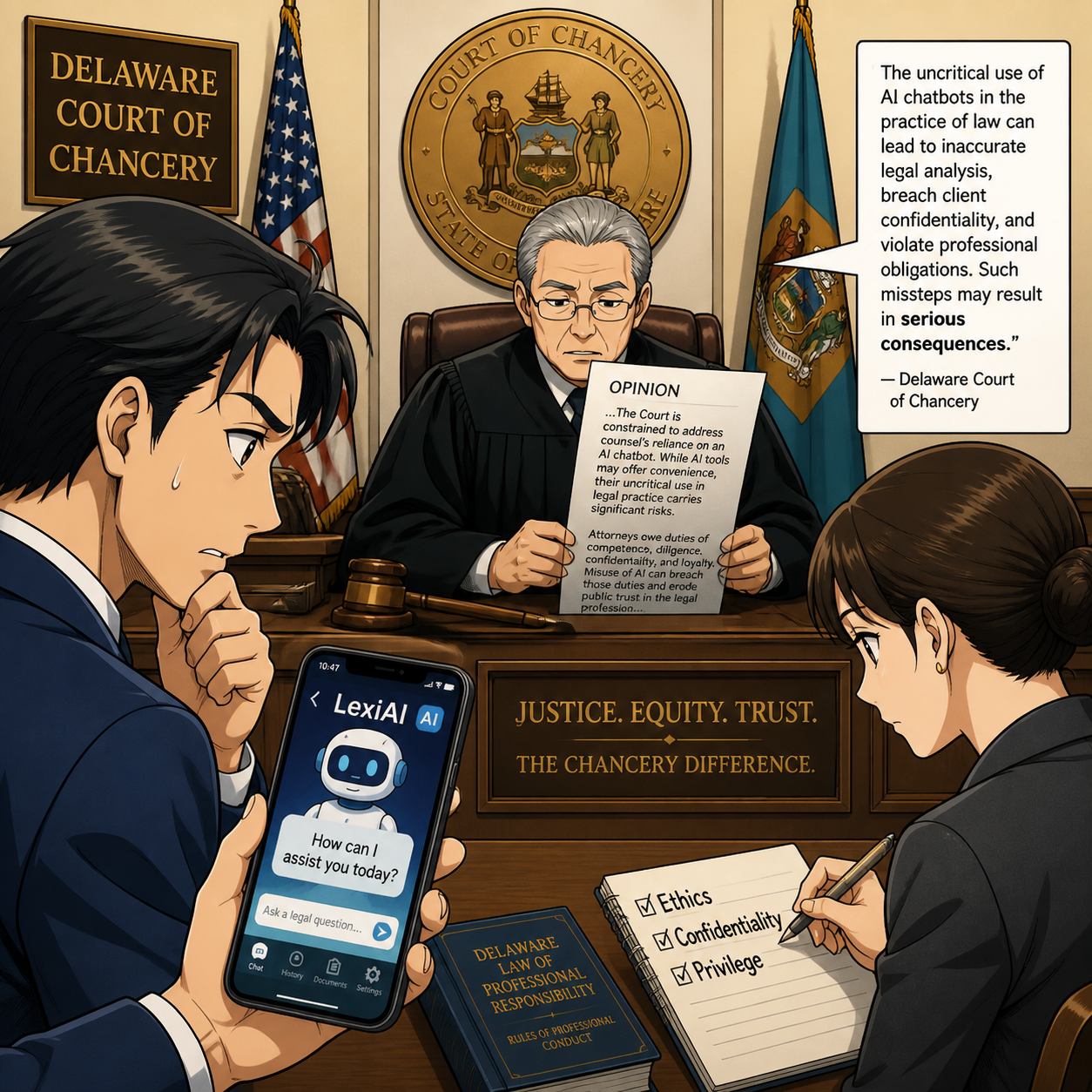
Lawyers need to evaluate public AI chatbot against ABA confidentiality and privilege rules

In March 2026, the Delaware Court of Chancery in Fortis Advisors, LLC v. Krafton, Inc. handed lawyers one of the clearest cautionary tales yet about public AI chatbots, corporate governance, and the limits of “move fast and break things.” A South Korean gaming conglomerate, Krafton Inc., used an artificial intelligence chatbot to help devise an internal “Project X” takeover plan against its own studio, Unknown Worlds Entertainment, and then tried to defend the fallout in court. The result: a detailed opinion reinstating the studio’s CEO, extending a $250 million earnout period, and spotlighting how AI misuse can become Exhibit A when things go wrong.

If you’re a solo, a small-firm lawyer, or an AI‑curious practitioner dabbling with ChatGPT or similar tools, this case is your wake‑up call. The message is not “don’t use AI.” The message is: treat public chatbots the same way you treat email, cloud storage, or texting — through the lens of ABA ethics, client confidentiality, and privilege. 😬

In this editorial, I’ll unpack what happened, how the court framed the misuse of a chatbot, and what you should do in your own practice to stay on the right side of the rules.

The Case in a Nutshell: AI as a Takeover Co‑Pilot

Krafton bought Unknown Worlds — the studio behind Subnautica — for $500 million upfront plus up to $250 million in contingent earnout payments, with a contractually guaranteed structure: the founders and CEO (the “Key Employees”) retained operational control and could only be fired for defined “Cause.”  As Subnautica 2 approached early‑access launch, internal projections showed the game would easily trigger a massive earnout.

The CEO of Krafton grew concerned he looked like a “pushover” under the deal and turned to a public AI chatbot for advice on how to avoid paying the earnout and seize control of the studio. The chatbot’s “response strategy” included:

  • Locking down publishing rights and code access.

  • Crafting messaging to “secure public support” and undermine the “large corporation vs. indie” narrative.

  • Preparing a “takeover” path that blended hardball legal tactics with PR framing. 

Krafton’s internal team implemented much of that plan — cutting off the studio’s access to its Steam publishing console, posting unilateral public statements, and ultimately terminating the founders and CEO on a pretext of “premature release” risk.  When sued, Krafton tried to pivot to new justifications, including the executives’ role changes and their defensive downloads of company data. 

The court was having none of it. Vice Chancellor Will held that:

  • The terminations were not “for Cause” under the negotiated contract.

  • The “Project X” takeover guided by the chatbot was a pretext to avoid the earnout.

  • The studio’s CEO, Ted Gill, must be reinstated with full operational control, and the earnout period equitably extended by the length of his ouster. 

In other words, the AI‑assisted takeover strategy became part of the factual narrative of bad faith and breach — not a clever workaround.

Public Chatbots and ABA Model Rules: Three Pressure Points ⚖️

Attorneys must consider ethical AI chatbot use for confidential client case analysis

Even though this is a corporate earnout case, the opinion gives lawyers a concrete frame for thinking about public AI tools under the ABA Model Rules.

1. Confidentiality — Model Rule 1.6

Rule 1.6 requires lawyers to keep “information relating to the representation of a client” confidential, absent informed consent or a specific exception. Public chatbots are not your firm’s Document Management System (DMS) — they’re third‑party services that typically ingest prompts for training, quality, and logging. When Krafton’s CEO ran “Project X” through a chatbot, he was effectively outsourcing high‑stakes strategy to a non‑privileged third‑party system that could store and learn from those prompts. 

For lawyers, the parallels are obvious:

  • Dropping fact patterns, names, or deal structures into a public chatbot can mean you’ve disclosed client information to a non‑controlled vendor.

  • Even “sanitized” prompts can be re‑identified when combined with other data.

Under 1.6, that’s a potential confidentiality breach unless you’ve vetted the tool, negotiated appropriate terms (including data handling and retention), and obtained informed client consent for that mode of assistance. Emojis and “it’s just drafting help” don’t change that. 😉

2. Privilege — Model Rules 1.1 and 1.4 (Competence and Communication)

Privilege isn’t framed in the Model Rules, but Rule 1.1 (competence) and 1.4 (communication) require you to understand how your technology choices affect the protection of client communications. When you route strategy discussions through a public chatbot:

  • You may jeopardize attorney–client privilege by involving a third‑party with no need‑to‑know and no formal role in the representation.

  • You may create discoverable records that live outside your control, just as Krafton’s CEO created chat logs he then tried to delete. 

The court noted that relevant chatbot logs were deleted, which did not play well in evaluating Krafton’s narrative.  Privilege analysis is already complex with cloud tools; adding public AI as a “secret co‑counsel” without protections only compounds that risk. 

Competent use of technology now includes understanding whether your AI stack is preserving or eroding privilege and communicating those risks to clients when you propose AI‑assisted workflows.

3. Candor and Misrepresentation — Model Rule 4.1 and 8.4(c) 🚨

Although this case turns on contractual “Cause” and good faith, the court’s language about “pretextual” justifications and manufactured defenses should resonate with litigators. Model Rule 4.1 prohibits knowingly making false statements of material fact to third parties; Rule 8.4(c) bars conduct involving dishonesty, fraud, deceit, or misrepresentation. 

When you:

  • Use a chatbot to generate strategic messaging designed to mislead stakeholders.

  • Craft public statements or demand letters that you know are pretextual, but you’ve optimized with AI for tone and impact.

… you’re still responsible for the truthfulness of that content. The court saw through Krafton’s attempt to re‑frame events after the fact, and its internal AI‑assisted playbooks did not help. 

For lawyers, the lesson is simple: AI‑generated output is yours once you sign or speak it. If it’s misleading, you own the ethics problem — not “the algorithm.”

Practical Takeaways for Solo and Small‑Firm Lawyers 🧩

So what do you do if you’re a tech‑savvy lawyer who likes AI, but doesn’t want your prompts quoted in an opinion like this?

Here are grounded, practice‑ready steps.

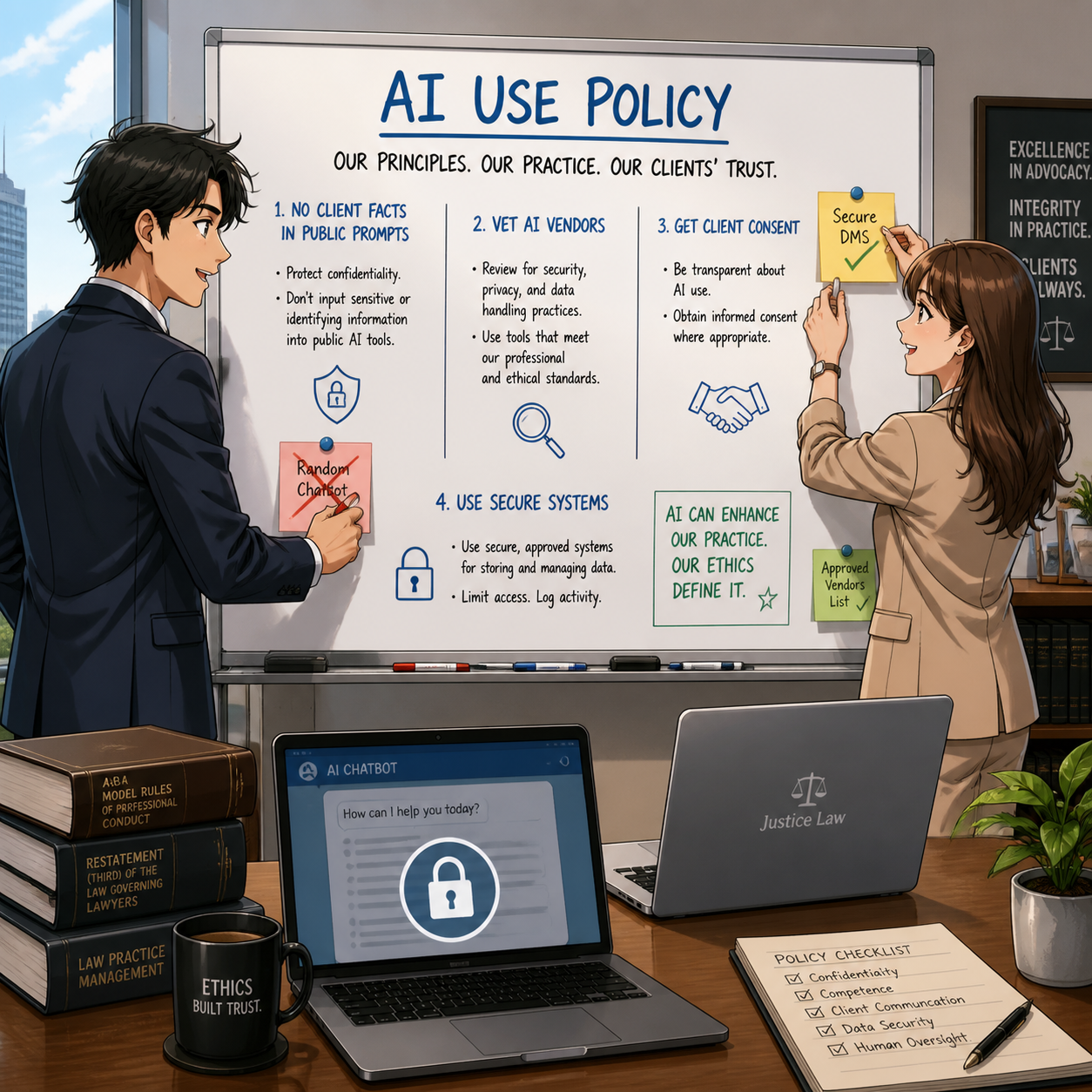
1. Establish an AI Use Policy

Even if you’re a solo, write down what you will and won’t do with public chatbots.

lawyers need to build practical, ethical AI policies for practice.

  • No client names, exact fact patterns, or identifiable deal terms in public tools.

  • Use AI for structure and language, not for strategy or confidential analysis.

  • Prefer client‑specific, non‑logging enterprise tools when handling sensitive material.

Treat this like you treat your cloud storage or remote‑work policy — it’s part of your competence under Model Rule 1.1 and your supervisory obligations under 5.1/5.3 if you have staff.

2. Separate “Public Prompting” from “Privileged Thinking” 🧠

Use public chatbots for:

  • Headline and meta description drafting.

  • Blog outlines, post ideas, or simple explainer language for non‑client scenarios.

  • Rough templates for standard documents that you will heavily edit.

Avoid using them for:

  • Fact‑specific case assessments.

  • Litigation strategy, negotiation plans, or internal “playbooks” like Krafton’s “Project X.” 

  • Anything that feels like the kind of conversation you’d normally have only with a colleague behind closed doors.

This separation keeps your privileged work product inside tools and workflows you control.

3. Vet Vendors Like You Vet e‑Discovery Platforms

If you move beyond public chatbots to paid AI tools, evaluate them as you would any major legaltech vendor:

  • Where is data stored?

  • Is training on your material disabled by default?

  • Can you get a Business Associate Agreement or Data Processing Agreement / Data Protection Impact Assessment that aligns with your jurisdiction’s expectations?

The ABA’s Formal Opinion 477R on secure communications and cloud ethics opinions from state bars all provide analogies: reasonable steps, not perfection, are required — but “type client memo into random website” is not reasonable. 😄

4. Document Client Consent When AI Is Material to the Representation

If you expect to use AI in a way that materially affects how you deliver legal services, communicate that to clients under Rule 1.4:

  • Explain benefits (efficiency, faster drafting).

  • Explain risks (data handling, reliability, hallucinations).

  • Offer an AI‑free option.

Written engagement terms that address AI use can save hard conversations later if something goes sideways.

5. Revisit Your “Bad Facts” Mindset

Reading this Delaware opinion, you see how internal strategy — including AI‑assisted plotting — can become a litigation exhibit.  For lawyers, that’s an invitation to ask: 

“If this prompt or chatbot conversation showed up in an opinion, would I be comfortable defending it under the Model Rules?”

If the answer is no, don’t send it. That simple heuristic scales across tools and platforms.

What This Case Signals for the Next Wave of Legal Tech 🌊

There can be significant legal consequences for AI chatbot misuse in legal disputes.

The opinion in Fortis Advisors v. Krafton is not an ethics decision aimed at lawyers, but it shows courts will:

  • Scrutinize AI‑assisted strategies as part of broader narratives about good faith, bad faith, and pretext.

  • Expect parties — and by extension, counsel — to maintain and produce AI‑related records where relevant.

  • Be unimpressed by attempts to retroactively justify decisions made for economic reasons with thin “quality” or “readiness” arguments. 

As public models get more powerful and more embedded in practice, ABA Model Rules on competence, confidentiality, supervision, and candor apply just as they did when lawyers moved to email, smartphones, and the cloud. AI is just the next tool — but it’s a tool that makes it very easy to generate sophisticated bad ideas quickly.

Your job is to keep your ethical compass steady, even when the chatbot is very persuasive. 🧭

MTC

🎙️ Shout Out: 250 Episodes, An Apple Roundup Shout-Out, and Why Android-to-iPhone File Sharing Just Became Every Lawyer's Business

There are weeks in the legal technology calendar that just feel good—and this past week was one of them. ⚖️ Two things landed almost simultaneously, and I want to take a moment to celebrate both properly right here on The Tech-Savvy Lawyer.Page.

Jeff Richardson and Brett Burney celebrate 250 Apple podcast episodes.

First, a genuine, enthusiastic congratulations to Jeff Richardson of iPhone J.D. and Brett Burney of Apps in Law on recording their 250th episode of the In the News podcast. 🎉 If you're not familiar with In the News, here's what you need to know: it is a weekly deep-dive into the Apple universe—iPhones, iPads, Macs, Apple Watch, Vision Pro, iOS updates, app releases, and everything in between. Jeff and Brett, both previous podcast guests, approach it as dedicated Apple enthusiasts who also happen to practice law, which gives the show a grounded, practical quality that pure consumer tech coverage rarely achieves. Two hundred and fifty episodes of consistent, high-quality Apple coverage is a remarkable achievement, full stop. 🏔️

And if you watched the video version of Episode 250, you caught Jeff broadcasting from the breathtaking backdrop of The Broadmoor resort in Colorado—where Jeff's firm, Adams & Reese, was celebrating its own 75th anniversary. That kind of serendipity makes a milestone feel even more earned. Subscribe at inthenewspodcast.com—you will not regret it. 🎧

Attorney can use Google Quick Share to bridge iPhone and Android.

Second, in that same week's In the News roundup post, Jeff included a mention of The Tech-Savvy Lawyer.Page—specifically, our article "How to Use Google's 'AirDrop for Android' (Quick Share) in Your Law Practice." 📲 Jeff's write-up of the week covered everything from Apple's sweeping price increases to iOS 27's five incoming apps to why watching Avatar: Fire and Ash on a Vision Pro on a plane might be the best movie experience currently available to humans. It was, in other words, a quintessentially iPhone J.D. roundup—Apple news, clearly explained, with a sharp eye for what actually matters to readers who live in the Apple ecosystem.

And right there, in that roundup, was a single bullet: "Michael D.J. Eisenberg of The Tech Savvy Lawyer explains how Android devices can now more easily use AirDrop to share files with iPhones." 🙌

That sentence is, on the surface, a consumer Apple tech note—and that's exactly what it should be. Jeff covers it because it is genuinely interesting Apple/mobile news for anyone who carries an iPhone. But for attorneys, the implications go considerably further.

Why This Matters Beyond the Apple Ecosystem 💼

Google expanded Quick Share—its answer to AirDrop—to work directly with Apple's AirDrop across Samsung Galaxy, Google Pixel, and a growing list of flagship Android devices . The transfer happens peer-to-peer: no server routing, no cloud intermediary, no data passing through Google's or Apple's infrastructure. ⚡ For an iPhone-carrying attorney receiving a document from an Android-using co-counsel, paralegal, or client, this is a genuine workflow upgrade.

ABA Model Rules 1.1, 1.6, 5.3 guard lawyer confidentiality.

But it also raises questions that an Apple commentator doesn't need to answer—and that we do. Under ABA Model Rule 1.6 (Confidentiality of Information), the peer-to-peer architecture of Quick Share is actually a feature, not just a convenience: files don't transit external servers, which helps satisfy the "reasonable efforts" standard to prevent unauthorized disclosure of client data. Under ABA Model Rule 1.1 (Competence) and its Comment 8, understanding how a file transfer mechanism works—and whether your firm's use of it is appropriate—is part of your professional obligation, not optional continuing education. And under ABA Model Rule 5.3 (Responsibilities Regarding Nonlawyer Assistance), if your staff are using personal Android devices to share files with iPhone-toting colleagues, you need a written BYOD policy that addresses it. ✅

Our article walks through all of this—device compatibility, step-by-step setup, a five-step firm rollout checklist, and a plain-language BYOD policy framework—so that you can implement this capability confidently and in full compliance with your professional responsibilities . And for a visual walkthrough, our TSL.P Labs Video Presentation: Google Quick Share for Lawyers covers every step in a tactical, ethics-first format . 🎥

The Bigger Picture 🌐

What I appreciate most about getting a mention from iPhone J.D. is the nature of what Jeff's blog is. It is an Apple resource—meticulous, reliable, enthusiast-grade Apple coverage, written by someone who genuinely loves this technology and reads everything. When a piece from The Tech-Savvy Lawyer.Page earns a bullet in Jeff's roundup, it is because the article has something genuinely useful to say about the Apple ecosystem. That is a standard I aim for every time I sit down to write. 📡

So, congratulations to Jeff and Brett on 250 episodes of excellent Apple coverage! And if our Quick Share guide gave even one attorney a smoother courthouse-steps file transfer—or a stronger confidentiality argument—then it earned its mention. 🥂

Shout Out! A Thunderstorm, Three Books, and a Room Full of Lawyers: Shout Out from The Lawyer’s Guide to Podcasting Launch 🌩🎙

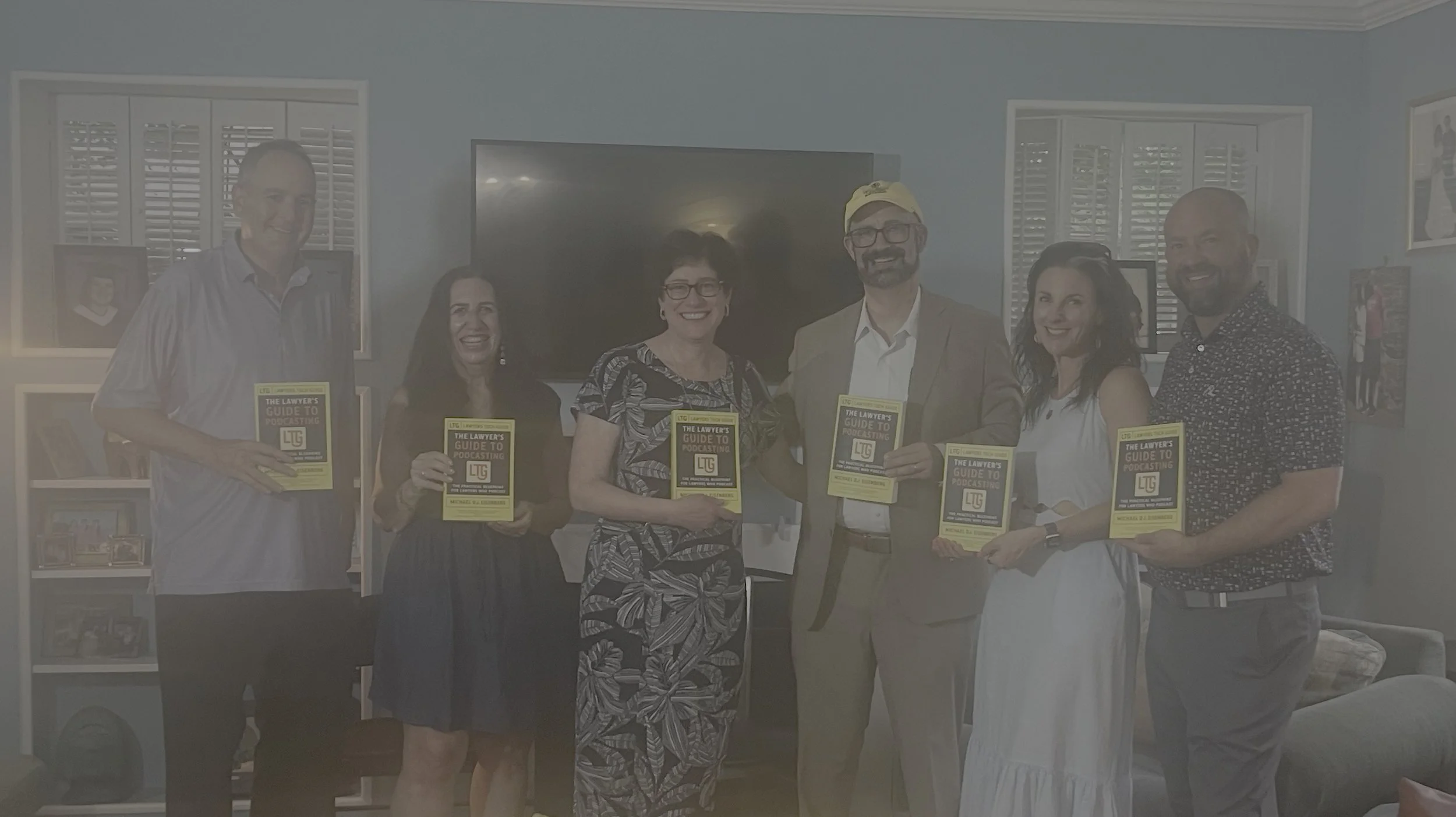
Seth price 📒 Carolyn Elefant 📒 Mindy Eisenberg 📒 Michael D.J. Eisenberg 📒 Wendy meadows 📒 scott

On May 20 in Bethesda, we launched The Lawyer's Guide to Podcasting: Building Your Brand, Audience, Tech Stack, and Expertise! with exactly the kind of energy I hoped this book would inspire: lawyers and legal professionals showing up for each other even as a serious thunderstorm rolled through the DMV. 🌧️🔥

Whether you braved the weather to come out, this post is for you. If you could not make it, think of this as your inside look at how a group of solos, small-firm lawyers, and AI‑curious professionals came together to talk about using podcasting as a serious business tool—one that fits comfortably within the guardrails of our ethics obligations under ABA Model Rules 1.1 (Competence), 1.6 (Confidentiality), and 7.1–7.3 (Communications about legal services).

A launch party built for working lawyers!

We gathered at the home of Carolyn Elefant in Bethesda—yes, in person, with real conversations and real snacks. 🥂 The goal was simple: make podcasting feel less like a mysterious “tech project” and more like a practical, repeatable part of your practice development strategy.

At the event, I walked through three concrete takeaways that mirror the book:

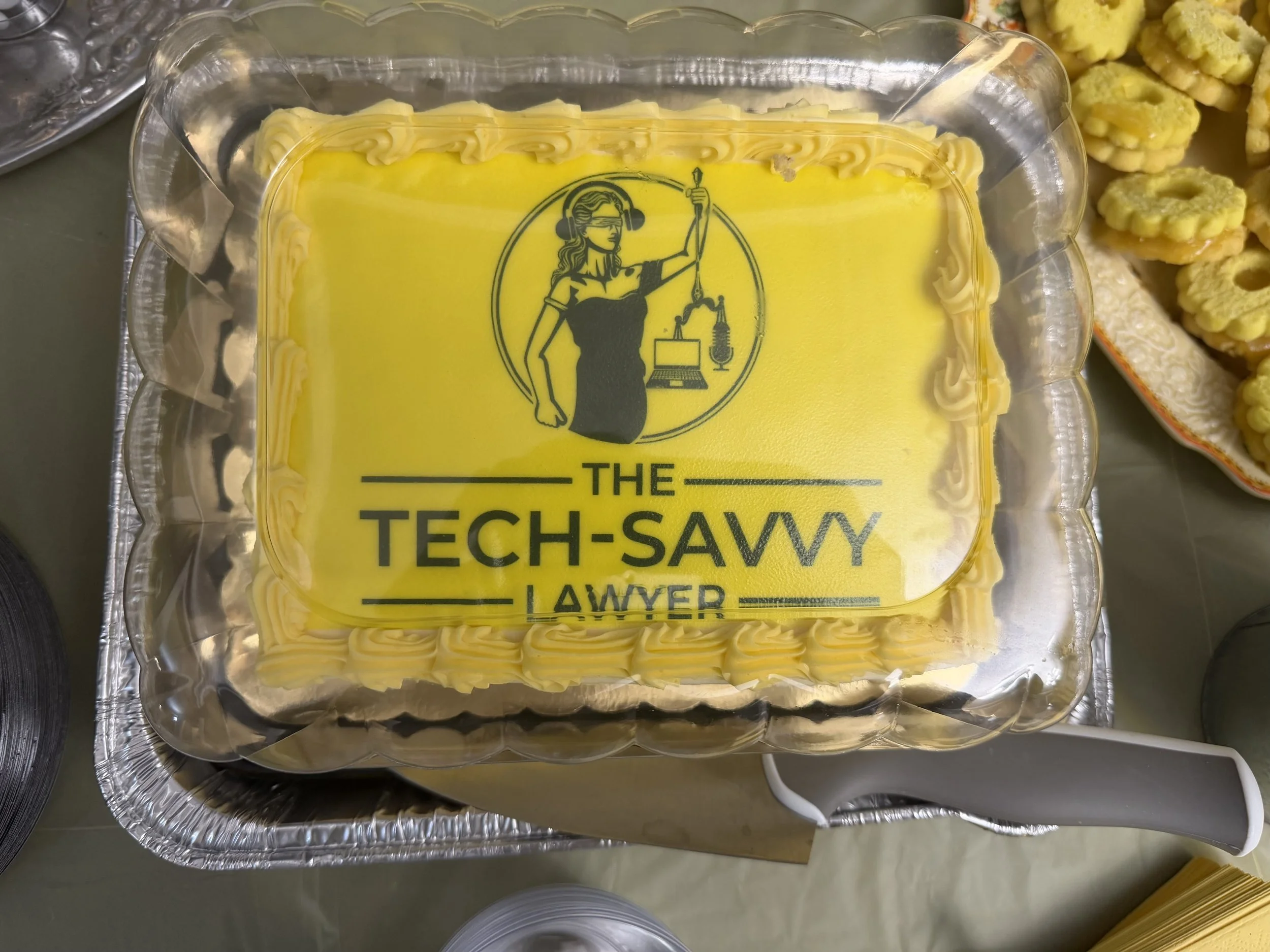
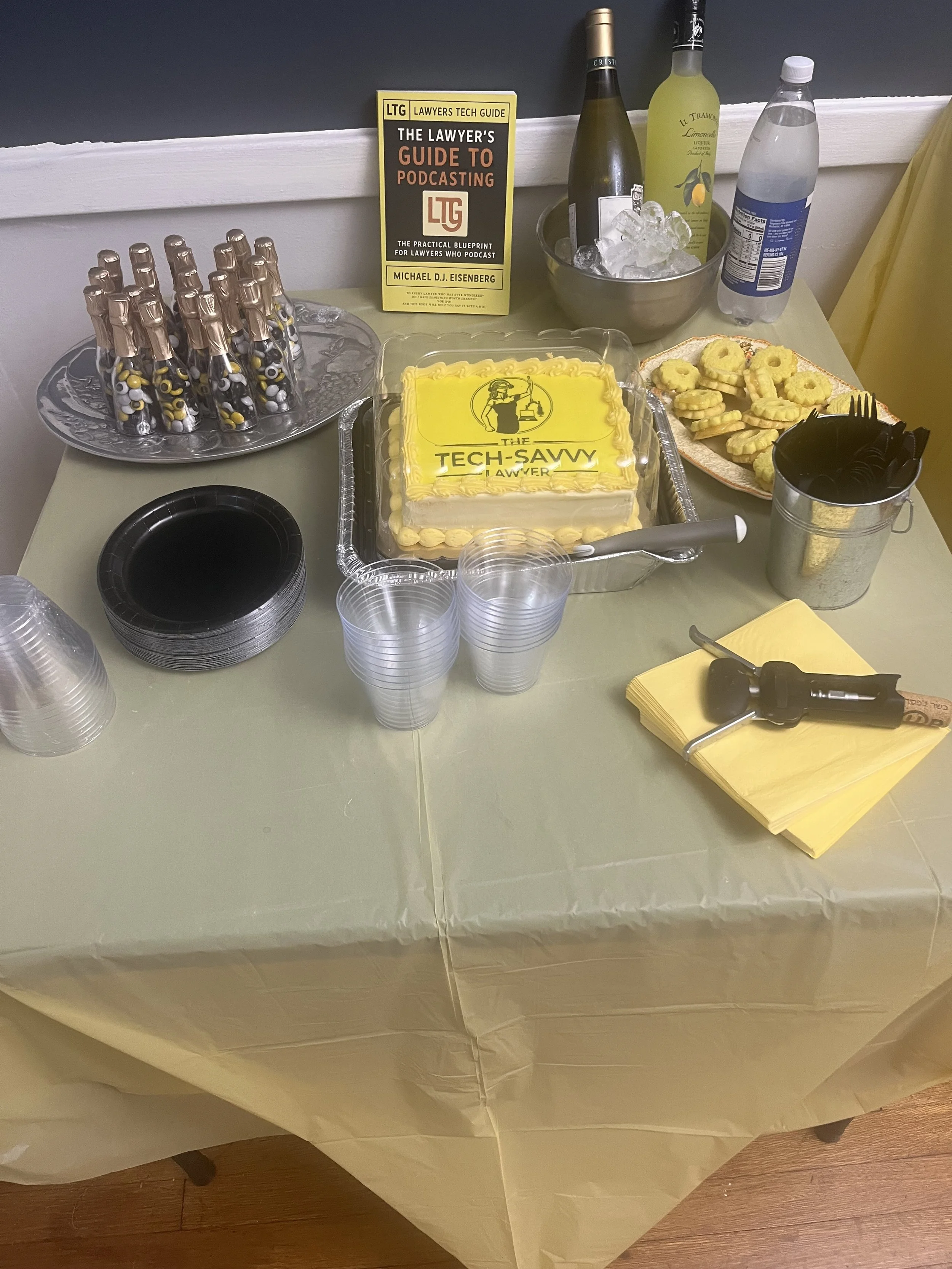
can’t have a launch party without cake!

  • A simple, lawyer‑tested podcast setup that you can actually keep running on a busy docket. 🎧

  • A short checklist of ethical and confidentiality questions to ask before you hit publish.

  • A set of ready‑to‑use episode ideas tailored to your practice area, so you are never staring at a blank calendar.

If those themes sound familiar, it is because they build on what we have discussed in prior posts and podcasts on the The Tech-Savvy Lawyer.Page. Together, they form the groundwork that became The Lawyer’s Guide to Podcasting: Building Your Brand, Audience, Tech Stack, and Expertise! 🎉

Shout Outs to the people who made the night! ⛈️

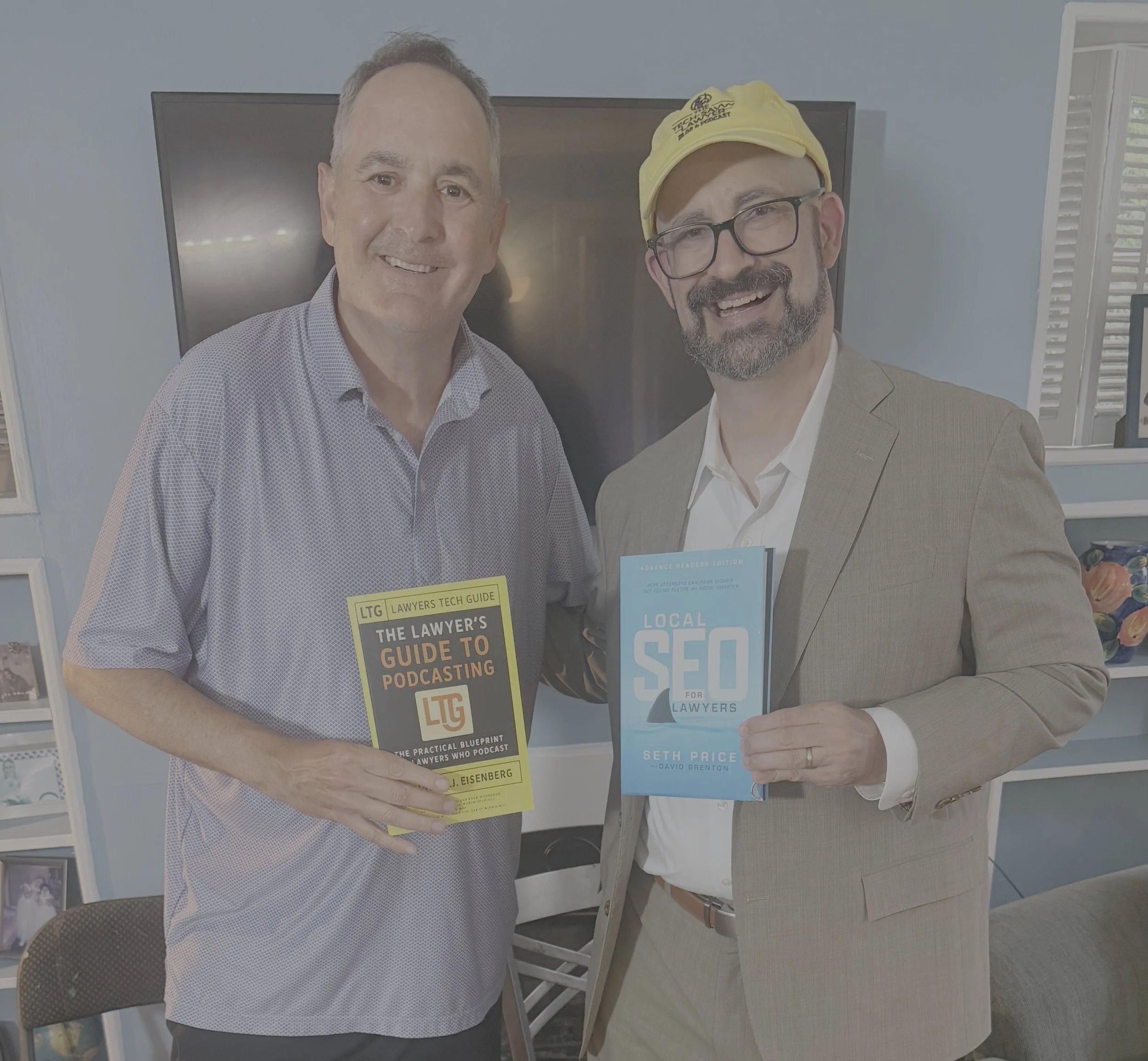
seth price and Michael D.J. Eisenberg exchange copies of their current releases!

A launch is never a solo act, even for a solo practitioner. I want to extend a very public, very appreciative shout out to a few people who made the evening special. 🙌

Finally, a heartfelt thanks to my wife and to every colleague, client, and friend who rearranged schedules and drove through a thunderstorm to be there. That kind of support is not just personally meaningful—it is a reminder that legal tech is at its best when it is rooted in community, not gadgets. 💙

Thank you Carolyn for hosting the book launch!

Why a podcasting book for lawyers—and why now?

If you follow the blog or listened to my guest appearance on Ruby Power’s “Power Up Your Practice”, Ep. 104: Legal Podcasting: The New Networking Standard, you have heard me say that podcasting is no longer a fringe experiment for lawyers. For solos, small‑to‑medium firms, and AI‑curious attorneys, a well‑designed podcast is:

  • An ongoing, searchable FAQ for your ideal clients.

  • A trust‑building channel for referral partners.

  • A training and onboarding tool for your own team.

In The Lawyer’s Guide to Podcasting, I walk through the tech stack and workflows that keep this realistic for a law practice, from microphones and recording platforms to editing, show notes, and ethical review. The idea is not to turn you into an audio engineer. The idea is to give you enough structure and competence that you work the basics yourself and delegate confidently without abdicating responsibility—very much in line with the duty of technological competence that is increasingly recognized under ABA Model Rule 1.1 and its state‑level interpretations.

Ethics, AI, and your voice behind the mic!🎙️

Many lawyers have told me that their hesitation about podcasting is not the microphone; it is the ethics. That is a healthy instinct. 👍

  • Model Rule 1.6 (Confidentiality) means no client can recognize themselves in your war stories without informed consent. In the book, I provide red‑flag questions and anonymization strategies you can bake into your outline before you record.

  • Model Rules 7.1–7.3 (Communications and Advertising) remind us that your podcast is marketing, direct or indirect, even when it feels like pure education. We cover how to structure disclaimers, avoid misleading “results‑typical” language, and respect solicitation limits while still giving real‑world examples.

  • For AI‑curious lawyers using tools like transcription, editing assistants, or AI‑drafted show notes, we address how to keep third‑party tools inside a framework that respects confidentiality and your supervisory responsibilities under the Rules.

If this resonates, you might also enjoy revisiting “Shout Out: Carolyn Elefant’s Review of Casetext v. ChatGPT!”, where she looked at AI in legal research through a similar ethics‑first lens. The same mindset applies here: use the tech, but do not outsource your judgment. 🧠

Where we go from here

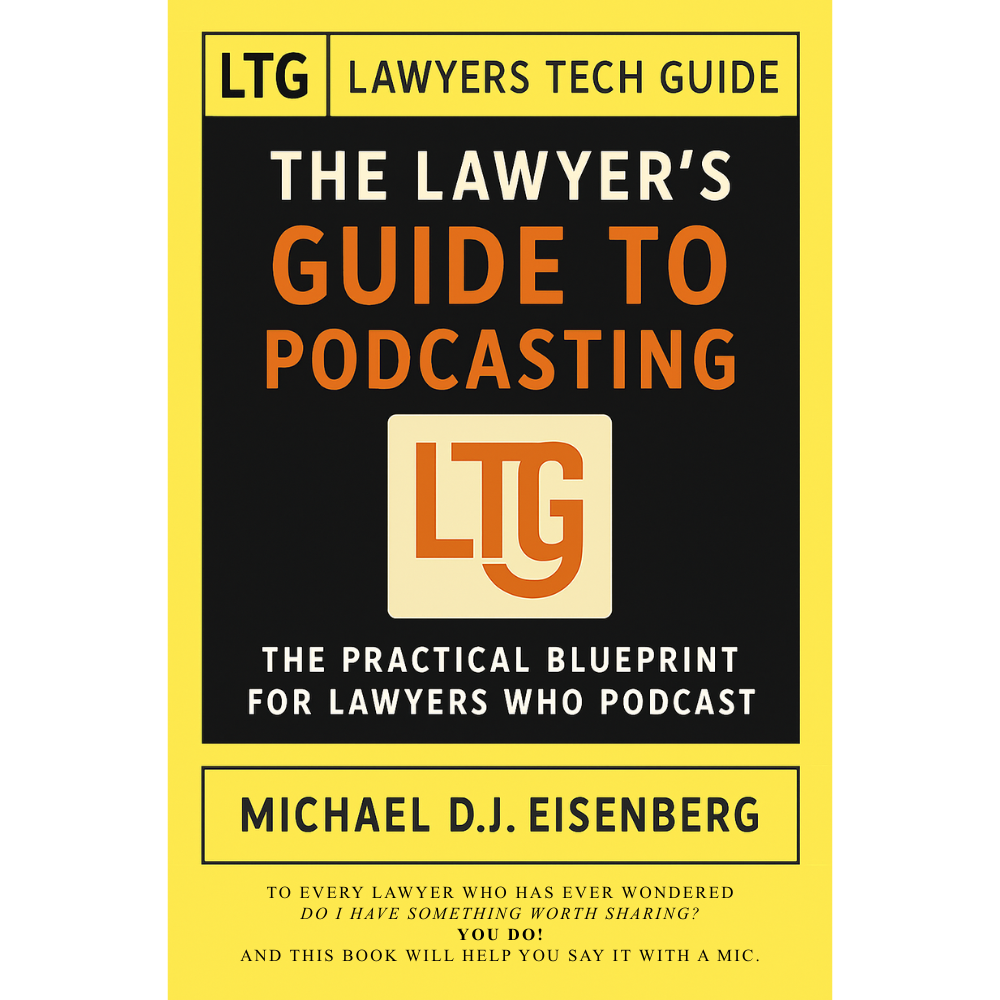
get your copy of The Lawyers tech guide: The lawyer’s guide to podcasting today on amazon!

The launch party was one evening; the conversation will continue in the weeks ahead on this blog and its podcast as we highlight chapters, interview fellow legal podcasters, and share templates you can adapt for your own show.

If you are a solo, a small‑firm partner, or an in‑house counsel looking for a practical roadmap, you can find The Lawyer's Guide to Podcasting: Building Your Brand, Audience, Tech Stack, and Expertise! on Amazon. My hope is simple: the next time a thunderstorm rolls through the DMV—or your own calendar—you will have a system that keeps your podcast, and your practice development, moving forward. 🌩🎙

TSL.P Labs Bonus: Google AI Discussion: Everyday Tech, Extraordinary Evidence: Smartphones, Dash Cams, and Wearables as Silent Witnesses in Your Cases ⚖️📱

Join us for an AI-powered deep dive into the ethical challenges facing legal professionals in the age of generative AI. 🤖 In this Tech-Savvy Lawyer.Page Labs episode, our Google AI hosts unpack our January 26, 2026, editorial and discuss how everyday devices—smartphones, dash cams, wearables, and connected cars—are becoming “silent witnesses” that can make or break your next case, while walking carefully through ABA Model Rules on competence, candor, privacy, and preservation of digital evidence.

In our conversation, we cover the following:

  • 00:00 – Welcome to The Tech-Savvy Lawyer.Page Labs Initiative and this week’s “Everyday Tech, Extraordinary Evidence” AI roundtable 🧪

  • 00:30 – Why classic “surprise witness” courtroom drama is giving way to always-on digital witnesses 🎭

  • 01:15 – Introducing the concept of smartphones, dash cams, and wearables as objective “silent witnesses” in litigation 📱

  • 02:00 – Overview of Michael D.J. Eisenberg’s editorial “Everyday Tech, Extraordinary Evidence” and his mission to bridge tech and courtroom practice 📰[

  • 03:00 – Case study setup: the Alex Preddy shooting in Minneapolis and the clash between official reports and digital evidence ⚖️

  • 04:00 – How bystander smartphone video reframed the legal narrative in the Preddy matter and dismantled “brandished a weapon” claims 🎥

  • 05:00 – From “pressing play” to full video synchronization: building a unified timeline from multiple cameras to audit police reports 🧩06:00 – Using frame-by-frame analysis to test loaded terms like “lunging,” “aggressive resistance,” and “brandishing” against what the pixels actually show 🔍

  • 07:00 – Moving beyond what we see: introducing “quiet evidence” such as GPS logs, telemetry, and sensor data as litigation tools 📡

  • 08:00 – GPS data for location, duration, and speed: turning “he was charging” into a measurable movement profile in protest and road-rage cases 🚶‍♂️🚗

  • 09:00 – Layering GPS from phones with vehicle telematics to create a multi-source reconstruction that is hard to impeach in court 📊

  • 10:00 – Dash cams as 360-degree witnesses: solving blind spots of human perception and single-angle video 🛞

  • 11:00 – Why exterior audio from dash cams—shouts, commands, crowd noise—can be crucial to proving state of mind and mens rea 🔊

  • 12:00 – Wearables as a body-wide sensor network: heart rate, sleep, and step count as quantitative proof of pain, fear, and trauma ⌚

  • 13:00 – Using longitudinal wearable data to support claims of emotional distress or sleep disruption in personal injury and civil-rights litigation 😴

  • 14:00 – Heart-rate spikes and movement logs at the moment of an encounter as corroboration of fear or immobility in use-of-force matters

  • 15:00 – Why none of this evidence exists in your case file unless you know to ask for it at intake 🗂️

  • 16:00 – Updating intake: adding questions about smartwatches, location services, doorbell cameras, dash cams, and connected cars to your client questionnaires 📝

  • 17:00 – Data preservation as an emergency task: deletion cycles, cloud overwrites, and using TROs to stop digital spoliation 🚨

  • 18:00 – Turning raw logs into compelling visuals: maps, synced clips, and timelines that juries can understand without sacrificing accuracy 🗺️

  • 19:00 – Ethics spotlight: ABA Model Rule 1.1 competence and Comment 8—why “I’m not a tech person” is now an ethical problem, not an excuse 📚

  • 20:00 – Candor to the tribunal and the line between strong advocacy and fraud when editing or excerpting digital evidence ⚠️

  • 21:00 – Respecting third-party privacy under Rule 4.4: when you must blur faces, redact audio, or limit collateral exposure of bystanders 🧩

  • 22:00 – Advising clients not to delete texts, videos, or logs and explaining spoliation risks under Rule 3.4 ⚖️

  • 23:00 – The uranium analogy: digital tools as powerful but dangerous if used without adequate ethical “containment” ☢️

  • 24:00 – Philosophical closing: will juries someday trust heart-rate logs more than tears on the witness stand, and what does that mean for human testimony? 🤔

  • 25:00 – Closing remarks and invitation to explore the full editorial, show notes, and resources on The Tech-Savvy Lawyer.Page 🌐

If you enjoyed this episode, please like, comment, subscribe, and share!

📽️ BONUS Labs 🧪 Initiative: Tech-Savvy Lawyer on Law Practice Today Podcast — Essential Trust Account Tips for Solo & Small Law Firms w/ Terrell Turner (Copy)

For those who prefer video over plain audio, enjoy this take on my guest appearance on Law Practice Today Podcast!

🙏 Special Thanks to Terrell Turner and the ABA for having me on the Law Practice Today Podcast, produced by the Law Practice Division of the American Bar Association. We have an important discussion on trust account management. We cover essential insights on managing trust accounts using online services. This episode has been edited for time, but no information was altered. We are grateful to the ABA and the Law Practice Today Podcast for allowing us to share this valuable conversation with our audience.

🎯 Join Terrell and me as we discuss the following three questions and more!

  1. What precautions should lawyers using online services to manage trust accounts be aware of?

  2. How can solo and small firm attorneys find competent bookkeepers who understand legal trust accounting?

  3. What security measures should attorneys implement when using online payment processors for client funds?

⏱️ In our conversation, we cover the following:

00:00 – Introduction & Preview: Trust Accounts in the Digital Age

01:00 – Welcome to the Law Practice Today Podcast

01:30 – Today's Topic: Online Services for Payments

02:00 – Guest Introduction: Michael D.J. Eisenberg's Background

03:00 – Michael's Experience with Trust Accounts

04:00 – Challenges for Solo and Small Practitioners

05:00 – Ensuring Security in Online Services

06:00 – Questions to Ask Online Payment Providers

07:00 – Password Security & Two-Factor Authentication

08:00 – Finding a Competent Legal Bookkeeper

09:00 – Why 8AM Law Pay Works for Attorneys

10:00 – Daily Monitoring of Trust Accounts

11:00 – FDIC Insurance & Silicon Valley Bank Lessons

13:00 – Researching Trust Account Best Practices

15:00 – Closing Remarks & Podcast Information

📚 Resources

🔗 Connect with Terrell

💼 LinkedIn: https://www.linkedin.com/in/terrellturner/

🌐 Website: https://www.tlturnergroup.com/

🎙️ Law Practice Today Podcast – https://lawpracticetoday.buzzsprout.com

📰 Mentioned in the Episode

💻 Software & Cloud Services Mentioned in the Conversation

  • 8AM Law Pay – Legal payment processing designed for trust account compliance – https://www.8am.com/lawpay/

  • 1Password – Password manager for generating and syncing complex passwords – https://1password.com/

  • LastPass – Mentioned as a password manager with noted security concerns – https://www.lastpass.com/

📻 BONUS: Tech-Savvy Lawyer on Law Practice Today Podcast — Essential Trust Account Tips for Solo & Small Law Firms w/ Terrell Turner

🙏 Special Thanks to Terrell Turner and the ABA for having me on the Law Practice Today Podcast, produced by the Law Practice Division of the American Bar Association. We have an important discussion on trust account management. We cover essential insights on managing trust accounts using online services. This episode has been edited for time, but no information was altered. We are grateful to the ABA and the Law Practice Today Podcast for allowing us to share this valuable conversation with our audience.

🎯 Join Terrell and me as we discuss the following three questions and more!

  1. What precautions should lawyers using online services to manage trust accounts be aware of?

  2. How can solo and small firm attorneys find competent bookkeepers who understand legal trust accounting?

  3. What security measures should attorneys implement when using online payment processors for client funds?

⏱️ In our conversation, we cover the following:

00:00 – Introduction & Preview: Trust Accounts in the Digital Age

01:00 – Welcome to the Law Practice Today Podcast

01:30 – Today's Topic: Online Services for Payments

02:00 – Guest Introduction: Michael D.J. Eisenberg's Background

03:00 – Michael's Experience with Trust Accounts

04:00 – Challenges for Solo and Small Practitioners

05:00 – Ensuring Security in Online Services

06:00 – Questions to Ask Online Payment Providers

07:00 – Password Security & Two-Factor Authentication

08:00 – Finding a Competent Legal Bookkeeper

09:00 – Why 8AM Law Pay Works for Attorneys

10:00 – Daily Monitoring of Trust Accounts

11:00 – FDIC Insurance & Silicon Valley Bank Lessons

13:00 – Researching Trust Account Best Practices

15:00 – Closing Remarks & Podcast Information

📚 Resources

🔗 Connect with Terrell

💼 LinkedIn: https://www.linkedin.com/in/terrellturner/

🌐 Website: https://www.tlturnergroup.com/

🎙️ Law Practice Today Podcast – https://lawpracticetoday.buzzsprout.com

📰 Mentioned in the Episode

💻 Software & Cloud Services Mentioned in the Conversation

  • 8AM Law Pay – Legal payment processing designed for trust account compliance – https://www.8am.com/lawpay/

  • 1Password – Password manager for generating and syncing complex passwords – https://1password.com/

  • LastPass – Mentioned as a password manager with noted security concerns – https://www.lastpass.com/