TSL.P Labs Bonus: Google AI Discussion: Everyday Tech, Extraordinary Evidence: Smartphones, Dash Cams, and Wearables as Silent Witnesses in Your Cases ⚖️📱

Join us for an AI-powered deep dive into the ethical challenges facing legal professionals in the age of generative AI. 🤖 In this Tech-Savvy Lawyer.Page Labs episode, our Google AI hosts unpack our January 26, 2026, editorial and discuss how everyday devices—smartphones, dash cams, wearables, and connected cars—are becoming “silent witnesses” that can make or break your next case, while walking carefully through ABA Model Rules on competence, candor, privacy, and preservation of digital evidence.

In our conversation, we cover the following:

  • 00:00 – Welcome to The Tech-Savvy Lawyer.Page Labs Initiative and this week’s “Everyday Tech, Extraordinary Evidence” AI roundtable 🧪

  • 00:30 – Why classic “surprise witness” courtroom drama is giving way to always-on digital witnesses 🎭

  • 01:15 – Introducing the concept of smartphones, dash cams, and wearables as objective “silent witnesses” in litigation 📱

  • 02:00 – Overview of Michael D.J. Eisenberg’s editorial “Everyday Tech, Extraordinary Evidence” and his mission to bridge tech and courtroom practice 📰[

  • 03:00 – Case study setup: the Alex Preddy shooting in Minneapolis and the clash between official reports and digital evidence ⚖️

  • 04:00 – How bystander smartphone video reframed the legal narrative in the Preddy matter and dismantled “brandished a weapon” claims 🎥

  • 05:00 – From “pressing play” to full video synchronization: building a unified timeline from multiple cameras to audit police reports 🧩06:00 – Using frame-by-frame analysis to test loaded terms like “lunging,” “aggressive resistance,” and “brandishing” against what the pixels actually show 🔍

  • 07:00 – Moving beyond what we see: introducing “quiet evidence” such as GPS logs, telemetry, and sensor data as litigation tools 📡

  • 08:00 – GPS data for location, duration, and speed: turning “he was charging” into a measurable movement profile in protest and road-rage cases 🚶‍♂️🚗

  • 09:00 – Layering GPS from phones with vehicle telematics to create a multi-source reconstruction that is hard to impeach in court 📊

  • 10:00 – Dash cams as 360-degree witnesses: solving blind spots of human perception and single-angle video 🛞

  • 11:00 – Why exterior audio from dash cams—shouts, commands, crowd noise—can be crucial to proving state of mind and mens rea 🔊

  • 12:00 – Wearables as a body-wide sensor network: heart rate, sleep, and step count as quantitative proof of pain, fear, and trauma ⌚

  • 13:00 – Using longitudinal wearable data to support claims of emotional distress or sleep disruption in personal injury and civil-rights litigation 😴

  • 14:00 – Heart-rate spikes and movement logs at the moment of an encounter as corroboration of fear or immobility in use-of-force matters

  • 15:00 – Why none of this evidence exists in your case file unless you know to ask for it at intake 🗂️

  • 16:00 – Updating intake: adding questions about smartwatches, location services, doorbell cameras, dash cams, and connected cars to your client questionnaires 📝

  • 17:00 – Data preservation as an emergency task: deletion cycles, cloud overwrites, and using TROs to stop digital spoliation 🚨

  • 18:00 – Turning raw logs into compelling visuals: maps, synced clips, and timelines that juries can understand without sacrificing accuracy 🗺️

  • 19:00 – Ethics spotlight: ABA Model Rule 1.1 competence and Comment 8—why “I’m not a tech person” is now an ethical problem, not an excuse 📚

  • 20:00 – Candor to the tribunal and the line between strong advocacy and fraud when editing or excerpting digital evidence ⚠️

  • 21:00 – Respecting third-party privacy under Rule 4.4: when you must blur faces, redact audio, or limit collateral exposure of bystanders 🧩

  • 22:00 – Advising clients not to delete texts, videos, or logs and explaining spoliation risks under Rule 3.4 ⚖️

  • 23:00 – The uranium analogy: digital tools as powerful but dangerous if used without adequate ethical “containment” ☢️

  • 24:00 – Philosophical closing: will juries someday trust heart-rate logs more than tears on the witness stand, and what does that mean for human testimony? 🤔

  • 25:00 – Closing remarks and invitation to explore the full editorial, show notes, and resources on The Tech-Savvy Lawyer.Page 🌐

If you enjoyed this episode, please like, comment, subscribe, and share!

MTC: Everyday Tech, Extraordinary Evidence: How Lawyers Can Turn Smartphones, Dash Cams, and Wearables Into Case‑Winning Proof After the Minnesota ICE Shooting 📱⚖️

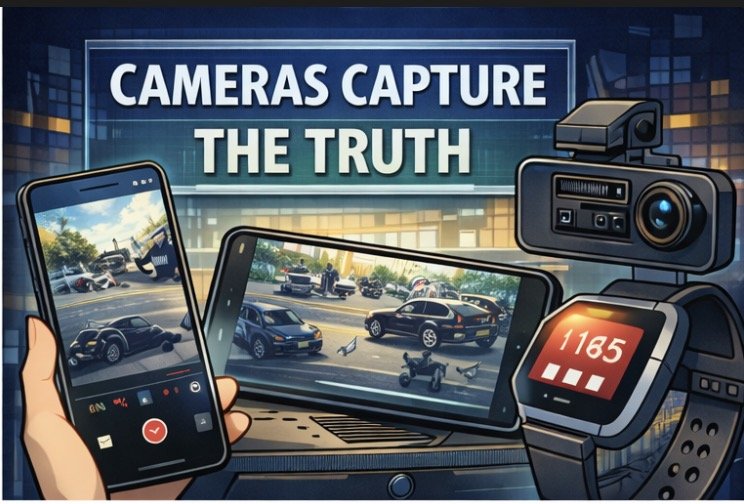
Smartphone evidence: Phone as Proof!

The recent fatal shooting of ICU nurse Alex Pretti by a federal immigration officer in Minneapolis has become a defining example of how everyday technology can reshape a high‑stakes legal narrative. 📹 Federal officials claimed Pretti “brandished” a weapon, yet layered cellphone videos from bystanders, later analyzed by major news outlets, appear to show an officer disarming him moments before multiple shots were fired while he was already on the ground. In a world where such encounters are documented from multiple angles, lawyers who ignore ubiquitous tech risk missing powerful, and sometimes exonerating, evidence.

Smartphones: The New Star Witness

In the Minneapolis shooting, multiple smartphone videos captured the encounter from different perspectives, and a visual analysis highlighted discrepancies between official statements and what appears on camera. One video reportedly shows an officer reaching into Pretti’s waistband, emerging with a handgun, and then, barely a second later, shots erupt as he lies prone on the sidewalk, still being fired upon. For litigators, this is not just news; it is a case study in how to treat smartphones as critical evidentiary tools, not afterthoughts.

Practical ways to leverage smartphone evidence include:

  • Identifying and preserving bystander footage early through public calls, client outreach, and subpoenas to platforms when appropriate.

  • Synchronizing multiple clips to create a unified timeline, revealing who did what, when, and from where.

  • Using frame‑by‑frame analysis to test or challenge claims about “brandishing,” “aggressive resistance,” or imminent threat, as occurred in the Pretti shooting controversy.

In civil rights, criminal defense, and personal‑injury practice, this kind of video can undercut self‑defense narratives, corroborate witness accounts, or demonstrate excessive force, all using tech your clients already carry every day. 📲

GPS Data and Location Trails: Quiet but Powerful Proof

The same smartphones that record video also log location data, which can quietly become as important as any eyewitness. Modern phones can provide time‑stamped GPS histories that help confirm where a client was, how long they stayed, and in some instances approximate movement speed—details that matter in shootings, traffic collisions, and kidnapping cases. Lawyers increasingly use this location data to:

Dash cam / cameras: Dashcam Truth!

  • Corroborate or challenge alibis by matching GPS trails with claimed timelines.

  • Reconstruct movement patterns in protest‑related incidents, showing whether someone approached officers or was simply present, as contested in the Minneapolis shooting narrative.

  • Support or refute claims that a vehicle was fleeing, chasing, or unlawfully following another party.

In complex matters with multiple parties, cross‑referencing GPS from several phones, plus vehicle telematics, can create a robust, data‑driven reconstruction that a fact‑finder can understand without a computer science degree.

Dash Cams and 360‑Degree Vehicle Video: Replaying the Scene

Cars now function as rolling surveillance systems. Many new vehicles ship with factory cameras, and after‑market 360‑degree dash‑cam systems are increasingly common, capturing impacts, near‑misses, and police encounters in real time. In a Minneapolis‑style protest environment, vehicle‑mounted cameras can document:

  • How a crowd formed, whether officers announced commands, and whether a driver accelerated or braked before an alleged assault.

  • The precise position of pedestrians or officers relative to a car at the time of a contested shooting.

  • Sound cues (shouts of “he’s got a gun!” or “where’s the gun?”) that provide crucial context to the video, like those reportedly heard in footage of the Pretti shooting.

For injury and civil rights litigators, requesting dash‑cam footage from all involved vehicles—clients, third parties, and law‑enforcement—should now be standard practice. 🚗 A single 360‑degree recording might capture the angle that police‑worn cameras miss or omit.

Wearables and Smartwatches: Biometrics as Evidence

GPS & wearables: Data Tells All!

Smartwatches and fitness trackers add a new dimension: heart‑rate, step counts, sleep data, and sometimes even blood‑oxygen metrics. In use‑of‑force incidents or violent encounters, this information can be unusually persuasive. Imagine:

  • A heart‑rate spike precisely at the time of an assault, followed by a sustained elevation that reinforces trauma testimony.

  • Step‑count and GPS data confirming that a client was running away, standing still, or immobilized as claimed.

  • Sleep‑pattern disruptions and activity changes supporting damages in emotional‑distress claims.

These devices effectively turn the body into a sensor network. When combined with phone video and location data, they help lawyers build narratives supported by objective, machine‑created logs rather than only human recollection. ⌚

Creative Strategies for Integrating Everyday Tech

To move from concept to courtroom, lawyers should adopt a deliberate strategy for everyday tech evidence:

  • Build intake questions that explicitly ask about phones, car cameras, smartwatches, home doorbell cameras, and even cloud backups.

  • Move quickly for preservation orders, as Minnesota officials did when a judge issued a temporary restraining order to prevent alteration or removal of shooting‑related evidence in the Pretti case.

  • Partner with reputable digital‑forensics professionals who can extract, authenticate, and, when needed, recover deleted or damaged files.

  • Prepare demonstrative exhibits that overlay video, GPS points, and timelines in a simple visual, so judges and juries understand the story without technical jargon.

The Pretti shooting also underscores the need to anticipate competing narratives: federal officials asserted he posed a threat, while video and witness accounts cast doubt on that framing, fueling protests and calls for accountability. Lawyers on all sides must learn to dissect everyday tech evidence critically—scrutinizing what it shows, what it omits, and how it fits with other proof.

Ethical and Practical Guardrails

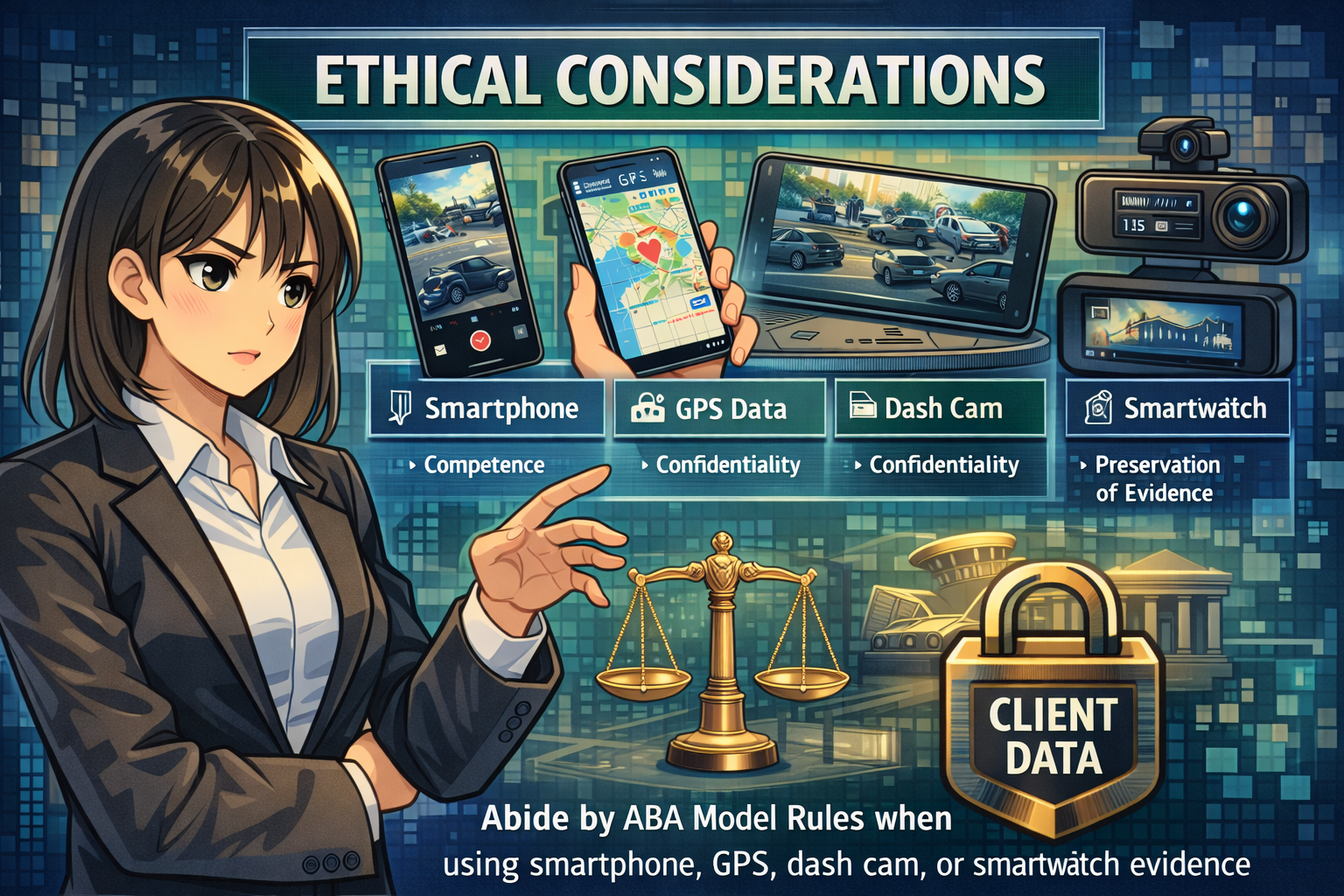
Ethics-focused image: Ethics First!

With this power comes real ethical responsibility. Lawyers must align their use of everyday tech with core duties under the ABA Model Rules of Professional Conduct.

  • Competence (ABA Model Rule 1.1)
    Rule 1.1 requires “competent representation,” and Comment 8 now expressly includes a duty to keep abreast of the benefits and risks of relevant technology. When you rely on smartphone video, GPS logs, or wearable data, you must either develop sufficient understanding yourself or associate with or consult someone who does.

  • Confidentiality and Data Security (ABA Model Rule 1.6)
    Rule 1.6 obligates lawyers to make reasonable efforts to prevent unauthorized access to or disclosure of client information. This extends to sensitive video, location trails, and biometric data stored on phones, cloud accounts, or third‑party platforms. Lawyers should use secure storage, limit access, and, where appropriate, obtain informed consent about how such data will be used and shared.

  • Preservation and Integrity of Evidence (ABA Model Rules 3.4, 4.1, and related e‑discovery ethics)
    ABA ethics guidance and case law emphasize that lawyers must not unlawfully alter, destroy, or conceal evidence. That means clients should be instructed not to edit, trim, or “clean up” recordings, and that any forensic work should follow accepted chain‑of‑custody protocols.

  • Candor and Avoiding Cherry‑Picking (ABA Model Rule 3.3, 4.1)
    Rule 3.3 requires candor toward the tribunal, and Rule 4.1 prohibits knowingly making false statements of fact. Lawyers should present digital evidence in context, avoiding selective clips that distort timing, perspective, or sound. A holistic, transparent approach builds credibility and protects both the client and the profession.

  • Respect for Privacy and Non‑Clients (ABA Model Rule 4.4 and related guidance)
    Rule 4.4 governs respect for the rights of third parties, including their privacy interests. When you obtain bystander footage or data from non‑clients, you should consider minimizing unnecessary exposure of their identities and, where feasible, seek consent or redact sensitive information.

FINAL THOUGHTS

Handled with these rules in mind, everyday tech can reduce factual ambiguity and support more just outcomes. Misused, it can undermine trust, compromise admissibility, and trigger disciplinary scrutiny. ⚖️