Word of the Week: Deepfakes: How Lawyers Can Spot Fake Digital Evidence and Avoid ABA Model Rule Violations ⚖️

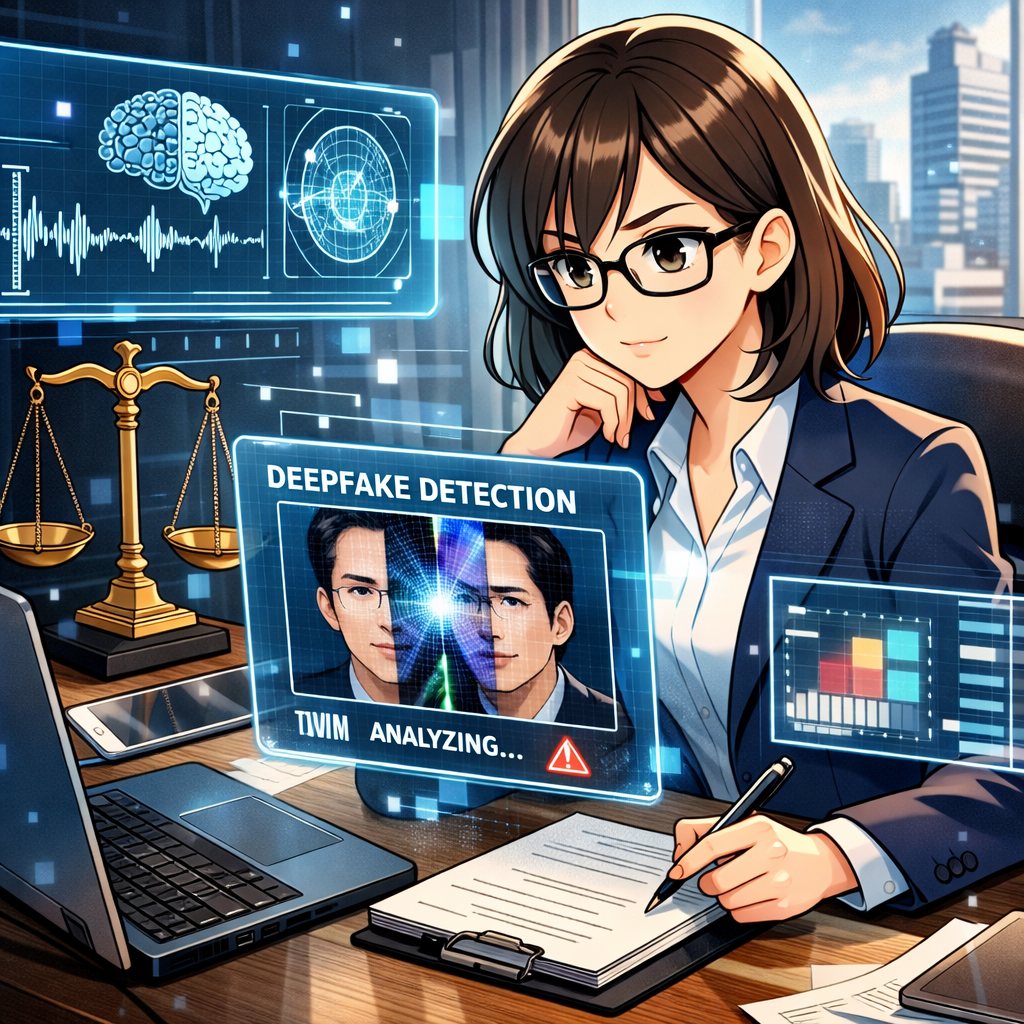
A Tech-Savvy Lawyer needs to be able to spot Deepfakes Before Courtroom Ethics Violations!

“Deepfakes” are AI‑generated or heavily manipulated audio, video, or images that convincingly depict people saying or doing things that never happened.🧠 They are moving from internet novelty to everyday litigation risk, especially as parties try to slip fabricated “evidence” into the record.📹

Recent cases and commentary show courts will not treat deepfakes as harmless tech problems. Judges have dismissed actions outright and imposed severe sanctions when parties submit AI‑generated or altered media, because such evidence attacks the integrity of the judicial process itself.⚖️ At the same time, courts are wary of lawyers who cry “deepfake” without real support, since baseless challenges can look like gamesmanship rather than genuine concern about authenticity.

For practicing lawyers, deepfakes are first and foremost a professional responsibility issue. ABA Model Rule 1.1 (Competence) now clearly includes a duty to understand the benefits and risks of relevant technology, which includes generative AI tools that create or detect deepfakes. You do not need to be an engineer, but you should recognize common red flags, know when to request native files or metadata, and understand when to bring in a qualified forensic expert.

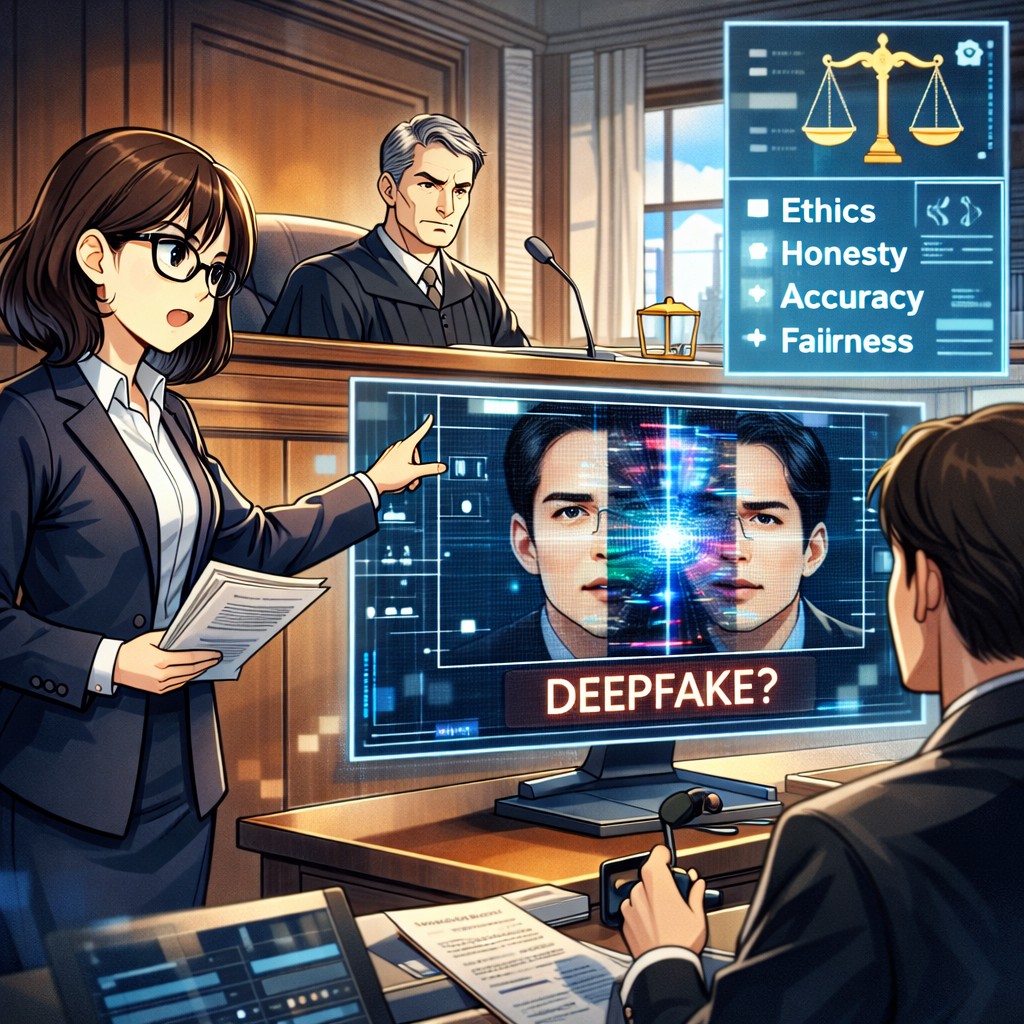
Deepfakes in Litigation: Detect Fake Evidence, Protect Your License!

Deepfakes also implicate Model Rule 3.3 (Candor to the tribunal) and Model Rule 3.4 (Fairness to opposing party and counsel). If you knowingly offer manipulated media, or ignore obvious signs of fabrication in your client’s “evidence,” you risk presenting false material to the court and obstructing access to truthful proof. Courts have made clear that submitting fake digital evidence can justify terminating sanctions, fee shifting, and referrals for disciplinary action.

Model Rule 8.4(c), which prohibits conduct involving dishonesty, fraud, deceit, or misrepresentation, sits in the background of every deepfake decision. A lawyer who helps create, weaponize, or strategically “look away” from deepfake evidence is not just making a discovery mistake; they may be engaging in professional misconduct. Likewise, a lawyer who recklessly accuses an opponent of using deepfakes without factual grounding risks violating duties of candor and professionalism.

Practically, you can start protecting your clients with a few repeatable steps. Ask early in the case what digital media exists, how it was created, and who controlled the devices or accounts.🔍 Build authentication into your discovery plan, including requests for original files, device logs, and platform records that can help confirm provenance. When the stakes justify it, consult a forensic expert rather than relying on “gut feel” about whether a recording “looks real.”

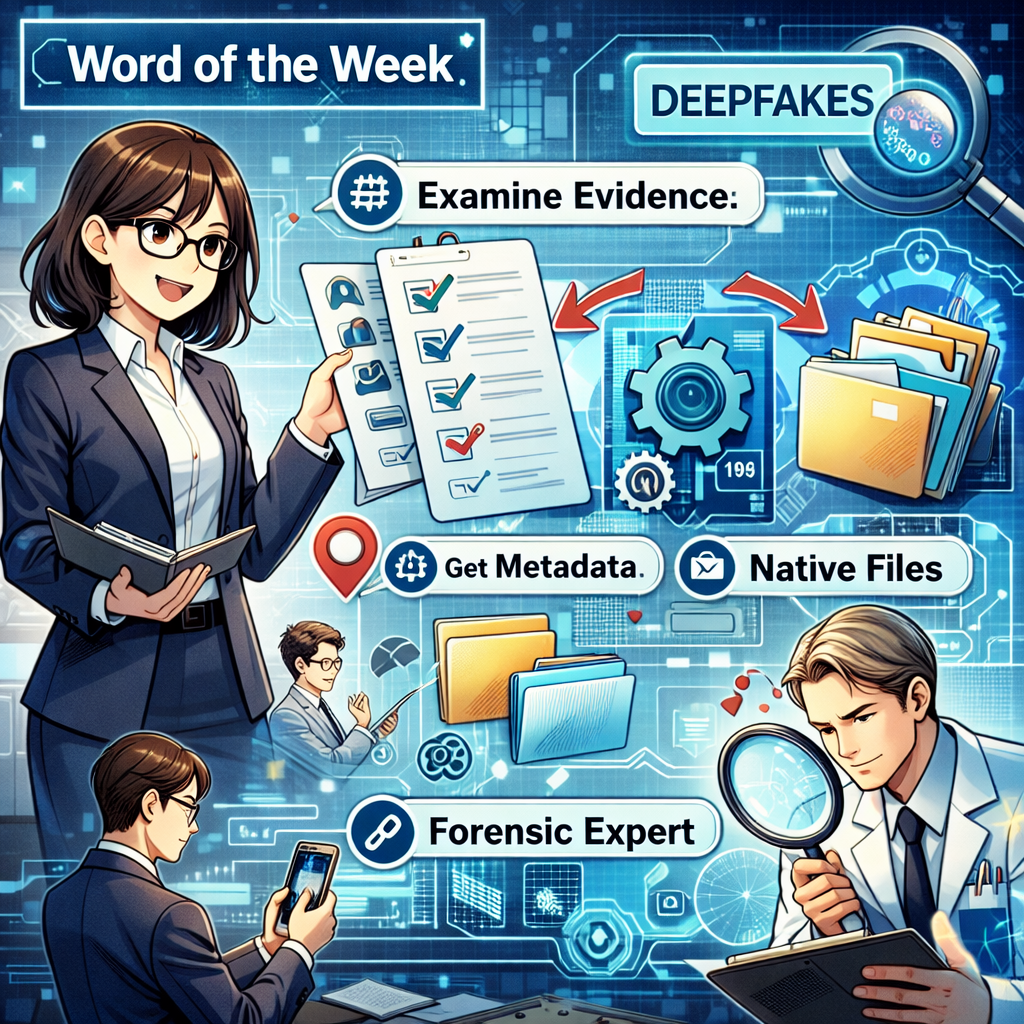
lawyers need to know Deepfakes, Metadata, and ABA Ethics Rules!

Finally, talk to clients about deepfakes before they become a problem. Explain that altering media or using AI to “clean up” evidence is dangerous, even if they believe they are only fixing quality.📲 Remind them that courts are increasingly sophisticated about AI and that discovery misconduct in this area can destroy otherwise strong cases. Treat deepfakes as another routine topic in your litigation checklist, alongside spoliation and privilege, and you will be better prepared for the next “too good to be true” video that lands in your inbox.

MTC: Everyday Tech, Extraordinary Evidence—Again: How Courts Are Punishing Fake Digital and AI Data ⚖️📱

Check your Ai work - AI fraud can meet courtroom consequences.

In last month’s editorial, “Everyday Tech, Extraordinary Evidence,” we walked through how smartphones, dash cams, and wearables turned the Minnesota ICE shooting into a case study in modern evidence practice, from rapid preservation orders to multi‑angle video timelines.📱⚖️ We focused on the positive side: how deliberate intake, early preservation, and basic synchronization tools can turn ordinary devices into case‑winning proof.📹 This follow‑up tackles the other half of the equation—what happens when “evidence” itself is fake, AI‑generated, or simply unverified slop, and how courts are starting to respond with serious sanctions.⚠️

From Everyday Tech to Everyday Scrutiny

The original article urged you to treat phones and wearables as critical evidentiary tools, not afterthoughts: ask about devices at intake, cross‑reference GPS trails, and treat cars as rolling 360‑degree cameras.🚗⌚ We also highlighted the Minnesota Pretti shooting as an example of how rapid, court‑ordered preservation of video and other digital artifacts can stop crucial evidence from “disappearing” before the facts are fully understood.📹 Those core recommendations still stand—if anything, they are more urgent now that generative AI makes it easier to fabricate convincing “evidence” that never happened.🤖

The same tools that helped you build robust, data‑driven reconstructions—synchronized bystander clips, GPS logs, wearables showing movement or inactivity—are now under heightened scrutiny for authenticity.📊 Judges and opposing counsel are no longer satisfied with “the video speaks for itself”; they want to know who created it, how it was stored, whether metadata shows AI editing, and what steps counsel took to verify that the file is what it purports to be.📁

When “Evidence” Is Fake: Sanctions Arrive

We have moved past the hypothetical stage. Courts are now issuing sanctions—sometimes terminating sanctions—when parties present fake or AI‑generated “evidence” or unverified AI research.💥

These are not “techie” footnotes; they are vivid warnings that falsified or unverified digital and AI data can end careers and destroy cases.🚨

ABA Model Rules: The Safety Rails You Ignore at Your Peril

Train to verify—defend truth in the age of AI.

Your original everyday‑tech playbook already fits neatly within ABA Model Rule 1.1 and Comment 8’s duty of technological competence; the new sanctions landscape simply clarifies the stakes.📚

  • Rule 1.1 (Competence): You must understand the benefits and risks of relevant technology, which now clearly includes generative AI and deepfake tools.⚖️ Using AI to draft or “enhance” without checking the output is not a harmless shortcut—it is a competence problem.

  • Rule 1.6 (Confidentiality): Uploading client videos, wearable logs, or sensitive communications to consumer‑grade AI sites can expose them to unknown retention and training practices, risking confidentiality violations.🔐

  • Rule 3.3 (Candor to the Tribunal) and Rule 4.1 (Truthfulness): Presenting AI‑altered video or fake citations as if they were genuine is the very definition of misrepresentation, as the New York and California sanction orders make clear.⚠️ Even negligent failure to verify can be treated harshly once the court’s patience for AI excuses runs out.

  • Rules 5.1–5.3 (Supervision): Supervising lawyers must ensure that associates, law clerks, and vendors understand that AI outputs are starting points, not trustworthy final products, and that fake or manipulated digital evidence will not be tolerated.👥

Bridging Last Month’s Playbook With Today’s AI‑Risk Reality

In Last month’s editorial, we urged three practical habits: ask about devices, move fast on preservation, and build a vendor bench for extraction and authentication.📱⌚🚗 This month, the job is to wrap those habits in explicit AI‑risk controls that lawyers with modest tech skills can realistically follow.🧠

  1. Never treat AI as a silent co‑counsel. If you use AI to draft research, generate timelines, or “enhance” video, you must independently verify every factual assertion and citation, just as you would double‑check a new associate’s memo.📑 “The AI did it” is not a defense; courts have already said so.

  2. Preserve the original, disclose the enhancement. Our earlier advice to keep raw smartphone files and dash‑cam footage now needs one more step: if you use any enhancement (AI or otherwise), label it clearly and be prepared to explain what was done, why, and how you ensured that the content did not change.📹

  3. Use vendors and examiners as authenticity firewalls. Just as we suggested, bringing in digital forensics vendors to extract phone and wearable data, you should now consider them for authenticity challenges as well—especially where the opposing side may have incentives or tools to create deepfakes.🔍 A simple expert declaration that a file shows signs of AI manipulation can be the difference between a credibility battle and a terminating sanction.

  4. Train your team using real sanction orders. Nothing clarifies the risk like reading Judge Castel’s order in the ChatGPT‑citation case or Judge Kolakowski’s deepfake ruling in Mendones.⚖️ Incorporate those cases into short internal trainings and CLEs; they translate abstract “AI ethics” into concrete, courtroom‑tested consequences.

  5. Document your verification steps. For everyday tech evidence, a simple log—what files you received, how you checked metadata, whether you compared against other sources, which AI tools (if any) you used, and what you did to confirm their outputs—can demonstrate good faith if a judge later questions your process.📋

Final Thoughts: Authenticity as a First‑Class Question

be the rock star! know how to use ai responsibly in your work!

In the first editorial, the core message was that everyday devices are quietly turning into your best witnesses.📱⌚ The new baseline is that every such “witness” will be examined for signs of AI contamination, and you will be expected to have an answer when the court asks, “What did you do to make sure this is real?”🔎

Lawyers with limited to moderate tech skills do not need to reverse‑engineer neural networks or master forensic software. Instead, they must combine the practical habits from January’s piece—asking, preserving, synchronizing—with a disciplined refusal to outsource judgment to AI.⚖️ In an era of deepfakes and hallucinated case law, authenticity is no longer a niche evidentiary issue; it is the moral center of digital advocacy.✨

Handled wisely, your everyday tech strategy can still deliver “extraordinary evidence.” Handled carelessly, it can just as quickly produce extraordinary sanctions.🚨

MTC

TSL.P Labs Bonus: Google AI Discussion: Everyday Tech, Extraordinary Evidence: Smartphones, Dash Cams, and Wearables as Silent Witnesses in Your Cases ⚖️📱

Join us for an AI-powered deep dive into the ethical challenges facing legal professionals in the age of generative AI. 🤖 In this Tech-Savvy Lawyer.Page Labs episode, our Google AI hosts unpack our January 26, 2026, editorial and discuss how everyday devices—smartphones, dash cams, wearables, and connected cars—are becoming “silent witnesses” that can make or break your next case, while walking carefully through ABA Model Rules on competence, candor, privacy, and preservation of digital evidence.

In our conversation, we cover the following:

  • 00:00 – Welcome to The Tech-Savvy Lawyer.Page Labs Initiative and this week’s “Everyday Tech, Extraordinary Evidence” AI roundtable 🧪

  • 00:30 – Why classic “surprise witness” courtroom drama is giving way to always-on digital witnesses 🎭

  • 01:15 – Introducing the concept of smartphones, dash cams, and wearables as objective “silent witnesses” in litigation 📱

  • 02:00 – Overview of Michael D.J. Eisenberg’s editorial “Everyday Tech, Extraordinary Evidence” and his mission to bridge tech and courtroom practice 📰[

  • 03:00 – Case study setup: the Alex Preddy shooting in Minneapolis and the clash between official reports and digital evidence ⚖️

  • 04:00 – How bystander smartphone video reframed the legal narrative in the Preddy matter and dismantled “brandished a weapon” claims 🎥

  • 05:00 – From “pressing play” to full video synchronization: building a unified timeline from multiple cameras to audit police reports 🧩06:00 – Using frame-by-frame analysis to test loaded terms like “lunging,” “aggressive resistance,” and “brandishing” against what the pixels actually show 🔍

  • 07:00 – Moving beyond what we see: introducing “quiet evidence” such as GPS logs, telemetry, and sensor data as litigation tools 📡

  • 08:00 – GPS data for location, duration, and speed: turning “he was charging” into a measurable movement profile in protest and road-rage cases 🚶‍♂️🚗

  • 09:00 – Layering GPS from phones with vehicle telematics to create a multi-source reconstruction that is hard to impeach in court 📊

  • 10:00 – Dash cams as 360-degree witnesses: solving blind spots of human perception and single-angle video 🛞

  • 11:00 – Why exterior audio from dash cams—shouts, commands, crowd noise—can be crucial to proving state of mind and mens rea 🔊

  • 12:00 – Wearables as a body-wide sensor network: heart rate, sleep, and step count as quantitative proof of pain, fear, and trauma ⌚

  • 13:00 – Using longitudinal wearable data to support claims of emotional distress or sleep disruption in personal injury and civil-rights litigation 😴

  • 14:00 – Heart-rate spikes and movement logs at the moment of an encounter as corroboration of fear or immobility in use-of-force matters

  • 15:00 – Why none of this evidence exists in your case file unless you know to ask for it at intake 🗂️

  • 16:00 – Updating intake: adding questions about smartwatches, location services, doorbell cameras, dash cams, and connected cars to your client questionnaires 📝

  • 17:00 – Data preservation as an emergency task: deletion cycles, cloud overwrites, and using TROs to stop digital spoliation 🚨

  • 18:00 – Turning raw logs into compelling visuals: maps, synced clips, and timelines that juries can understand without sacrificing accuracy 🗺️

  • 19:00 – Ethics spotlight: ABA Model Rule 1.1 competence and Comment 8—why “I’m not a tech person” is now an ethical problem, not an excuse 📚

  • 20:00 – Candor to the tribunal and the line between strong advocacy and fraud when editing or excerpting digital evidence ⚠️

  • 21:00 – Respecting third-party privacy under Rule 4.4: when you must blur faces, redact audio, or limit collateral exposure of bystanders 🧩

  • 22:00 – Advising clients not to delete texts, videos, or logs and explaining spoliation risks under Rule 3.4 ⚖️

  • 23:00 – The uranium analogy: digital tools as powerful but dangerous if used without adequate ethical “containment” ☢️

  • 24:00 – Philosophical closing: will juries someday trust heart-rate logs more than tears on the witness stand, and what does that mean for human testimony? 🤔

  • 25:00 – Closing remarks and invitation to explore the full editorial, show notes, and resources on The Tech-Savvy Lawyer.Page 🌐

If you enjoyed this episode, please like, comment, subscribe, and share!

MTC: PornHub Breach: Cybersecurity Wake-Up Call for Lawyers

Lawyers are the first line defenders for their clientS’ pii.

It's the start of the New Year, and as good a time as any to remind the legal profession of their cybersecurity obligations! The recent PornHub data exposure reveals critical vulnerabilities every lawyer must address under ABA ethical obligations. Third-party analytics provider Mixpanel suffered a breach compromising user email addresses, triggering targeted sextortion campaigns. This incident illuminates three core security domains for legal professionals while highlighting specific duties under ABA Model Rules 1.1, 1.6, 5.1, 5.3, and Formal Opinion 483.

Understanding the Breach and Its Legal Implications

The PornHub incident demonstrates how failures by third-party vendors can lead to cascading security consequences. When Mixpanel's systems were compromised, attackers gained access to email addresses that now fuel sextortion schemes. Criminals threaten to expose purported adult site usage unless victims pay cryptocurrency ransoms. For law firms, this scenario is not hypothetical—your practice management software, cloud storage providers, and analytics tools present identical vulnerabilities. Each third-party vendor represents a potential entry point for attackers targeting your client data.

ABA Model Rule 1.1: The Foundation of Technology Competence

ABA Model Rule 1.1 requires lawyers to provide competent representation, and Comment 8 explicitly extends this duty to technology: "To maintain the requisite knowledge and skill, a lawyer should keep abreast of changes in the law and its practice, including the benefits and risks associated with relevant technology". This is not a suggestion—it is an ethical mandate. Thirty-one states have adopted this technology competence requirement into their professional conduct rules.

What does this mean practically? You must understand the security implications of every technology tool your firm uses. Before onboarding any platform, conduct due diligence on the vendor's security practices. Require SOC 2 compliance, cyber insurance verification, and detailed security questionnaires. The "reasonable efforts" standard does not demand perfection, but it does require informed decision-making. You cannot delegate technology competence entirely to IT consultants. You must understand enough to ask the right questions and evaluate the answers meaningfully.

ABA Model Rule 1.6: Safeguarding Client Information in Digital Systems

Rule 1.6 establishes your duty of confidentiality, and Comment 18 requires "reasonable efforts to prevent [the inadvertent or unauthorized] access or disclosure” to information relating to the representation of a client. This duty extends beyond privileged communications to all client-related information stored digitally.

The PornHub breach illustrates why this matters. Your firm's email system, document management platform, and client portals contain information criminals actively target. The "reasonable efforts" analysis considers the sensitivity of information, likelihood of disclosure without additional safeguards, cost of safeguards, and difficulty of implementation. For most firms, this means mandatory multi-factor authentication (MFA) on all systems, encryption for data at rest and in transit, and secure file-sharing platforms instead of email attachments.

You must also address third-party vendor access under Rule 1.6. When you grant a case management platform access to client data, you remain ethically responsible for protecting that information. Your engagement letters should specify security expectations, and vendor contracts must include confidentiality obligations and breach notification requirements.

ABA Model Rules 5.1 and 5.3: Supervisory Responsibilities Extend to Technology

lawyers need to stay up to date on the security protocOls for their firm’s software!

Rule 5.1 imposes duties on partners and supervisory lawyers to ensure the firm has measures giving "reasonable assurance that all lawyers in the firm conform to the Rules of Professional Conduct". Rule 5.3 extends this duty to nonlawyer assistants, which courts and ethics opinions have interpreted to include technology vendors and cloud service providers.

If you manage a firm or supervise other lawyers, you must implement technology policies and training programs. This includes security awareness training, password management requirements, and incident reporting procedures. You cannot assume your younger associates understand cybersecurity best practices—they need explicit training and clear policies.

For nonlawyer assistance, you must "make reasonable efforts to ensure that the person's conduct is compatible with the professional obligations of the lawyer". This means vetting your IT providers, requiring them to maintain appropriate security certifications, and ensuring they understand their confidentiality obligations. Your vendor management program is an ethical requirement, not just a business best practice.

ABA Formal Opinion 483: Data Breach Response Requirements

ABA Formal Opinion 483 establishes clear obligations when a data breach occurs. Lawyers have a duty to monitor for breaches, stop and mitigate damage promptly, investigate what occurred, and notify affected clients. This duty arises from Rules 1.1 (competence), 1.6 (confidentiality), and 1.4 (communication).

The Opinion requires you to have a written incident response plan before a breach occurs. Your plan must identify who will coordinate the response, how you will communicate with affected clients (including backup communication methods if email is compromised), and what steps you will take to assess and remediate the breach. You must document what data was accessed, whether malware was used, and whether client information was taken, altered, or destroyed.

Notification to clients is mandatory when a breach involves material client confidential information. The notification must be prompt and include what happened, what information was involved, what you are doing in response, and what clients should do to protect themselves. This duty extends to former clients in many circumstances, as their files may still contain sensitive information subject to state data breach laws.

Three Security Domains: Personal, Practice, and Client Protection

Your Law Practice's Security
Under Rules 5.1 and 5.3, you must implement reasonable security measures throughout your firm. Conduct annual cybersecurity risk assessments. Require MFA on all systems. Implement data minimization principles—only share what vendors absolutely need. Establish incident response protocols before breaches occur. Your supervisory duties require you to ensure that all firm personnel, including non-lawyer staff, understand and follow the firm's security policies.

Client Security Obligations
Rule 1.4 requires you to keep clients reasonably informed, which includes advising them on security matters relevant to their representation. Clients experiencing sextortion need immediate, informed guidance. Preserve all threatening emails with headers intact. Document timestamps and demands. Advise clients never to pay or respond—payment confirms active monitoring and often leads to additional demands. Report incidents to the FBI's IC3 unit and local cybercrime divisions. For family law practitioners, understand that sextortion often targets vulnerable individuals during contentious proceedings. Criminal defense attorneys must recognize these threats as extortion, not embarrassment issues. Your competence under Rule 1.1 requires you to understand these threats well enough to provide effective guidance.

Personal Digital Hygiene
Your personal email account is your digital identity's master key. Enable MFA on all professional and personal accounts. Use unique, complex passwords managed through a password manager. Consider pseudonymous email addresses for sensitive subscriptions. Separate your litigation communications from personal browsing activities. The STOP framework applies: Slow down, Test suspicious contacts, Opt out of high-pressure conversations, and Prove identities through independent channels. Your personal security failures can compromise your professional obligations under Rule 1.6.

Practical Implementation Steps

THere are five Practical Implementation Steps lawyers can do today to get their practice cyber compliant!

First, conduct a technology audit to map every system that stores or accesses client information. Identify all third-party vendors and assess their security practices against industry standards.

Second, implement MFA across all systems immediately—this is one of the most effective and cost-efficient security controls available.

Third, develop written security policies covering password management, device encryption, remote work procedures, and incident response.

Fourth, train all firm personnel on these policies and conduct simulated phishing exercises to test awareness.

Fifth, review and update your engagement letters to include technology provisions and breach notification procedures.

Conclusion

The PornHub breach is not an isolated incident—it is a template for how modern attacks occur through third-party vendors. Your ethical duties under ABA Model Rules require proactive cybersecurity measures, not reactive responses after a breach. Technology competence under Rule 1.1, confidentiality protection under Rule 1.6, supervisory responsibilities under Rules 5.1 and 5.3, and breach response obligations under Formal Opinion 483 together create a comprehensive framework for protecting your practice and your clients. Cybersecurity is no longer an IT issue delegated to consultants; it is a core professional competency that affects your license to practice law. The time to act is before your firm appears in a breach notification headline.

🎙️ Ep. 123: Former Federal Prosecutor Reveals How AI Levels the Playing Field in Criminal Defense 🎙️⚖️🤖

My next guest is Lance Kennedy. Lance is a former federal prosecutor who now operates a tech forward criminal defense practice in Texas. He combines his prosecutorial experience with cutting edge AI and automation tools to compete against well-resourced government teams, helping criminal defense attorneys leverage technology for data analytics, digital forensics, and case management across both federal and state courts.

Join Lance Kennedy and me as we discuss the following three questions and more! 🎯

  1. What are the top three ways criminal defense attorneys can leverage technology to level the playing field against well-resourced prosecution teams? And how has your prosecutorial experience informed your approach to implementing these tools?

  2. With your experience handling both federal cases and state Texas matters, what are the top three technological tools or approaches that criminal defense attorneys should prioritize differently when managing federal cases versus state cases? And how can technology help attorneys navigate the distinct procedural and evidentiary challenges of each system?

  3. What are the top three ethical and practical considerations criminal defense attorneys must address when implementing AI tools in their practice? And how can lawyers ensure they maintain the 'human in the loop' while maximizing AI's benefits for client representation?

In our conversation, we cover the following ⏱️

00:00:00 - Introduction

00:01:00 - Guest's Current Tech Setup

00:05:00 - Top Three Ways Criminal Defense Attorneys Can Leverage Technology

00:08:00 - Federal vs State Technology Tools and Approaches

00:10:00 - Top Three Tech Tools Better Than Government Systems

00:13:00 - Data Privacy and PII Protection in AI Tools

00:14:00 - Ethical and Practical Considerations for AI Implementation

00:16:00 - Where to Find Lance Kennedy

RESOURCES 📚

Connect with Lance Kennedy 🤝

Mentioned in the Episode 💡

Hardware Mentioned in the Conversation 💻

Software & Cloud Services Mentioned in the Conversation ☁️

TRANSCRIPT

Introduction

Michael D.J. Eisenberg: Episode 123 former federal prosecutor reveals how AI levels the playing field in criminal defense.

My next guest is Lance Kennedy. Lance is a former federal prosecutor who now operates a tech forward criminal defense practice in Texas. He combines his prosecutorial experience with cutting edge AI and automation tools to compete against well-resourced government teams, helping criminal defense attorneys leverage technology for data analytics, digital forensics, and case management across both federal and state courts.

All this and more, enjoy.

AD# 1: Consider Giving The Tech-Savvy Lawyer.Page Podcast A Five-Star ⭐️ Review!

Michael D.J. Eisenberg: Have you been enjoying the Tech Savvy lawyer.page podcast? Consider giving us a five star review on Apple Podcasts or wherever you get your podcast feeds.

Lance, welcome to the podcast. Thanks for having me on. I appreciate you being here. [00:01:00] And to get things started, please tell us what your current tech setup is.

Our Guest's Current Tech Setup!

Lance Kennedy: Well, you know, it really has evolved since I started my practice, but currently I do have, a MacBook Pro that I use kind of as my normative computer.

I do use Mac almost exclusively along with a dual sim. iPhone 17 Pro Max. Mm-hmm. Which has two different lines. One for business, one for personal use, so it can kind of consolidate it into one. And then on my actual desk, which I actually use a, standing desk. Really, it makes it nice to be able to adjust along with a gaming chair.

'cause I think that was actually the most comfortable, best. Chair that Define was actually a gaming chair, and its Secret Lab is the company, so Yep. You're looking for a good one. That's, my recommendation. And then of course, extended monitors, because we use so many different systems, so that's more of the hardware setup.

In terms of software though, we, I use of course, Gmail interface for our firm along with our website, which is managed by Scorpion, one of , the ad companies. And then other software that we utilize are matics for our [00:02:00] CRM and my case for our client management portal, along with some other intake software that we utilize.

So I'm gonna ask, which MacBook Pro do you have? That's a good question. So I bought it a little bit, but it's the, you know, it has , the M two chip in it. Okay. 16 gig MacBook Air. So I've had it for about a year and a half and Excellent.

Michael D.J. Eisenberg: Really

Lance Kennedy: well for me.

Michael D.J. Eisenberg: Yep. And of course you have a Apple store.

Business account, right? I do. Yeah, of course. Excellent. And what about your monitors? Do you have a particular brand?

Lance Kennedy: Well, the monitors I currently am using , are, curved Samsung monitors. Mm-hmm. They, and then I have a articulating arm that I have them on just so I can kind of maneuver them.

I still use my, my laptop for most things with the laptop screen, and then use the extended monitors to kind of host documents or platforms that I'm utilizing.

Michael D.J. Eisenberg: For your curve monitors, do you have more than one on your desk? I have two. And so the curve monitor, my understanding of the concept is to kind of keep your eyes on the screen so that you don't lose anything.

You [00:03:00] know, moving from left to right, you know, I've got a three monitor set up, main one and two FLA flanking left and right. They say that having a curve monitor is better because you need, again, you keeping your eyes on the screen. Do you find to have any conflict with that, given that you have two curved monitors?

Lance Kennedy: I don't find any real issue with it. I mean, they're not the most extreme, you know, curved monitors. Some of them are, have a, I dunno if it's concave or convex, but point is, is that they do have a little bit more of an angle to them. Right. These are almost flat, but they do have a slight curve and I really haven't found an issue with, it, it just, it works for me and I kind of have them set up on opposite sides of my deck and

Michael D.J. Eisenberg: that's all that matters.

Your iPhone 17 pro. Is it a pro promax or pro promax? And did you get the orange? I did get

Lance Kennedy: the orange. How do you like that? It's all right, but I have a OtterBox, one of the defender. Mm-hmm. OtterBox cases. And I know some people think the Promax versions are a little large, and then I add a, an additional right kind of bulk to it.

But I figured if I'm gonna have that expensive of a piece of hardware, [00:04:00] I'm gonna get the most rugged. Protective system that I could get, which is the defender.

Michael D.J. Eisenberg: I do the same thing, and I agree with you. I've got some sort of, I have a knockoff case for my iPhone, PROMAX 17, but the nice thing about it is it has a little kickstand built.

It's really nice. So that comes in handy, like when you're, elsewhere, you wanna just prop it up, whether you're in the kitchen, dining room table or at a Starbucks and you only have your phone with you. That's been a little trick that I found out from my last anchor case that I had for my 16.

I'm on the annuals recycle program with Apple, so I get the new phone every year. Well let's get into the questions.

Q?#1:  What are the top three ways criminal defense attorneys can leverage technology to level the playing field against well-resourced prosecution teams?And how has our guest's prosecutorial experience informed your approach to implementing these tools?

Michael D.J. Eisenberg: Question number one. Lance as a former federal prosecutor who now runs a tech forward criminal defense practice. What are the top three ways criminal defense attorneys can leverage technology to level the playing field against well-resourced prosecution teams?

And how has your prosecutorial experience informed your approach to implementing

Lance Kennedy: these tools? Yeah, those are great questions. And so what I would say on the outset, as you know, particularly with the new AI revolution, I [00:05:00] think we're at the onset of it. It still has, you know, a lot to go. We'll see where it takes us.

But really with these technological changes, what I see in at least our market, and I think it's probably in any practice area, it's becoming. More key is you're g you're really gonna have firms that take advantage of the full weight of technology available to them. And those that don't, and the ones that don't, are just gonna be left behind because they're not able, they're not gonna be able to leverage their time and resources in the same way.

Mm-hmm. And it goes to, you know, the different ways we're utilizing technology, I mean, the first would be data analytics and, and case management with all the AI tools available. You know, you have to, of course, make sure you're following bar rules and not sharing PII in places. Right. Utilizing AI either on your own server or running it without sharing data has been a game changer because what you can do is you can organize discovery and spotting consistencies or quickly cross-reference evidence and you know, which is really critical when you're going against prosecution teams with more manpower.

Whenever you, you know, you're up against the federal government or a state government, [00:06:00] they have almost unlimited resources available to them, investigators, analysts, experts and and whatnot. And so having that ability to quickly analyze data and spotting consistencies is key. The next would be digital forensic tools.

You know, by employing such like forensic software or utilizing experts that have access to forensic software, like cell tower data, digital communication or, or different types of video analysis, we've been able to really. Bolster our client's defense. And part of that is my prosecutorial background, particularly with the Department of Justice, , taught me how the government's gonna build a case against you.

Mm-hmm. So we want to utilize the same tools to, to be able to dismantle a case, or at least provide the best defense to our clients. And in our area, of course, is criminal defense. Most of this is gonna be done though through experts that have, you know, either DEC decryption tools or other analytic tools.

And, and starting to leverage again, the same forensic opportunities that the, the state or government has. And then finally, I kind of touched on this with data analytics is really AI and automation. This is, you [00:07:00] know, things such as automated receptionist, document review, legal research. All of these have, we've been able to successfully offload to AI platforms.

And that does free up bandwidth for our team to focus on, strategy rather than just paperwork. So those would be the three ways, categories of the ways we're utilizing technology.

Ad#2: Consider Buying The Tech-Savvy Lawyer a Cup of Coffee ☕️ or Two ☕️☕️!

Michael D.J. Eisenberg: Pardon the interruption. I hope you're enjoying the Tech Heavy Layer page podcast. As much as I enjoy making them consider buying us a cup of coffee or two to help toray some of the production costs, thanks and enjoy.

Q?#2: What are the top three technological tools or approaches that criminal defense attorneys should prioritize differently when managing federal cases versus state cases? And how can technology help attorneys navigate the distinct procedural and evidentiary challenges of each system? system. .

Michael D.J. Eisenberg: So let's move on to question number two. With your experience handling both federal cases and state and Texas state matters, what are the top three technological tools or approaches that criminal defense attorneys should prioritize differently when managing federal cases versus state cases? And how can technology help attorneys navigate the distinct procedural and evidentiary challenges of each

Lance Kennedy: system. Great question. So I'll take these kind of separately because federal and state work are, are somewhat distinct, albeit both [00:08:00] kind of deal with the same subject matter, federal cases and, and the federal system. Of course, you have a, you have a unified online platform, ECF case, sir.

And then of course you have box, which is the, the typical way that evidence is shared with you from, you know, the agency's DOJ, the prosecutor to you as the attorney. And so when it comes to utilizing technology with federal cases, particularly those that are, you know, again, very, have a very large amount of discovery such as white collar cases, wire fraud, things of that nature.

We utilize and leverage, for instance, like co-counsel with Westlaw to be able to, to create trial books and really look at the discovery and help us manage our, the vast amount of discovery. I mean, you know, a small white collar case could have 10, 15,000. Exhibits or files, they're white collar cases that go into hundreds of thousands, if not millions of documents.

So, mm-hmm. You know, quickly being able to utilize AI rather than have to have, you know, an associate comb through those and really look for things has, is a, is definitely something that you should leverage if you're [00:09:00] not doing that already. In terms of, you know, state practice things, you know, 'cause criminal practices and state work, you're dealing with a lot of volume of clients such as, UIs, assaults, drugs, right.

And the like. So utilizing AI and, and other automated technologies for rapid response call tracking, text automation, even like case management software mm-hmm. You know, are very helpful. And that's just because state cases can move pretty quickly. Or involve high client volume. And so you want to be able to utilize automation as much as possible.

So that's what we do as well. And then finally, the technol technological advantage you get by utilizing all these different platforms. You know, like for instance, using dashboards to track procedural deadlines or evidentiary issues really enables you to, to stop things from slipping through the cracks.

Michael D.J. Eisenberg: So my question to you, going back to the first, and, course the second question. As you mentioned that you wanna be using the same platforms as the government does, whether it's state or federal. Have you found, say, maybe three [00:10:00] pieces of tech or software. That you find to be better than what the state or federal government uses.

Lance Kennedy: I mean, you don't have access to their internal systems. Right. And then mm-hmm. In terms of like state, the state, and I'm speaking of particularly the federal system that, the state prosecution, depending on the county, can be fairly antiquated. You know, because we work throughout Texas. My firm Lance Kennedy law, we work through all the major metros of the Texas Triangle, but also rural counties with five, 6,000 people. Right? And so you see a wide discrepancy between tools that they're using. And so what I would say is you may have access, for instance, to like Westlaw, which they're gonna be utilizing. Mm-hmm. In preparation as well. But I would venture to say that if you're a tech savvy defense attorney, like in my position, you're gonna have access to more platforms and be willing to use , more platforms, right.

In the state or feds. And that's just because. You know, they're not gonna go outta their way to purchase a software that's not being provided for them. Right. Whereas, if you're running your own business, you can select [00:11:00] the best software possible to help your clients. Are you willing to share your top three?

Yeah, I would say, I mean, the easiest for me is chat. GPTI do have a pro account that would be top of the list. There's just so many features available with the new agents that they've rolled out. Deep research functionality, copy editing, replying, you know, for instance, making sure that whatever communication is compliant with whatever rules of professional conduct or Texas Code of Criminal procedure, you can really utilize, you know, AI in that capacity to shore up your communication, even if it's merely looking at, what you're typing , or research question or the like.

The next one would be Westlaw, the AI enabled Westlaw with co-counsel. Just because it makes, you know, when I, when I went into law school, we were still learning how to, , and granted it was still, it was antiquated at this point, but they were still making us learn how to pull cases from the volumes in the library.

Right. I've never done that actually, in practice. It was a waste of time, but then of course, we were using Westlaw, but you had to use some of , the connectors and you had to [00:12:00] be really adept at the coding of how you phrased a question. Now, that's not even , a question. You can literally type in any search query and sort it by case, like, how does XJ judge handle this matter?

And it leverages the entire Westlaw database. And then finally, I would say a really easy one to utilize is Grammarly. And so , my team is Grammarly integrated in all of our platforms that enables us to. Make sure that our copy is clear and professional and gets the right tone. And when you're dealing with criminal clients, many times you're gonna get a client screed, you can't even understand it's gonna be, you know, run on sentences , and stream of consciousness.

So to be able to quickly utilize AI to interpret it and then respond with a proper tone , is incredible as well. So I'd say those were my top three.

Michael D.J. Eisenberg: Excellent. Excellent. I appreciate you sharing that, but I'm gonna focus on one, which is gonna bleed into our third question. Talked about chat, GPT Pro. Now, is the information that you put into that system at that tier, is that still protected or are you [00:13:00] worried get to be wary of your PII?

Lance Kennedy: Yeah, that, that's a, that's kind of a real open question right now. So most of the LMS and other platforms are gonna enable you to turn off data sharing. Mm-hmm. And so that should, for, for all intents and purposes, protect your data. But, but really ensure, you know, you're doing what is compliant with your bar.

The next thing is you can actually host your own, you know, server with mm-hmm. AI on it and just kind of keep it in a closed ecosystem. So that's the safer method. But I think probably both of them meet the criter and confidentiality. The issue is you just don't want PII getting onto the internet some way, somehow inadvertently, and I think as long as it's not being shared.

That should prevent that from ever occurring. But again, you know, that's just my opinion and you have to kind of figure it out. I think the issue , is that, you know, state bars are, you know, and I would say advertising committees, there are government workers or individuals mm-hmm. That never run a business. And there's Right, they know impetus for them to move quickly on these types of issues or be sensible or reasonable. And so. [00:14:00] I would just say be a smart practitioner and don't put yourself in any type of harm's way. And for our last question,

Q?#3: What are the top three ethical and practical considerations criminal defense attorneys must address when implementing AI tools in their practice? And how can lawyers ensure they maintain the quote unquote human in the loop while maximizing AI's benefits for client representation?

Michael D.J. Eisenberg: as someone who has worked on both sides of the courtroom and now integrates AI into your defense strategies, what are the top three ethical and practical considerations criminal defense attorneys must address when implementing AI tools in their practice?

And how can lawyers ensure they maintain the quote unquote human in the loop while maximizing AI's benefits for client representation ?

Lance Kennedy: You know, I think this kind of goes to the use of any technology is. When it comes to replacing repetitive tasks, things that really are, I would say, tasks that don't take a true technician or someone with a mm-hmm.

Skill set to do. Those are the ones that need and should be automated and can be automated.

Michael D.J. Eisenberg: Mm-hmm.

Lance Kennedy: As quickly, even things like receptionist. Mm-hmm. You have an AI receptionist. So the point is, is that there are things that generally do have a human like component or interact. Mm-hmm. Can be easily replaced with ai.

However, you know, depending on your competency and where you're [00:15:00] practicing, what type of law. For instance, you know, we're never gonna replace attorneys in the courtroom, at least right. For the way foreseeable future things like hearings or visiting a client in jail. Or making phone calls to family members to, you know, assure them everything's being done.

Those are the tasks that of course we are still gonna have to have a human touch. The more we automate, the more we leverage technology, the more we're utilizing AI to be able to help us do things like research or in something that took us. Five hours we can now do in 30 minutes. Right. We're gonna leverage because that frees up my attorneys to do the things that they're really paid to do, which is, you know, win cases, resolve them favorably for our clients and keep them in the loop.

And, and that's where, technology really is enabling us to

Michael D.J. Eisenberg: succeed.

Have you come across any ethical pitfalls in dealing with ai? Maybe not necessarily with yourself, but you've seen with other colleagues?

Lance Kennedy: No. I mean, what, you know, the question , is like, what would be the ethical grounds here?

It's the, the same rules apply whether guides writing copy for you from mm-hmm. Or [00:16:00] producing a video. Then if you did it on your own, I think as long as the presentation is accurate and doesn't give clients or potential clients the wrong. Opinion of you or your team or your staff. Mm-hmm. You know, then you're in good territory.

So it's a tool, but it doesn't replace ethical behavior or discretion. Gotcha.

Michael D.J. Eisenberg: Well, Lance, I wanna thank you for being here today. Please.

Where You Can Find Our Guest!

Michael D.J. Eisenberg: Where can people find you?

Lance Kennedy: You can find me@lancekennedy.com. It's our firm's website. You can also find me on LinkedIn, TikTok, Instagram, and Facebook. Excellent. Well, Lance,

Michael D.J. Eisenberg: again, thank you for being here.

Absolutely. Thank you.

See You In Two Weeks!

Michael D.J. Eisenberg: Thank you for joining me on this episode of the Tech Savvy Lawyer Page podcast. Our next episode will be posted in about two weeks. If you have any ideas about a future episode, please contact me at Michael DJ at the Tech Savvy lawyer.page. Have a great day and happy [00:17:00] lawyering.