Word of the Week: Deepfakes: How Lawyers Can Spot Fake Digital Evidence and Avoid ABA Model Rule Violations ⚖️

A Tech-Savvy Lawyer needs to be able to spot Deepfakes Before Courtroom Ethics Violations!

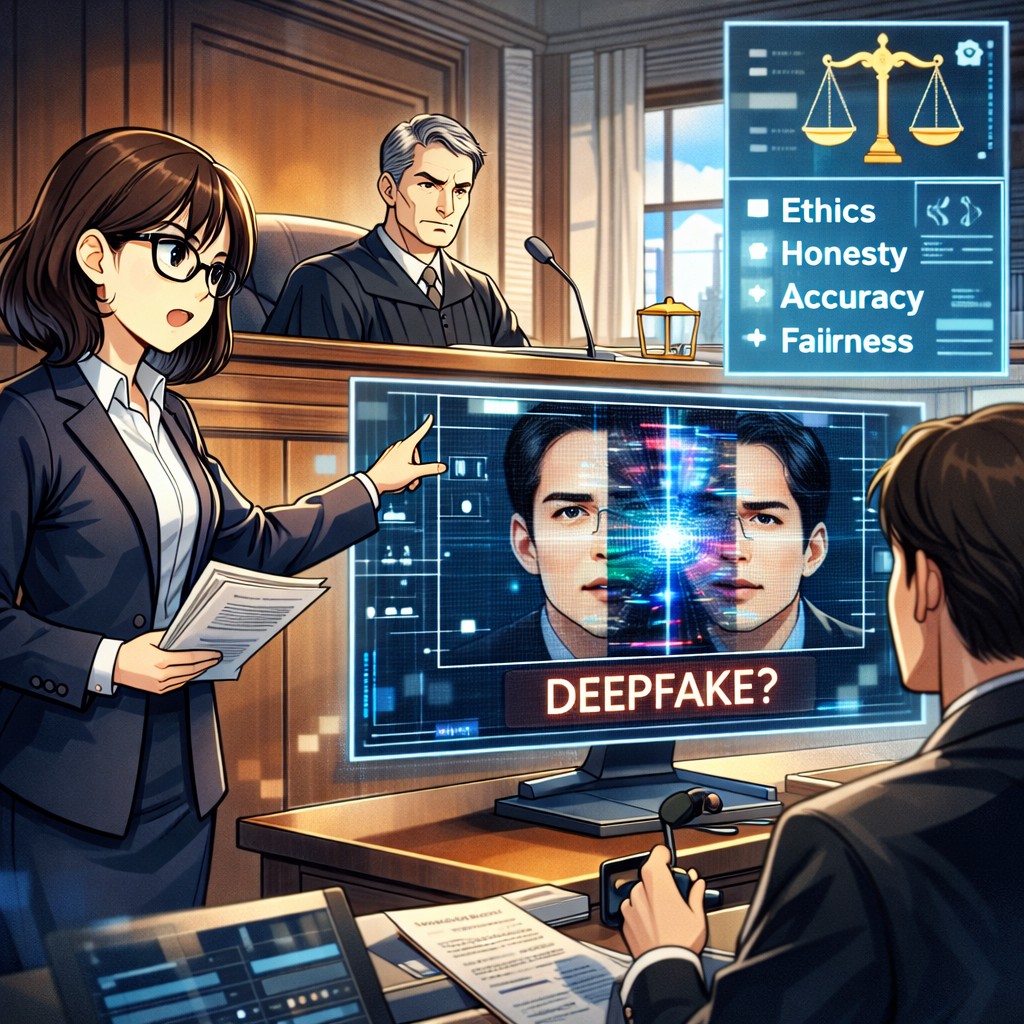
“Deepfakes” are AI‑generated or heavily manipulated audio, video, or images that convincingly depict people saying or doing things that never happened.🧠 They are moving from internet novelty to everyday litigation risk, especially as parties try to slip fabricated “evidence” into the record.📹

Recent cases and commentary show courts will not treat deepfakes as harmless tech problems. Judges have dismissed actions outright and imposed severe sanctions when parties submit AI‑generated or altered media, because such evidence attacks the integrity of the judicial process itself.⚖️ At the same time, courts are wary of lawyers who cry “deepfake” without real support, since baseless challenges can look like gamesmanship rather than genuine concern about authenticity.

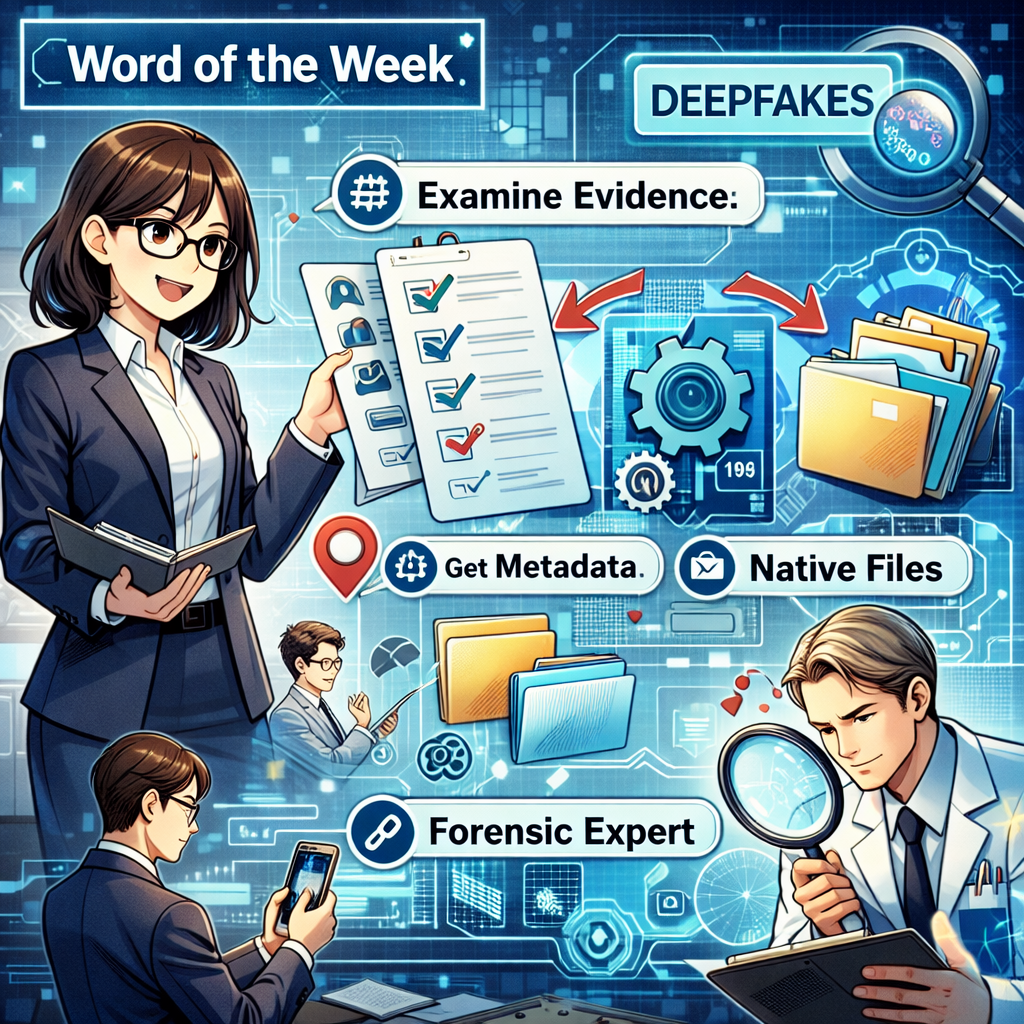
For practicing lawyers, deepfakes are first and foremost a professional responsibility issue. ABA Model Rule 1.1 (Competence) now clearly includes a duty to understand the benefits and risks of relevant technology, which includes generative AI tools that create or detect deepfakes. You do not need to be an engineer, but you should recognize common red flags, know when to request native files or metadata, and understand when to bring in a qualified forensic expert.

Deepfakes in Litigation: Detect Fake Evidence, Protect Your License!

Deepfakes also implicate Model Rule 3.3 (Candor to the tribunal) and Model Rule 3.4 (Fairness to opposing party and counsel). If you knowingly offer manipulated media, or ignore obvious signs of fabrication in your client’s “evidence,” you risk presenting false material to the court and obstructing access to truthful proof. Courts have made clear that submitting fake digital evidence can justify terminating sanctions, fee shifting, and referrals for disciplinary action.

Model Rule 8.4(c), which prohibits conduct involving dishonesty, fraud, deceit, or misrepresentation, sits in the background of every deepfake decision. A lawyer who helps create, weaponize, or strategically “look away” from deepfake evidence is not just making a discovery mistake; they may be engaging in professional misconduct. Likewise, a lawyer who recklessly accuses an opponent of using deepfakes without factual grounding risks violating duties of candor and professionalism.

Practically, you can start protecting your clients with a few repeatable steps. Ask early in the case what digital media exists, how it was created, and who controlled the devices or accounts.🔍 Build authentication into your discovery plan, including requests for original files, device logs, and platform records that can help confirm provenance. When the stakes justify it, consult a forensic expert rather than relying on “gut feel” about whether a recording “looks real.”

lawyers need to know Deepfakes, Metadata, and ABA Ethics Rules!

Finally, talk to clients about deepfakes before they become a problem. Explain that altering media or using AI to “clean up” evidence is dangerous, even if they believe they are only fixing quality.📲 Remind them that courts are increasingly sophisticated about AI and that discovery misconduct in this area can destroy otherwise strong cases. Treat deepfakes as another routine topic in your litigation checklist, alongside spoliation and privilege, and you will be better prepared for the next “too good to be true” video that lands in your inbox.

ILTACON 2025 Opening: Navigating the Legal Tech Treasure Trove ⚓

Get your legal tech plunder at #ILTACON2025

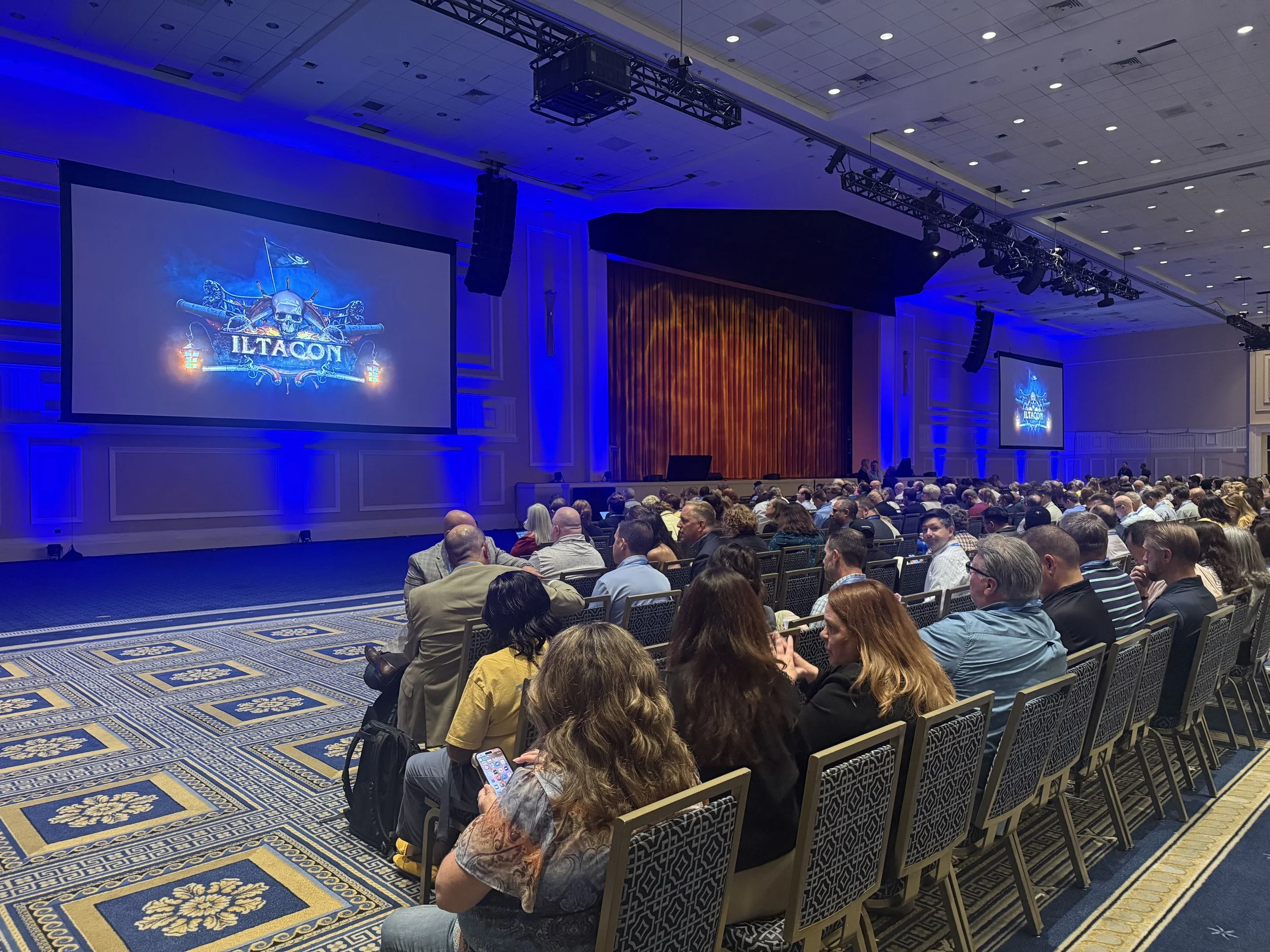
Ahoy, legal tech voyagers! ⛵ ILTACON 2025 has officially set sail at the magnificent Gaylord National Resort & Convention Center in National Harbor, Maryland, and what a spectacular opening it's been. From August 10-14, over 4,000 legal professionals interested in legal technology are charting their course through the most comprehensive bounty of legal tech innovations ever assembled.

This year's pirate theme couldn't be more fitting. Legal professionals have truly become modern-day treasure hunters, seeking out the digital gold that will transform their practices. The opening reception on Monday morning perfectly captured this spirit, with maritime merriment setting the tone for what promises to be an extraordinary week of discovery.

Among the distinguished crew of attendees, we spotted previous podcast guest Stephen Embry, the brilliant mind behind the TechLaw Crossroads blog and former chair of the American Bar Association’s Law Practice Division. His insights on artificial intelligence adoption and legal technology competency continue to guide practitioners navigating the choppy waters of digital transformation. Also making waves is Brett Burney, Vice President of NextPoint Law Group, whose expertise in bridging the chasm between legal and technology frontiers has made him a sought-after guide for firms embracing Discovery solutions.

The exhibit hall, themed as the "Pirate's Bounty," features over 225 vendors displaying their technological treasures. From AI-powered legal research tools to advanced case management systems, the bounty available to legal professionals has never been more abundant. The challenge isn't finding technology—it's selecting the right tools that will genuinely enhance practice efficiency without overwhelming existing workflows.

What makes ILTACON unique is its peer-driven approach to education. Unlike vendor-heavy conferences, ILTACON sessions are crafted by practitioners who have firsthand experience with the challenges facing legal technology professionals. This year's 80+ educational sessions span eight focus areas, ensuring every legal professional finds relevant insights to take back to their firm.

For firms with limited to moderate technology skills, ILTACON provides the perfect environment to learn from peers who have successfully navigated similar challenges. The networking opportunities alone justify the investment, as connections made here often lead to solutions for specific practice challenges.

The pirate theme extends beyond mere decoration—it represents the adventurous spirit required to succeed in today's legal technology landscape. Legal professionals must be willing to explore uncharted territories, test new solutions, and occasionally take calculated risks to discover the innovations that will give their practices a competitive edge.

#ILTACON2025

As we sail through this week of discovery, remember that the real treasure isn't the technology itself—it's the enhanced client service, improved efficiency, and competitive advantages these tools provide when properly implemented.

May fair winds fill your sails as you navigate this legal tech treasure trove! ⚓

#ILTACON2025

My Two Cents: The Intersection of AI and eDiscovery: Embracing Technology without Overriding Human Judgment

To what extent can artificial intelligence truly assist attorneys in the realm of e-discovery? 🧐

In the realm of eDiscovery, the integration of artificial intelligence (AI) has revolutionized the way legal professionals handle vast amounts of data. The benefits of AI in enhancing efficiency and accuracy are undeniable, but it is essential to strike a balance between leveraging technology and the invaluable human judgment required for the final result. In a recent Shout Out! featuring previous podcast guest and past guest host Brett Burney, his discussion shed light on the symbiotic relationship between AI and human expertise in eDiscovery.

The Power of AI in eDiscovery:

AI has emerged as a powerful tool in eDiscovery, allowing legal professionals to tackle complex tasks more efficiently and effectively. With the capability to process and analyze massive volumes of data, AI algorithms can identify patterns, extract relevant information, and predict case outcomes with remarkable speed and accuracy. This technology enables legal teams to save time, reduce costs, and gain valuable insights that would be otherwise challenging to uncover manually.

The Role of Human Judgment:

While AI provides indispensable assistance, it is important to recognize that it is not a substitute for human judgment in the final analysis. Brett emphasizes that its human judgment that should be the final editors.  Human expertise and insight remain irreplaceable when it comes to interpreting the context, understanding nuances, and making critical decisions. Legal professionals possess a unique ability to consider multiple perspectives, exercise discretion, and apply legal reasoning based on their experience and understanding of the case at hand.

The Synergy of AI and Human Expertise:

Artificial intelligence does not replace human judgment when lawyers conduct ediscovery.

By embracing the synergy between AI and human judgment, eDiscovery practitioners can harness the full potential of technology while ensuring a comprehensive and well-rounded approach to legal matters. AI algorithms can help legal teams streamline the initial stages of data processing, categorization, and information retrieval, empowering them to focus their attention on the strategic aspects of case analysis. This collaboration enhances the efficiency of legal workflows and augments the ability of legal professionals to uncover crucial insights buried within extensive data sets.

The Ethical Considerations:

While AI is a powerful ally in eDiscovery, ethical considerations must be at the forefront of its implementation. Transparency and accountability are paramount to ensure fairness, as biases embedded within AI algorithms can potentially impact the results. Legal professionals must exercise caution when relying on AI predictions and should employ critical thinking to validate and interpret AI-generated outputs. Human oversight becomes crucial to identifying and mitigating any biases or errors that may arise during the AI-assisted eDiscovery process.

The Professional Ethical Considerations:

The lawyer responsible for the final discovery deliverable to the opposition will be held legally, e.g., malpractice, and professionally, i.e., responsible to their bar association, accountable.  If you are going to rely on AI for your “eDiscovery” then you need to know its limitations.  MR 1.1[8] Further, you need to somehow address its shortcomings before you hand over your discovery production. Regardless, check your work!

The Future of AI in eDiscovery:

AI and Lawyers can work together to better an ediscovery response!

As technology continues to evolve, the future of AI in eDiscovery holds immense potential. Advancements in machine learning and natural language processing will further refine AI algorithms, enabling even more precise analysis and prediction capabilities. However, the significance of human judgment will persist, as the complex nature of legal cases necessitates the application of legal principles, strategic thinking, and ethical considerations that only humans can provide.

Conclusion:

The integration of AI in eDiscovery has transformed the legal landscape, empowering professionals to navigate through vast amounts of data efficiently and uncover crucial insights. However, it is essential to acknowledge that AI is a powerful tool that complements rather than replaces human judgment. By embracing the synergy between AI and human expertise, legal professionals can capitalize on the advantages of technology while ensuring a comprehensive and nuanced approach to eDiscovery. As the field continues to evolve, the harmonious collaboration between AI and human judgment will shape the future of eDiscovery, delivering improved outcomes and justice in the digital age.     

MTC.

Happy Lawyering!!!