The Tech Savvy Lawyer
  • Tech-Savvy Saturdays
  • *Award Winning Podcast*
  • Appearances
  • Blog
  • Support the Blog!
  • Meet Michael
  • Contact
The Tech Savvy Lawyer
  • Tech-Savvy Saturdays/
  • *Award Winning Podcast*/
  • Appearances/
  • Blog/
  • Support the Blog!/
  • About/
    • Meet Michael
  • Contact/
podcast%2Bappearance%2Bcopy.jpg
The Tech Savvy Lawyer

Helping Lawyers with their Tech Questions

Blog

Helping lawyers with their everyday computer needs.

The Tech Savvy Lawyer
  • Tech-Savvy Saturdays/
  • *Award Winning Podcast*/
  • Appearances/
  • Blog/
  • Support the Blog!/
  • About/
    • Meet Michael
  • Contact/

March 03, 2026

TSL.P EP# 132 (Special Episode): AI, Deepfakes, and Metadata: Guest-Hosting Capital University Law School’s First Law Library Podcast Club with Professor Jennifer Wondracek 🎙️⚖️

March 03, 2026/ The Tech-Savvy Lawyer.Page/ Michael D.J. Eisenberg

🎙️ This week, we have something special for you. Your The Tech-Savvy Lawyer.Page blogger and podcaster, Michael D.J. Eisenberg, was invited back to his alma mater, Capital University Law School, to guest host their very first Podcast Club — a live, recorded podcast conversation featuring real law students, real questions, and real talk. Moderated alongside Professor Wondracek, this is an unscripted, in-the-moment discussion — not a produced studio episode, not a rehearsed explainer — just an honest, practitioner-led conversation about the issues shaping the legal profession today. 🎓 We think that's exactly what makes it worth your time. 🛡️⚖️
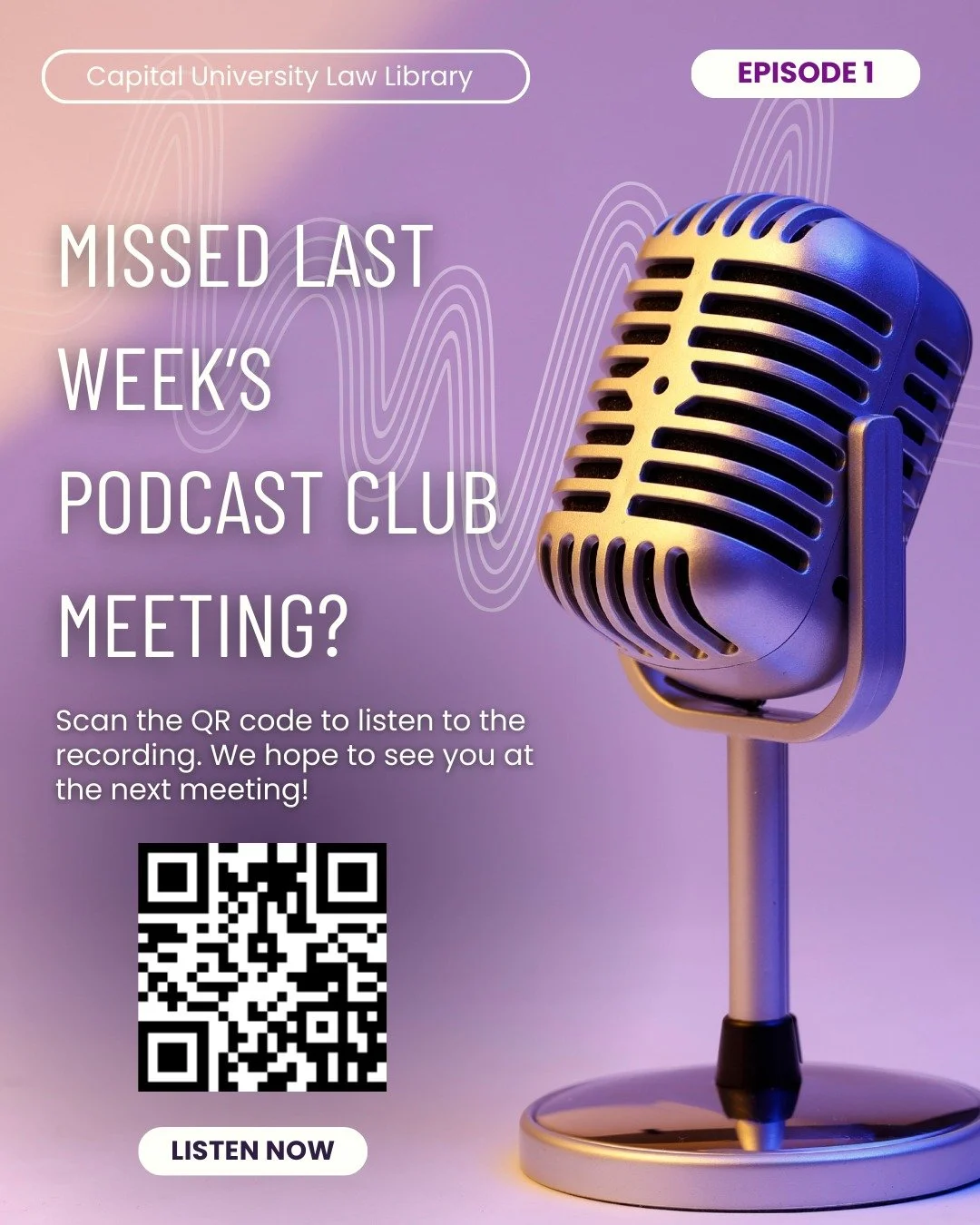
In our conversation, we cover the following:

  • [00:00] 🎬 Welcome & Introductions — Professor Raik introduces Michael D.J. Eisenberg; Michael shares his background representing veterans before the VA and his work at The Tech-Savvy Lawyer.Page, including his Amazon #1 bestselling book The Lawyer's Guide to Podcasting

  • [01:00] 🕵️ What Is a Deepfake? — Defining deepfakes and the real-world Bethesda incident where a fabricated video triggered a police raid and wasted critical law enforcement resources

  • [02:30] ⚖️ Deepfakes in Legal Practice — The serious professional responsibility consequences when attorneys introduce fake or AI-generated evidence into a trial or negotiation — and why "I didn't know" won't always protect you

  • [03:00] 📋 ABA Model Rule 1.1 — Competence & Comment 8 — Why technology competence is an ethical obligation, not optional — and what "competent use of technology" actually means for your daily practice

  • [05:00] 📶 Public Wi-Fi & VPN Security — The real dangers of using public Wi-Fi at airports, coffee shops, and on planes without a VPN, especially when accessing client portals, trust accounts, or confidential client communications

  • [05:45] 🔐 VPN Recommendations — NordVPN vs. ExpressVPN; why the right VPN matters for protecting your clients and your license

  • [07:00] 🔍 How to Detect Deepfakes in Evidence — Reviewing file metadata, spotting visual anomalies, and the Mendones v. Cushman & Wakefield case (Cal. Super. Ct. 2025) where Judge Victoria Kolakowski spotted deepfake videos — and imposed terminating sanctions

  • [08:30] 📜 ABA Model Rule 3.3 — Candor to the Tribunal — Your duty of honesty to the court and the compounding risks of unknowingly submitting falsified AI-generated evidence

  • [09:30] 🧑‍⚖️ ABA Model Rule 8.4 — Dishonesty, Fraud, Deceit & Misrepresentation — How these rules can stack with Rule 3.3 to multiply your ethical exposure

  • [10:30] 🖼️ Live Demo: Accessing File Metadata — A real-time screen share showing how to right-click and access image properties, including GPS coordinates, camera settings, file timestamps, and modification history — using a photo taken right at Capital University Law School

  • [14:00] 🗂️ Metadata Scrubbing — Why some law firms strip metadata from outgoing emails and documents, and why "scrubbed" evidence should raise red flags during discovery

  • [17:30] 🛡️ Five Basic Safeguards for Legal Professionals in the AI Era:

    • Invest in ongoing education — CLEs, podcasts, blogs

    • Know and follow your office's technology protocols

    • Be transparent with clients about your use of AI — in your engagement letters and contracts

    • Update your engagement letters and retainer agreements now

    • Stay alert to the rapidly changing AI landscape — ignoring it is not an option

  • [20:00] 💬 Student Q&A — George's question: Does the ethical obligation to review metadata create a resource gap between large firms and solo practitioners? What AI tools can help level the playing field?

  • [22:00] ⚠️ United States v. Heppner (S.D.N.Y. 2026) — The landmark federal ruling that AI-generated documents used with consumer AI tools are NOT protected by attorney-client privilege or work product doctrine — and why your choice of AI platform is now an ethics decision

  • [23:30] 🔒 Consumer AI vs. Secure Legal AI Platforms — The critical difference between free and low-cost consumer AI accounts and enterprise-grade legal AI tools with zero-data-retention contracts

  • [25:30] 📚 LexisNexis Protégé & Secure AI — How LexisNexis's zero-retention, end-to-end encrypted AI platform — including access to ChatGPT and Claude — lets attorneys use AI ethically without jeopardizing client data

  • [27:00] 💾 Prompt Discoverability — Why your AI prompts may be subpoenaed in malpractice claims or bar investigations, and why documenting and downloading your AI usage history matters

  • [28:30] 📁 Cassia's Question — Documenting AI research and adopting a random sampling strategy for metadata review: practical approaches to demonstrating "reasonable" due diligence

  • [30:00] 🗃️ eDiscovery Tools for Metadata at Scale — Relativity, Disco, and how these platforms help even resource-limited firms surface metadata anomalies across large document sets

  • [33:00] 📰 Current Awareness Resources — Where to stay current on legal tech: law.com, bar association newsletters, The Tech-Savvy Lawyer.Page blog and podcast, CLEs, and legal listservs

  • [33:30] 🚨 Hallucinated AI Citations & Real Consequences — Mata v. Avianca, Wadsworth v. Walmart (Morgan & Morgan pro hac vice revoked), the Chicago firm dissolution case — and why citation-checking is now a non-negotiable litigation skill

  • [37:00] 🎲 Book Giveaway — Rolling the virtual dice; congratulations to the winner of Michael's book, The Lawyer's Guide to Podcasting!

  • [38:00] 🗓️ Upcoming Events — Michael joins the Capital Law Spring Summit/Bootcamp in April; dinner with students at The Red Door Tavern

Resources

Connect with Professor Jennifer Wondracek:

  • E-Mail: jwondracek@law.capital.edu 

  • LinkedIn: https://www.linkedin.com/in/jennifer-wondracek

📌 Mentioned in the Episode

🏛️ ABA Model Rules

  • ABA Model Rule 1.1 (Competence), Comment 8 (Technology Competence): https://www.americanbar.org/groups/professional_responsibility/publications/model_rules_of_professional_conduct/rule_1_1_competence/

  • ABA Model Rule 3.3 — Candor to the Tribunal: https://www.americanbar.org/groups/professional_responsibility/publications/model_rules_of_professional_conduct/rule_3_3_candor_toward_the_tribunal/

  • ABA Model Rule 8.4 — Misconduct (Dishonesty, Fraud, Deceit, Misrepresentation): https://www.americanbar.org/groups/professional_responsibility/publications/model_rules_of_professional_conduct/rule_8_4_misconduct/

⚖️ Case Law

  • Mata v. Avianca, Inc. — The landmark hallucinated AI citation case (S.D.N.Y. 2023): https://www.courtlistener.com/docket/17271435/mata-v-avianca-inc/

  • Mendones v. Cushman & Wakefield, Inc., No. 23CV028772 (Cal. Super. Ct. Alameda Cnty., Sept. 9, 2025) — Deepfake terminating sanctions: https://ediscoverytoday.com/2025/09/25/deepfake-videos-and-images-lead-to-terminating-sanctions-ediscovery-case-law/

  • United States v. Heppner, 25-cr-00503-JSR (S.D.N.Y. Feb. 10, 2026) — AI documents not protected by privilege: https://www.insideprivacy.com/artificial-intelligence/ai-and-legal-privilege-key-takeaways-from-us-v-heppner/

  • Wadsworth v. Walmart — Morgan & Morgan pro hac vice revocation over AI citations: (search Westlaw/Lexis for current citation)

🤔 Other

  • 🎓 Capital University Law School — Law Library Podcast Club: https://law-capital.libguides.com/c.php?g=1168974&p=11364939

  • 📰 Law.com — Legal news and current awareness: https://www.law.com

  • 🏛️ Ohio State Bar Association — Ethics Hotline: https://www.ohiobar.org

💻 Hardware Mentioned in the Conversation

  • 📱 Google Pixel 3 (used to demonstrate photo metadata and GPS geotagging in the live demo): https://store.google.com/us/category/phones

☁️ Software & Cloud Services Mentioned in the Conversation

  • 🤖 ChatGPT (OpenAI) — Consumer & Teams AI platforms: https://openai.com/chatgpt

  • 🤖 ChatGPT Teams — Enhanced security tier: https://openai.com/chatgpt/team

  • 🤖 Claude (Anthropic) — AI assistant: https://claude.ai

  • 📊 CNET — VPN rankings: https://www.cnet.com/tech/services-and-software/best-vpn/

  • 🗃️ CS Disco — AI-powered eDiscovery platform: https://www.csdisco.com

  • 🔐 ExpressVPN — VPN service (#1 on CNET): https://www.expressvpn.com

  • ⚖️ LexisNexis Protégé — Legal AI platform with zero-retention, encrypted access to ChatGPT and Claude: https://www.lexisnexis.com/en-us/products/lexis-plus-ai.page 

  • 🖥️ macOS Get Info & File Tags — Native macOS metadata tool: https://support.apple.com/guide/mac-help 

  • 🖥️ Microsoft Windows File Properties (right-click → Properties → Details) — Native OS metadata viewer: https://support.microsoft.com/en-us/windows

  • 🔐 NordVPN — VPN service (#1 on Tom's Guide): https://nordvpn.com

  • 🤖 Perplexity AI — AI research assistant: https://www.perplexity.ai

  • 🗃️ Relativity — eDiscovery platform with metadata analysis: https://www.relativity.com

  • 📊 Tom's Guide — VPN rankings: https://www.tomsguide.com/best-picks/best-vpn

  • ⚖️ Westlaw — Legal AI research vault: https://legal.thomsonreuters.com/en/products/westlaw
March 03, 2026/ The Tech-Savvy Lawyer.Page/ Michael D.J. Eisenberg/ Comment
Podcasts
Tags (copy and paste directly into Squarespace tags field): legal technology, AI ethics, deepfakes in court, attorney ethics, ABA Model Rules, Rule 1.1 competence, generative AI law, legal AI tools, attorney-client privilege, US v Heppner, Mendones v Cushman Wakefield, lawyer technology competence, VPN for lawyers, metadata evidence, eDiscovery, legal malpractice AI, hallucinated citations, ChatGPT law, LexisNexis AI, Tech-Savvy Lawyer

Michael D.J. Eisenberg

February 13, 2026

TSL.P Labs 🧪: Everyday Tech, Extraordinary Sanctions: How Courts Are Cracking Down on Fake AI Evidence in 2026 ⚖️🤖

February 13, 2026/ The Tech-Savvy Lawyer.Page/ Michael D.J. Eisenberg

Everyday devices can capture extraordinary evidence, but the same tools can also manufacture convincing fakes. 🎥⚖️ In this episode, we unpack our February 9, 2026, editorial on how courts are punishing fake digital and AI-generated evidence, then translate the risk into practical guidance for lawyers and legal teams.

You’ll hear why judges are treating authenticity as a frontline issue, what ethical duties get triggered when AI touches evidence or briefing, and how a simple “authenticity playbook” can help you avoid career-ending mistakes. ✅

In our conversation, we cover the following

  • 00:00:00 – Preview: From digital discovery to digital deception, and the question of what happens when your “star witness” is actually a hallucination or deepfake 🚨

  • 00:00:20 – Introducing the editorial “Everyday Tech, Extraordinary Evidence Again: How Courts Are Punishing Fake Digital and AI Data.” 📄

  • 00:00:40 – Welcome to the Tech-Savvy Lawyer.Page Labs Initiative and this AI Deep Dive Roundtable 🎙️

  • 00:01:00 – Framing the episode: flipping last month’s optimism about smartphones, dash cams, and wearables as case-winning “silent witnesses” to their dark mirror—AI-fabricated evidence 🌗

  • 00:01:30 – How everyday devices and AI tools can both supercharge litigation strategy and become ethical landmines under the ABA Model Rules ⚖️

  • 00:02:00 – Panel discussion opens: revisiting last month’s “Everyday Tech, Extraordinary Evidence” AI bonus and the optimism around smartphone, smartwatch, and dash cam data as unbiased proof 📱⌚🚗

  • 00:02:30 – Remembering cases like the Minnesota shooting and why these devices were framed as “ultimate witnesses” if the data is preserved quickly enough 🕒

  • 00:03:00 – The pivot: same tools, new threats—moving from digital discovery to digital deception as deepfakes and hallucinations enter the evidentiary record 🤖

  • 00:03:30 – Setting the “mission” for the episode: examining how courts are reacting to AI-generated “slop” and deepfakes, with an increasingly aggressive posture toward sanctions 💣

  • 00:04:00 – Why courts are on high alert: the “democratization of deception,” falling costs of convincing video fakes, and the collapse of the old presumption that “pictures don’t lie” 🎬

  • 00:04:30 – Everyday scrutiny: judges now start with “Where did this come from?” and demand details on who created the file, how it was handled, and what the metadata shows 🔍

  • 00:05:00 – Metadata explained as the “data about the data”—timestamps, software history, edit traces—and how it reveals possible AI manipulation 🧬

  • 00:06:00 – Entering the “sanction phase”: why we are beyond warnings and into real penalties for mishandling or fabricating digital and AI evidence 🚫

  • 00:06:30 – Horror Story #1 (Mendon v. Cushman & Wakefield, Cal. Super. Ct. 2025): plaintiffs submit videos, photos, and screenshots later determined to be deepfakes created or altered with generative AI 🧨

  • 00:07:00 – Judge Victoria Kakowski’s response: finding that the deepfakes undermined the integrity of judicial proceedings and imposing terminating sanctions—“death penalty” for the lawsuit ⚖️

  • 00:07:30 – How a single deepfake “poisons the well,” destroying the court’s trust in all of a party’s submissions and forfeiting their right to the court’s time 💥

  • 00:08:00 – Horror Story #2 (S.D.N.Y. 2023): the New York “hallucinating lawyer” case where six imaginary cases generated by ChatGPT were filed without verification 📚

  • 00:08:30 – Rule 11 sanctions and humiliation: Judge Castel’s order, monetary penalty, and the requirement to send apology letters to real judges whose names were misused ✉️

  • 00:09:00 – California follow-on: appellate lawyer Amir Mustaf files an appeal brief with 21 fake citations, triggering a 10,000-dollar sanction and a finding that he did not read or verify his own filing 💸

  • 00:09:30 – Courts’ reasoning: outsourcing your job to an AI tool is not just being wrong—it is wasting judicial resources and taxpayer money 🧾

  • 00:10:00 – Do we need new laws? Why Michael argues that existing ABA Model Rules already provide the safety rails; the task is to apply them to AI and digital evidence, not to reinvent them 🧩

  • 00:10:20 – Rule 1.1 (competence): why “I’m not a tech person” is no longer a viable excuse if you use AI to enhance video or draft briefs without understanding or verifying the output 🧠

  • 00:11:00 – Rule 1.6 (confidentiality): the ethical minefield of uploading client dash cam video or wearable medical data to consumer-grade AI tools and risking privilege leakage ☁️

  • 00:11:30 – Training risk: how client data can end up in model training sets and why “quick AI summaries” can inadvertently expose secrets 🔐

  • 00:12:00 – Rules 3.3 and 4.1 (candor and truthfulness): presenting AI-altered media as original or failing to verify AI output can now be treated as misrepresentation 🤥

  • 00:12:30 – Rules 5.1–5.3 (supervision): why partners and supervising lawyers remain on the hook for juniors, staff, and vendors who misuse AI—even if they didn’t personally type the prompts 🧑‍💼

  • 00:13:00 – Authenticity Playbook, Step 1: mindset shift—never treat AI as a “silent co-counsel”; instead, treat it like a very eager, very inexperienced, slightly drunk intern who always needs checking 🍷🤖

  • 00:13:30 – Authenticity Playbook, Step 2: preserve the original and disclose any AI enhancement; build a clean chain of custody while staying transparent about edits 🎞️

  • 00:14:00 – Authenticity Playbook, Step 3: using forensic vendors as authenticity firewalls—experts who can certify that metadata and visual cues show no AI manipulation 🛡️

  • 00:14:30 – Authenticity Playbook, Step 4: “train with fear” by showing your team real orders, sanctions, and public shaming rather than relying on abstract ethics lectures ⚠️

  • 00:15:00 – Authenticity Playbook, Step 5: documenting verification steps—logging files, tools, and checks so you can demonstrate good faith if a judge questions your evidence 📝

  • 00:16:00 – Bigger picture: the era of easy, unchallenged digital evidence is over; mishandled tech can now produce “extraordinary sanctions” instead of extraordinary evidence 🧭

  • 00:16:30 – Authenticity as “the moral center of digital advocacy”: if you cannot vouch for your digital evidence, you are failing in your role as an advocate 🏛️

  • 00:17:00 – Future risk: as deepfakes become perfect and nearly impossible to detect with the naked eye, forensic expertise may become a prerequisite for trusting any digital evidence 🔬

  • 00:17:30 – “Does truth get a price tag?”—whether justice becomes a luxury product if only wealthy parties can afford authenticity firewalls and expert validation 💼

  • 00:18:00 – Closing reflections: fake evidence, real consequences, and the call to verify sources and check metadata before you file ✅

  • 00:18:30 – Closing: invitation to visit Tech-Savvy Lawyer.Page for the full editorial, resources, and to like, subscribe, and share with colleagues who need to stay ahead of legal tech innovation 🌐

Resources

Cases

  • In Mendones v. Cushman & Wakefield, Inc. (Cal. Super. Ct. Alameda County, 2025), plaintiffs submitted multiple videos, photos, and screenshots that the court determined were deepfakes or altered with generative AI.📹 Judge Victoria Kolakowski found intentional submission of false testimony and imposed terminating sanctions, dismissing the case outright and emphasizing that deepfake evidence “fundamentally undermines the integrity of judicial proceedings.”⚖️

  • In New York, two lawyers became infamous in 2023 after filing a brief containing six imaginary cases generated by ChatGPT; Judge P. Kevin Castel sanctioned them under Rule 11 for abandoning their responsibilities and failing to verify the authorities they cited.📑 They were ordered to pay a monetary penalty and to notify the real judges whose names had been falsely invoked, a reputational hit that far exceeded the dollar amount.💸

  • A California appellate lawyer, Amir Mostafavi, was later fined $10,000 for filing an appeal with twenty‑one fake case citations generated by ChatGPT.💻 The court stressed that he had not read or verified the AI‑generated text, and treated that omission as a violation of court rules and a waste of judicial resources and taxpayer money.⚠️ 

ABA Model Rules

  • Rule 1.1 (Competence): You must understand the benefits and risks of relevant technology, which now clearly includes generative AI and deepfake tools.⚖️ Using AI to draft or “enhance” without checking the output is not a harmless shortcut—it is a competence problem.

    • Comment 8’s duty of technological competence; the new sanctions landscape simply clarifies the stakes.📚

  • Rule 1.6 (Confidentiality): Uploading client videos, wearable logs, or sensitive communications to consumer‑grade AI sites can expose them to unknown retention and training practices, risking confidentiality violations.🔐

  • Rule 3.3 (Candor to the Tribunal) and Rule 4.1 (Truthfulness): Presenting AI‑altered video or fake citations as if they were genuine is the very definition of misrepresentation, as the New York and California sanction orders make clear.⚠️ Even negligent failure to verify can be treated harshly once the court’s patience for AI excuses runs out.

  • Rules 5.1–5.3 (Supervision): Supervising lawyers must ensure that associates, law clerks, and vendors understand that AI outputs are starting points, not trustworthy final products, and that fake or manipulated digital evidence will not be tolerated.👥

February 13, 2026/ The Tech-Savvy Lawyer.Page/ Michael D.J. Eisenberg/ Comment
Labs, Podcasts
legal technology, AI in law, generative AI, deepfakes, digital evidence, eDiscovery, litigation practice, legal ethics, professional responsibility, ABA Model Rules, attorney competence, confidentiality, attorney-client privilege, candor to the tribunal, Rule 11 sanctions, hallucinated citations, forensic experts, metadata, chain of custody, law practice management

Michael D.J. Eisenberg

  • Tech-Savvy Saturdays/
  • *Award Winning Podcast*/
  • Appearances/
  • Blog/
  • Support the Blog!/
  • About/
    • Meet Michael
  • Contact/

The Tech Savvy Lawyer

Like what I'm doing?
Buy Me A Coffee
  • Announcement
  • Appearances
  • Be On the Look Out (BOLO)
  • Editorial
  • Home Office
  • How to . . .
  • Humor
  • Podcasts
  • Shout Out!
  • Word of the Week!

Subscribe

Sign up with your email address to receive news and updates.

We respect your privacy.

Thank you!

MICHAEL D.J. EISENBERG IS A WASHINGTON, DC LEGAL PROFESSIONAL WHO LOVES HIS TECH. 

I've spent decades helping lawyers—young and old—tackle their tech challenges. Now, I’m bringing that knowledge to a broader audience with this blog. My posts are inspired by real questions I’ve been asked and the trends shaping the future.

Whether you're a tech novice or a pro, you'll find practical insights here to streamline your legal practice and improve your daily life. Let’s make technology work for you, not against you. 😀

Disclaimer

The Tech‑Savvy Lawyer.Page blog and podcast are for informational and educational purposes only. The content reflects the insights and opinions of a legal professional with extensive experience in law and technology. Nothing published on this site or shared through the podcast should be construed as legal advice, nor does it create any attorney‑client relationship.

Readers and listeners should consult a licensed attorney for legal advice tailored to their specific circumstances. References to software, services, or products are provided for discussion purposes only and do not constitute endorsements, guarantees, or warranties.

Disclosure

As required by the IRS and FTC, please note that this blog and podcast may include affiliate links. The Tech‑Savvy Lawyer.Page may earn a commission from qualifying purchases or referrals, at no additional cost to you.