
TSL.P Labs 🧪: Everyday Tech, Extraordinary Sanctions: How Courts Are Cracking Down on Fake AI Evidence in 2026 ⚖️🤖
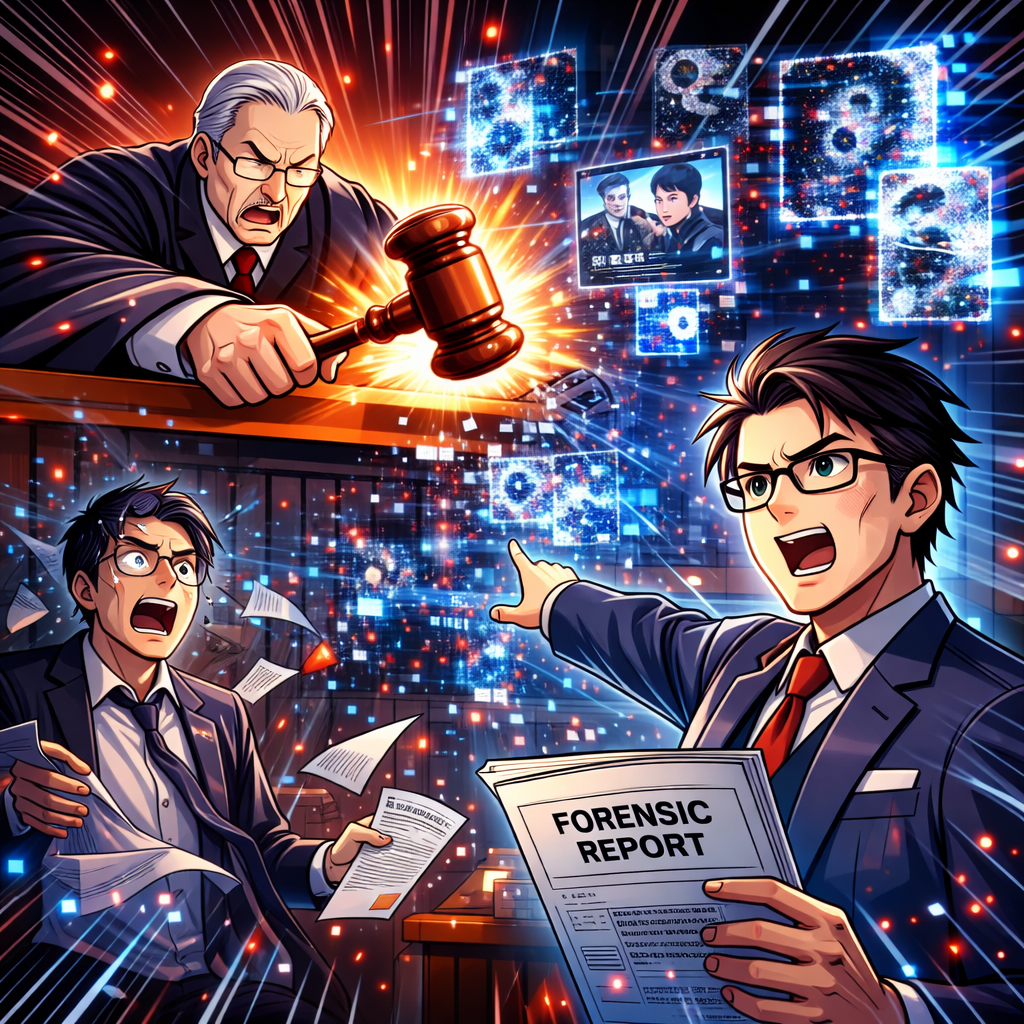
/Everyday devices can capture extraordinary evidence, but the same tools can also manufacture convincing fakes. 🎥⚖️ In this episode, we unpack our February 9, 2026, editorial on how courts are punishing fake digital and AI-generated evidence, then translate the risk into practical guidance for lawyers and legal teams.
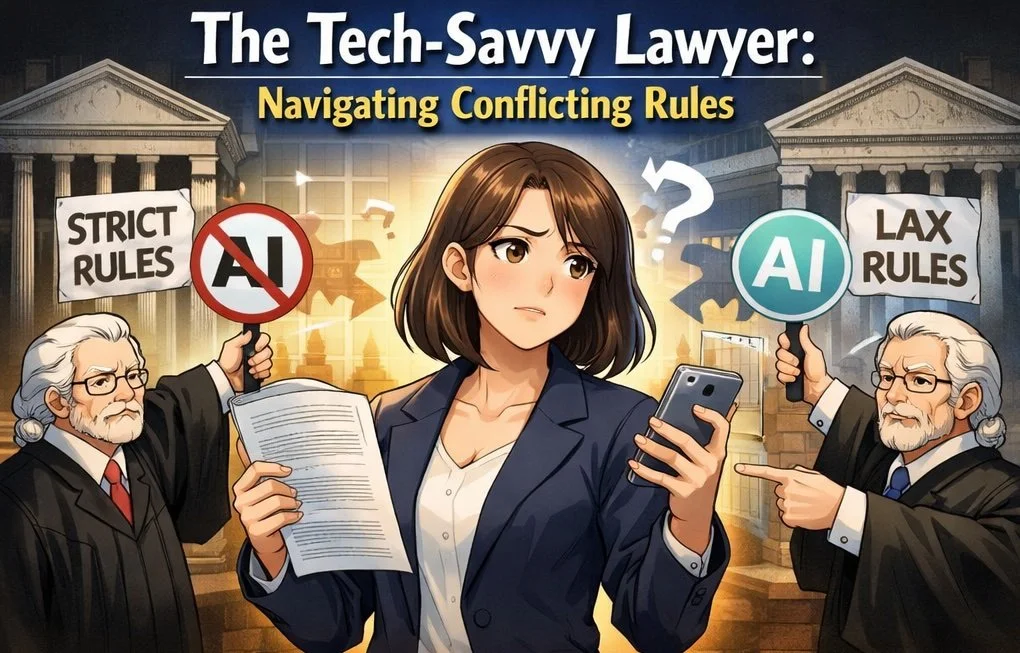
You’ll hear why judges are treating authenticity as a frontline issue, what ethical duties get triggered when AI touches evidence or briefing, and how a simple “authenticity playbook” can help you avoid career-ending mistakes. ✅
In our conversation, we cover the following
00:00:00 – Preview: From digital discovery to digital deception, and the question of what happens when your “star witness” is actually a hallucination or deepfake 🚨
00:00:20 – Introducing the editorial “Everyday Tech, Extraordinary Evidence Again: How Courts Are Punishing Fake Digital and AI Data.” 📄
00:00:40 – Welcome to the Tech-Savvy Lawyer.Page Labs Initiative and this AI Deep Dive Roundtable 🎙️
00:01:00 – Framing the episode: flipping last month’s optimism about smartphones, dash cams, and wearables as case-winning “silent witnesses” to their dark mirror—AI-fabricated evidence 🌗
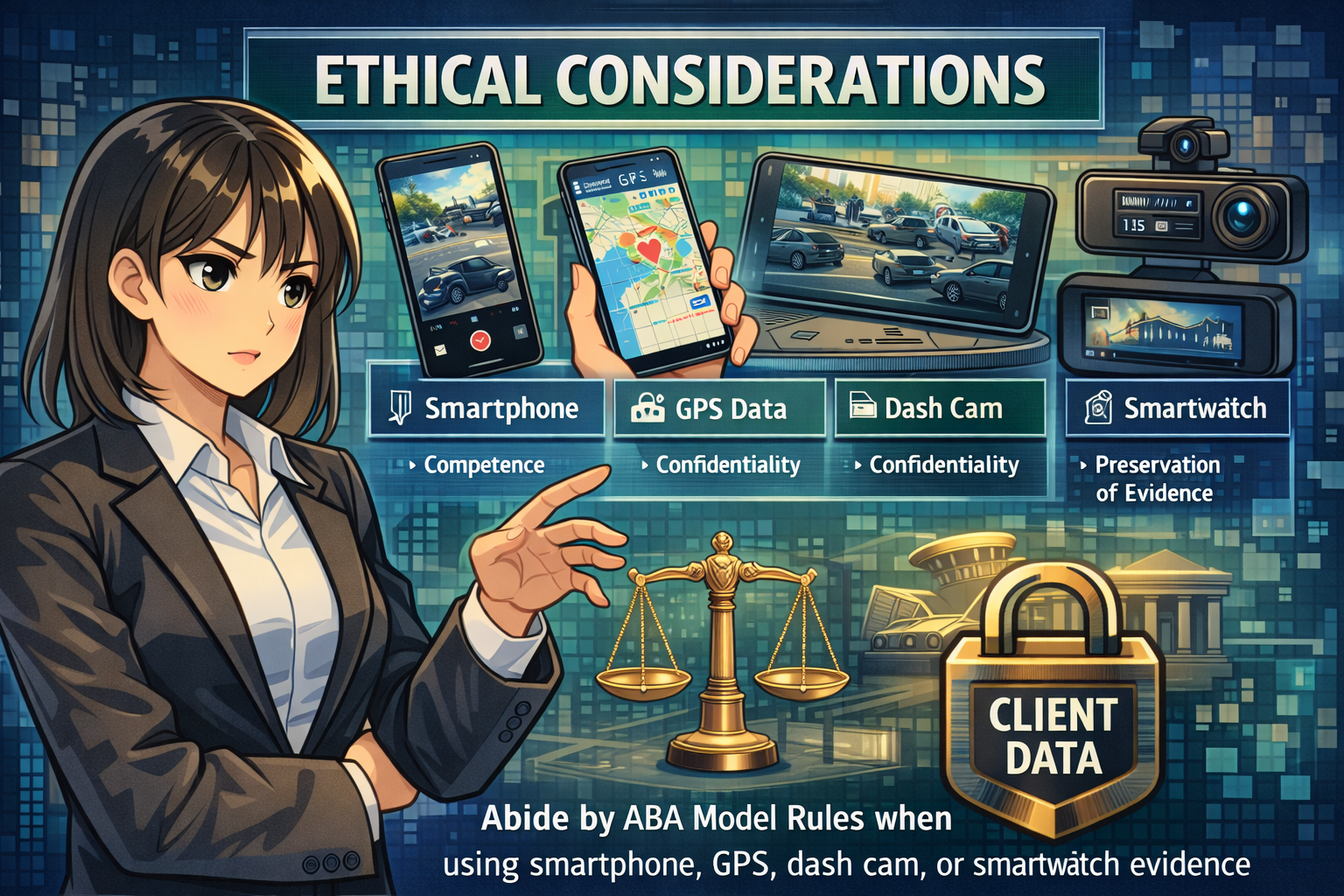
00:01:30 – How everyday devices and AI tools can both supercharge litigation strategy and become ethical landmines under the ABA Model Rules ⚖️
00:02:00 – Panel discussion opens: revisiting last month’s “Everyday Tech, Extraordinary Evidence” AI bonus and the optimism around smartphone, smartwatch, and dash cam data as unbiased proof 📱⌚🚗
00:02:30 – Remembering cases like the Minnesota shooting and why these devices were framed as “ultimate witnesses” if the data is preserved quickly enough 🕒
00:03:00 – The pivot: same tools, new threats—moving from digital discovery to digital deception as deepfakes and hallucinations enter the evidentiary record 🤖
00:03:30 – Setting the “mission” for the episode: examining how courts are reacting to AI-generated “slop” and deepfakes, with an increasingly aggressive posture toward sanctions 💣
00:04:00 – Why courts are on high alert: the “democratization of deception,” falling costs of convincing video fakes, and the collapse of the old presumption that “pictures don’t lie” 🎬
00:04:30 – Everyday scrutiny: judges now start with “Where did this come from?” and demand details on who created the file, how it was handled, and what the metadata shows 🔍
00:05:00 – Metadata explained as the “data about the data”—timestamps, software history, edit traces—and how it reveals possible AI manipulation 🧬
00:06:00 – Entering the “sanction phase”: why we are beyond warnings and into real penalties for mishandling or fabricating digital and AI evidence 🚫
00:06:30 – Horror Story #1 (Mendon v. Cushman & Wakefield, Cal. Super. Ct. 2025): plaintiffs submit videos, photos, and screenshots later determined to be deepfakes created or altered with generative AI 🧨
00:07:00 – Judge Victoria Kakowski’s response: finding that the deepfakes undermined the integrity of judicial proceedings and imposing terminating sanctions—“death penalty” for the lawsuit ⚖️
00:07:30 – How a single deepfake “poisons the well,” destroying the court’s trust in all of a party’s submissions and forfeiting their right to the court’s time 💥
00:08:00 – Horror Story #2 (S.D.N.Y. 2023): the New York “hallucinating lawyer” case where six imaginary cases generated by ChatGPT were filed without verification 📚
00:08:30 – Rule 11 sanctions and humiliation: Judge Castel’s order, monetary penalty, and the requirement to send apology letters to real judges whose names were misused ✉️
00:09:00 – California follow-on: appellate lawyer Amir Mustaf files an appeal brief with 21 fake citations, triggering a 10,000-dollar sanction and a finding that he did not read or verify his own filing 💸
00:09:30 – Courts’ reasoning: outsourcing your job to an AI tool is not just being wrong—it is wasting judicial resources and taxpayer money 🧾
00:10:00 – Do we need new laws? Why Michael argues that existing ABA Model Rules already provide the safety rails; the task is to apply them to AI and digital evidence, not to reinvent them 🧩
00:10:20 – Rule 1.1 (competence): why “I’m not a tech person” is no longer a viable excuse if you use AI to enhance video or draft briefs without understanding or verifying the output 🧠
00:11:00 – Rule 1.6 (confidentiality): the ethical minefield of uploading client dash cam video or wearable medical data to consumer-grade AI tools and risking privilege leakage ☁️
00:11:30 – Training risk: how client data can end up in model training sets and why “quick AI summaries” can inadvertently expose secrets 🔐
00:12:00 – Rules 3.3 and 4.1 (candor and truthfulness): presenting AI-altered media as original or failing to verify AI output can now be treated as misrepresentation 🤥
00:12:30 – Rules 5.1–5.3 (supervision): why partners and supervising lawyers remain on the hook for juniors, staff, and vendors who misuse AI—even if they didn’t personally type the prompts 🧑💼
00:13:00 – Authenticity Playbook, Step 1: mindset shift—never treat AI as a “silent co-counsel”; instead, treat it like a very eager, very inexperienced, slightly drunk intern who always needs checking 🍷🤖
00:13:30 – Authenticity Playbook, Step 2: preserve the original and disclose any AI enhancement; build a clean chain of custody while staying transparent about edits 🎞️
00:14:00 – Authenticity Playbook, Step 3: using forensic vendors as authenticity firewalls—experts who can certify that metadata and visual cues show no AI manipulation 🛡️
00:14:30 – Authenticity Playbook, Step 4: “train with fear” by showing your team real orders, sanctions, and public shaming rather than relying on abstract ethics lectures ⚠️
00:15:00 – Authenticity Playbook, Step 5: documenting verification steps—logging files, tools, and checks so you can demonstrate good faith if a judge questions your evidence 📝
00:16:00 – Bigger picture: the era of easy, unchallenged digital evidence is over; mishandled tech can now produce “extraordinary sanctions” instead of extraordinary evidence 🧭
00:16:30 – Authenticity as “the moral center of digital advocacy”: if you cannot vouch for your digital evidence, you are failing in your role as an advocate 🏛️
00:17:00 – Future risk: as deepfakes become perfect and nearly impossible to detect with the naked eye, forensic expertise may become a prerequisite for trusting any digital evidence 🔬
00:17:30 – “Does truth get a price tag?”—whether justice becomes a luxury product if only wealthy parties can afford authenticity firewalls and expert validation 💼
00:18:00 – Closing reflections: fake evidence, real consequences, and the call to verify sources and check metadata before you file ✅
00:18:30 – Closing: invitation to visit Tech-Savvy Lawyer.Page for the full editorial, resources, and to like, subscribe, and share with colleagues who need to stay ahead of legal tech innovation 🌐
Resources
Cases
In Mendones v. Cushman & Wakefield, Inc. (Cal. Super. Ct. Alameda County, 2025), plaintiffs submitted multiple videos, photos, and screenshots that the court determined were deepfakes or altered with generative AI.📹 Judge Victoria Kolakowski found intentional submission of false testimony and imposed terminating sanctions, dismissing the case outright and emphasizing that deepfake evidence “fundamentally undermines the integrity of judicial proceedings.”⚖️
In New York, two lawyers became infamous in 2023 after filing a brief containing six imaginary cases generated by ChatGPT; Judge P. Kevin Castel sanctioned them under Rule 11 for abandoning their responsibilities and failing to verify the authorities they cited.📑 They were ordered to pay a monetary penalty and to notify the real judges whose names had been falsely invoked, a reputational hit that far exceeded the dollar amount.💸
A California appellate lawyer, Amir Mostafavi, was later fined $10,000 for filing an appeal with twenty‑one fake case citations generated by ChatGPT.💻 The court stressed that he had not read or verified the AI‑generated text, and treated that omission as a violation of court rules and a waste of judicial resources and taxpayer money.⚠️
ABA Model Rules
Rule 1.1 (Competence): You must understand the benefits and risks of relevant technology, which now clearly includes generative AI and deepfake tools.⚖️ Using AI to draft or “enhance” without checking the output is not a harmless shortcut—it is a competence problem.
Comment 8’s duty of technological competence; the new sanctions landscape simply clarifies the stakes.📚
Rule 1.6 (Confidentiality): Uploading client videos, wearable logs, or sensitive communications to consumer‑grade AI sites can expose them to unknown retention and training practices, risking confidentiality violations.🔐
Rule 3.3 (Candor to the Tribunal) and Rule 4.1 (Truthfulness): Presenting AI‑altered video or fake citations as if they were genuine is the very definition of misrepresentation, as the New York and California sanction orders make clear.⚠️ Even negligent failure to verify can be treated harshly once the court’s patience for AI excuses runs out.
Rules 5.1–5.3 (Supervision): Supervising lawyers must ensure that associates, law clerks, and vendors understand that AI outputs are starting points, not trustworthy final products, and that fake or manipulated digital evidence will not be tolerated.👥