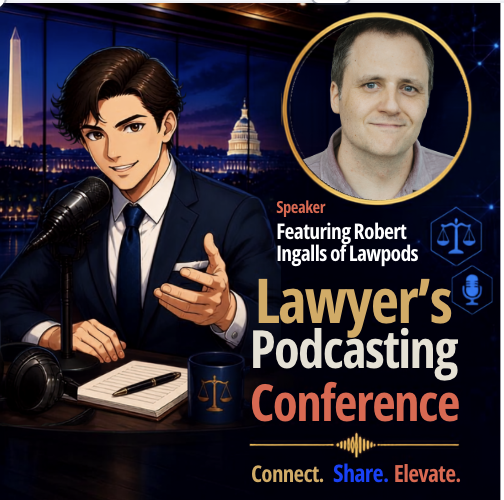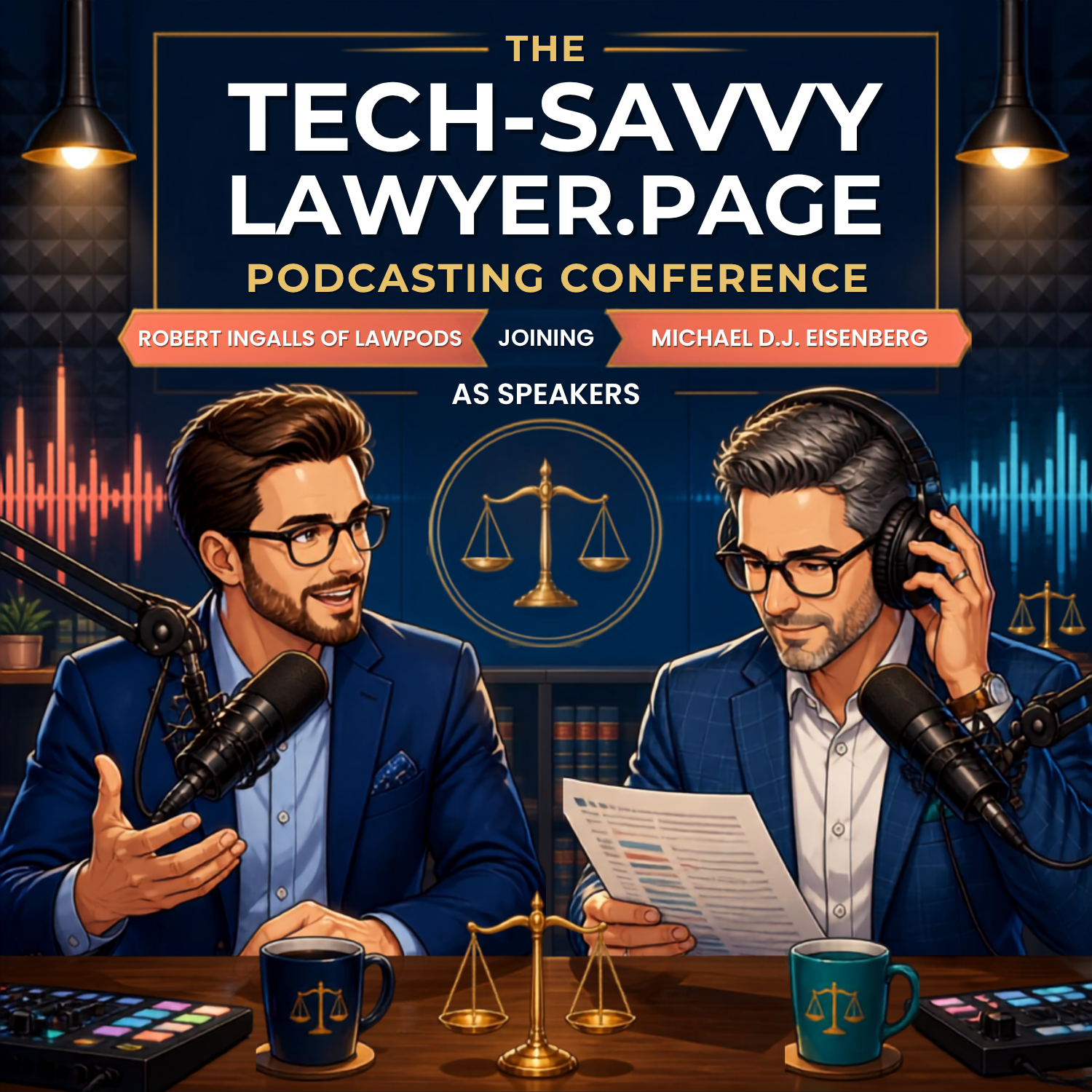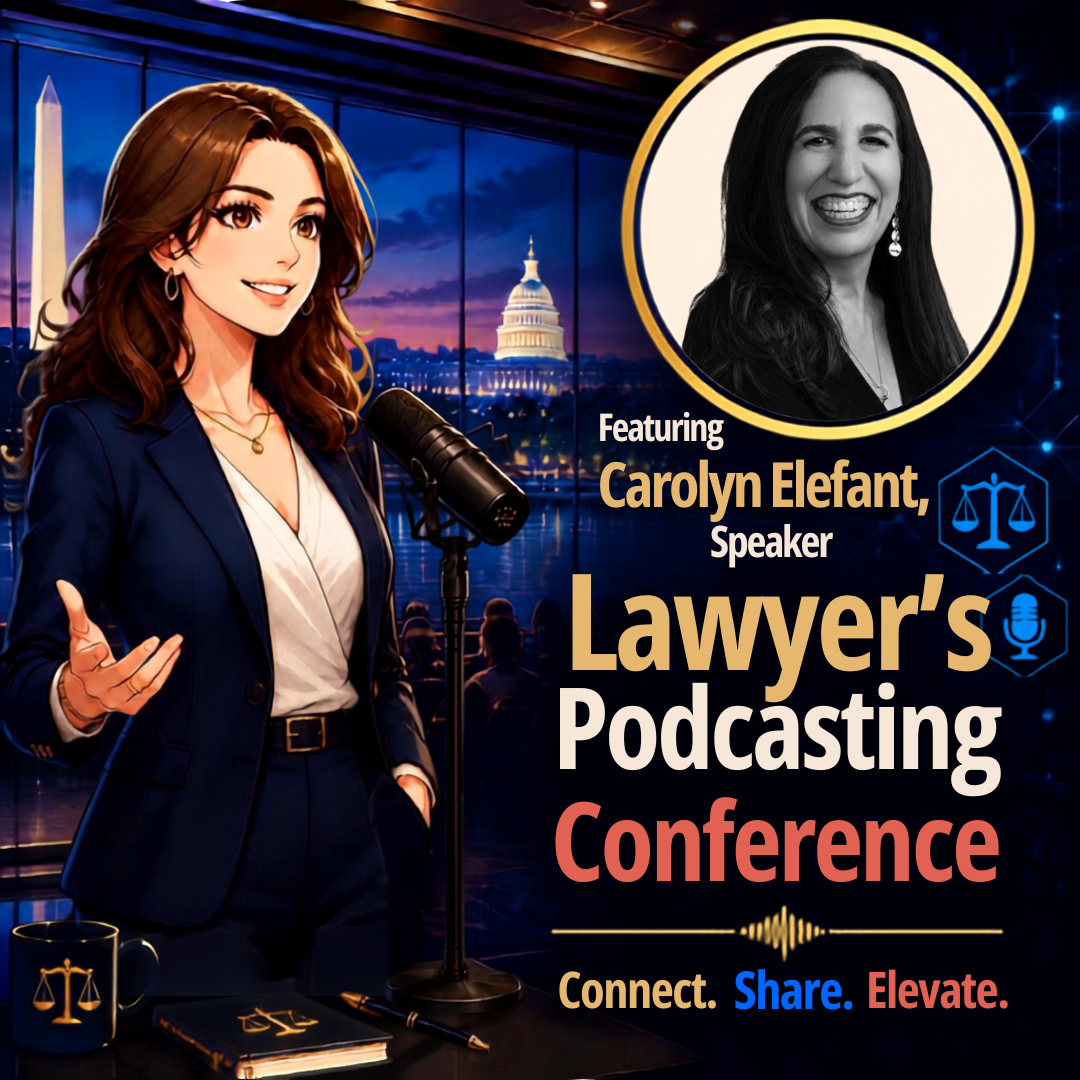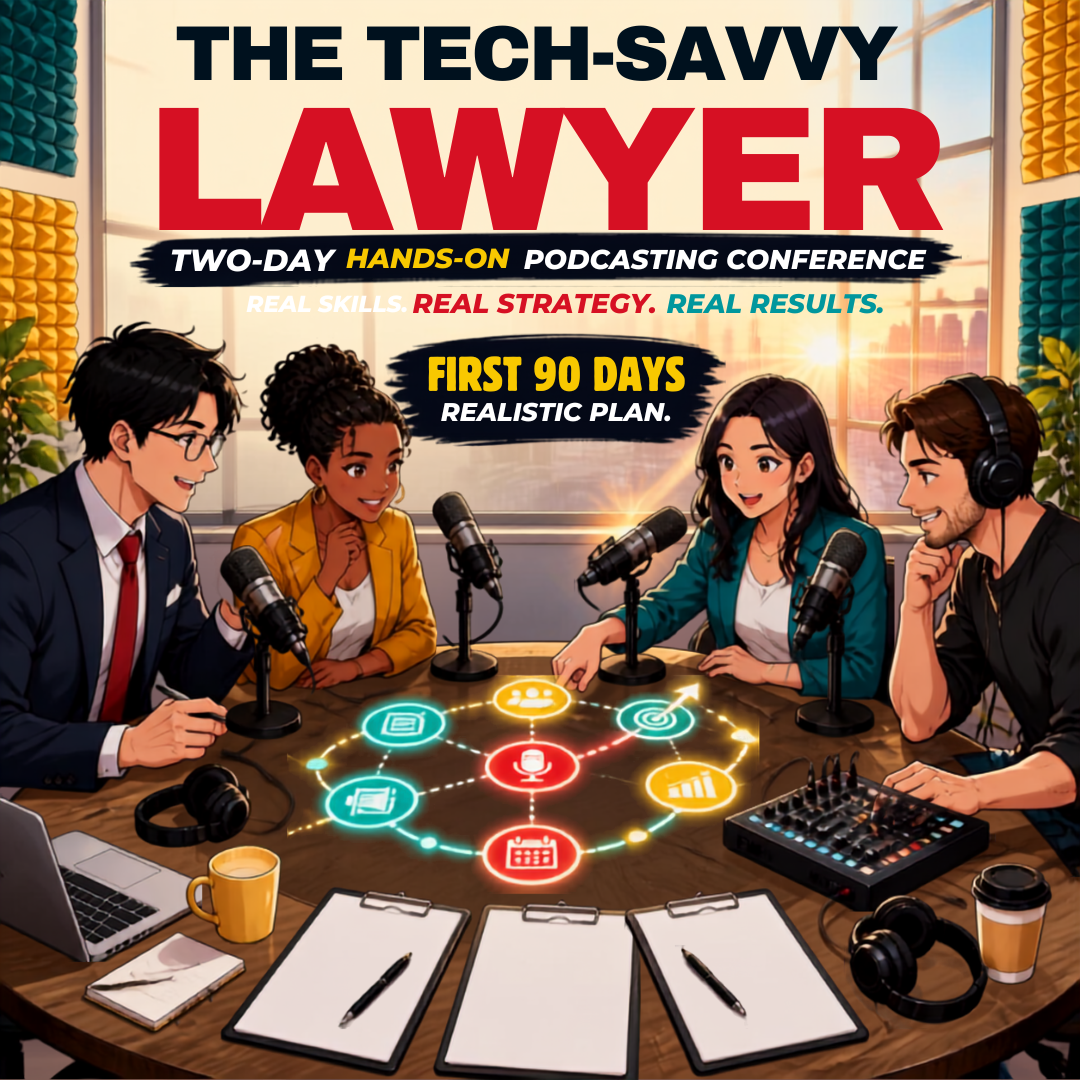
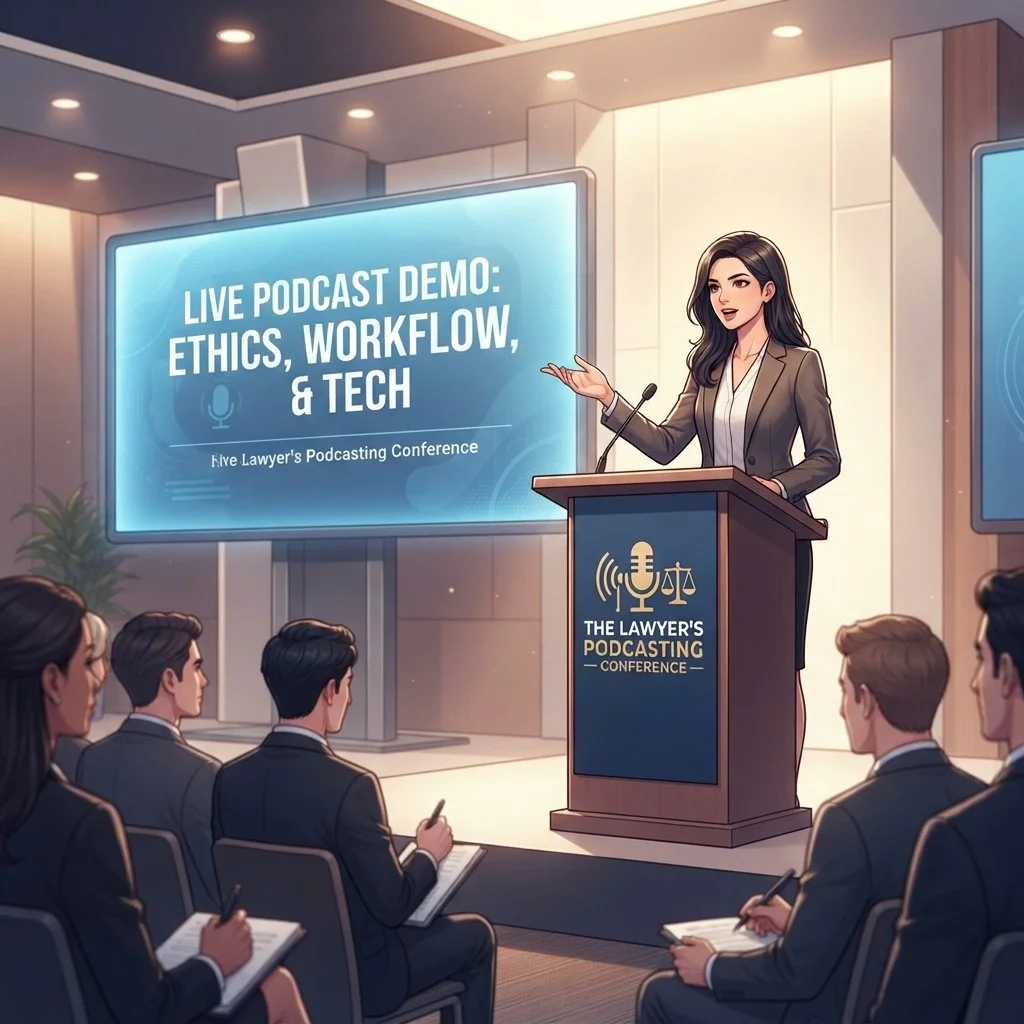
📣 Announcing the Lawyer’s Podcasting Conference – Coming This November

At MacStock 2026, during my presentation, “Podcasting with Apple: From Idea to Launch Using the Gear You Already Own”, I explored how lawyer‑hosted podcasts help attorneys educate clients, build authority, and grow their practices. Those insights sparked an idea that I first announced right after my session—and now it’s time to share it with you. 🚀

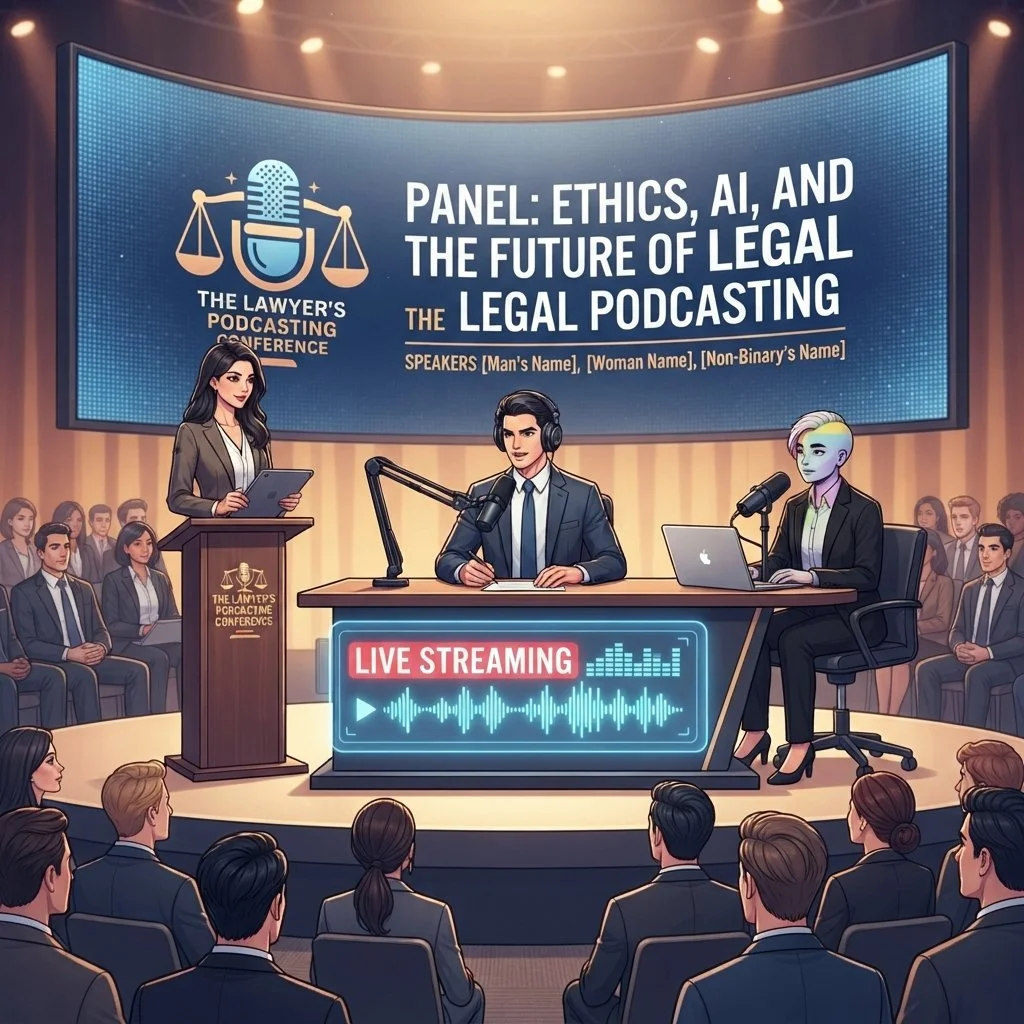
I’m excited to announce that we’re planning the first Attorneys Podcasting Conference, tentatively scheduled for Friday and Saturday, November 12–13, in the Washington, DC metro area. This event is for solo practitioners, small and midsize firm lawyers, AI‑curious legal professionals, and anyone interested in practical, real‑world legal technology—whether you live in Windows, macOS, or a mix of both.

Why an Attorneys Podcasting Conference?

Legal podcasting sits at the intersection of client development, education, and professional responsibility. A well‑run podcast can support your law‑firm business by:

  • Showcasing your subject‑matter expertise in ways a static bio never will 😊

  • Deepening trust with current and prospective clients by explaining complex issues in plain language

  • Keeping you top‑of‑mind with referrals, colleagues, and community partners

When you publish, you are speaking to the public about legal issues, and that triggers real ethical considerations. Under ABA Model Rule 7.1 (Communications Concerning a Lawyer’s Services), your podcast content must not be false or misleading, including how you describe your experience, results, or fees. Under Model Rule 1.6 (Confidentiality of Information), you must avoid sharing identifiable client information or facts that could reasonably lead to identification—even in anonymized stories. And Model Rule 5.3 (Responsibilities Regarding Nonlawyer Assistance) matters when you engage producers, editors, or marketing vendors to help with your show.

This conference will not only help you start and grow a podcast, it will help you do so ethically, in alignment with your jurisdiction’s version of the ABA Model Rules. ⚖️

What This Conference Is About

lawyer’s learn how to improve your Brand, seo and geo through podcasting!

This event is designed for attorneys who want podcasting to be a strategic business tool, not just a hobby. We’ll focus on:

  • Why podcasting grows your law‑firm business
    We’ll dig into how a consistent, well‑targeted show supports client development, referral relationships, and thought leadership—without violating Rules 7.1 or 7.2 on lawyer advertising.

  • From Hanging a Shingle to Yellow Pages to SEO to GEO
    For generations, law‑firm marketing has evolved step by step: you started by hanging a shingle, then moved into Yellow Pages ads, then into websites and search engine optimization (SEO). Today we’re entering a new phase: Generative Engine Optimization (GEO)—how your content is discovered, summarized, and surfaced by AI‑driven tools and generative engines.

    In this conference, we’ll talk about where podcasting fits in that progression: how a well‑structured show can support traditional SEO while also positioning you for GEO, so that when clients or referral sources ask AI‑powered tools legal questions in your niche, your expertise is more likely to be surfaced.

  • How to start the right way
    We’ll walk through choosing a niche, format, and editorial calendar; building a workflow that respects your docket; and creating a basic compliance checklist so each episode stays within ethical guardrails.

  • How to grow and sustain your podcast
    You’ll learn practical tactics for audience growth, repurposing episodes into blogs and newsletters, and integrating your podcast with email, social media, and AI‑assisted workflows—still mindful of Rule 1.6 when using cloud or AI tools.

  • Tools, tech, and services for Windows and Mac
    We’ll explore microphones, interfaces, recording and editing tools, hosting platforms, and production services that work well in both Windows and macOS environments. Whether you’re recording in Audacity on Windows, GarageBand or Logic Pro on Mac, or a web‑based platform, you’ll see realistic, law‑practice‑friendly setups. 💻🖥️

The goal is a practical, hands‑on conference that helps you either launch a podcast or take your existing show to the next level, with clear, concrete connections back to law‑firm business growth and professional responsibility.

Who This Conference Is For

This conference is ideal for:

Lawyers, learn from seasoned podcasters and professionals how to start, ethically operate, and grow your podcast and your law practice!

  • Solo and small‑firm attorneys who want a cost‑effective, authentic way to reach clients and referral sources

  • Midsize firm lawyers and practice group leaders who want to align podcasting with broader content and business‑development strategies

  • AI‑curious legal professionals who want to understand where AI‑driven transcription, summarization, and editing tools fit into podcast workflows, while staying within ethics rules on confidentiality and supervision

  • Law‑firm marketing and business development professionals responsible for managing risk while helping lawyers stand out

  • Vendors and sponsors offering equipment, software, production, hosting, AI tools, and marketing services for attorney podcasters

You do not need to be “tech‑forward” to benefit. If you can draft a motion, send an email, and open a file, you can learn this. The goal is to make the technology approachable, not overwhelming.

Windows and Mac: Equal Focus

Although much of my work at The Tech‑Savvy Lawyer ecosystem has featured Apple platforms, this conference explicitly serves users on Windows, Mac, or both:

  • Demonstrations will include Windows‑friendly tools, Mac‑specific workflows, and browser‑based platforms that live above the OS line.

  • We’ll highlight cross‑platform best practices, so your workflows survive hardware refreshes, lateral moves, or firm‑wide technology changes.

  • We’ll talk candidly about IT and security considerations, including how to vet podcast tools under Model Rule 1.1 (Competence) and its comments on technology.

Your podcast should follow you, not the other way around. 😊

Vendors, Sponsors, and Live Recordings

We are building an expo experience that is more than just branded tables and pens:

  • Vendor booths will include podcast production services, hosting platforms, AI‑assisted tools, microphones and interfaces, and legal marketing consultancies that understand law‑firm constraints.

  • Sponsors will be able to support the event through traditional tiers and in‑kind contributions such as Wi‑Fi, coffee breaks, breakfast, lunch, or A/V and recording services.

  • We plan to offer live‑recording opportunities, including:

    • Reserved slots to record your podcast on‑site

    • Live episode demos with an audience

    • Workflow walk‑throughs that highlight both Windows and Mac setups

Throughout, we will keep an eye on confidentiality, consent, and any necessary disclosures to stay within Rules 1.6, 7.1, and 7.2.

Want to Stay in the Loop?

If you’re:

come join your fellow professionals and enter the world of lawyer podcasting!!!

  • An attorney with a podcast

  • A lawyer seriously considering starting one

  • A law‑firm leader or marketing professional interested in podcasting

  • A vendor or sponsor looking to support attorney podcasters

…I’d love for you to get on the early‑info list.

Just click this link and enter your email address to join the list!

When you sign up, you’ll be able to:

  • Receive final date, venue, and registration details as they’re confirmed

  • Get speaker announcements and information on ways to participate, including suggesting topics, formats, and panels you’d like to see

  • Learn about live‑recording opportunities, such as signing up to record your podcast on‑site or participating in live demos and audience sessions 🎙️

  • See sponsorship and vendor information once packages are set

  • Share any questions you have and what you’re hoping to get from this kind of conference—topics you want covered, tools you want to see, or business challenges you’d like help solving

🎙Bonus Episode: TSL Labs's 🧪 Deep Dive into our July 13, 2026, Editorial, Law School, Laptops, and AI: Why Banning Computers Misses the Point!

Join us for an AI-powered deep dive into the ethical challenges facing legal professionals in the age of generative AI. 🤖 In this episode, we unpack our editorial “Law School, Laptops and AI: Why Banning Computers Misses the Point,” and explore why laptop bans in law schools are less about ethics and more about administrative convenience — and how that choice could leave future lawyers unprepared for a fully digital profession.

In our conversation, we cover the following

00:00:00 — From “no calculators” to “no laptops”: how old tech panics mirror today’s AI fears in legal education 📚🧮

00:01:00 — AI panic hits law schools: blanket bans on generative AI and even laptops in the classroom 🎓⚠️

00:02:00 — Why Michael supports limiting AI in 1L while still opposing laptop bans: building foundational legal judgment 💪⚖️

00:03:00 — ABA Model Rule 1.1 and competence: why early overreliance on AI short-circuits “intellectual muscle” 🧠

00:05:00 — Why banning laptops “misses the point”: the scalpel vs leeches analogy and modern legal training 🩺🖥️

00:06:00 — Accessibility and fairness: Michael’s 2002 law school story and laptops as essential accessibility tools ✍️💻

00:07:00 — Digital-native students and analog exams: how bans unfairly shift the playing field instead of leveling it 🎯

00:08:00 — Law practice is 100% digital: e‑discovery, e‑filing, and why stripping laptops undermines tech competence 🌐📑

00:08:30 — ABA Model Rule 1.1, Comment 8: the ethical duty to understand the benefits and risks of relevant technology 📘

00:09:30 — Lazy enforcement: why laptop bans are about visual policing, not thoughtful AI policy 🧍‍♂️👀

00:10:00 — ABA Model Rule 5.3: supervising AI as a “digital clerk” and why hiding the tech creates ethical gaps 🤖📎

00:11:30 — Guardrails, not prohibitions: network geofencing, offline laptops, and locked‑down software environments 🧱📶

00:12:30 — Clear AI policies in assignments: when AI is permitted, when it is prohibited, and how disclosure builds discipline 📝

00:13:00 — Teaching prompt engineering as a core legal skill: delegation, context, and structured AI use 🧩

00:13:30 — ABA Model Rule 1.6 and confidentiality: the risks of pasting client secrets into public AI tools 🔐

00:14:30 — Cognitive offloading vs cognitive atrophy: why tech can strengthen legal reasoning when used wisely 🧠⚙️

00:16:00 — Verifying AI outputs: hallucinations, fake cases, and training students to check everything against primary law 📚

00:17:00 — Temptation vs discipline: why bans don’t teach judgment, but supervised AI use can 🎯

00:18:00 — The false dichotomy: foundational human judgment vs tech competence and why future lawyers must have both ⚖️💡

00:19:00 — The future horizon: when AI becomes the “senior partner” and the lawyer becomes the supervisor‑in‑chief 🧑‍⚖️🤖

00:20:00 — Final challenge: law schools can’t ban their way out of the future — they have to teach students to wield the tools safely 🔍🚀

RESOURCES

Mentioned in the episode

Software & Cloud Services mentioned in the conversation

If you care about the future of legal education, client protection, and real‑world tech competence, hit play now and then share this episode with a colleague who still thinks “just ban the laptops” is a solution. 🎧💬

🎙️BONUS EPISODE: MacStock X Preview: Podcasting with Apple for Lawyers – From Idea to Launch Using the Gear You Already Own ⚖️🎙

In this special The Tech-Savvy Lawyer.Page Podcast episode, I join Chuck Joiner on MacVoices’ “Road to MacStock X” to preview my presentation, “Podcasting with Apple: From Idea to Launch Using the Gear You Already Own,” and to show legal professionals how to design, launch, and improve a podcast using Apple devices and workflows they already have. 🎧
Join Chuck and me as we discuss the following questions and more!

  • How can lawyers and new podcasters launch a professional‑quality show using only their existing Apple hardware and built‑in macOS and iPadOS tools?

  • What practical, Apple‑centric workflow—from idea generation to recording, editing, distribution, and guest management—underpins “Podcasting with Apple: From Idea to Launch Using the Gear You Already Own”?

  • How should legal podcasters think about ethics, defamation, and cross‑border risks when discussing law, politics, or controversial topics?

  • In what ways does podcasting improve a lawyer’s visibility and “generative engine optimization,” making them more discoverable to clients and AI systems?

  • How do hardware and software choices evolve from Mac laptop and earbuds to 4K cameras, better mics, Ecamm, and AI‑assisted editing?

In our conversation, we cover the following

  • 00:00:00 – Michael joins Chuck to talk MacStock X and preview “Podcasting with Apple: From Idea to Launch Using the Gear You Already Own.”

  • 00:01:00 – Overview of The Lawyer’s Guide to Podcasting: idea generation, recording, inviting guests, editing, distribution, and a dedicated ethics chapter for lawyers.

  • 00:02:00 – Why Apple users already have enough equipment to start a podcast; framing MacStock X as a hands‑on walkthrough using Macs, iPads, and built‑in software.

  • 00:02:30 – What attendees should bring to MacStock X: themselves, their Apple devices, and why editing is easier on a Mac laptop than on an iPad.

  • 00:02:45 – Early iPad‑based editing with Apple Pencil, manually trimming ums, ahs, gaps, and retakes, and how that led to more automated workflows.

  • 00:03:00 – Moving to more efficient editing tools that automatically flag issues while still requiring human review; AI as a powerful tool, not a final answer. 🤖

  • 00:03:30 – Why new podcasters—especially lawyers—must review AI output to avoid errors and ethical problems.

  • 00:04:00 – The importance of starting: accepting that early episodes won’t equal mature work, and why improvement comes through practice.

  • 00:05:00 – Low‑cost and no‑cost approaches, doing tasks manually first, and then delegating or using AI to reclaim time and focus on higher‑value work.

  • 00:06:00 – Treating podcasting as a learning adventure: exploring Apple tools, enjoying subject matter, and embracing continuous technical and editorial improvement.

  • 00:07:00 – Hardware evolution: from Mac laptop and earbuds to an Osbot 4K camera and Shure MV7 mic, plus travel‑friendly setups.

  • 00:08:00 – Post‑COVID boom in content creation and how hardware and software now target “content creators,” including legal podcasters.

  • 00:09:00 – Audience size versus enjoyment: why a niche audience can be enough when the creator values the conversations and the impact.

  • 00:10:00 – How podcasting enhances “generative engine optimization” by creating high‑quality, indexable content about your expertise.

  • 00:11:00 – The Tech-Savvy Lawyer.Page Podcast: focusing on how lawyers, judges, and others use technology to improve services, enhance products, and recapture time. ⚖️💻
  • 00:12:00 – Tech stack evolution: from a Blue Yeti travel mic to the Shure MV7, emphasizing incremental upgrades rather than big upfront spending.

  • 00:12:30 – Ethics and defamation fundamentals: avoiding slander, false statements, and understanding that truth is a crucial defense.

  • 00:13:00 – Cross‑border implications: podcasts crossing state and international lines and why deeper legal topics warrant caution and advice from counsel.

  • 00:14:00 – Political speech, emotion, and the need to “be the adult in the room” to avoid escalating into litigation.

  • 00:15:00 – Differences in lawyer ethics and advertising rules across states; ABA model rules and local nuances.

  • 00:15:30 – Recommendation to review Gordon Firemark’s content‑creation law resources for podcasters.

  • 00:16:00 – Disclaimers: no legal advice, no attorney‑client relationship, and why these are essential in legal‑tech podcasting.

  • 00:17:00 – MacStock X discount codes: TECHSAVVYLAWYER and MACVOICES for $50 off registration, plus in‑person $5 discount on The Lawyer’s Guide to Podcasting.

  • 00:18:00 – Ecamm’s all‑day MacStock X session: from basics to advanced, positioning Ecamm as a virtual TV studio for audio and video podcasting.

  • 00:19:00 – Ecamm’s limited‑seat format, Creator Camp in Birmingham, and using Ecamm to record this conversation.

  • 00:20:00 – Invitation to attend MacStock X in Crystal Lake, join the community, and learn alongside other Apple‑focused creators.

  • 00:21:00 – Where to find Michael: TheTechSavvyLawyer.Page, The Tech-Savvy Lawyer.Page Podcast, and The Lawyer’s Guide to Podcasting on Amazon.

RESOURCES

Connect with Chuck

  • Contact Page: https://macvoices.com/contact/

  • LinkedIn: https://www.linkedin.com/in/chuckjoiner/

  • MacVoices - https://macvoices.com/

Mentioned in the episode

  • American Bar Association Model Rules of Professional Conduct - https://www.americanbar.org/groups/professional_responsibility/publications/model_rules_of_professional_conduct/model_rules_of_professional_conduct_table_of_contents/?login

  • Book: The Lawyer’s Guide to Podcasting – https://www.amazon.com/Lawyers-Guide-Podcasting-Tech-Savvy-Lawyer-Pages/dp/B0GGX32DZH/ref=sr_1_1?crid=3VOS3UEZNSIMB&dib=eyJ2IjoiMSJ9.AGEuOQwftq-s5O0PqDNjd3zedjDpqdT9pTmLUNktKoMgLL8i6DXC1FKO_L3eWhhLwfONlBZ780wTm15KELZNjUM6wU27377u7SJZ-1k7ZWnkrVmcdTShPkVcjSqMoj79EbRD9I8UP_DzX-X8E2UJ0VP9UqMZoJIwCF4WRIm15wWn32iPZ0kY50a4Lj-BYk1uuaOE5sT8ShPKV7ZgE4JxabTE_b5ppI3AUNhh64nRU6Q.EZF7hiJiOUHarYUE255hezBGcNbXjZz_wrt6eC-z9gg&dib_tag=se&keywords=The+lawyers+guide+to+podcasting&qid=1784764741&sprefix=the+lawyers+guide+to+podcasting%2Caps%2C109&sr=8-1

  • GEO – "generative engine optimization” - https://www.thetechsavvylawyer.page/blog/2026/3/26/-word-of-the-week-geo-generative-engine-optimization?rq=GEO

  • Gordon Firemark - https://www.thetechsavvylawyer.page/search?q=Firemark

  • MacStock X Conference & Expo, Crystal Lake, Illinois - https://macstockconferenceandexpo.com/

Hardware mentioned in the conversation

  • Apple Pencil - www.apple.com/apple-pencil/

  • Apple Products - www.Apple.com

  • Blue Yeti microphone - https://www.logitechg.com/en-us/shop/p/yeti-premium-usb-microphone

  • iPad - https: - www.apple.com/ipad/

  • Osbot 4K camera - https://www.obsbot.com/obsbot-meet-2-4k-webcam

  • Shure MV7i microphone - https://www.shure.com/en-US/products/microphones/mv7i?variant=MV7i

Software & Cloud Services mentioned in the conversation

  • Ecamm (Mac‑based live production and recording software) - www.ecamm.com

🎙️ Ep. 139, From MyCase to Claude: Building a Secure, AI-Ready Tech Stack for Solo and Small Law Firms.

My next guests are Gabriela “Gabby” Cubeiro, Senior Vice President of Product at 8am — the powerhouse behind MyCase, LawPay, CASEpeer, and DocketWise — and Majo Castro, founder and managing attorney at CastroMand Legal in Austin, Texas. 🌟 Gabby is a 16-year legal tech veteran who co-founded CASEpeer and now drives product strategy across one of the most widely adopted law practice management platforms in the country. Majo is a Venezuelan-born cybersecurity and AI attorney whose solo firm helps growing companies navigate AI implementation, data management, and cybersecurity — and she writes about all of it on her Substack, The Cyber Law Gal. 🛡️ This is a no-fluff, peer-to-peer conversation about the exact workflows that separate a modern LPM from a liability, why the Data Processing Agreement is the most important acronym in your practice right now, and what your employees are almost certainly already doing with AI — whether you've approved it or not.

Join Gabriela “Gabby” Cubeiro, Majo Castro, and me as we discuss the following three questions and more!

  1. What are the top three integrations or workflows a solo, small, or midsize firm should expect from a modern cloud-based LPM platform like 8am — and what's missing that signals a real red flag around efficiency, cash flow, or security?

  2. As AI gets baked into cloud LPM tools like 8am, what are the top three day-to-day tasks that will change most for solo and small firm lawyers — and what basic security or ethical guardrails should they put in place to use those AI features without putting client data at risk?

  3. For solo and small firms without a CISO or CTO, what are the top three cybersecurity mistakes you see over and over again?

In our conversation, we cover the following:

  • [00:00:00] 🪝 Show Hook — Gabby's critical warning: if your firm hasn't "adopted" AI, your employees probably already have — on free consumer tools

  • [00:00:00] Title read — Episode 139

  • [00:01:00] Host intro: why this conversation goes tactical on AI, security, and LPM workflows

  • [00:02:00] Guest introductions — Gabriela “Gabby” Cubeiro (8am/MyCase) and Majo Castro (CastroMand Legal / The Cyber Law Gal)

  • [00:03:00] Majo celebrates 1.5 years as a solo practitioner 🎉

  • [00:03:00] Ad: Five-star review request for The Tech-Savvy Lawyer.Page
  • [00:03:30] Tech setups — Gabby's MacBook Air (M4 chip), iPhone Max, Slack, Zoom, Google Drive, Claude Enterprise

  • [00:06:00] Gabby's portable USB-C external monitor for travel (Amazon, highest-rated)

  • [00:09:00] Majo's MacBook Pro 14" M4 (16GB RAM), performance issues, upgrade path discussion

  • [00:10:00] Michael recommends Onyx (free Mac maintenance utility); Michael's Mac Studio M3 Ultra with 256GB

  • [00:11:00] Mac Mini and Mac Studio as desktop alternatives; MacRumors Buyer's Guide tip

  • [00:13:00] Apple Business Account benefits — small discounts + white-glove service

  • [00:15:00] Majo's full setup: iPhone 16 Pro Max, Google Workspace + Gemini (team account with DPA), DJI Osmo Pocket 3, Hollyland wireless mic

  • [00:16:00] Q1: Top three LPM workflows — intake, secure client communication (client portal), and getting paid (trust accounting + automated invoicing)

  • [00:19:00] Majo on switching from QuickBooks to MyCase after discovering QuickBooks mishandles trust accounting

  • [00:20:00] 🎉 Gabby announces: AI case summary features are now LIVE in 8am/MyCase

  • [00:21:00] Cloud vs. local access debate — SaaS uptime, SLAs, and asking vendors for proof

  • [00:23:00] Michael's redundant backup strategy: Backblaze + Dropbox + local Mac Mini

  • [00:25:00] Cautionary tale: ransomware attack converts a server-based firm to the cloud overnight

  • [00:28:00] Majo's Google Drive third-party backup with 2-hour recovery window

  • [00:29:00] Q2: How AI changes daily workflows — drafting, case summaries, surfacing critical info fast

  • [00:30:00] Why reading vendor Terms of Service and activating Data Processing Agreements (DPAs) is non-negotiable

  • [00:31:00] 8am's SOC 2 Type 2 compliance; updated AI terms and opt-in controls coming

  • [00:32:00] SOC 2, HIPAA, end-to-end encryption as baseline vendor security requirements

  • [00:34:00] AI as the great equalizer — leveling the playing field for solo firms vs. BigLaw

  • [00:35:00] Majo's real data: ~12 hours saved last month across 27 consultations using Gemini for proposals

  • [00:36:00] Plaud and Pocket AI recording devices — data retention, PII, and DPA concerns

  • [00:37:00] Majo's stance on wearable AI recorders; Apple Watch comparison; one-party vs. two-party consent

  • [00:39:00] Plaud's terms say no AI training — but it's not a DPA; terms can change without notice 🚨

  • [00:40:00] Google Workspace DPA must be manually activated — most users don't know; creating user friction around protection

  • [00:41:00] Q3: Top cybersecurity mistakes — shadow AI, no MFA, undertrained employees

  • [00:42:00] Majo's checklist: DPA + no model training on client data + enterprise/team-tier subscriptions + MFA

  • [00:43:00] Gabby: employees are the #1 security risk; fractional IT and CISO options for small firms

  • [00:44:00] AI-powered phishing attacks on law firms will only intensify

  • [00:45:00] Majo's training method: positive AI policies + 45-second staff video explainers 🎬

  • [00:46:00] 🚨 Gabby's shadow AI reminder (Show Hook callback): audit your tech stack — your team already has

  • [00:47:00] Episode originally recorded at ABA Techshow; re-recorded after a technical snafu 😅

  • [00:47:00] Where to find Gabby: LinkedIn, X, 8am.com, Kaleidoscope conference (September — banner at 8am.com)

  • [00:48:00] Where to find Majo: LinkedIn (Majo Castro), CastroMand Legal, Substack: The Cyber Law Gal

  • [00:48:30] Outro — michaeldj@thetechsavvylawyer.page | next episode in ~two weeks

RESOURCES

Connect with Gabriela “Gabby” Cubeiro

Connect with Majo Castro

Mentioned in the Episode

Hardware Mentioned

🎙️ Ep. 138: How US Legal Support Integrates AI, Security, and Remote Depositions into Your Litigation Tech Stack ⚖️💻

use AI transcript review to streamline complex deposition analysis!

My next guest is Jimmie Bridwell of US Legal Support, a Houston‑based litigation support company that manages depositions, record retrieval, trial technology, and graphics generation for law firms nationwide. In this post, we dive into how US Legal Support blends security, integration, and AI‑driven tools to help solos, small firms, and AM Law practices modernize their tech stack, streamline discovery, and run more effective remote depositions.⚖️💡

Join Jimmie Bridwell and me as we discuss the following three questions and more!

  • What are the top three ways lawyers should expect companies like US Legal Support’s technology platforms — whether remote deposition solutions, transcription services, or document management — to integrate seamlessly into a law firm’s existing tech stack to eliminate duplicative data entry and streamline trial preparation?

  • What are the top three technology investments or skillsets that lawyers consistently overlook, but would dramatically improve their practice efficiency and client services in 2026?

  • Based on US Legal Support’s experience facilitating over 245,000 remote events annually, what are the top three technology mistakes you see lawyers making during remote depositions or virtual proceedings, and how can they course correct to deliver more efficient client representation?

In our conversation, we cover the following

  • [00:00:00] Jimmie’s personal tech stack: Surface Pro laptop, 47‑inch curved Samsung monitor, HyperCast microphone, and Logitech Brio camera in a Microsoft‑based environment with Microsoft Cloud.

  • [00:00:45] Managing dual smartphones (Apple for work, Android for personal) and why Apple’s security posture matters in litigation and device holds.

  • [00:01:20] How US Legal Support uses Apple computers in graphics studios while the broader organization runs on Microsoft infrastructure.

  • [00:02:00] Defining the first big question: how vendors like US Legal Support should integrate with law firm tech stacks to prevent duplicate data entry.

  • [00:02:15] Why integration, security, and data management form the core triad for any law‑firm‑to‑vendor data exchange.

  • [00:03:00] The importance of a single, trusted first input for case data so humans aren’t re‑keying information across multiple systems.

  • [00:03:40] Inside US Legal Support’s security model: SOC 2 Type 2, HIPAA, NIST protocols, Microsoft and Amazon cloud, and internal security validation.

  • [00:04:40] Concrete questions lawyers should ask prospective vendors about encryption, security reviews, and penetration tests.

  • [00:06:00] Data breach reporting expectations and the need for a clearly published, timely incident response framework.

  • [00:07:30] Data management and access: preventing unauthorized secondary use of client data and guaranteeing 24/7 access to discovery and litigation documents.

proper ai use can help prevent chaotic Zoom deposition versus calm litigation!

  • [00:08:30] Integration patterns: standardized vs customized APIs, multipoint data flows, and the importance of vendor integration experience with law firm case management tools.

  • [00:11:00] Reframing overlooked tech investments and skills, with an emphasis on AI‑powered transcript review in 2026.

  • [00:11:15] How AI‑assisted transcript review condenses multi‑day depositions into summarized, keyworded, and key‑point‑driven outputs for faster strategy decisions.

  • [00:12:20] Why AI hallucination risk is lower when models work directly from the underlying deposition record.

  • [00:14:10] AI‑assisted deposition tools: secure portals that ingest exhibits and records, identify pre‑existing conditions, output outlines, and suggest deposition questions.

  • [00:15:40] Comparing legacy OCR workflows to today’s generative AI tools and how template‑free extraction speeds up discovery.

  • [00:17:00] Evaluating partners with holistic litigation solutions versus piecemeal, point‑solution vendors.

  • [00:18:00] The maturation of the litigation support market from small shops with thin tech budgets to larger organizations with in‑house dev teams.

  • [00:19:10] Why US Legal Support favors transactional BPaaS pricing over long subscription contracts in a fast‑moving tech landscape.

  • [00:22:00] Common mistakes in remote depositions, including heavy reliance on general meeting tools like Zoom for litigation‑specific workflows.

  • [00:22:10] Litigation‑ready platforms vs. meeting tools: exhibit management, date stamping, annotations, real‑time feeds, and AI enhancements.

  • [00:24:00] The evolution of case management platforms from generic workflow systems to highly tuned legal solutions.

  • [00:26:00] Emerging horizon tools, including facial recognition and facial sentiment analytics for remote proceedings.

  • [00:26:40] The long‑tail impact of COVID: remote depositions moving from nearly 0% to roughly 60–70% of proceedings, and how that forced adoption changed lawyer attitudes.

  • [00:27:30] Internal adoption challenges in medium and large firms: inconsistent processes, under‑used tech, and the operational cost of “every lawyer does it differently.”

  • [00:29:00] Applying manufacturing‑style process discipline to law firm workflows while respecting attorney autonomy.

  • [00:30:00] Where to find US Legal Support online and how they serve clients across the United States.

RESOURCES

Connect with Jimmie Bridwell

lawyers make sure your cloud platforms are SOC 2, HIPAA, NIST‑compliant!

  • US Legal Support: https://www.uslegalsupport.com

Hardware mentioned in the conversation

Software & Cloud Services mentioned in the conversation

🎙️ Ep. #137 - How Lawyers Can Protect Kids Online: COPPA 2.0, Age Assurance, and AI Chatbots with FOSI’s Andrew Zach 👨‍⚖️🔐

My next guest is Andrew Zach, Senior Policy Counsel at the Family Online Safety Institute (FOSI), where he works at the intersection of technology, privacy law, and child online safety policy in Washington, DC. In this Tech‑Savvy Lawyer.Page episode, we unpack what family‑centered online safety really means for practicing attorneys, from intake forms and client portals to law practice management systems, social media, and rapidly evolving AI chatbots. Andrew explains COPPA and the proposed COPPA 2.0, explores how states and countries are experimenting with age assurance, and offers practical guidance for lawyers who handle sensitive images, minors’ data, and AI‑driven tools while staying compliant and supporting parents. If you are an attorney, legal professional, or a tech‑curious parent, this conversation will help you make smarter, safer choices about how you use technology in and around your law practice.
Join Andrew and me as we discuss the following three questions and more! ⚖️💻

  1. What are the top three practical steps every lawyer should take to bake in family‑centered online safety when designing client‑facing tech, websites, portals, intake forms, messaging, and social media?

  2. What are the top three technology tools or configurations law firms should implement to better protect children and teens who may be affected by legal technology, whether they are direct clients in a family matter or simply sharing devices with adult clients?

  3. If you were advising bar associations and practice‑area leaders, what would be the top three CLE or policy priorities to ensure lawyers responsibly use AI, client portals, and other digital tools while supporting parents and caregivers in keeping families safe online?

In our conversation, we cover the following ⏱️

  • 00:00 – Welcoming Andrew and his current tech setup: MacBook Pro, external monitor, iPhones, and wired Bose headphones 🎧

  • 01:00 – What is FOSI and how it works across policy, digital parenting, and industry best practices to keep families safer online 🌐

  • 02:00 – COPPA basics: verifiable parental consent for under‑13 data, why COPPA is dated, and the patchwork of state privacy laws filling the federal gap 📜

  • 03:00 – California privacy leadership, international regimes (like Europe), and why the US needs a comprehensive data privacy law with limits on collection, use, storage, and sale of personal data 🧩

  • 04:00 – HIPAA, SOC 2, agentic AI chatbots on legal websites, and why notice, consent, and data minimization matter for law firms adopting AI‑driven intake and support tools 🤖

  • 05:00 – Data minimization as a safeguard when storage or breaches go wrong; retention and disclosure issues in worst‑case scenarios 📂

  • 05:30 – Handling sensitive images in legal practice (family photos, abuse evidence) and why state‑by‑state rules make it hard to manage online safety and data privacy consistently 🧾

  • 06:00 – Why a stronger federal law is needed, and what COPPA 2.0 (Children and Teens Online Privacy Protection Act) could change, including raising the age of digital consent and protecting teens from targeted advertising 🎯

  • 07:00 – Everyday scenarios: sharing kids’ photos with family, private messaging vs social media, and why limiting audience and avoiding “questionable” content is critical 👨‍👩‍👧‍👦

  • 08:00 – Why “private” Facebook accounts with many friends still are not private enough for potentially risky images and what safer sharing looks like 🔒

  • 09:00 – Keeping audiences limited in litigation and family law contexts while complying with legal guidelines for highly sensitive evidence 📁

  • 10:00 – Defining age assurance vs age verification, and how tools like facial age estimation, IDs, and self‑declaration fit into online safety compliance 🧑‍💻

  • 11:00 – International and US examples: UK social media age checks, Australia’s age assurance trials, and Texas cases on adult sites and app‑store‑level verification ⚖️

  • 12:00 – Free Speech Coalition v. Paxton upholding age verification for adult sites versus the App Store Accountability Act’s broader mandate and why it was enjoined 🏛️

  • 13:00 – Financial harm to parents from kids’ unsupervised app purchases and concerns about access to “harmful content” through apps and social media 💳

  • 14:00 – Is there such a thing as “age insurance”? Exploring liability, coverage, and why Andrew is not aware of a product like that 🧾

  • 15:00 – Apple vs Facebook on data tracking: long terms of service, Apple’s “Ask App Not to Track” pop‑up, and “arms race” messaging around personalization and privacy 📲

  • 16:00 – Communicating data practices clearly to users and kids; age‑appropriate disclosures and the role of legislation in requiring plain‑language privacy notices 🧠

  • 17:00 – “Kids’ accounts” on platforms like Instagram, retrofitting protections vs safety by design, and what private‑by‑default, constrained communication can look like for teens 🧒

  • 18:00 – Culture of responsibility: six entities in online safety (industry, policymakers, law enforcement, educators, kids, and families) and FOSI’s free digital parenting resources 📚

  • 19:00 – Why expecting parents to customize every app setting is unrealistic and how safety‑by‑design and data‑minimization can reduce that burden 🛠️

  • 20:00 – Parental responsibility vs platform responsibility, and how making parental controls easier (e.g., YouTube teen account setup time) can encourage meaningful engagement 👪

  • 21:00 – Recent cases in New Mexico and California: addiction, mental health, platform design, and new legal strategies targeting harms beyond specific content 🧑‍⚖️

  • 22:00 – The Joe Camel analogy, marketing to kids, and why FOSI avoids equating social media directly with tobacco while still pushing for better design safeguards 🚭

  • 23:00 – Features like “take a break” and limits on infinite scroll; designing for vulnerable users and younger audiences from the outset 🧱

  • 24:00 – AI chatbots in legal practice: risks of emotional dependence, mental health harms, and why unregulated bots should not replace trained professionals in sensitive contexts 🧩

  • 26:00 – How often teens and families are using generative AI, and the emerging theme of stricter rules or disclosures for legal, medical, and financial advice from chatbots 🧮

  • 27:00 – Disclaimers and transparency for client‑facing chatbots on law firm sites; state‑by‑state experimentation and potential new duties for lawyers using AI in practice 💬

  • 28:00 – The White House’s national AI policy framework, its child‑safety focus, and the need for congressional action, preemption questions, and national standards 🇺🇸

  • 29:00 – Why bar associations and lawyers should track AI policy developments closely as they intersect with ethics, confidentiality, and family online safety 🔍

  • 30:00 – FOSI’s “good digital parenting” resources, device agreements, and practical scripts for setting expectations with kids about devices and online behavior 📄

  • 31:00 – Where to find Andrew online, including FOSI’s website and his “Andrew the Policy Guy” content on LinkedIn and TikTok 📲

RESOURCES

Connect with Andrew 🌐

Mentioned in the episode 📝

Hardware mentioned in the conversation 🖥️

Software & Cloud Services mentioned in the conversation ☁️

🎙️ TSL Lab’s Deep Dive into Our May 18, 2027, editorial, “AI Won’t Replace Solo and Small Firm Lawyers. It Will Supercharge Them”!

📌 Too Busy to Read Our May 18, 2026, Editorial?

Join us for an AI-powered deep dive into the ethical challenges facing legal professionals in the age of generative AI. 🤖 This week’s Tech-Savvy Lawyer Lab’s podcast unpacks my editorial, “AI Won’t Replace Solo and Small Firm Lawyers. It Will Supercharge Them,” and translates it into practical, ethics-aware guidance for solo and small firm professionals navigating AI in real time.

We explore why AI is unlikely to replace lawyers but highly likely to transform how legal work is unbundled, priced, and delivered. We walk through Jevons Paradox, ABA rules on competence, supervision, and confidentiality, and the very real risks of hallucinated filings and careless use of public AI tools. You will see how treating AI as a supervised junior associate can expand your capacity, open new micro‑niches, and make your practice more human-centered, not less. ⚖️

In our conversation, we cover the following:

  • 00:00:00 – Why “doom hype” around AI is targeting the legal profession and why the collapse-of-lawyers narrative falls apart in real life.

  • 00:01:00 – Introducing Michael D.J.’s editorial “AI Won’t Replace Solo and Small Firm Lawyers. It Will Supercharge Them.”

  • 00:02:00 – Setting ground rules: educational discussion only and why this episode is not legal advice.

  • 00:02:30 – Rethinking what a “job” really is and the idea that legal work is a bundle of tasks, not one monolithic activity.

  • 00:03:00 – Comparing big-firm specialization to the tightly packed bundle of tasks handled by solo and small-firm lawyers.

  • 00:03:30 – Why AI can pull on individual threads in that bundle, but cannot run the whole practice for you.

  • 00:04:00 – The solo master-chef metaphor: AI as the kitchen machine doing prep work while the human focuses on taste and judgment. 🍲🤖

  • 00:05:00 – How AI can draft preliminary summaries or case law lists while the lawyer still owns strategy and verification.

  • 00:05:30 – The “mental verification” problem: when typing and thinking used to be the same act for lawyers.

  • 00:06:00 – What changes when AI writes the first draft and why verification must become a separate, deliberate step.

  • 00:06:30 – The risk of hallucinated filings and viral stories of fake cases generated by AI. 😬

  • 00:07:00 – Data points showing the profession is adapting, not dying: more lawyers, more bar-required jobs, rising law school interest.

  • 00:07:30 – Revisiting the e‑discovery panic and predictions that predictive coding would wipe out junior associates.

  • 00:08:00 – How cheaper e‑discovery led to an explosion of data and actually increased demand for legal work.

  • 00:08:30 – Introducing Jevons Paradox and why greater efficiency can increase, not decrease, total demand.

  • 00:09:00 – The widened-highway analogy: more lanes, more traffic, and how that maps onto AI in law. 🛣️

  • 00:10:00 – How AI lets small firms tackle big, complex matters and offer more predictable flat-fee pricing.

  • 00:11:00 – Expanding access to legal services for the middle class and why cheaper legal work grows the market.

  • 00:11:30 – Turning to ethics: ABA Model Rule 1.1 on competence and the duty to understand relevant technology.

  • 00:12:00 – The solo’s burden: you are the IT department and the innovation committee, all at once. ☕💻

  • 00:12:30 – A practical definition of technological competence for solos and small firms.

  • 00:13:00 – Starting small with AI: summaries, first-draft emails, and extracting checklists from dense legislation.

  • 00:13:30 – AI as the “junior associate you don’t have to hire but must supervise” under Rules 5.1 and 5.3.

  • 00:14:00 – Why you remain responsible for AI’s output just as you would for a paralegal or junior lawyer.

  • 00:14:30 – The solo’s question: Does it really make sense to write a formal AI policy for just one person?

  • 00:15:00 – How a short written AI policy creates hard boundaries before you are stressed and rushed.

  • 00:15:30 – Defining approved uses, high‑review tasks, and absolute “no-go” zones for AI in your practice.

  • 00:16:00 – Model Rule 1.6 on confidentiality and the special risk solo and small firms face with cloud tools.

  • 00:16:30 – Why pasting sensitive client facts into a generic consumer chatbot is an ethical minefield.

  • 00:17:00 – How consumer AI tools tokenize your text and use it to train future models.

  • 00:17:30 – The “megaphone in a public square” analogy for pasting confidential data into public AI tools. 📣

  • 00:18:00 – Moving from megaphones to soundproof vaults: using enterprise modes or legal-specific platforms.

  • 00:18:30 – Why a single data breach can be existential for a solo firm and why clients should care about tool choices.

  • 00:19:00 – Legislative inflation: constant growth in complex rules, norms, and regulations across jurisdictions.

  • 00:19:30 – How AI helps solos track regulatory change, generate client alerts, and update templates in real time.

  • 00:20:00 – Carving out lucrative micro‑niches with AI, such as hyper‑specific regulatory domains.

  • 00:20:30 – Pairing niche expertise with SEO and content marketing so a solo can compete at scale.

  • 00:21:00 – The junior lawyer dilemma: what happens to entry-level training when AI eats the grunt work.

  • 00:21:30 – Why firms still need junior lawyers to build a future bench, not just to type memos.

  • 00:22:00 – What AI fundamentally cannot do: build trust in person, join community events, or create referral networks.

  • 00:22:30 – How automation pushes lawyers toward more human-centric, relationship-focused work. ❤️

  • 00:23:00 – The core conclusion: the real existential threat is the AI-literate competitor down the street, not the robot.

  • 00:23:30 – Treating AI as a supervised junior associate while protecting ethics, productivity, and client outcomes.

  • 00:24:00 – Final reflections: mapping your own “bundle of tasks” and deciding what to offload so you can supercharge yourself. ⚡

RESOURCES

Mentioned in the episode

👉 If this episode helps you think more clearly about AI, ethics, and your own “bundle of tasks,” share it with a colleague and subscribe so you never miss a future Tech-Savvy Lawyer deep dive. 🚀

REMINDER! Come Meet Michael! Launch Party 🎉 for The Lawyer's Guide to Podcasting (May 20)!

come meet the author May 20, 2026 in Bethesda, md.

If you’re still deciding about the May 20 launch party for The Lawyer’s Guide to Podcasting, here are three concrete things you’ll walk away with:

  • A simple, lawyer‑tested podcast setup you can actually maintain

  • A checklist of ethical and confidentiality questions to ask before you hit publish

  • A few ready‑to‑use episode ideas tailored to your practice area

Looking forward to seeing you may 20, 2026.

Join us on Wednesday, May 20, 5:30–7:30 PM, at 4704 North Chelsea Lane, Bethesda, MD 20814. Please RSVP by midnight on Monday, May 18, so we can plan for food, drinks, and space!

👉 RSVP on Eventbrite: https://www.eventbrite.com/e/book-launch-party-the-lawyers-guide-to-podcasting-tickets-1988334439834

I can’t wait to see all of you!!! 🤗

Ep. #136: How Law Firms Can Actually Use AI: Practical Intake, Document, and Workflow Automation with Hamid Kohan

My next guest is Hamid Kohan, founder of LegalSoft and LawPractice.ai, and one of the most practical voices on applying AI inside real-world law firms.🧠 He joins me to break down how firms can move beyond the “we’ve done it this way for 40 years” mindset, modernize their tech stack, and start using AI today without taking on unnecessary risk.

Join Hamid and me as we discuss the following three questions and more!

  • What are the top three ways law firms can integrate AI using solutions like LegalSoft and LawPractice.ai into their intake, case management, and document workflows to improve efficiency and accuracy?

  • From your work directly with law firms, what are the top three challenges lawyers face in adopting AI, and how can they overcome them to modernize their practice?

  • Looking ahead, what are the top three emerging technologies beyond AI that attorneys should start exploring today to stay competitive in the legal industry?

In our conversation, we cover the following

  • 00:00 – Welcoming Hamid and overview of his tech-heavy environment

  • 00:30 – Why his team is 90% Mac while he stays on PC and Android

  • 01:10 – Running a pure cloud and SaaS setup with no true desktop environment

  • 02:00 – Treating devices as “Uber” to the web and why local power matters less

  • 02:30 – Hardware choices: HP PC, massive Samsung monitors, and 60+ browser tabs as a to‑do list

  • 03:30 – Working across 12 entities and using tabs to monitor departments and initiatives

  • 04:00 – Living in Google Chrome and managing resource usage for heavy browser workflows

  • 04:40 – Chrome extensions Hamid relies on: Adobe, malware protection, McAfee, offline document tools

  • 05:20 – Why he uses Chrome’s built-in password manager

  • 05:40 – Android Samsung smartphone and keeping mobile simple

  • 06:00 – Question 1: top three ways to integrate AI into intake, case management, and document workflows

  • 06:20 – How legal is “stuck in the past” and why Hamid saw law firms as a scaling opportunity

  • 07:10 – From CRMs and workflows to KPIs: the pre‑AI foundation for scaling law firms

  • 07:40 – The “sky dropped” moment when AI hit the legal industry

  • 08:10 – Vendor noise, “Me Too AI,” and why vertical, single‑purpose AI tools overwhelm firms

  • 08:50 – Why multi-solution AI platforms (like LawPractice.ai) will ultimately win

  • 09:20 – Why firms must start using AI now instead of waiting for perfection

  • 09:50 – Where lawyers should start with AI: document collection as a low‑risk entry point

  • 10:30 – Using AI to automate document requests via SMS, email, and calls

  • 11:00 – AI document summary that checks whether a client sent the correct document

  • 11:40 – Why AI collection and summaries are “risk-free” compared to AI drafting

  • 12:10 – Using AI for document chronologies and conservative workloads

  • 12:40 – Explaining LegalSoft: global virtual staffing for law firms across eight countries

  • 13:30 – How virtual legal staff can cut overhead by up to 75% for firms

  • 14:20 – Why Hamid launched LawPractice.ai to AI‑enable both law firms and LegalSoft’s 4,000 professionals

  • 15:10 – Question 2: the top three challenges lawyers face when adopting AI

  • 15:30 – Challenge 1: finding the right AI tool in a crowded, noisy market

  • 16:00 – Challenge 2: underestimating implementation, training, and real‑world usage

  • 16:20 – Case example: an employment firm that changed its view of AI after proper training

  • 17:10 – Challenge 3: signing long-term AI contracts before proper testing

  • 17:30 – Why firms should insist on “try before you buy” pilot periods

  • 18:00 – Making AI usage mandatory to avoid adoption resistance inside the firm

  • 18:40 – Parallels with CRMs like Clio, Filevine, and CasePeer and partial user adoption

  • 19:20 – How poor CRM data entry disrupts the entire legal workflow

  • 20:00 – Question 3: “beyond AI” tech and why Hamid says it’s “AI, AI, AI” for now

  • 20:30 – The real three “emerging tech” priorities: selecting, implementing, and integrating AI

  • 21:00 – Why locking into long-term tech contracts is risky in a fast-moving AI landscape

  • 21:30 – The trap of attractive multi‑year discounts and what firms should watch for

  • 22:00 – Where listeners can find Hamid and book a one‑on‑one through LegalSoft

Resources

Mentioned in the episode

  • Hardware mentioned in the conversation

  • Software & Cloud Services mentioned in the conversation