🎙️ Ep. #130: Taming Client Data Security – Nick Martin’s Proven Tech Strategies for Law Firms 🚀

My next guest is Nick Martin, CEO of FileScience. He shares expert insights on stabilizing law firm operations with smart backups and automation. Join us to discover practical, easy-to-implement ways to protect your data from outages and errors, so your clients’ information stays safe, secure, and accessible when you need it most. 

Listen in with Nick Martin and me as we discuss the following three questions and more! 💡

  • When a firm is drowning in document chaos, what are the first three specific workflows to digitize or automate to stabilize operations?

  • Beyond just losing documents, what are the three specific silent killers of document hygiene that lawyers ignore?

  • How do lawyers solve the top three friction points of digital collaboration: version conflicts, insecure sharing methods, and the loss of institutional knowledge buried inside files?

In our conversation, we cover the following 📊

  • 00:00 – Guest intro and Nick’s tech setup (MacBook Pro, iPad, iPhone 15, Bang & Olufsen speaker) 🔊

  • 00:30 – Q1: Digitizing workflows – unification of memory, forever undo button, retention 🛡️

  • 04:00 – Backups for iManage, NetDocuments, Clio, FileVine; air-gapped copies 📁

  • 06:00 – Microsoft 365 outage resilience with FileScience ☁️

  • 08:00 – Retention periods (5-7 years by state/practice); NY lawful order policy ⚖️

  • 10:00 – Q2: Silent killers – file degradation, wrong versions, insider threats 🕵️

  • 13:00 – Q3: Solving friction – immutable timelines, encryption (Purview, CBC), institutional knowledge preservation 🔒

  • 15:00 – End-to-end encryption details; where to find Nick

Resources 🔗

Connect with Nick Martin 🤝

Mentioned in the episode 📚

Hardware mentioned in the conversation 💻

Software & Cloud Services mentioned in the conversation ☁️

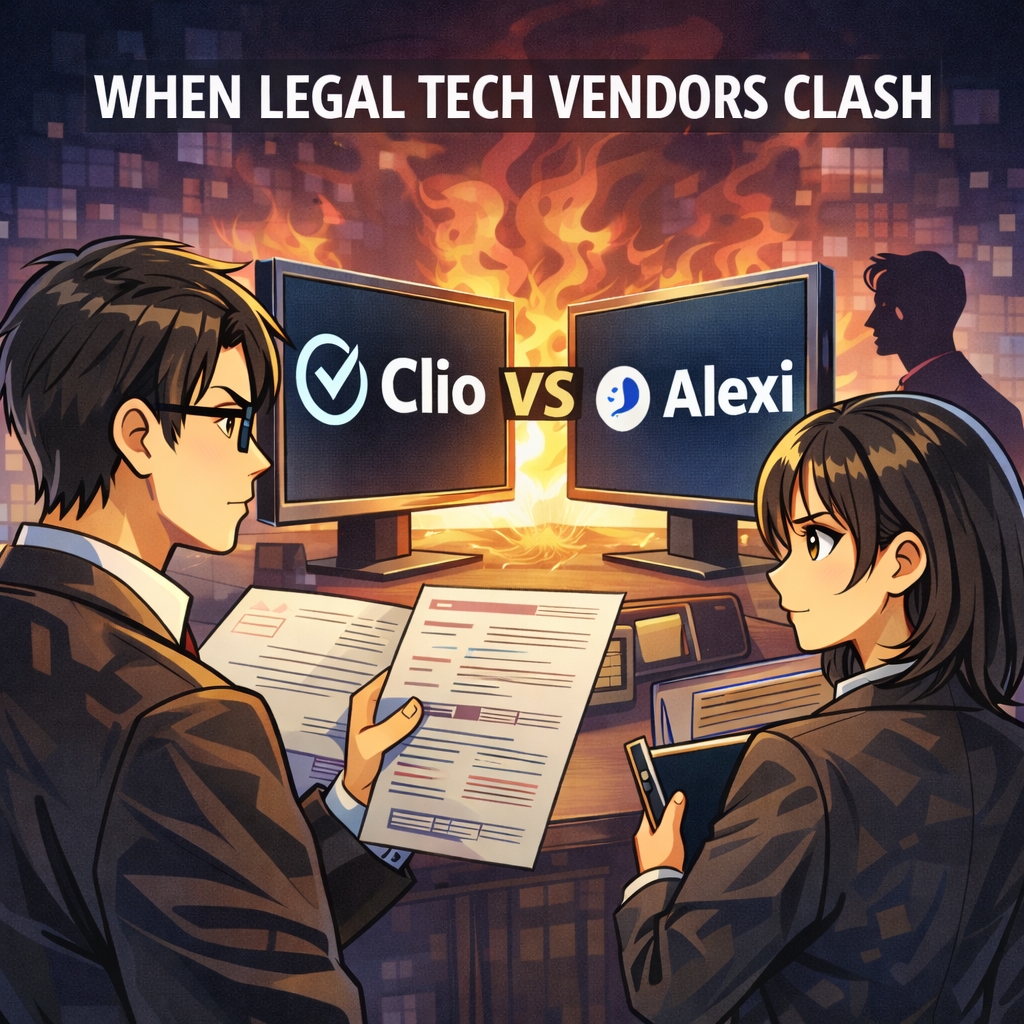
MTC: Clio–Alexi Legal Tech Fight: What CRM Vendor Litigation Means for Your Law Firm, Client Data and ABA Model Rule Compliance ⚖️💻

Competence, Confidentiality, Vendor Oversight!

When the companies behind your CRM and AI research tools start suing each other, the dispute is not just “tech industry drama” — it can reshape the practical and ethical foundations of your practice. At a basic to moderate level, the Clio–Alexi fight is about who controls valuable legal data, how that data can be used to power AI tools, and whether one side is using its market position unfairly. Clio (a major practice‑management and CRM platform) is tied to legal research tools and large legal databases. Alexi is a newer AI‑driven research company that depends on access to caselaw and related materials to train and deliver its products. In broad strokes, one side claims the other misused or improperly accessed data and technology; the other responds that the litigation is “sham” or anticompetitive, designed to limit a smaller rival and protect a dominant ecosystem. There are allegations around trade secrets, data licensing, and antitrust‑style behavior. None of that may sound like your problem — until you remember that your client data, workflows, and deadlines live inside tools these companies own, operate, or integrate with.

For lawyers with limited to moderate technology skills, you do not need to decode every technical claim in the complaints and counterclaims. You do, however, need to recognize that vendor instability, lawsuits, and potential regulatory scrutiny can directly touch: your access to client files and calendars, the confidentiality of matter information stored in the cloud, and the long‑term reliability of the systems you use to serve clients and get paid. Once you see the dispute in those terms, it becomes squarely an ethics, risk‑management, and governance issue — not just “IT.”

ABA Model Rule 1.1: Competence Now Includes Tech and Vendor Risk

Model Rule 1.1 requires “competent representation,” which includes the legal knowledge, skill, thoroughness, and preparation reasonably necessary for the representation. In the modern practice environment, that has been interpreted to include technology competence. That does not mean you must be a programmer. It does mean you must understand, in a practical way, the tools on which your work depends and the risks they bring.

If your primary CRM, practice‑management system, or AI research tool is operated by a company in serious litigation about data, licensing, or competition, that is a material fact about your environment. Competence today includes: knowing which mission‑critical workflows rely on that vendor (intake, docketing, conflicts, billing, research, etc.); having at least a baseline sense of how vendor instability could disrupt those workflows; and building and documenting a plan for continuity — how you would move or access data if the worst‑case scenario occurred (for example, a sudden outage, injunction, or acquisition). Failing to consider these issues can undercut the “thoroughness and preparation” the Rule expects. Even if your firm is small or mid‑sized, and even if you feel “non‑technical,” you are still expected to think through these risks at a reasonable level.

ABA Model Rule 1.6: Confidentiality in a Litigation Spotlight

Model Rule 1.6 is often front of mind when lawyers think about cloud tools, and the Clio–Alexi dispute reinforces why. When a technology company is sued, its systems may become part of discovery. That raises questions like: what types of client‑related information (names, contact details, matter descriptions, notes, uploaded files) reside on those systems; under what circumstances that information could be accessed, even in redacted or aggregate form, by litigants, experts, or regulators; and how quickly and completely you can remove or export client data if a risk materializes.

You remain the steward of client confidentiality, even when data is stored with a third‑party provider. A reasonable, non‑technical but diligent approach includes: understanding where your data is hosted (jurisdictions, major sub‑processors, data‑center regions); reviewing your contracts or terms of service for clauses about data access, subpoenas, law‑enforcement or regulatory requests, and notice to you; and ensuring you have clearly defined data‑export rights — not only if you voluntarily leave, but also if the vendor is sold, enjoined, or materially disrupted by litigation. You are not expected to eliminate all risk, but you are expected to show that you considered how vendor disputes intersect with your duty to protect confidential information.

ABA Model Rule 5.3: Treat Vendors as Supervised Non‑Lawyer Assistants

ABA Rules for Modern Legal Technology can be a factor when legal tech companies fight!

Model Rule 5.3 requires lawyers to make reasonable efforts to ensure that non‑lawyer assistants’ conduct is compatible with professional obligations. In 2026, core technology vendors — CRMs, AI research platforms, document‑automation tools — clearly fall into this category.

You are not supervising individual programmers, but you are responsible for: performing documented diligence before adopting a vendor (security posture, uptime, reputation, regulatory or litigation history); monitoring for material changes (lawsuits like the Clio–Alexi matter, mergers, new data‑sharing practices, or major product shifts); and reassessing risk when those changes occur and adjusting your tech stack or contracts accordingly. A litigation event is a signal that “facts have changed.” Reasonable supervision in that moment might mean: having someone (inside counsel, managing partner, or a trusted advisor) read high‑level summaries of the dispute; asking the vendor for an explanation of how the litigation affects uptime, data security, and long‑term support; and considering whether you need contractual amendments, additional audit rights, or a backup plan with another provider. Again, the standard is not perfection, but reasoned, documented effort.

How the Clio–Alexi Battle Can Create Problems for Users

A dispute at this scale can create practical, near‑term friction for everyday users, quite apart from any final judgment. Even if the platforms remain online, lawyers may see more frequent product changes, tightened integrations, shifting data‑sharing terms, or revised pricing structures as companies adjust to litigation costs and strategy. Any of these changes can disrupt familiar workflows, create confusion around where data actually lives, or complicate internal training and procedures.

There is also the possibility of more subtle instability. For example, if a product roadmap slows down or pivots under legal pressure, features that firms were counting on — for automation, AI‑assisted drafting, or analytics — may be delayed or re‑scoped. That can leave firms who invested heavily in a particular tool scrambling to fill functionality gaps with manual workarounds or additional software. None of this automatically violates any rule, but it can introduce operational risk that lawyers must understand and manage.

In edge cases, such as a court order that forces a vendor to disable key features on short notice or a rapid sale of part of the business, intense litigation can even raise questions about long‑term continuity. A company might divest a product line, change licensing models, or settle on terms that affect how data can be stored, accessed, or used for AI. Firms could then face tight timelines to accept new terms, migrate data, or re‑evaluate how integrated AI features operate on client materials. Without offering any legal advice about what an individual firm should do, it is fair to say that paying attention early — before options narrow — is usually more comfortable than reacting after a sudden announcement or deadline.

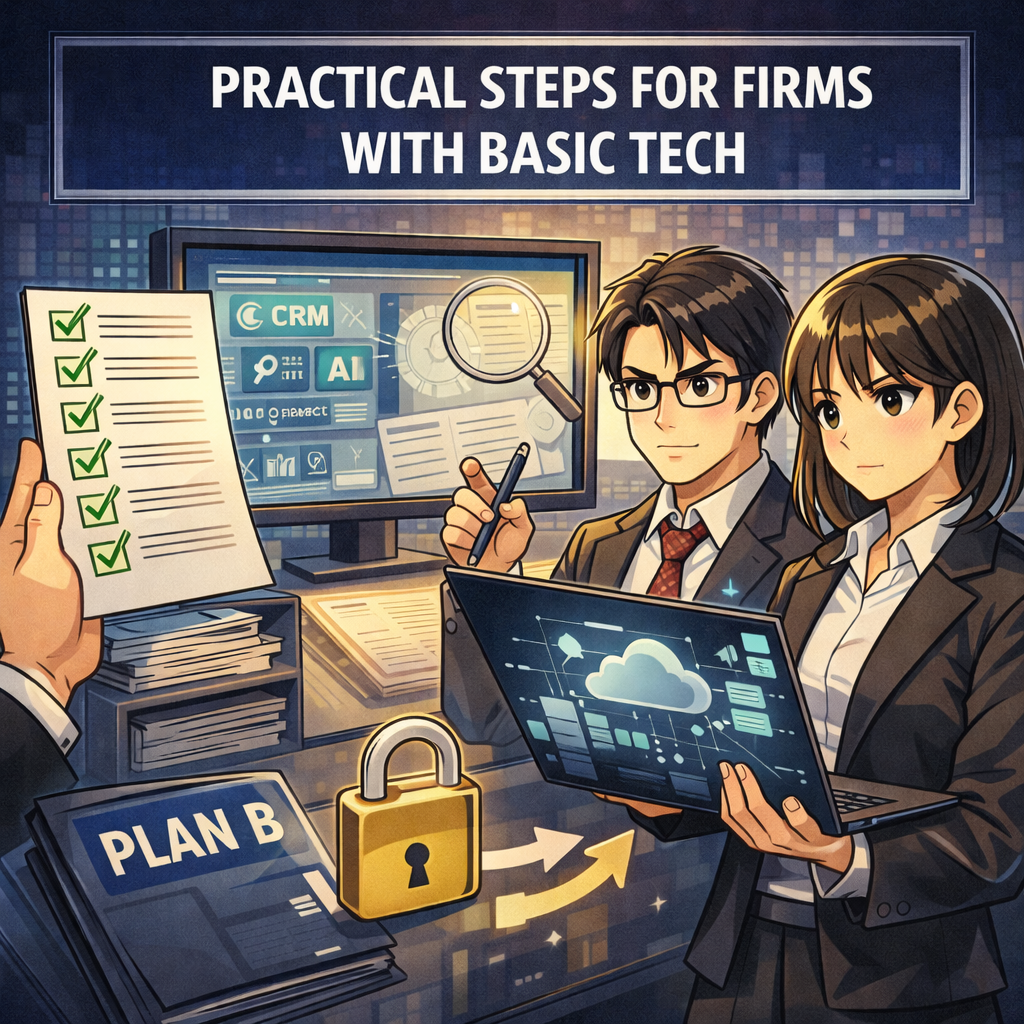
Practical Steps for Firms at a Basic–Moderate Tech Level

You do not need a CIO to respond intelligently. For most firms, a short, structured exercise will go a long way:

Practical Tech Steps for Today’s Law Firms

  1. Inventory your dependencies. List your core systems (CRM/practice management, document management, time and billing, conflicts, research/AI tools) and note which vendors are in high‑profile disputes or under regulatory or antitrust scrutiny.

  2. Review contracts for safety valves. Look for data‑export provisions, notice obligations if the vendor faces litigation affecting your data, incident‑response timelines, and business‑continuity commitments; capture current online terms.

  3. Map a contingency plan. Decide how you would export and migrate data if compelled by ethics, client demand, or operational need, and identify at least one alternative provider in each critical category.

  4. Document your diligence. Prepare a brief internal memo or checklist summarizing what you reviewed, what you concluded, and what you will monitor, so you can later show your decisions were thoughtful.

  5. Communicate without alarming. Most clients care about continuity and confidentiality, not vendor‑litigation details; you can honestly say you monitor providers, have export and backup options, and have assessed the impact of current disputes.

From “IT Problem” to Core Professional Skill

The Clio–Alexi litigation is a prominent reminder that law practice now runs on contested digital infrastructure. The real message for working lawyers is not to flee from technology but to fold vendor risk into ordinary professional judgment. If you understand, at a basic to moderate level, what the dispute is about — data, AI training, licensing, and competition — and you take concrete steps to evaluate contracts, plan for continuity, and protect confidentiality, you are already practicing technology competence in a way the ABA Model Rules contemplate. You do not have to be an engineer to be a careful, ethics‑focused consumer of legal tech. By treating CRM and AI providers as supervised non‑lawyer assistants, rather than invisible utilities, you position your firm to navigate future lawsuits, acquisitions, and regulatory storms with far less disruption. That is good risk management, sound ethics, and, increasingly, a core element of competent lawyering in the digital era. 💼⚖️

🎙️ Ep. 113 - How Seth Price Scaled a 50-Lawyer Firm and Digital Agency: Tech, Cloud, and the Future of Legal Marketing!

Seth Price, founding partner of Price Benowitz LLP and CEO of BluShark Digital, shares deep insights on leveraging technology to scale law firms. He highlights Salesforce, Clio, and Smart Advocate as essential tools, discussing their specific roles in case management and marketing automation. Seth outlines the evolution of digital marketing for lawyers, stressing the importance of content, links, and local reviews in SEO strategy. He offers tips for interpreting Google Analytics and staying ahead of algorithm changes. Concluding with advice on future-proofing practices, Seth urges law firm leaders to invest in adaptive tech stacks and remain inquisitive amid rapid innovation.

Join Seth and me as we discuss the following three questions and more!

  1. What are the top three pieces of tech, software, or hardware you use to scale price benefits from a two-person firm to over 50 attorneys?

  2. What are the top three ways you've seen digital marketing change for lawyers, and can you give us a tip for each one?

  3. What are your top three tips for law firm leaders looking to future-proof their practices amid rapid technological change?

In our conversation, we cover the following:

[01:23] Seth's Tech Setup

[09:50] Top Three Tech Tools for Scaling Price Benefits

[11:27] Detailed Explanation of Clio and SmartAdvocate

[12:40] Digital Marketing Changes for Lawyers

[16:09] Importance of Local Search and Reviews

[19:00] Tips for Understanding Google Analytics

[25:13] Final Tips for Future-Proofing Law Firms

Resources:

Connect with Seth:

Hardware mentioned in the conversation:

Software & Cloud Services mentioned in the conversation:

CLIO Con 2023, Day One!

The tech-savvy lawyer at the clio con 2023 in nashville, TN!

This year, I was invited to attend the 2023 CLIO Con as a member of the media. I’ll be reporting from the conference held this year at the Nashville, Gaylord Opryland Resort & Convention Center in Nashville, TN. Lawyers and some non-lawyers are attending from around the world!

I am excited to learn and report on how CLIO is embracing technology into the practice of law.  Artificial Intelligence has certainly put the spotlight on lawyers’ use of technology in their work. While AI may be new, the use of technology has steadily been implemented into the practice of law for at least four or five decades.

2023.10, CLIO CON Gaylord Conference Center at the Gaylord Conference Center in Nashville, TN.

I’m not a CLIO user myself. That fact should not serve as a commentary on CLIO nor reflect any bias in my reporting. I am not aware of other lawyer practice management programs (or even any client relationship management programs) putting on a program similar to CLIOs.  Regardless, I’m here to learn what can be done with technology to hopefully improve the practice of law, help our clients better, and enhance our own lives. I hope my reporting will help you learn why you may want to attend a CLIO conference or something similar – perhaps the ABA Techshow in Chicago. Stay tuned! I have some exciting news related to it soon!

Feel free to send me any e-mails or leave comments on the blog if you have any questions!

Enjoy & Happy Lawyering!

On my way to Nashville for The Tech-Savvy Lawyer.Page !

Heading for my preordered cofefe at iad before my plane takes off!

I’m on my way to Nashville for tonight's American Legal Technology Awards Gala 2023 and the 2023 Clio Cloud Conference.  I am happy to attend the Gala as last year's recipient of the ALTA for my work on The Tech-Savvy Lawyer.Page Podcast

I’ll then be attending the conference as a member of the media.  I’ll be providing insights and updates on the event's proceedings.  Whether you are a Clio user or not, I think we can all learn something from this conference.

Meanwhile, as I head to Nashville, here is a friendly pro tip to pre-order your Starbucks via the app so you can skip those lengthy airport lines.

Skip the lines for starbucks at the airport - use the app - order a head!

Stay tuned for updates throughout the week!

Meanwhile, as I head to Nashville, here is a friendly pro tip to pre-order your Starbucks via the app so you can skip those lengthy airport lines.

Stay tuned for updates throughout the week!