Shout Out: Previous Podcast Guest Ruby Powers Invites Your The Tech-Savvy Lawyer.Page Blogger and Podcaster Back on Power Up Your Practice!

I recently had the honor of joining Ruby Powers on her Power Up Your Practice Podcast, and I could not be more excited about what we covered for fellow lawyers. We talked about legal podcasting as a practical, ethical, and highly effective way for attorneys to build visibility, deepen relationships, and modernize their marketing without needing to be “hardcore tech people.”

On Ruby’s show, I shared why I believe that podcasting is becoming the new networking standard for lawyers. When you regularly publish episodes—whether about your day-to-day practice, a niche topic, or even a related interest—you push your name and your ideas into the online world in a consistent way. Search engines and AI systems notice this. Over time, your name and your content start to surface more often when people search for your practice area, your type of work, or your expertise. That is real SEO, and it comes from steady, quality content rather than tricks or gimmicks.

Another reason I encourage lawyers to podcast is simple: your voice makes you more human. Listeners hear how you think and how you explain things. They hear your tone and your values. That goes far beyond a static bio or a profile page. Whether your audience is potential clients, referral sources, peers, or the broader public, a podcast lets them get to know you in a safe and scalable way. This is networking that keeps working for you even when you are in court, in a hearing, or taking a much-needed break. 🌟

I also understand that many lawyers hesitate because they are concerned about ethics. That concern is healthy. As attorneys, we cannot ignore ABA Model Rules and similar state rules when we put content into the world. On the podcast, Ruby and I discussed that while a show can be an excellent educational and marketing tool, we must avoid giving individualized legal advice and avoid accidentally creating an attorney–client relationship. I strongly recommend clear, prominent disclaimers that explain the podcast is for informational purposes only, does not create an attorney–client relationship, and should not be relied on as legal advice for any specific matter.

This aligns with our obligation of competence under Model Rule 1.1, which now includes understanding relevant technology, and with our duties around communications and advertising under Model Rules 7.1 and following. A well-run legal podcast respects those boundaries. It presents general information and insights, and it invites listeners to seek formal counsel if they need advice for their specific situation. When you treat your podcast as education plus relationship-building, not as a substitute for representation, you are already thinking in the right direction.

In our conversation, Ruby and I also addressed a common fear: “I’m not tech-savvy enough to start a podcast.” As someone known as the Tech-Savvy Lawyer, I want to be clear: you do not need to be a full-time tech enthusiast to do this. You likely already have access to most of what you need. A solid microphone, a decent camera, and a platform like Zoom, Riverside, or StreamYard can take you surprisingly far. Many of these tools are user-friendly and continue to improve. You can start with the basics and then layer on more sophistication as you grow more comfortable. 🎧

Ruby shared her own experience of initially overthinking her podcast. She wanted it to be perfect, and that almost stopped her from launching. I hear that from lawyers all the time. My advice is simple: do not wait for perfect. Your early episodes will probably make you cringe later, which means you are improving. That is a good sign. Focus on clear audio, honest content, and consistent scheduling. Over time, you can refine your editing, your format, and even your branding. You can bring in a contractor or a service to help with editing once you know you want to keep going.

We also discussed the flexibility podcasting offers. You can publish weekly, every other week, or monthly. You can create solo episodes where you explain key topics. You can host interviews with colleagues, experts, or community leaders. You can even experiment with live formats, where audience members submit questions in advance, and you answer them at a general, educational level. The format should fit your bandwidth, your goals, and your audience.

One concept I emphasized is the idea of an “ideal listener” or avatar. Before you hit record, think about exactly who you are speaking to. Is it a potential client in a specific practice area? Other lawyers in your niche? Law students or young practitioners? Having that profile in mind will guide your topic choices, your language, and your examples. It also helps you stay focused on value rather than drifting into random conversations that do not support your goals.

From a business perspective, legal podcasting can support your referral network in powerful ways. Colleagues can share your episodes, which subtly introduce you as a trusted resource. Prospective clients may listen to several episodes before they ever contact you, which means they arrive already familiar with your style and approach. That can shorten the trust-building curve and make consultations more productive.

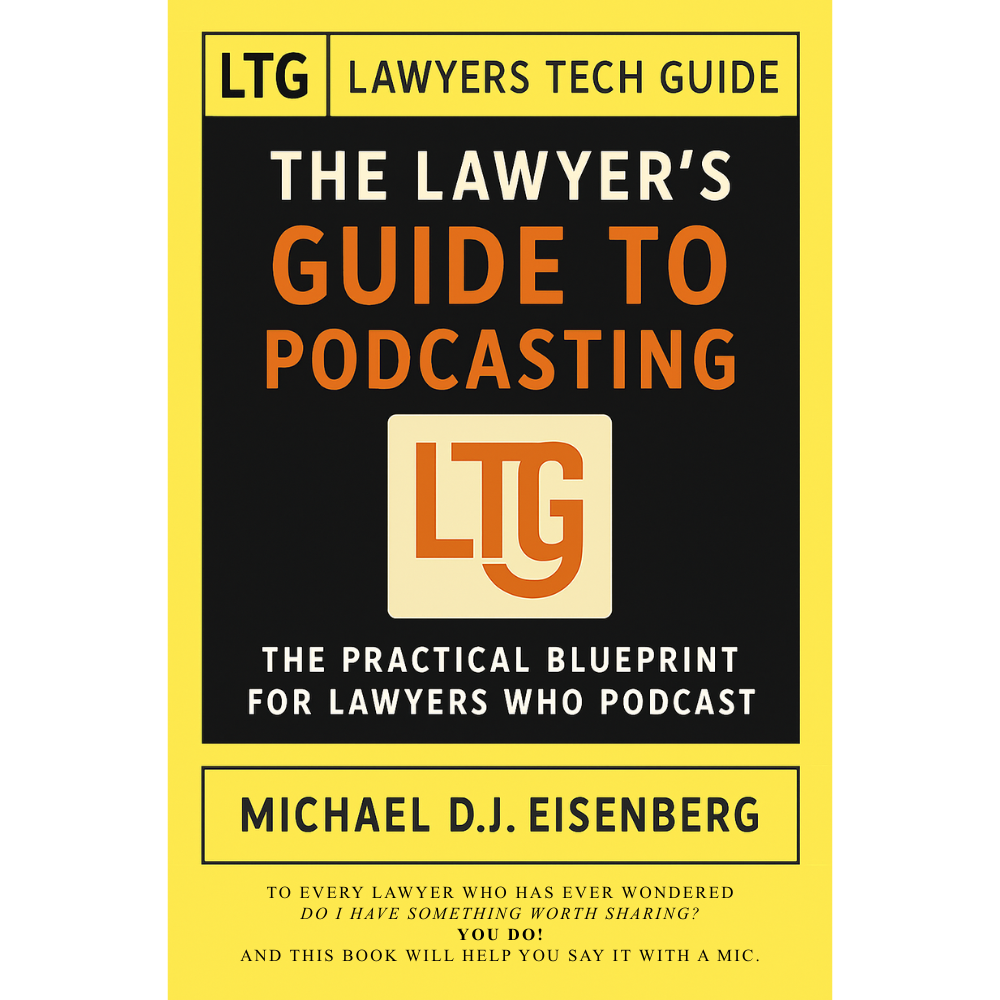
What I appreciate about Ruby’s Power Up Your Practice platform is that it treats podcasting not as a vanity project, but as part of a larger ecosystem of law practice management, technology, and professional development. My appearance on her show gave me a chance to tie together what I see in my own practice, my blog, my podcast, and my book: lawyers do not need to fear technology. We need to engage with it thoughtfully, guided by the same ethics and judgment we apply in every other part of our work.

If you are a lawyer with limited to moderate tech skills and you have been on the fence about starting a podcast, I invite you to listen to my conversation with Ruby and let it serve as a practical, encouraging blueprint. You will hear that you are not alone in your concerns, that there are clear ways to stay compliant with ABA Model Rules, and that the path to becoming a “tech-savvy lawyer” does not require perfection—only willingness, consistency, and a focus on delivering value. 🚀

Enjoy!
🎙️ Ep. 129, Why Lawyers Should Podcast in the Age of AI: Live Roundtable from Podfest 2026 🎙️⚖️

In this special episode, recorded live from Podfest 2026 in Orlando, FL at the Renaissance Marriott Hotel near SeaWorld, I was able to gather several attendees who are in the legal world—lawyers and legal industry marketers—to talk about why lawyers should podcast and more! 🎙️ Our roundtable features Dennis “DM” Meador (Legal Podcast Network), Louis Goodman (Love Thy Lawyer), Robert Ingalls (Lawpods), Wendi Weiner (The Writing Guru), and Elizabeth Gearhart (Passage to Profit / Gearhart Law), each bringing deep experience in podcasting, legal marketing, and personal branding for lawyers.

We discuss practical, no-fluff insights about how lawyers can use podcasting to build authority, strengthen SEO, show up in large language models (LLMs) like ChatGPT, and connect more authentically with clients and referral sources. Whether you are tech-curious, tech-comfortable, or completely new to podcasting, this episode will help you decide if starting a podcast makes strategic sense for your practice or business.

QUESTIONS WE DISCUSS 🎯

Join Dennis, Louis, Robert, Wendi, Elizabeth, and me as we discuss the following three questions and more!

  1. Why should lawyers be podcasting in 2026 and beyond, especially with Gen Z and Gen Alpha getting so much of their trusted information from podcasts and social platforms?

  2. What is one of the first concrete steps a lawyer should take if they are seriously considering launching a podcast of their own?

  3. What is one of the biggest mistakes lawyers should watch out for when launching a podcast, and how can they avoid becoming a “zombie podcast” that dies after a few episodes? 🧟‍♂️

Additional themes we explore include:

  • How podcasting acts as an “electronic resume” and trust-building tool for lawyers.

  • How podcasts can drive SEO, get you discovered in LLMs like ChatGPT, Google Gemini, Perplexity, and Claude, and generate traffic to your law firm website.

  • Why your podcast does not always need to be “about the law” to be effective for your legal brand.

  • How to balance authenticity (including salty language) with your professional brand and ethics rules.

TIME-STAMPED EPISODE GUIDE ⏱️

In our conversation, we cover the following:

  • 00:00 – Welcome & guest introductions
    Live from Podfest 2026: intros from Dennis “DM” Meador (Legal Podcast Network), Louis Goodman (Love Thy Lawyer), Robert Ingalls (Lawpods), Wendi Weiner (The Writing Guru), and Elizabeth Gearhart (Passage to Profit / Gearhart Law).

  • 02:00 – Why should lawyers be podcasting?

    • Gen Z and Gen Alpha treat podcasts as a top trusted media source. 📲

    • Podcasting vs TikTok for lawyers who don’t want to dance but still want reach.

    • Podcast as “electronic resume” and branding vehicle for lawyers and judges.

  • 04:30 – Is podcasting right for every lawyer?

    • Robert on why not every lawyer should podcast, and why goals matter.

    • How a podcast helps potential clients decide if you are “their” lawyer—or not.

  • 06:30 – Personality, language, and fit

    • The Tampa PI lawyer who refuses to bleep swear words to attract the right clients and repel the wrong ones. 🤬

    • Why authenticity can be a powerful qualification tool, not a liability.

  • 08:00 – Podcasting as a marketing engine

    • Turning a 30–60 minute recording into video clips, written content, and evergreen assets.

    • How podcast content keeps working for you long after the recording session.

  • 09:30 – Personal branding and storytelling for lawyers

    • Wendi on using podcasts to develop a personal brand, tell your story, and highlight your “superpower” as a lawyer.

    • Why sharing your career pivots and non-traditional path resonates deeply with listeners.

  • 12:00 – Getting discovered in ChatGPT and other LLMs

    • Elizabeth on using a podcast and transcripts to improve visibility in ChatGPT, Google Gemini, Perplexity, and Claude. 🤖

    • How regular podcasting and transcript optimization sustained and improved hits from LLMs to Gearhart Law’s website.

  • 15:30 – Future-proofing and “language-based internet”

    • DM explains why we’re moving from a page-based to a language-based internet and why early podcast adopters will win—similar to early website and SEO adopters.

    • Podcasting as both “future-proofing” and “present-proofing” your practice.

  • 18:00 – Hobby vs business podcast

    • Louis on starting his podcast as a social hobby and discovering the SEO and networking upside.

    • How a niche local legal podcast can drive referrals and reputation even without direct monetization.

  • 21:00 – How personal is too personal?

    • Robert’s own experience evolving his podcast from estate planning to broader personal topics.

    • Balancing sharing about yourself with focusing on the listener’s problem (StoryBrand “guide vs hero” concept).

  • 25:00 – Beyond law: topic flexibility

    • Why your legal podcast can focus on tech, politics, entrepreneurship, or hobbies while still supporting your legal brand.

    • Examples of lawyers podcasting about politics and broader societal issues to grow recognition.

  • 28:30 – Helping lawyers find their story

    • Wendi’s process: asking about upbringing, first-generation experiences, career pivots, athletic feats, and long-term goals to unlock unique stories.

    • How those stories fuel compelling podcast episodes and stronger interviews.

  • 34:00 – Thinking beyond your current role

    • Using podcasting and personal branding to position yourself for boards, politics, and second careers outside traditional law practice.

  • 37:00 – AI hallucinations & validating LLM output

    • Elizabeth’s workflow for cross-checking answers across ChatGPT, Gemini, Perplexity, Claude, and Grok.

    • Why LLMs “love” natural, conversational podcast transcripts as training material.

  • 40:00 – Networking power of “you should be on my podcast”

    • How inviting people as guests changes the dynamic at networking events. 🤝

    • Using podcast guest outreach on LinkedIn and pod-match style platforms.

  • 43:00 – Content, authority, and algorithm signals

    • DM on why consistent, custom content will always outperform gimmicks in SEO and algorithm changes.

    • How podcasts support authority, trust, and long-term discoverability in search and LLMs.

  • 48:00 – Question #2: First steps for lawyers considering a podcast

    • Robert and DM: “Know your why” and who your ideal listener/client really is.

    • Are you using the show for lead nurturing, referral education, or brand visibility?

  • 52:00 – Political/legal shows and indirect monetization

    • Discussion of political/legal commentary podcasts that soft-sell the firm.

    • Why they can work—but why expectations and time horizon matter.

  • 56:00 – Brand consistency before you launch

    • Wendi on auditing your website, LinkedIn, business page, and social handles for consistent branding (e.g., “The Writing Guru”).

    • Using CTAs and data capture to turn podcast listeners into contacts.

  • 59:00 – Knowing your deeper “why”

    • Elizabeth’s “peel the onion” exercise: repeatedly asking why until you reach the core motivation, often helping people out of “impossible situations.”

  • 1:03:00 – Solo vs agency vs studio

    • Pros and cons of DIY gear and production vs working with podcast agencies or studios.

    • Why time value, ethics, and avoiding scams all matter for lawyers.

  • 1:08:00 – Ethics, multi-jurisdiction practice, and global reach

    • How legal ethics, multistate audiences, and global distribution impact what lawyers can say on their podcasts.

  • 1:12:00 – Question #3: Biggest mistakes lawyers make launching a podcast

    • Elizabeth: ethics, off-the-cuff comments, and aligning tone (including swearing) with your brand and practice area.

    • Wendi: perfectionism vs progress—accepting that early episodes will be imperfect but valuable.

    • Robert: no long-term plan and no content strategy, leading to inconsistency and podfade.

    • Louis: underestimating time; a solid 30 minutes of content may require several hours early on.

    • DM: expecting immediate impact and treating podcasting like a short-term campaign instead of a long-term asset.

  • 1:22:00 – Test-driving podcasting as a guest first

    • Why appearing as a guest on other shows (via Podmatch and similar platforms) is a smart “trial run” before launching your own.

  • 1:25:00 – Where to find today’s guests & closing

    • Each guest shares their preferred platforms, emails, and websites so you can connect and learn more.

RESOURCES 📚

Connect with our Guests

Louis Goodman ⚖️

Elizabeth Gearhart 📻

Robert Ingalls 🎧

Dennis “DM” Meador 💼

Wendi Weiner ✍️

Mentioned in the episode

Non‑Hardware/Software 🔍

Hardware mentioned 🧰

(Exact models are discussed generally rather than by SKU, but here are representative links to explore.)

Software & Cloud Services mentioned ☁️