Why Macstock 2026 Should Be on Every Tech-Savvy Lawyer’s Calendar (and How to Save $50 with My Code) ⚖️💻

macstock 2026 will be held july 10, 11 & 12, 2026!

If you’re a solo, small-firm, or AI‑curious lawyer who lives in the Apple ecosystem, Macstock 2026 is one of the few conferences that genuinely respects both your time and your tech stack. It’s a three‑day, community‑driven, Apple‑centric event where you can sharpen your skills with your Mac, iPhone, and iPad, and walk away with workflows you can actually deploy on Monday morning.

This year, I’m honored to be speaking at Macstock X on “Podcasting with Apple: From Idea to Launch Using the Gear You Already Own.” We’ll take a practical walk through planning, recording, and publishing a professional‑quality podcast using the same devices you already carry into court, client meetings, and your home office. Whether you want to build a niche show for veterans’ benefits, family law, or small‑business compliance—or simply become a more confident guest on other podcasts—this session is designed to be accessible, concrete, and repeatable. 🎙️

What Makes Macstock Different (and Why Lawyers Should Care)

Macstock isn’t a generic tech expo with a handful of Apple sessions bolted on; it’s an independent, Apple‑focused conference built for people who actually use Apple gear every day. The attendees range from first‑time Mac users to seasoned creators, but everyone shares a common goal: get more from Apple hardware and software without drowning in jargon.

For attorneys, that matters. You’re not trying to become an IT professional. You want to:

  • Capture and organize evidence more efficiently on your iPhone. 📱

  • Draft, annotate, and sign documents on your iPad when you’re away from the office.

  • Automate repetitive tasks on your Mac so you can spend more time on advocacy and less on admin.
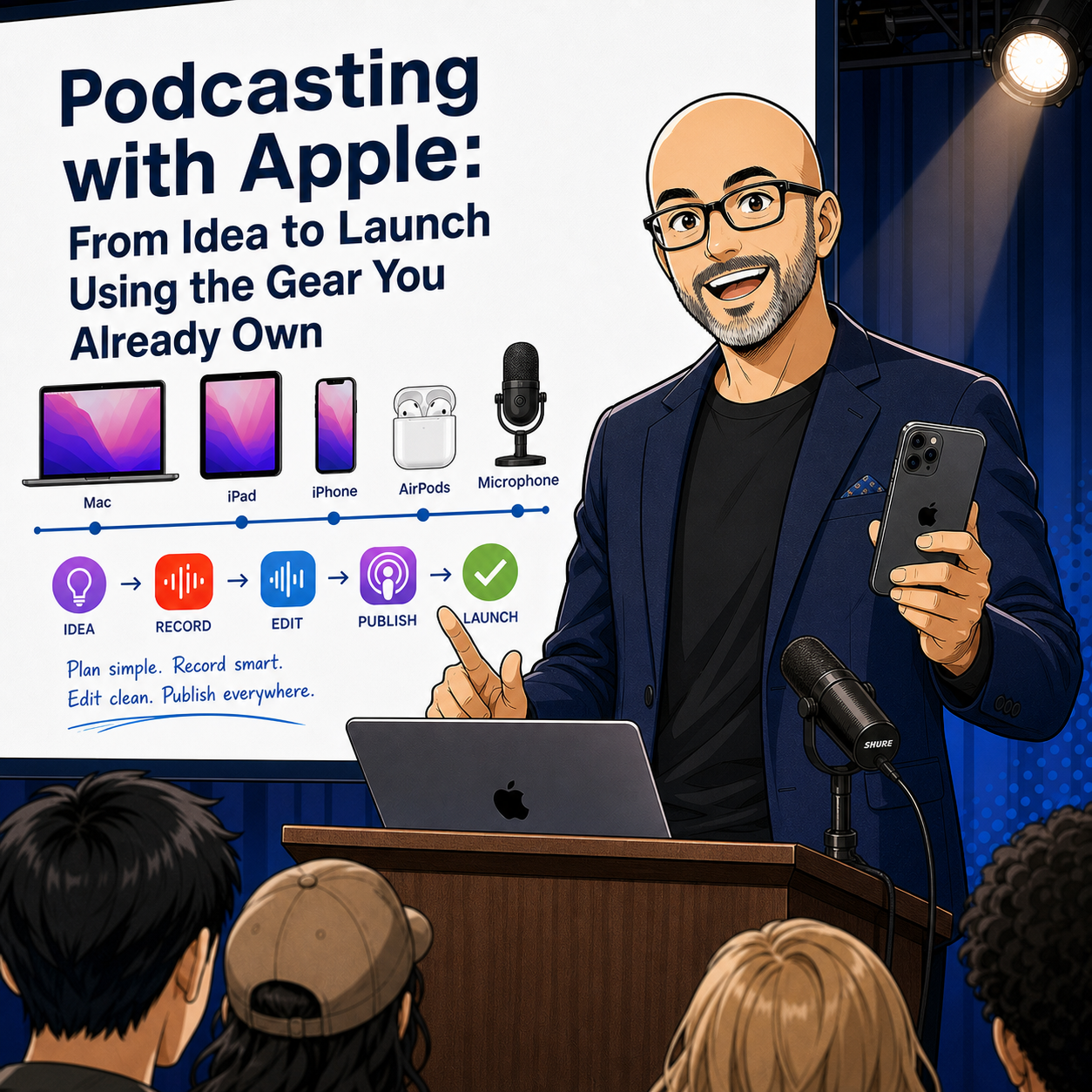
learn how to use your mac to podcast!

Macstock’s sessions, hallway conversations, and Creator Camp tracks are all geared toward real‑world workflows—exactly the kinds of workflows I talk about on The Tech-Savvy Lawyer podcast and blog, including episodes like Ethical AI, Paperless Practice, and Smart Hardware Choices with ABA LTRC Chair Alan Klevan ⚖️🤖 and similar deep‑dives into ethical tech use.

A Time-Sensitive Deal: Save $50 and Support The Tech-Savvy Lawyer

Let’s talk about timing and value. You can use my code TECHSAVVYLAWYER at checkout to save $50 on your Macstock Weekend Pass or Creator Camp Bundle. If you’ve been thinking, “I should go to Macstock one of these years,” this is that year.

For every person who uses the code, Macstock provides me a $25 referral fee. That means:

  • You pay $50 less for a weekend of Apple‑centric, workflow‑rich content.

  • You directly support The Tech-Savvy Lawyer blog and podcast, including future episodes and tutorials.

The code TECHSAVVYLAWYER is not case‑sensitive and is valid through July 8, 2026.

How Macstock Helps You Meet Your Ethical Tech Duties
your The Tech-Savvy Lawyer.Page Blogger and podcaster will be presenting at Macstock x!

Macstock is not marketed as a legal tech conference, but it naturally supports your professional obligations under the ABA Model Rules.

  • Competence — Model Rule 1.1 (Comment 8): You have a duty to keep abreast of the benefits and risks associated with relevant technology. Learning how to securely use Apple devices for uses like document management, client communication, and evidence handling goes directly to your duty of technological competence.

  • Confidentiality — Model Rule 1.6: Many sessions at Macstock touch on system settings, backups, and secure workflows. Understanding how to configure your Apple devices to minimize unauthorized access, especially when using cloud sync and third‑party apps, strengthens your compliance with confidentiality obligations.

  • Communication — Model Rule 1.4: Clear, timely communication often depends on your ability to reach clients where they are—email, secure messaging, or even video updates. The more confidently you use your Apple tools, the more reliably you can keep clients informed.

If there is not a session directly addressing your questions, there are many enthusiastic, friendly attendees and speakers happy to try to help you and your Apple computer needs! 🤗

On The Tech-Savvy Lawyer blog and podcast, we frequently link these ethics points to real tools and scenarios—just as we did in episodes exploring AI, deepfakes, and metadata in digital evidence—and Macstock is a natural extension of that mindset.

Why Lawyers Should Care About Podcasting with Apple

Podcasting can be more than a marketing buzzword. Done right, it can be:

  • A client education channel that answers common questions before they become billable emergencies.

  • A way to build authority in a niche practice area—veterans’ benefits, immigration, special education, you name it.

  • A platform to interview judges, experts, and colleagues in a way that strengthens professional relationships.

My Macstock session, “Podcasting with Apple: From Idea to Launch Using the Gear You Already Own,” is focused on practical, lawyer‑friendly steps. We’ll talk about using your iPhone as a primary microphone, recording with your Mac, organizing episodes in iCloud, and editing in approachable tools—no audio engineering degree required. If you enjoy my conversations with guests on The Tech-Savvy Lawyer podcast, this session will show you what it takes to stand behind the mic yourself.

Community, Not Just Content

One of the things I appreciate most about Macstock is the community. People go back year after year not only because the sessions are strong, but because the hallway track, shared meals, and evening conversations provide real, candid problem‑solving time.

For lawyers—especially solos and small‑firm practitioners—this kind of peer‑to‑peer exchange is invaluable. You’ll find people who:

  • Have already solved a workflow you’re struggling with.

  • Are willing to share templates, shortcuts, and practical advice.

  • Understand the pressure of balancing client work, marketing, and a life outside the office.

If you’ve listened to episodes like my MacVoices “Road to Macstock” appearance in 2024, you’ve heard how much I value that human side of legal tech and Apple tech events.

Ready to Join Me at Macstock?
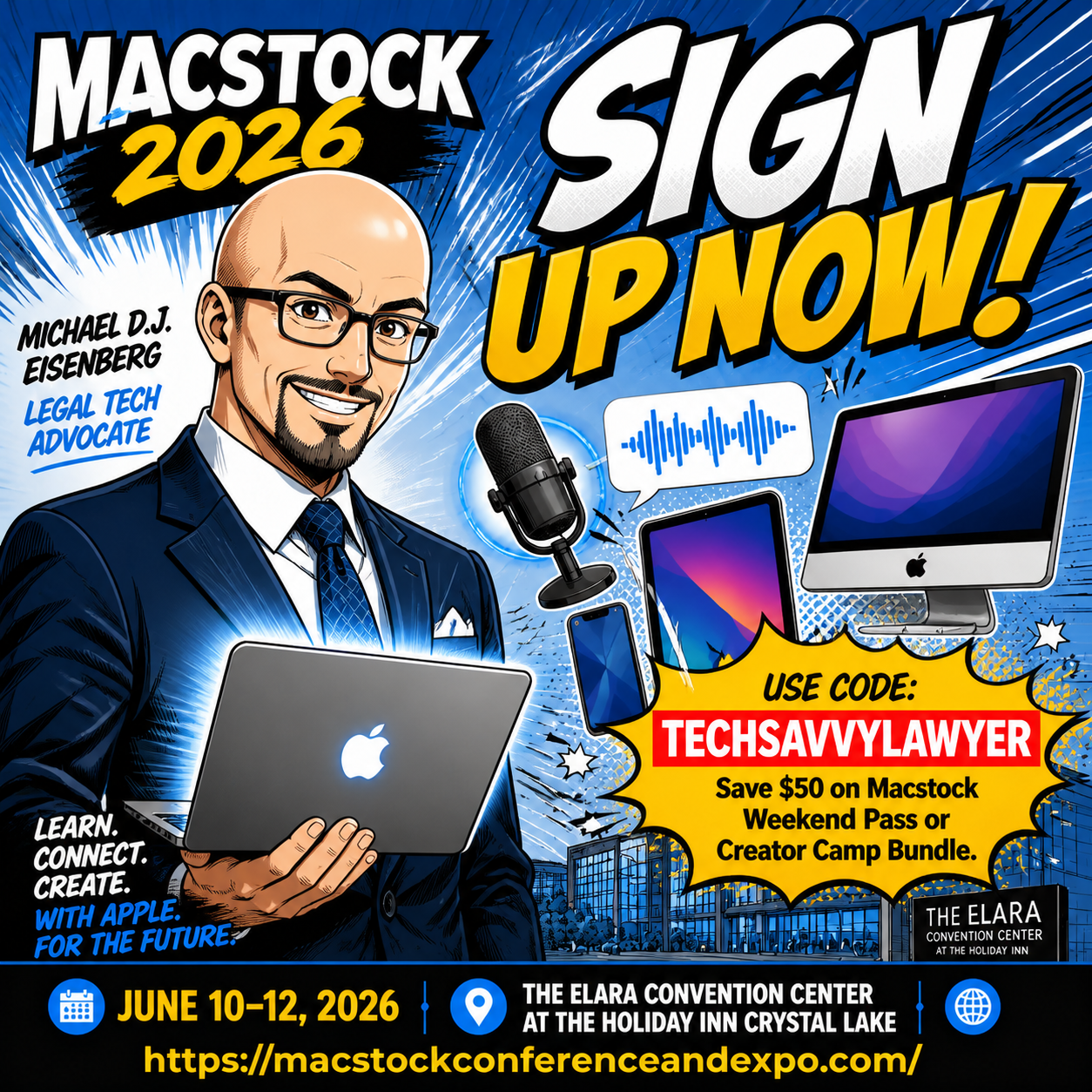
If you’re serious about making your existing Apple gear work harder for your practice—without overwhelming your staff or your budget—Macstock 2026 is worth the trip. You’ll return with actionable workflows, renewed confidence, and a clearer sense of how to align your technology use with your ethical obligations.

Just don’t wait:

  • Sign up at https://macstockconferenceandexpo.com/register/

  • Use code TECHSAVVYLAWYER (not case‑sensitive) for $50 off your Macstock Weekend Pass or Creator Camp Bundle.

  • For every use of the code, I receive a $25 referral fee that helps sustain The Tech-Savvy Lawyer content you rely on.

I look forward to seeing you at Macstock X— and hopefully hearing your voice in the podcasting space soon. 🎧⚖️

Shout Out! A Thunderstorm, Three Books, and a Room Full of Lawyers: Shout Out from The Lawyer’s Guide to Podcasting Launch 🌩🎙

Seth price 📒 Carolyn Elefant 📒 Mindy Eisenberg 📒 Michael D.J. Eisenberg 📒 Wendy meadows 📒 scott

On May 20 in Bethesda, we launched The Lawyer's Guide to Podcasting: Building Your Brand, Audience, Tech Stack, and Expertise! with exactly the kind of energy I hoped this book would inspire: lawyers and legal professionals showing up for each other even as a serious thunderstorm rolled through the DMV. 🌧️🔥

Whether you braved the weather to come out, this post is for you. If you could not make it, think of this as your inside look at how a group of solos, small-firm lawyers, and AI‑curious professionals came together to talk about using podcasting as a serious business tool—one that fits comfortably within the guardrails of our ethics obligations under ABA Model Rules 1.1 (Competence), 1.6 (Confidentiality), and 7.1–7.3 (Communications about legal services).

A launch party built for working lawyers!

We gathered at the home of Carolyn Elefant in Bethesda—yes, in person, with real conversations and real snacks. 🥂 The goal was simple: make podcasting feel less like a mysterious “tech project” and more like a practical, repeatable part of your practice development strategy.

At the event, I walked through three concrete takeaways that mirror the book:

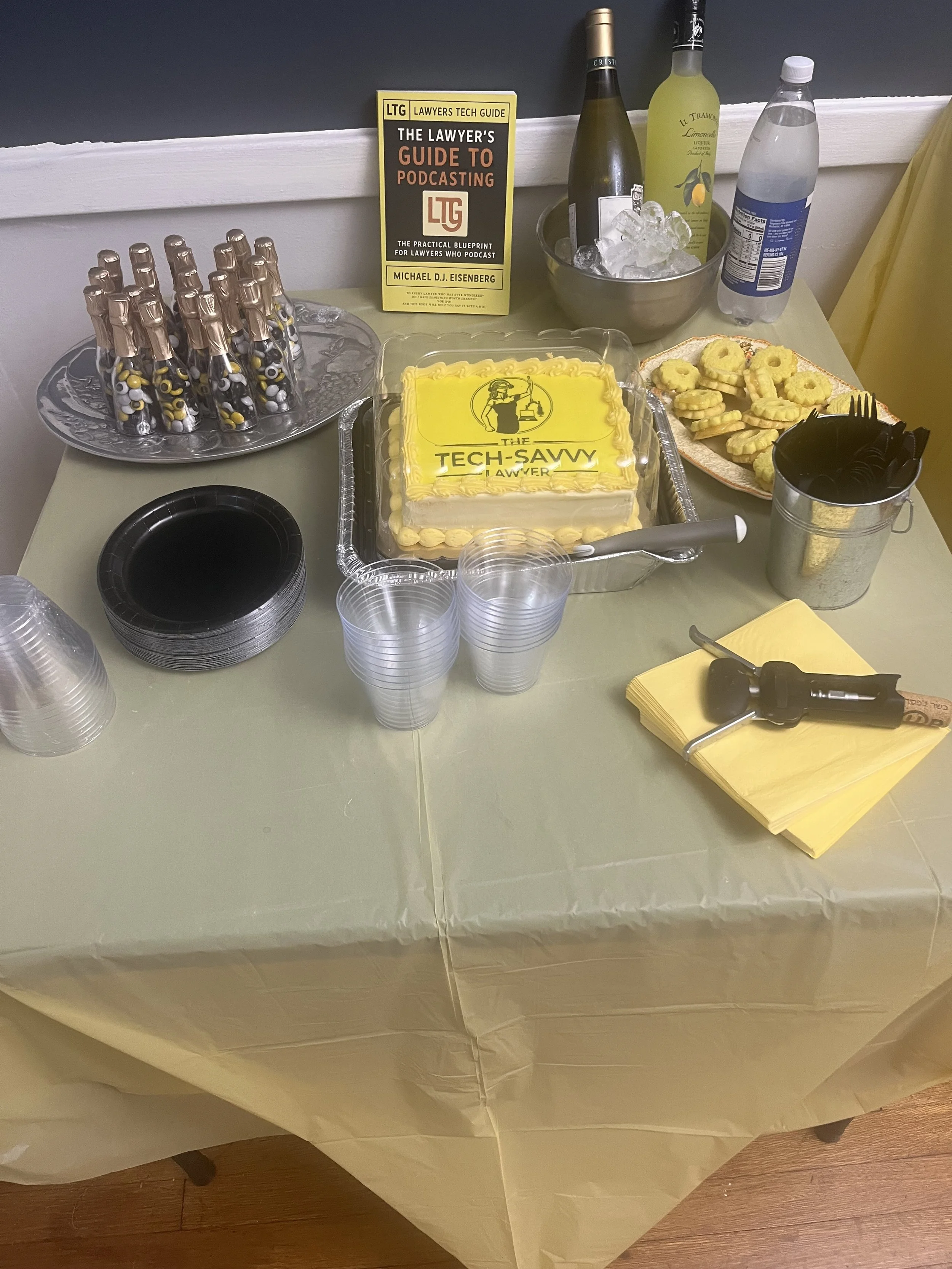
can’t have a launch party without cake!

  • A simple, lawyer‑tested podcast setup that you can actually keep running on a busy docket. 🎧

  • A short checklist of ethical and confidentiality questions to ask before you hit publish.

  • A set of ready‑to‑use episode ideas tailored to your practice area, so you are never staring at a blank calendar.

If those themes sound familiar, it is because they build on what we have discussed in prior posts and podcasts on the The Tech-Savvy Lawyer.Page. Together, they form the groundwork that became The Lawyer’s Guide to Podcasting: Building Your Brand, Audience, Tech Stack, and Expertise! 🎉

Shout Outs to the people who made the night! ⛈️

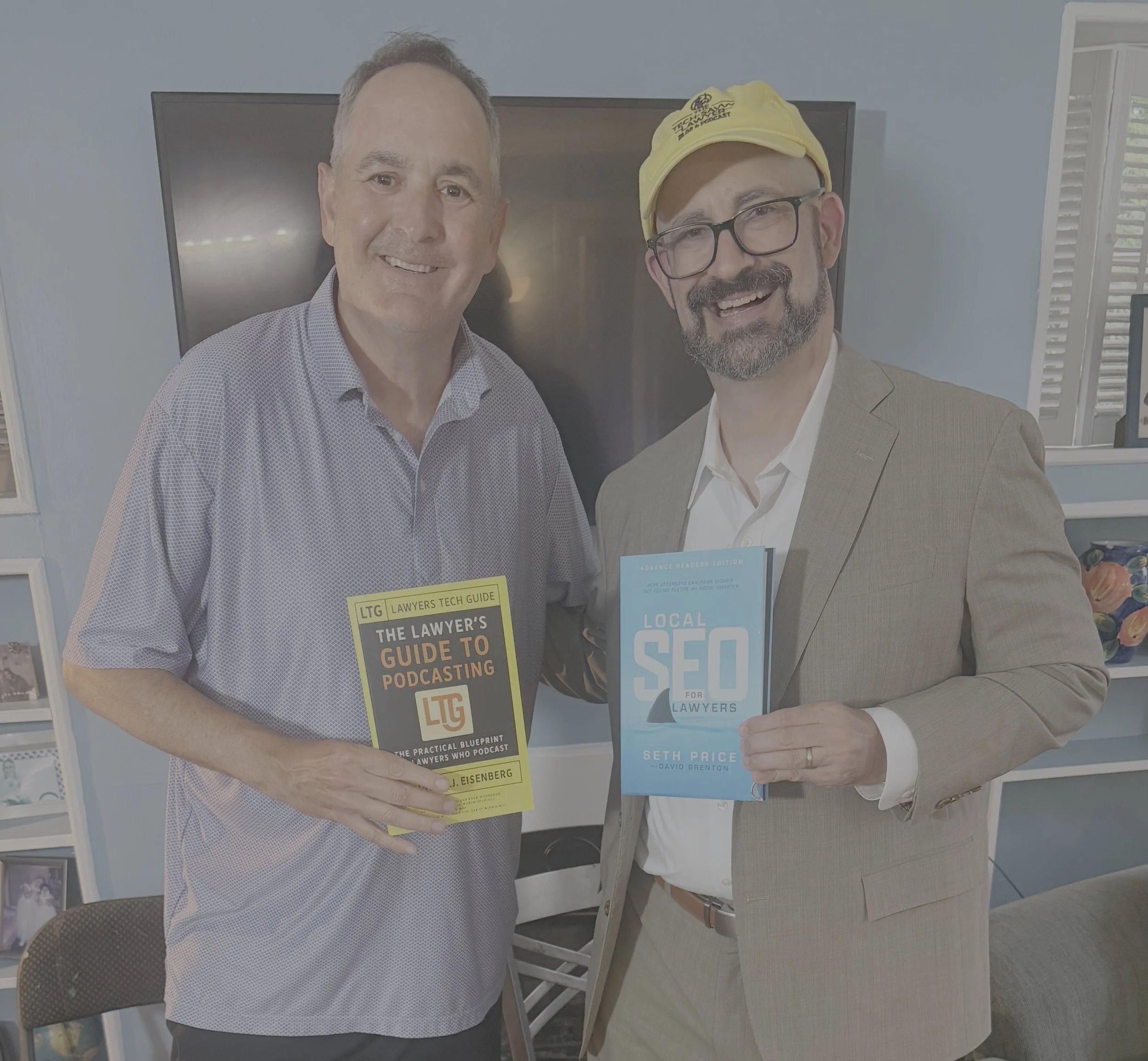
seth price and Michael D.J. Eisenberg exchange copies of their current releases!

A launch is never a solo act, even for a solo practitioner. I want to extend a very public, very appreciative shout out to a few people who made the evening special. 🙌

Finally, a heartfelt thanks to my wife and to every colleague, client, and friend who rearranged schedules and drove through a thunderstorm to be there. That kind of support is not just personally meaningful—it is a reminder that legal tech is at its best when it is rooted in community, not gadgets. 💙

Thank you Carolyn for hosting the book launch!

Why a podcasting book for lawyers—and why now?

If you follow the blog or listened to my guest appearance on Ruby Power’s “Power Up Your Practice”, Ep. 104: Legal Podcasting: The New Networking Standard, you have heard me say that podcasting is no longer a fringe experiment for lawyers. For solos, small‑to‑medium firms, and AI‑curious attorneys, a well‑designed podcast is:

  • An ongoing, searchable FAQ for your ideal clients.

  • A trust‑building channel for referral partners.

  • A training and onboarding tool for your own team.

In The Lawyer’s Guide to Podcasting, I walk through the tech stack and workflows that keep this realistic for a law practice, from microphones and recording platforms to editing, show notes, and ethical review. The idea is not to turn you into an audio engineer. The idea is to give you enough structure and competence that you work the basics yourself and delegate confidently without abdicating responsibility—very much in line with the duty of technological competence that is increasingly recognized under ABA Model Rule 1.1 and its state‑level interpretations.

Ethics, AI, and your voice behind the mic!🎙️

Many lawyers have told me that their hesitation about podcasting is not the microphone; it is the ethics. That is a healthy instinct. 👍

  • Model Rule 1.6 (Confidentiality) means no client can recognize themselves in your war stories without informed consent. In the book, I provide red‑flag questions and anonymization strategies you can bake into your outline before you record.

  • Model Rules 7.1–7.3 (Communications and Advertising) remind us that your podcast is marketing, direct or indirect, even when it feels like pure education. We cover how to structure disclaimers, avoid misleading “results‑typical” language, and respect solicitation limits while still giving real‑world examples.

  • For AI‑curious lawyers using tools like transcription, editing assistants, or AI‑drafted show notes, we address how to keep third‑party tools inside a framework that respects confidentiality and your supervisory responsibilities under the Rules.

If this resonates, you might also enjoy revisiting “Shout Out: Carolyn Elefant’s Review of Casetext v. ChatGPT!”, where she looked at AI in legal research through a similar ethics‑first lens. The same mindset applies here: use the tech, but do not outsource your judgment. 🧠

Where we go from here

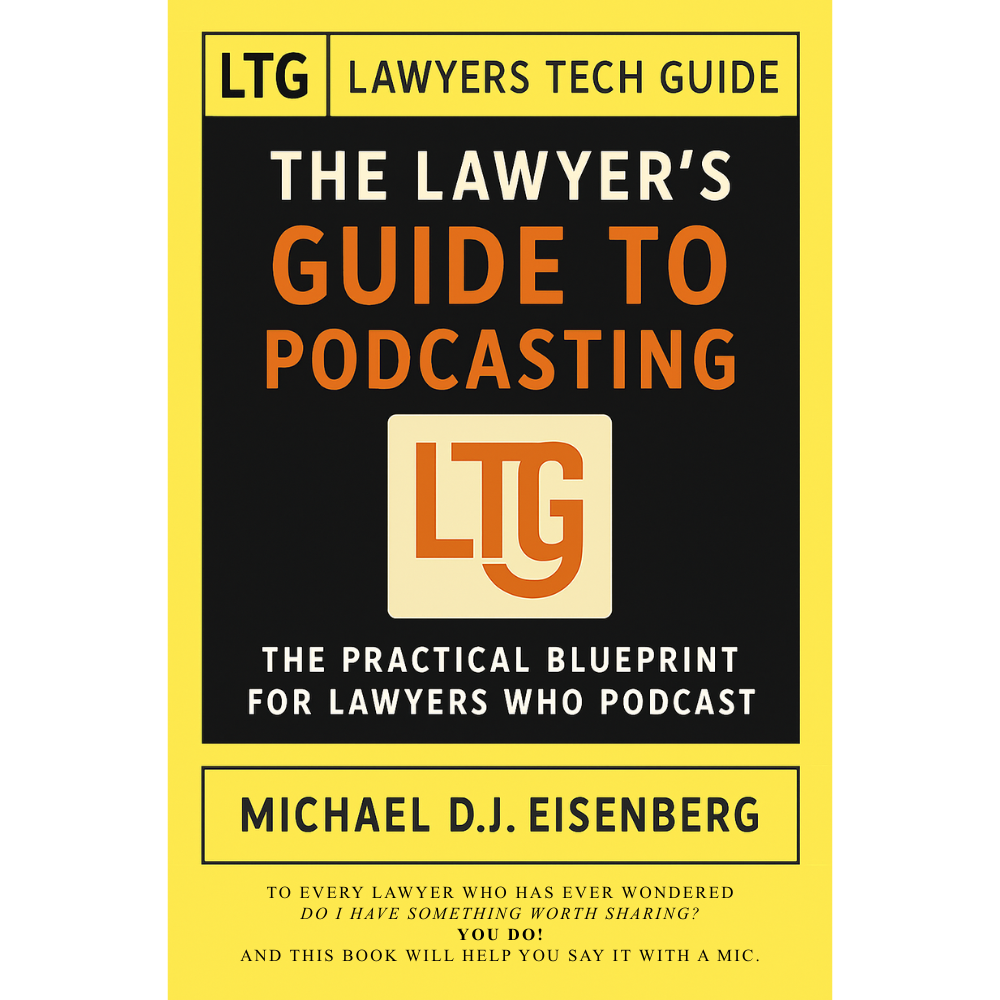
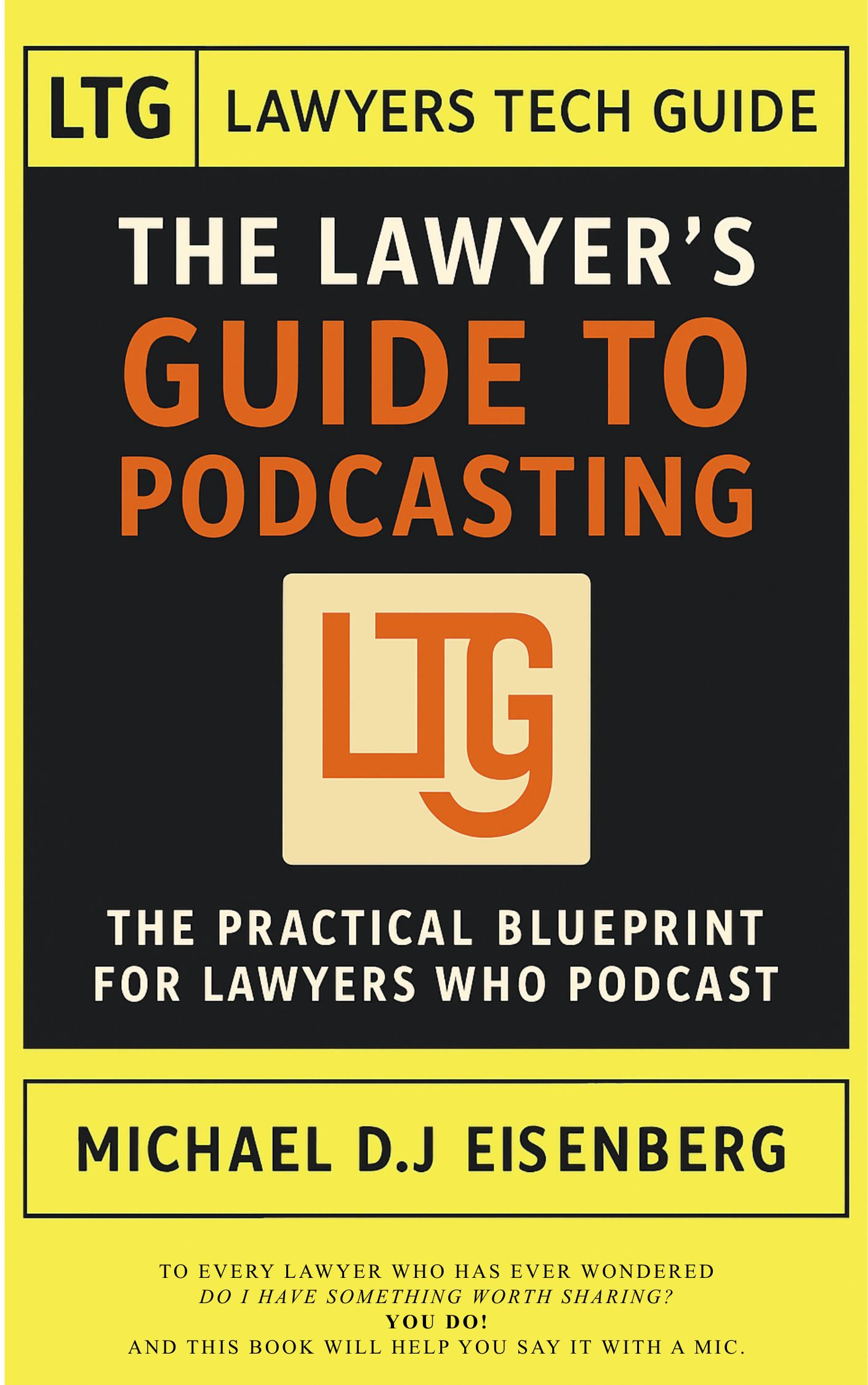
get your copy of The Lawyers tech guide: The lawyer’s guide to podcasting today on amazon!

The launch party was one evening; the conversation will continue in the weeks ahead on this blog and its podcast as we highlight chapters, interview fellow legal podcasters, and share templates you can adapt for your own show.

If you are a solo, a small‑firm partner, or an in‑house counsel looking for a practical roadmap, you can find The Lawyer's Guide to Podcasting: Building Your Brand, Audience, Tech Stack, and Expertise! on Amazon. My hope is simple: the next time a thunderstorm rolls through the DMV—or your own calendar—you will have a system that keeps your podcast, and your practice development, moving forward. 🌩🎙

MTC: AI Won’t Replace Solo and Small-Firm Lawyers — It Will Supercharge Them ⚖️🤖

Solo lawyers can use artificial intelligence as a virtual associate to handle legal research, drafting, intake, and billing in a modern small law firm ⚖️🤖

If you run a solo or small-to-medium firm, you’ve probably heard the predictions: AI will automate legal tasks in “12 to 18 months” or replace traditional lawyers entirely by 2035. Those headlines make great clickbait, but they miss what is actually happening on the ground in smaller practices. AI is not wiping out solo and small-firm lawyers; it is changing the mix of tasks we do — and creating more opportunities for us if we adopt it intentionally and ethically. 

In a recent Washington Post opinion, Damien Charlotin argues that AI won’t replace lawyers. It will create more of them. His logic is especially important for solos and small firms. He describes legal jobs as “bundles of tasks,” many of which are tightly linked and not easily peeled apart for automation. If you’ve ever juggled intake, research, drafting, negotiation, and billing in a single day, you know exactly what that tight bundle feels like. AI is about to start pulling on pieces of that bundle — and your job is to decide how to rebundle your work in a way that serves clients, protects ethics, and keeps your business healthy. ⚖️🤖

Why Solo and Small Firms Should Ignore the Doom Headlines 😅

Charlotin points out that lawyers have never been more numerous in the United States, with law school applications rising and record-high employment in bar-required jobs. That’s happening at the same time as AI hype, which should tell you something: the profession is not collapsing.

For solos and small firms, the bigger risk is not AI replaces me, but AI-literate competitors out-serve my clients. Larger firms may have innovation teams and internal IT, but you have agility and direct control over your workflows. If you can use AI to shave hours off routine tasks — and reinvest that time into client counseling, business development, or flat-fee offerings — you can turn AI from a threat into a differentiator. As I often say on The Tech-Savvy Lawyer.Page podcast, AI is the junior associate you don’t have to hire, but still have to supervise.

Your Practice as a “Tight Bundle” of Tasks 🧩

Charlotin’s “bundles of tasks” concept is tailor-made for solo and small-firm reality. In big firms, tasks can be split across teams; in smaller shops, you wear most of the hats. Research, drafting, strategy, client communication, and billing are often intertwined in a single matter.

For experienced lawyers, Charlotin notes, “doing legal research and evaluating an argument are … often the same mental activity” — we check the argument by writing it. If you offload only the writing to AI, verification becomes a separate, deliberate act that takes time, and if you skip it, you risk sanctions for hallucinated filings. This is why I push solo and small-firm lawyers to treat AI as an assistant that drafts and summarizes, while you retain control over the analysis and final product.

Lessons from E-Discovery for Small Practices 📂➡️📈

Charlotin likens the current AI hype to the e-discovery wave more than a decade ago. Back then, headlines like those from The New York Times predicted “Armies of Expensive Lawyers, Replaced by Cheaper Software.” What actually happened? The volume of discoverable material exploded; the tools became part of practice; and lawyers moved into new roles managing, interpreting, and litigating around that information.

That same Jevons paradox — cheaper processes leading to more usage — is already playing out in tools marketed to solo and small firms. AI-assisted drafting and research platforms now make it viable for smaller shops to handle matters that previously required big-firm staffing, and to offer more predictable pricing without cutting quality. Cheaper legal work often means more legal work — especially for clients who previously couldn’t afford you.

ABA Model Rule 1.1: Competence for Lean Teams 📚

Small law firm team using legal AI tools to improve collaboration, client service, and ABA-compliant workflows across a lean practice 👩‍⚖️👨‍⚖️💻.

For solos and small- to medium-sized firms, ABA Model Rule 1.1 on competence is both a challenge and an opportunity. It requires you to understand “the benefits and risks associated with relevant technology,” including AI. But unlike big firms, you can’t delegate that understanding to an IT department or an internal AI committee; you are the committee.

Practically, that means you need at least a working grasp of what your chosen AI tools do, how they handle data, and where they fit in your workflows. You don’t need to run every experiment at once. Start with one or two high-impact areas — say, summarizing long PDFs, generating first drafts of routine emails, or creating checklists from statutes or rules — and build from there. Competence for solo and small-firm lawyers is not about chasing every new feature; it’s about picking the right tools for your practice and using them deliberately.

Rules 5.1 and 5.3: Supervision When “You Are the Management” 👥🤖

You might think Rules 5.1 and 5.3 (supervision of lawyers and nonlawyers) are big-firm problems. They’re not. If you have even one staff member, contract attorney, or virtual assistant, you are responsible for how they use AI. And even if you’re truly solo, you’re still responsible for supervising the AI tools you deploy as if they were a nonlawyer assistant.

For small practices, the most practical move is a simple written AI policy, even if it’s a one-page document:

  • Which tasks can use AI (e.g., research assistance, first-draft documents);

  • Which tasks require heightened review (e.g., anything filed with a court);

  • Which tasks are off-limits (e.g., unsupervised client advice, sensitive fact patterns pasted into consumer chatbots).

As discussed both in Charlotin’s piece and in bar guidance for smaller firms, formal policies help you avoid ad hoc, inconsistent AI use that could jeopardize client confidentiality or court obligations.

Rule 1.6 Confidentiality: Cloud Tools on a Budget 🔐

Model Rule 1.6 on confidentiality doesn’t change just because you’re a small shop — but your margin for error is thinner. Many solos and small firms rely on cloud-based tools because they can’t host their own infrastructure. That’s fine, as long as you are careful.

Before pasting client facts into an AI tool, you must know whether it stores or reuses data, whether it trains on your inputs, and whether there’s an option for a “no training” or “enterprise” mode. When in doubt, prefer AI features built into reputable legal platforms (research tools, practice management systems, document automation suites) with clear confidentiality commitments, rather than generic consumer apps. On The Tech-Savvy Lawyer.Page, I hammer this point because solos cannot absorb the cost of a major data mishap the way some larger organizations can.

Legislative Inflation and Niche Opportunities for Smaller Firms 📜📈

Charlotin notes that every jurisdiction is “afflicted by legislative inflation” — more rules, more norms, more regulations. That means more interpretation, more disputes, more filings, and more need for lawyers. For solos and small-to-medium firms, this is an opportunity to carve out narrow niches and use AI to keep up with complex, evolving regimes that might otherwise be out of reach.

An AI-enabled solo can monitor regulatory changes, generate quick client alerts, and update templates far faster than before. Combined with targeted content marketing and SEO, this makes it possible to dominate specific micro-niches without a big marketing budget — something I frequently discuss on The Tech-Savvy Lawyer.Page when we talk about modern business development.

Entry-Level Work and the Solo/Small Pyramid 🧑‍🎓➡️⚖️

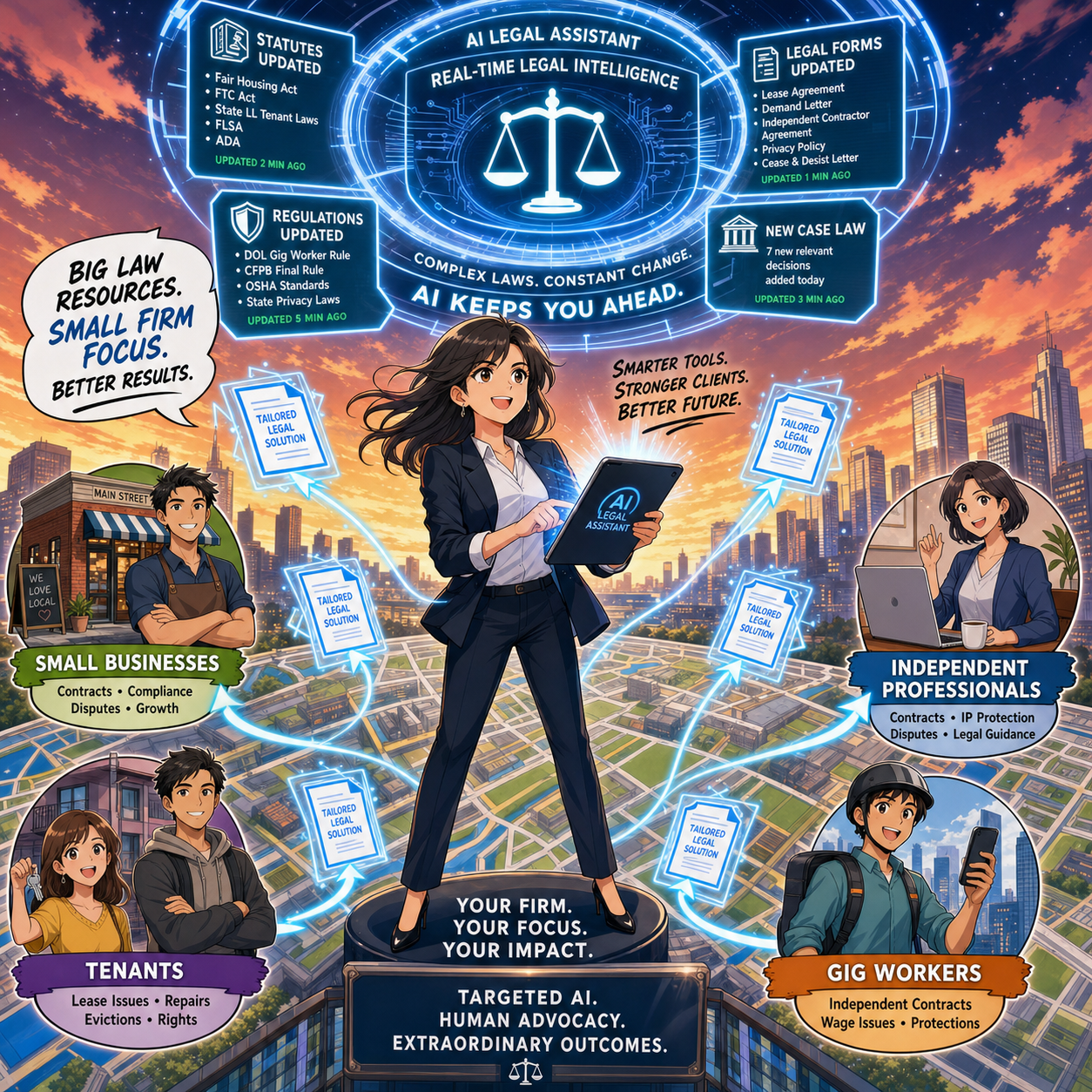
a Small-firm lawyer can use AI-powered legal technology to serve niche clients, track changing regulations, and deliver efficient legal services across a local market 🎯⚖️

Charlotin flags a serious concern: AI may change entry-level work. For big firms, that means rethinking associate leverage. In smaller firms, it means you may hire differently — or delay that first hire because AI picks up some of the routine drafting and research.

But Charlotin also notes that young lawyers are hired for reasons beyond their marginal drafting value — future partnership, signals to clients, bench strength for unpredictable surges. The same is true for small and mid-size firms. AI can handle some grunt work, but it can’t attend a community event, build a local reputation, or bring in referrals. If you use AI to free juniors from the most repetitive tasks, you can push them earlier into client-facing and business-building roles, which is exactly where smaller firms thrive.

Reorganization, Not Replacement — Especially for You 🔄

Charlotin closes by emphasizing that while the profession will look different in 2035, the lawyer is here to stay, and there will likely be more lawyers, not fewer. They will use AI — “they would be fools not to” — and they will charge for that value.

For solo and small-to-medium firms, the reorganization is already underway:

  • Routine drafting and research shift toward AI-assisted workflows.

  • Verification, judgment, and client counseling become even more central.

  • Niche expertise, responsiveness, and pricing flexibility become your competitive edge.

If you treat AI as a core part of your toolkit — governed by the ABA Model Rules and aligned with your business goals — you must position your firm not just to survive the AI wave, but to ride it. ⚖️🤖

Its been said many times by myself and others, lawyers must embrace AI into their practice of law or be left behind by those who do!

MTC: Are Lawyers Really Ready for a Wallet‑Free Future? Digital Wallets, ABA Ethics, and the Reality of Going Fully Cashless 💳⚖️

Tech-savvy lawyers should not leave their physical wallets at home, BUT YOU CAN PROBABLY pare THEM down some.

When previous podcast guest David Sparks over at MacSparky shared his recent post about accidentally going out without his physical wallet—and still making it through the day just fine on his iPhone and Apple Wallet—it captured a quiet shift many of us in the legal profession are grappling with. He walked into his appointment armed only with a digital ID, digital insurance card, and Apple Pay, and everything worked. For a growing number of professionals, that is the new normal. The question for lawyers is more specific: not can we go wallet‑free, but should we—ethically, practically, and professionally—given our obligations under the ABA Model Rules?

Digital wallets are no longer niche tools reserved for tech enthusiasts. Apple Wallet and similar platforms have matured into robust ecosystems that can store payment cards, IDs, insurance cards, transit passes, and even car keys. They sit at the intersection of convenience, security, and risk. As attorneys, we have to examine that intersection with greater rigor than the average consumer, because our technology choices are framed by duties of competence, confidentiality, and client service.

The promise of a wallet‑free practice

On paper, the case for a full digital wallet is compelling. Digital payments can reduce friction at the courthouse café, client lunches, and bar events. Digital IDs eliminate worries about misplacing a physical card. Many platforms add layers of biometric security that traditional wallets can’t match. David notes that Apple Wallet has “been quietly getting better for years,” allowing storage of physical card numbers behind Face ID and making peer‑to‑peer payments a tap‑away. For a solo or small‑firm lawyer, that friction reduction compounds over time into real efficiency.

From a malpractice‑avoidance standpoint, a digital wallet can be safer than a billfold. Losing a traditional wallet means scrambling to cancel credit cards, monitoring for identity theft, and possibly dealing with unauthorized use of your bar ID or access cards. A lost phone, by contrast, can be located, remotely wiped, or locked with strong authentication. Properly configured, it can reduce risk rather than increase it.

This is where ABA Model Rule 1.1 on competence, particularly Comment 8, becomes relevant. The Comment notes that competent representation includes understanding “the benefits and risks associated with relevant technology.” A digital wallet is very much “relevant technology” for a modern practitioner. Choosing not to understand or use it, especially when it offers better security and traceability than analog methods, may itself become a competence question as the bar’s expectations evolve.

The gaps: cash, IDs, and access to justice

There are plenty of reasons not to go “cashless” when leaving home or the office.

Still, David’s hesitation—“there’s a part of me that still feels compelled to carry a small wallet with my driver’s license in it”—should resonate with lawyers. There are pockets of our professional lives where the ecosystem is not ready, and those pockets matter.

First, cash. Many lawyers still tip courthouse staff, parking attendants, baristas near the courthouse, and others in cash—including, in my case, using $2 bills (yes, they are still produced, still accepted, and can be obtained at many banks across the U.S. [At least as of the time of this posting]. I almost always get an excited smile when I tip my barista for his/her work with a $2 bill). Cash remains the lowest‑friction, most universally accepted “protocol” for small-scale human interactions. Refusing to carry any cash at all can put you in awkward social and professional situations, especially in older courthouses or local establishments that either do not take cards or resent micro‑transactions by card. For those committed to cash tipping as a personal or professional habit, a purely digital wallet is not yet a substitute.

Second, physical IDs. While TSA and some states are piloting and accepting digital IDs, acceptance is not universal, and the rules are in flux. David notes he has a state digital ID that “shows up nicely” in Apple Wallet. That is great—until you encounter an agency, judge, clerk, or officer who simply will not accept it. Not all jurisdictions recognize mobile driver’s licenses or digital IDs, and some procedures (e.g., certain filings or in‑person notarizations) still presume a physical, inspectable card. The risk is not hypothetical: show up with the wrong form of ID for a flight or a court security checkpoint, and you may face delay, additional fees, or outright denial of entry.

FROM TSA WEBSITE - “If you are unable to provide the required acceptable ID, such as a passport or REAL ID, you can pay a $45 fee to use TSA ConfirmID. TSA will then attempt to verify your identity so you can go through security; however, there is no guarantee TSA can do so.”

✈️ 🌎 ‼️

FROM TSA WEBSITE - “If you are unable to provide the required acceptable ID, such as a passport or REAL ID, you can pay a $45 fee to use TSA ConfirmID. TSA will then attempt to verify your identity so you can go through security; however, there is no guarantee TSA can do so.” ✈️ 🌎 ‼️

For lawyers, this is not just an inconvenience—it is a competence and diligence issue under Model Rules 1.1 and 1.3. If your failure to carry an accepted ID means you miss a hearing, delay a filing, or cannot visit a client, you have a professional problem, not just a tech annoyance. Likewise, local court rules and security policies may require a specific bar card or government‑issued ID to enter restricted areas. A digital ID on your phone will not help if the sheriff’s deputy at the door has not been trained or authorized to accept it.

Third, connectivity. A digital wallet that is fully dependent on live internet access is a fragile tool in old courthouses with thick stone walls, in rural jurisdictions, or during emergencies. Many modern digital wallets do allow offline transactions at NFC terminals using stored tokens, but not all. If your payment method, ID, or membership pass depends on a cloud verification step and you are in a dead zone—or your battery dies—you effectively have no wallet. Lawyers who rely on public transit, rideshares, or mobile office setups need to consider this in contingency planning, particularly when punctuality is essential.

Digital wallets and legal ethics

From an ethics perspective, digital wallets intersect with several core duties.

Under Model Rule 1.6, protecting client confidentiality extends to how you pay for and manage client‑related expenses. If you are using peer‑to‑peer payment apps or storing client‑related account details in a digital wallet, you must understand their privacy and data‑sharing practices. Some services expose transaction histories, social feeds, or metadata that could inadvertently reveal client relationships or matter details. Configuring strict privacy settings and separating personal from firm accounts is not optional; it is part of your duty of confidentiality.

Model Rule 1.15 on safekeeping property also comes into play if you ever use digital tools to handle client funds, reimbursements, or settlement distributions. While most bars still require traditional trust accounts and closely regulate payment processors, the trend toward digital payments will continue. Using any digital payment or wallet solution around client funds requires careful vetting, written policies, and—ideally—consultation with your malpractice carrier and bar ethics guidance.

Finally, Model Rule 5.3 on responsibilities regarding nonlawyer assistance extends to IT providers and wallet platforms. If your firm relies on third‑party providers to manage mobile device management (MDM), security, or payment integrations, you must make reasonable efforts to ensure their conduct aligns with your professional obligations. Managing digital wallets on firm‑owned or BYOD devices should be governed by a clear policy that addresses encryption, remote wipe, lock‑screen settings, and acceptable use.

Practical guidance: a hybrid, not a cliff

As advanced as our digital wallets are, the legal professional should carry a combination of digital and physical identification, means of payment, and cash!

Given these realities, are we “truly there” yet for lawyers to go fully wallet‑free? Not quite. For most practitioners, the prudent path is a hybrid approach:

  • Carry a slim physical wallet with a government‑issued ID, bar card (if used locally), a minimal backup payment card, and a small amount of cash for tipping and edge cases.

  • Use a digital wallet as your primary payment and convenience layer, especially in environments where it is well‑supported and secure.

  • Confirm, in advance, what IDs your courthouse, correctional facilities, and agencies accept, and do not assume your digital ID will suffice.

  • Harden your digital wallet: enable strong biometrics, ensure a reputable MDM or security solution manages any firm devices, and separate personal from professional payment flows where possible.

This hybrid approach aligns with Model Rule 1.1’s requirement to understand and responsibly adopt relevant technology while honoring the practical demands of courtroom work and client service. It allows you to benefit from the security and efficiency of digital wallets without betting your professional obligations on the most fragile parts of the ecosystem: universal acceptance and ubiquitous connectivity.

David ends his reflection by asking whether he will ever “truly go out knowingly wallet‑free” and whether he is alone in his hesitation. Lawyers should feel no pressure to be first in line to abandon physical wallets entirely. Our job is to advocate, counsel, and appear—on time, properly identified, and fully prepared. That may mean, for the foreseeable future, living comfortably in both worlds: with a well‑tuned digital wallet in your hand and a minimal, carefully curated physical wallet in your pocket.

MTC

🚨🎙️📘 Three Days Left: The Lawyer’s Guide to Podcasting releases NEXT WEEK! 🥳🥳🥳

Inside title page of The Lawyer’s Guide to Podcasting, releasing January 19, 2026.

“The Lawyer’s Guide to Podcasting” will be released on Monday, January 19, 2026, through Amazon!!!

Designed for legal professionals, this book walks through every step of launching and sustaining an effective, ethically sound podcast that supports your practice and professional reputation.​

You will learn:

  • Show formats

  • Equipment needed

  • Show hosting platforms to use

  • Growing your audience

  • Maintaining Professional Ethics

  • Maybe earn some $Money$ too!

Want the release link the moment it’s live?
Email Admin@TheTechSavvyLawyer.Page with subject “Book Link.” I’ll send it on launch day. 🚀

🎙️📘 Quick reminder: The Lawyer’s Guide to Podcasting releases NEXT WEEK!

Inside title page of The Lawyer’s Guide to Podcasting, releasing January 19, 2026.

If you want a podcast that sounds professional without turning your week into a production project, this book is built for you. It’s practical. It’s workflow-first. It keeps ethics and confidentiality in view. 🔐⚖️

✅ Inside you’ll learn:

  • How to choose a podcast format that fits your goals 🎯

  • A simple, reliable setup that sounds credible 🎤

  • Recording habits that reduce editing time ⏱️

  • Repurposing steps so one episode powers your content plan ♻️

📩 Want the release link the moment it’s live? Email Admin@TheTechSavvyLawyer.Page with subject “Book Link.” I’ll send it on launch day. 🚀

ANNOUNCEMENT (BOOK RELEASE): The Lawyer’s Guide to Podcasting: The Simple, Ethics-Aware Playbook to Launch a Professional Podcast (Release mid-January, 2026)

Anticipated release is mid-january 2026.

🎙️📘 Podcasting is still one of the fastest ways to build trust. It works for lawyers, legal professionals, and any expert who needs to explain complex topics in plain language.

On January 19, 2026, I’m releasing The Lawyer’s Guide to Podcasting. This book is designed for busy professionals who want a podcast that sounds credible, protects confidentiality, and fits into a real workflow. No studio required. No tech overwhelm.

✅ Inside the book, you’ll learn:

  • How to pick a podcast format that matches your goals 🎯

  • The “minimum viable setup” that sounds professional 🎤

  • Recording workflows that reduce editing time ⏱️

  • Practical ethics and risk habits for public content 🔐

  • Repurposing steps so one episode becomes a week of marketing ♻️

📩 Get the release link: Email Admin@TheTechSavvyLawyer.Page with the subject line “Podcasting Book Link” and I’ll send the link as soon as the book is released. 📩🎙️