🗣️ Shout Out! Carolyn Elefant’s "Be the Bellwether AI Litigator" Summit — And Why I’m Demonstrating Perplexity for Litigation Research on September 17-18 ⚖️🤖

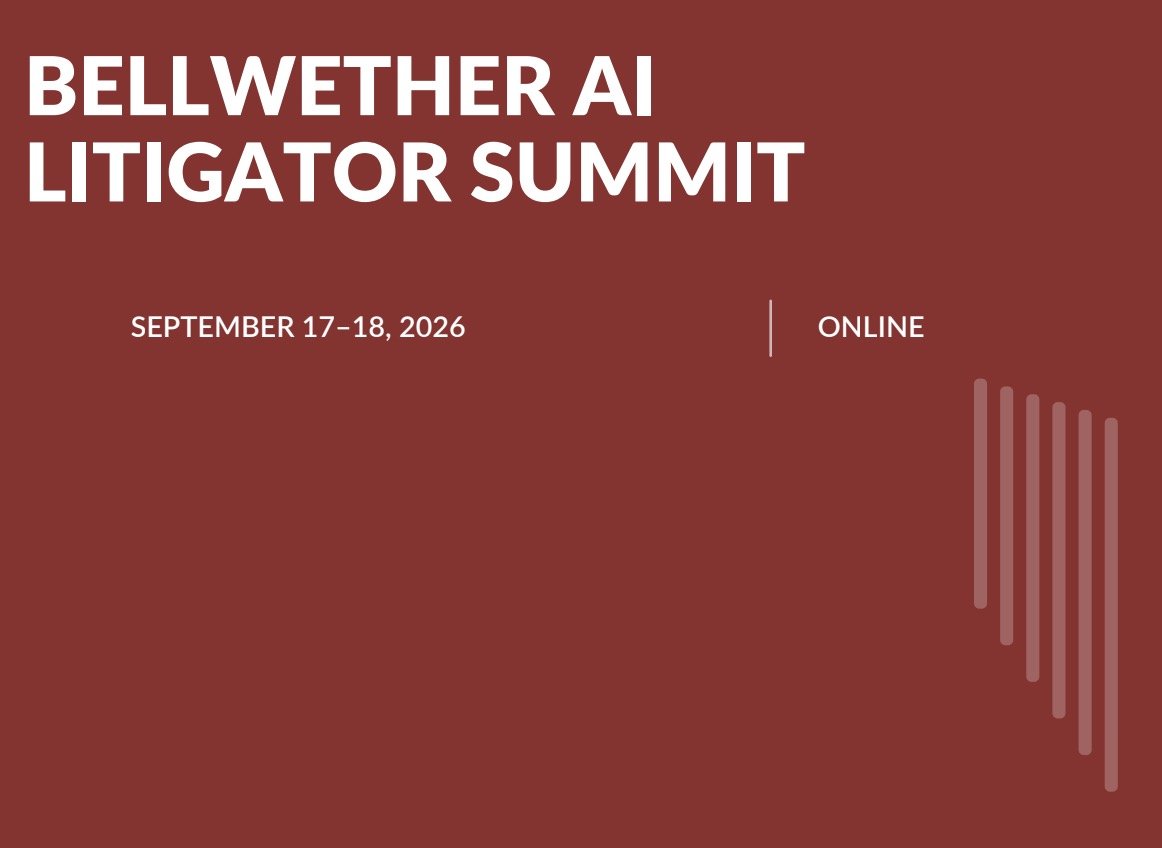
Every so often a program comes along that treats artificial intelligence the way practicing litigators actually experience it — as an evidence problem, a privilege problem, a candor problem, and only then as a productivity tool. 🎯 Carolyn Elefant’s Be the Bellwether AI Litigator summit is that program. It runs online September 17–18, 2026, and I am delighted to give it a full-throated Shout Out!

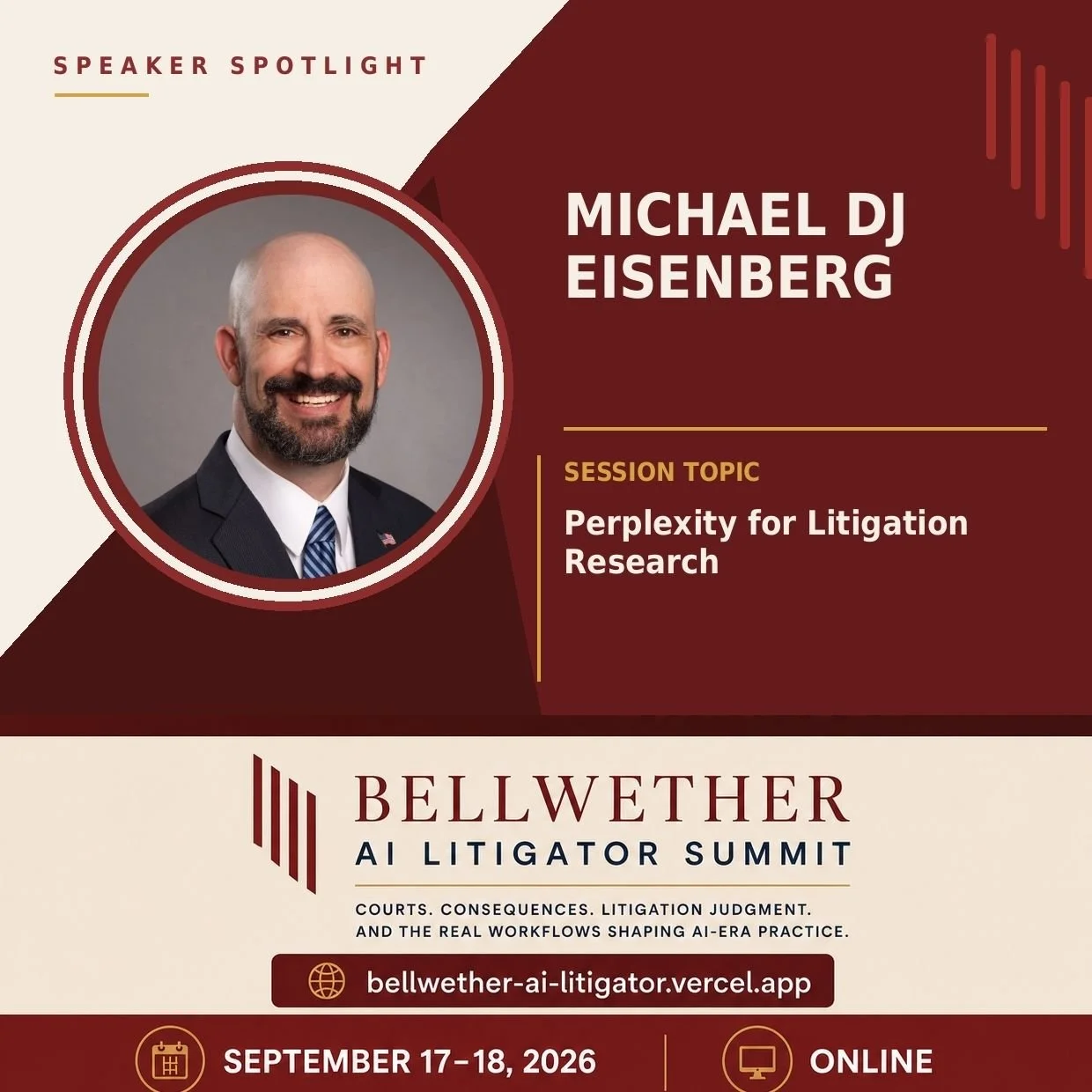
I have an interest to disclose. I am one of the presenters. On Day Two, September 18, at 11:00 a.m., I am demonstrating "Perplexity for Litigation Research" — a ten-minute, screen-shared walkthrough followed by five minutes of Q&A. No slides about the future of law. Just the tool, a real research problem, and the verification work that has to follow. You can see the full lineup in the Bellwether AI Litigator Summit agenda and register through the summit program page.

Why Carolyn Elefant Earned This Shout Out 👏

Carolyn has been the standard-bearer for solo and small-firm lawyers for more than two decades at MyShingle.com. She is a Cornell Law graduate, an ABA Legal Rebel, an inaugural Fastcase 50 honoree, and a recipient of the American Legal Technology Lifetime Achievement award. She has trained roughly 2,500 lawyers on AI ethics and policy since ChatGPT arrived. Critically, she still litigates. She fights energy cases at FERC, state PUCs, and in court. That matters. Her programs never drift into vendor theater.

The summit reflects that discipline. It is a day-and-a-half intensive built for solos, boutiques, larger firms, government lawyers, and public-interest litigators — the whole bench, not just BigLaw innovation officers.

Day One: Courts, Consequences, and Judgment ⚖️

Day One is themed "Courts, Consequences, and Litigation Judgment," and the faculty list is genuinely strong.

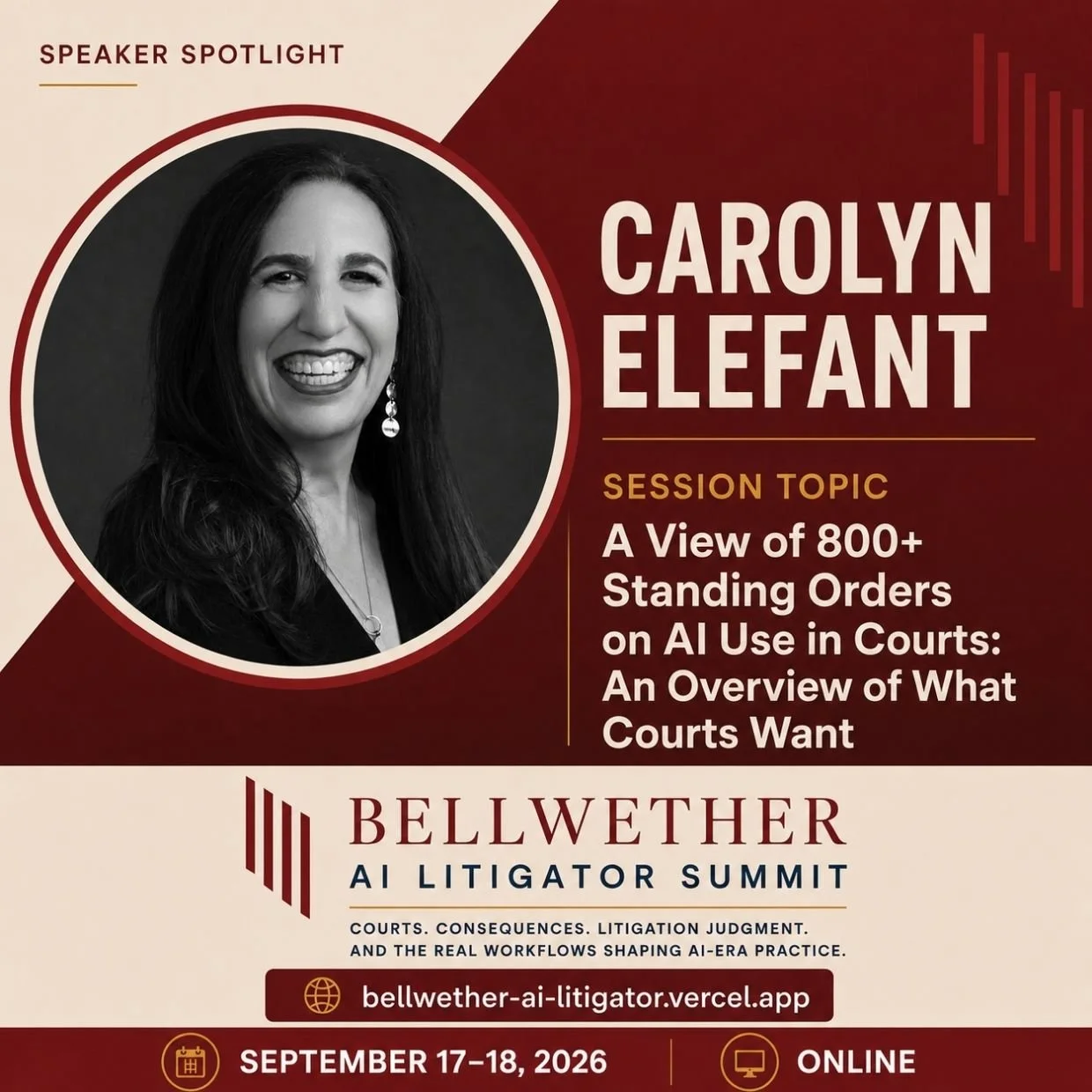
Carolyn opens at 10:00 a.m. with a survey of 800+ standing orders on AI use in courts. Let that number sit for a moment. Eight hundred. Adam Feldman follows with "What We Learned From the Hallucination Cases." Nathan Gaffney addresses privilege rulings. Hilary Gerzhoy and Professor Jonah Perlin pair scholarship with hands-on confidentiality guidance. Shlomo Klapper and the Hon. Brian D. Palmucci offer the judicial view at 1:00 p.m. Will Moye brings an expert’s ChatGPT war story, Nick Rishwain covers expert prompts and disqualification risk, and Christopher Kercher closes the day with the AI-native litigation firm.

That sequencing is not accidental. It tracks the ethical architecture most of us are still assembling.

The Model Rules Are Not Optional Here 📋

Regular readers know this drum. I keep beating it.

Model Rule 1.1, Comment 8 makes technology competence an ethical duty, not a hobby. Forty-one jurisdictions have adopted it. You cannot supervise what you do not understand.

Model Rule 1.6 governs confidentiality, and ABA Formal Opinion 512 sharpened the point: think hard before client-identifying information enters a public large language model. Gerzhoy and Perlin’s session goes directly at vendor terms, retention, and enterprise-versus-consumer platforms.

Model Rule 3.3 demands candor toward the tribunal. Fabricated citations are the most public failure mode of the past three years, and the duty to correct continues until the proceeding ends. I walked through the remedial protocol in 🪙🪙 MTC: When Reputable Databases Fail: What Lawyers Must Do After AI Hallucinations Reach the Court, where Stanford’s research showed Lexis+ AI hallucinating at 17% and Westlaw’s AI-Assisted Research at roughly 34%. Paid platforms are not a safe harbor. 🚨

Model Rules 5.1 and 5.3 put supervision of lawyers and nonlawyer assistance squarely on you. If your paralegal breaches confidentiality through a chatbot, that is your breach.

Model Rule 8.4(c) covers dishonesty and misrepresentation — increasingly relevant as altered and generated evidence reaches the courtroom. I covered that ground with Professor Jennifer Wondracek’s students in 🎙️ TSL.P EP# 132: AI, Deepfakes, and Metadata, including Mendones v. Cushman & Wakefield and the terminating sanctions that followed.

Day Two: Ten Lawyers, Ten Screens 💻

Day Two is the part I find most valuable, and not because I am on it.

Ten practicing litigators share their screens and run real workflows end to end. Porter Heath Morgan on in-house litigation management. Sarah Bashir on family law. John Stobart using Claude at trial. Regina Edwards on discovery. E. Aaron Cartright III generating thirteen litigation documents from one structured input. Arthur Rothrock running a case start to finish. Jim White on Obsidian. C. Todd Smith on Copilot. Descrybe.ai on emerging research tools.
Each demonstration answers four questions: What problem was the lawyer solving? What did AI actually do? Where did it fail? What did the lawyer have to verify?

That third question is the one vendors never answer. It is the reason this summit is worth your time.

My own segment will show how I use Perplexity to help with litigation research — building queries, evaluating sources, and, most importantly, the verification loop that follows every single output. Reading the underlying authority is not negotiable. If you have followed The Tech-Savvy Lawyer.Page Podcast, you know I treat AI drafts as hypotheses, never as answers. 🧪

Practical Details 📅

Registration is open, early-bird pricing is $249, and every participant receives the Bellwether Litigator Resource Kit — covering court AI-order tracking, pre-filing verification, citation and quotation checking, protective orders, vendor due diligence, and human-review protocols. Tickets are also available via Eventbrite.

Come for the judges. Stay for the screen shares. And please say hello during my Q&A. 👋
Congratulations, Carolyn. This one is going to matter. 🎉

Shout Out! A Thunderstorm, Three Books, and a Room Full of Lawyers: Shout Out from The Lawyer’s Guide to Podcasting Launch 🌩🎙

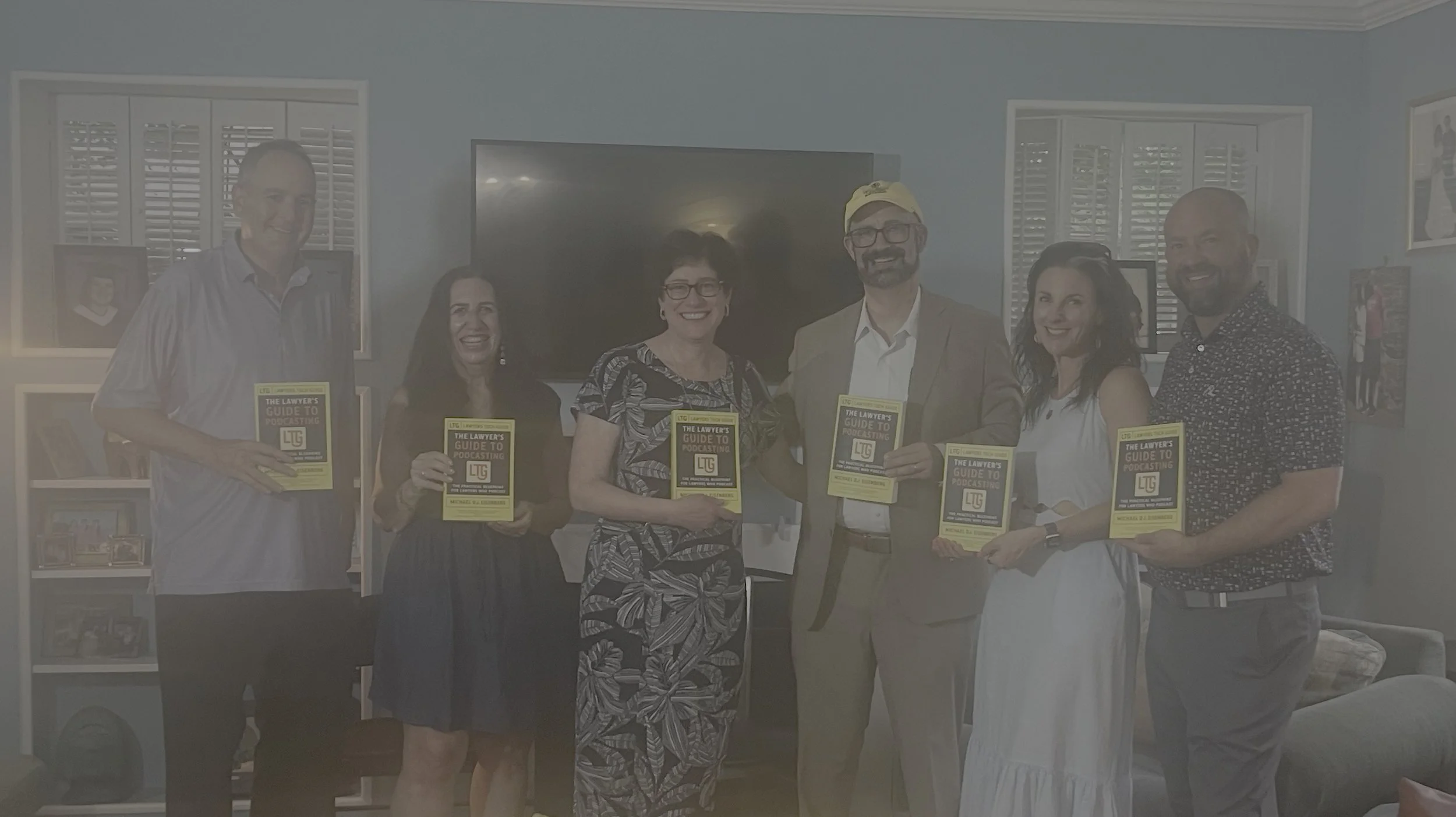
Seth price 📒 Carolyn Elefant 📒 Mindy Eisenberg 📒 Michael D.J. Eisenberg 📒 Wendy meadows 📒 scott

On May 20 in Bethesda, we launched The Lawyer's Guide to Podcasting: Building Your Brand, Audience, Tech Stack, and Expertise! with exactly the kind of energy I hoped this book would inspire: lawyers and legal professionals showing up for each other even as a serious thunderstorm rolled through the DMV. 🌧️🔥

Whether you braved the weather to come out, this post is for you. If you could not make it, think of this as your inside look at how a group of solos, small-firm lawyers, and AI‑curious professionals came together to talk about using podcasting as a serious business tool—one that fits comfortably within the guardrails of our ethics obligations under ABA Model Rules 1.1 (Competence), 1.6 (Confidentiality), and 7.1–7.3 (Communications about legal services).

A launch party built for working lawyers!

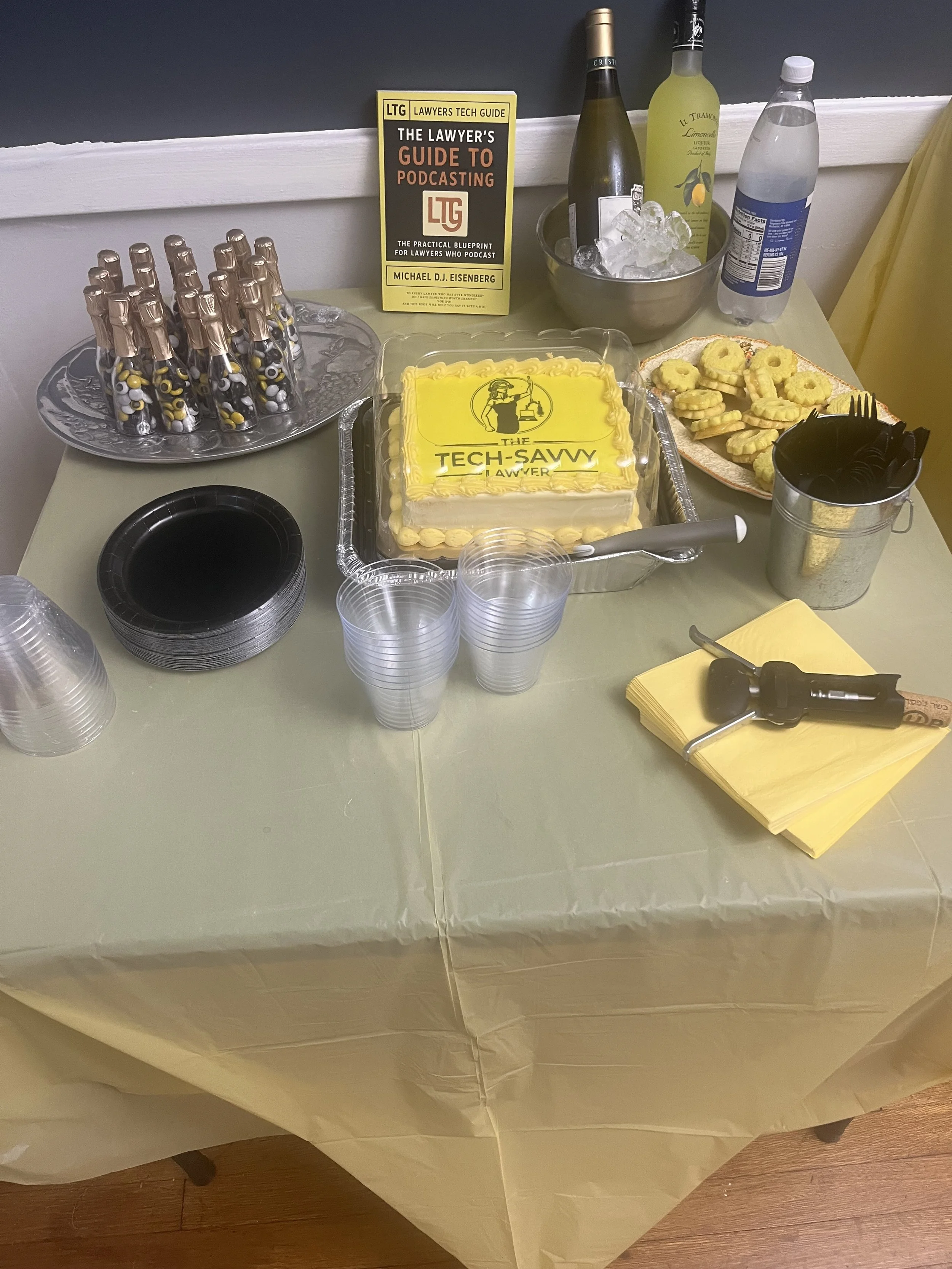
We gathered at the home of Carolyn Elefant in Bethesda—yes, in person, with real conversations and real snacks. 🥂 The goal was simple: make podcasting feel less like a mysterious “tech project” and more like a practical, repeatable part of your practice development strategy.

At the event, I walked through three concrete takeaways that mirror the book:

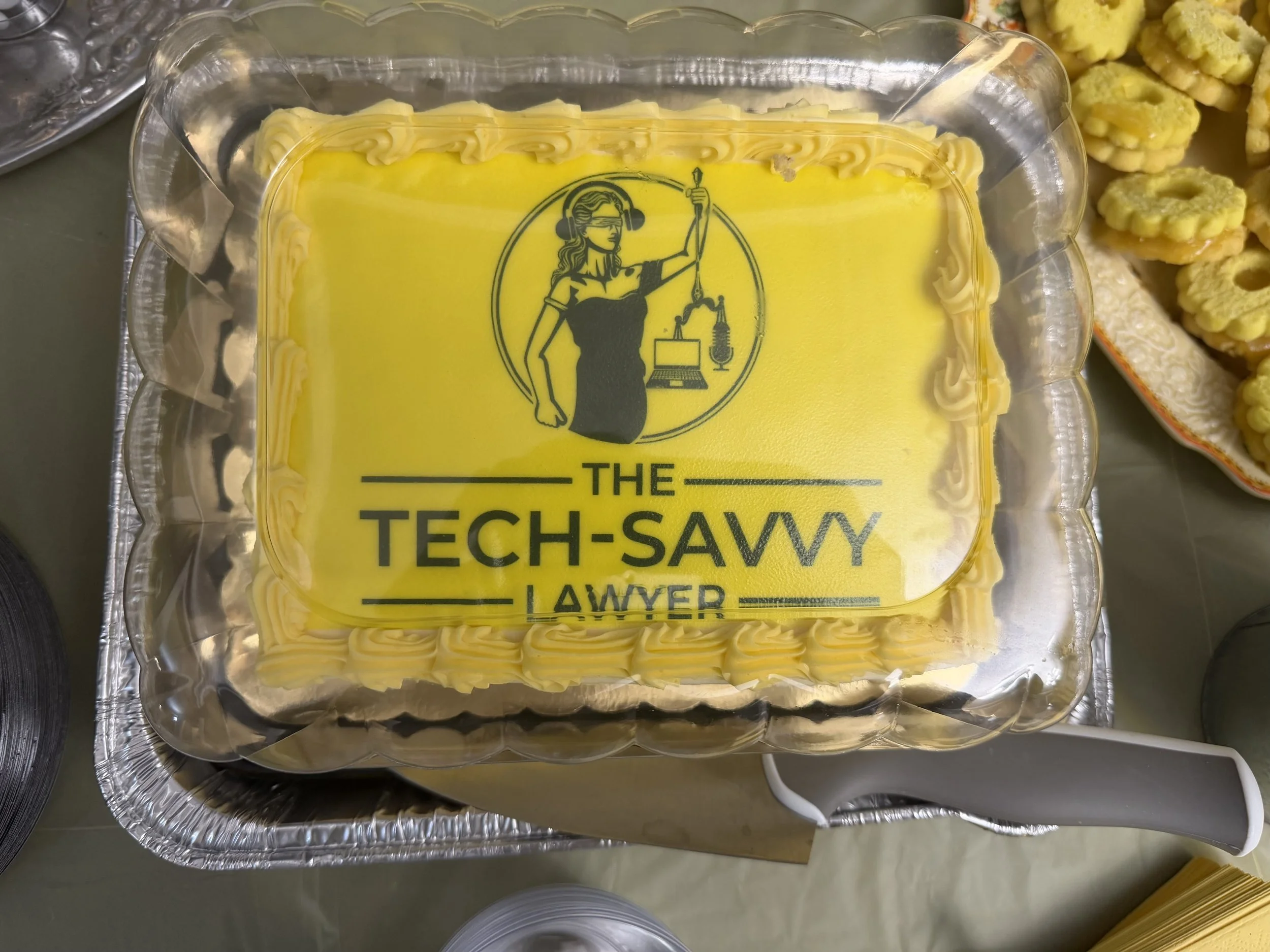
can’t have a launch party without cake!

  • A simple, lawyer‑tested podcast setup that you can actually keep running on a busy docket. 🎧

  • A short checklist of ethical and confidentiality questions to ask before you hit publish.

  • A set of ready‑to‑use episode ideas tailored to your practice area, so you are never staring at a blank calendar.

If those themes sound familiar, it is because they build on what we have discussed in prior posts and podcasts on the The Tech-Savvy Lawyer.Page. Together, they form the groundwork that became The Lawyer’s Guide to Podcasting: Building Your Brand, Audience, Tech Stack, and Expertise! 🎉

Shout Outs to the people who made the night! ⛈️

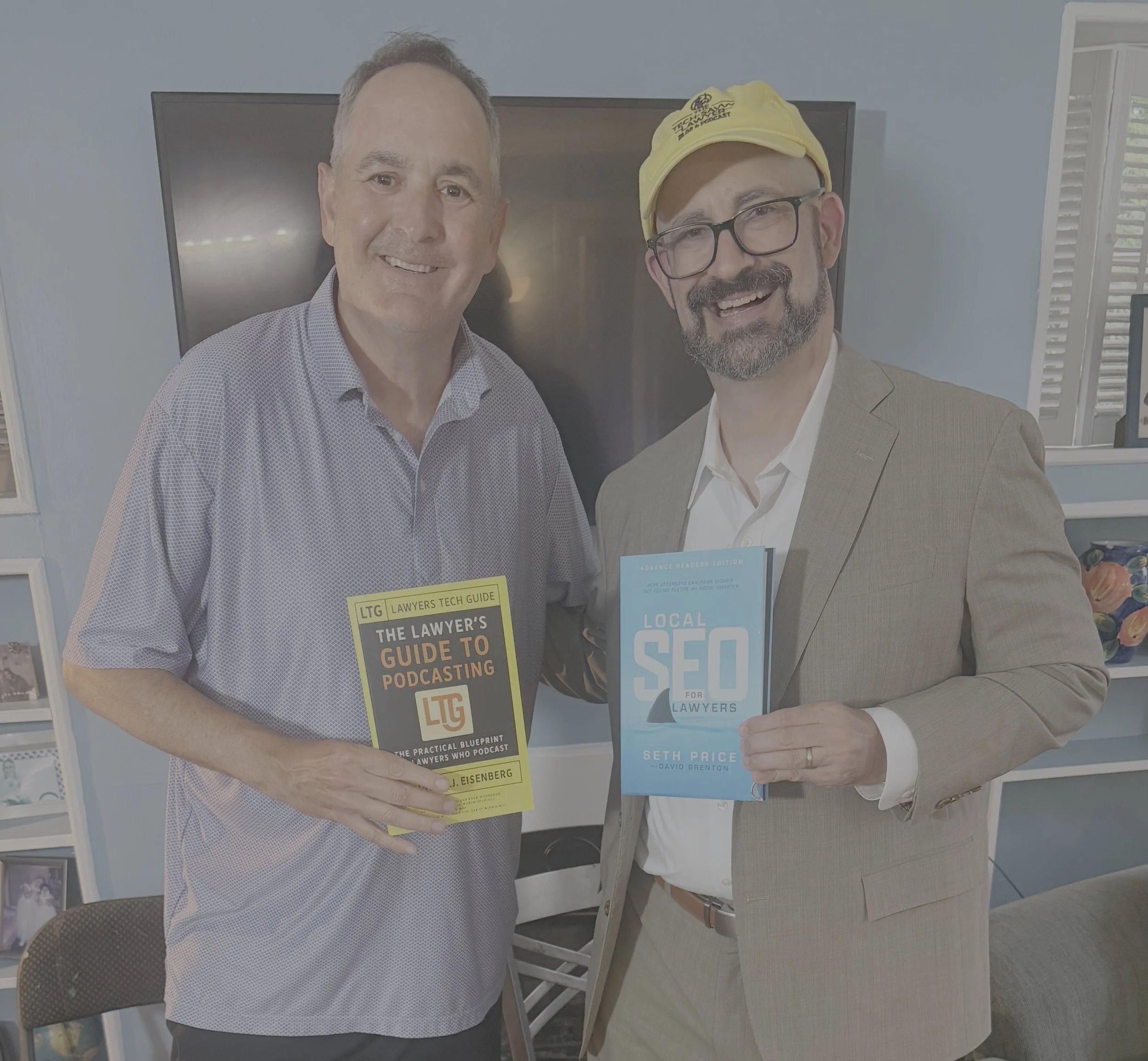
seth price and Michael D.J. Eisenberg exchange copies of their current releases!

A launch is never a solo act, even for a solo practitioner. I want to extend a very public, very appreciative shout out to a few people who made the evening special. 🙌

Finally, a heartfelt thanks to my wife and to every colleague, client, and friend who rearranged schedules and drove through a thunderstorm to be there. That kind of support is not just personally meaningful—it is a reminder that legal tech is at its best when it is rooted in community, not gadgets. 💙

Thank you Carolyn for hosting the book launch!

Why a podcasting book for lawyers—and why now?

If you follow the blog or listened to my guest appearance on Ruby Power’s “Power Up Your Practice”, Ep. 104: Legal Podcasting: The New Networking Standard, you have heard me say that podcasting is no longer a fringe experiment for lawyers. For solos, small‑to‑medium firms, and AI‑curious attorneys, a well‑designed podcast is:

  • An ongoing, searchable FAQ for your ideal clients.

  • A trust‑building channel for referral partners.

  • A training and onboarding tool for your own team.

In The Lawyer’s Guide to Podcasting, I walk through the tech stack and workflows that keep this realistic for a law practice, from microphones and recording platforms to editing, show notes, and ethical review. The idea is not to turn you into an audio engineer. The idea is to give you enough structure and competence that you work the basics yourself and delegate confidently without abdicating responsibility—very much in line with the duty of technological competence that is increasingly recognized under ABA Model Rule 1.1 and its state‑level interpretations.

Ethics, AI, and your voice behind the mic!🎙️

Many lawyers have told me that their hesitation about podcasting is not the microphone; it is the ethics. That is a healthy instinct. 👍

  • Model Rule 1.6 (Confidentiality) means no client can recognize themselves in your war stories without informed consent. In the book, I provide red‑flag questions and anonymization strategies you can bake into your outline before you record.

  • Model Rules 7.1–7.3 (Communications and Advertising) remind us that your podcast is marketing, direct or indirect, even when it feels like pure education. We cover how to structure disclaimers, avoid misleading “results‑typical” language, and respect solicitation limits while still giving real‑world examples.

  • For AI‑curious lawyers using tools like transcription, editing assistants, or AI‑drafted show notes, we address how to keep third‑party tools inside a framework that respects confidentiality and your supervisory responsibilities under the Rules.

If this resonates, you might also enjoy revisiting “Shout Out: Carolyn Elefant’s Review of Casetext v. ChatGPT!”, where she looked at AI in legal research through a similar ethics‑first lens. The same mindset applies here: use the tech, but do not outsource your judgment. 🧠

Where we go from here

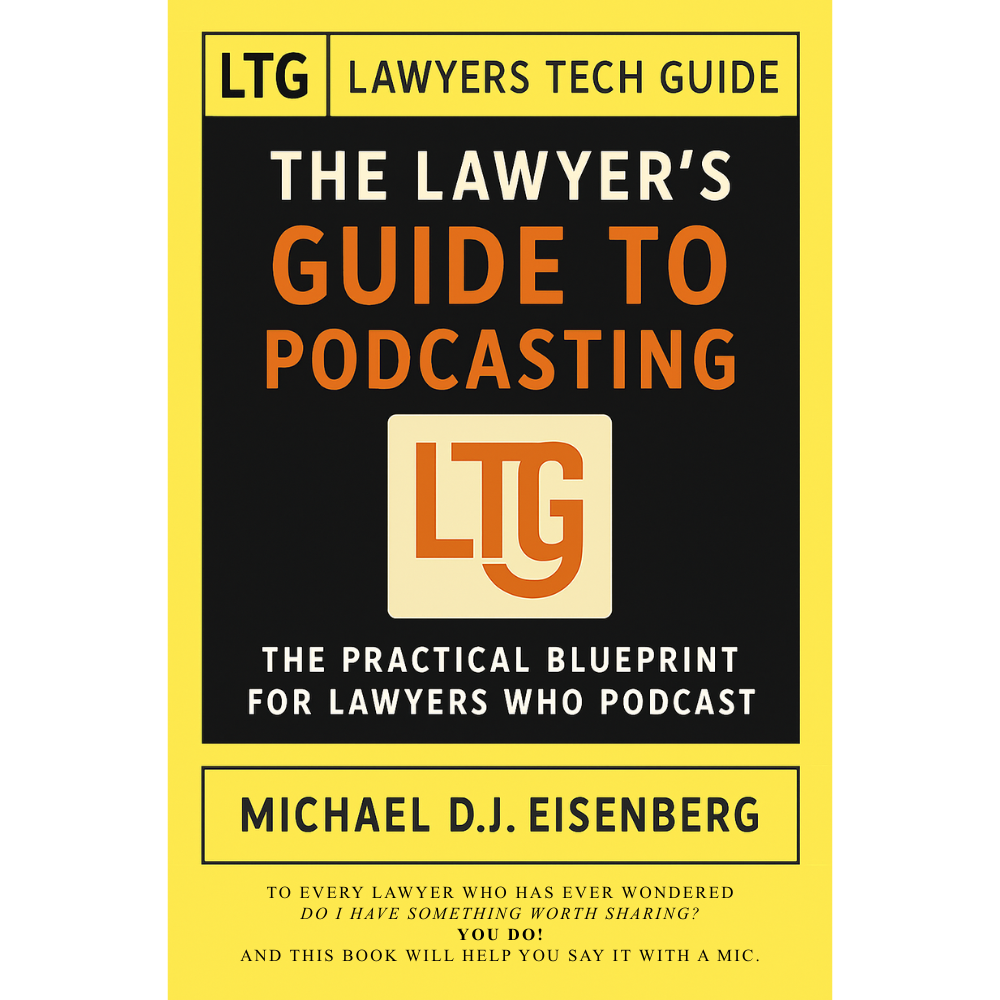
get your copy of The Lawyers tech guide: The lawyer’s guide to podcasting today on amazon!

The launch party was one evening; the conversation will continue in the weeks ahead on this blog and its podcast as we highlight chapters, interview fellow legal podcasters, and share templates you can adapt for your own show.

If you are a solo, a small‑firm partner, or an in‑house counsel looking for a practical roadmap, you can find The Lawyer's Guide to Podcasting: Building Your Brand, Audience, Tech Stack, and Expertise! on Amazon. My hope is simple: the next time a thunderstorm rolls through the DMV—or your own calendar—you will have a system that keeps your podcast, and your practice development, moving forward. 🌩🎙