📢 Library of Congress Recognizes The Tech-Savvy Lawyer Podcasting Guide—and the Conversation Continues at The Tech-Savvy Lawyer.Page 🎙️

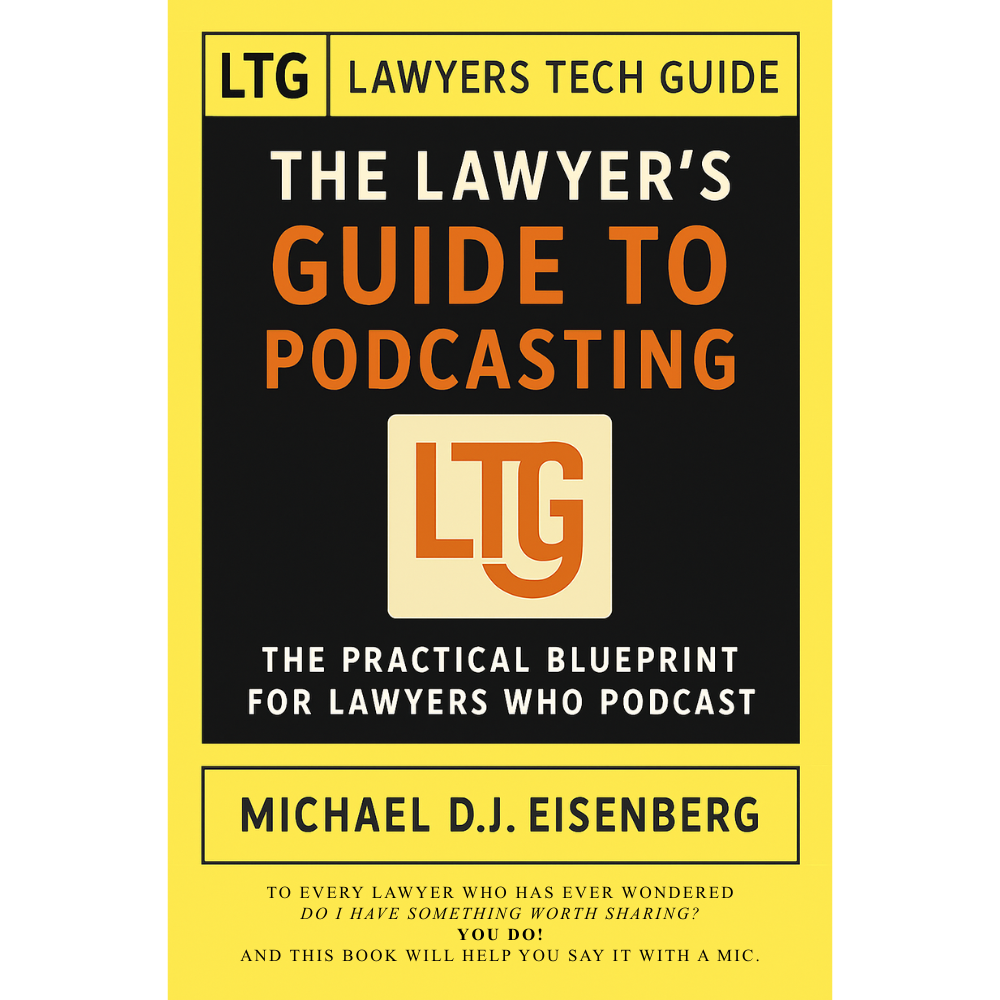
Excited and honored to share that the library of congress has accepted “The Tech-Savvy Lawyer, Lawyer’s guide to podcasting” into its collection!

I am pleased to announce that the Library of Congress has accepted The Tech-Savvy Lawyer: Lawyer’s Podcasting Guide for inclusion in its collection. I am honored for this recognition. It is a meaningful milestone for the guide, for The Tech-Savvy Lawyer, and for the growing community of lawyers who use podcasting to educate, connect, and contribute to the public conversation about law and technology. 📚

Library of Congress Control Number: 2026395311.

For years, The Tech-Savvy Lawyer has focused on practical technology issues that affect real law practices. The goal has never been technology for its own sake. It has been to help lawyers make sound decisions about tools that influence client service, confidentiality, competence, communication, efficiency, and professional judgment.

The Library of Congress acceptance of the Lawyer’s Podcasting Guide recognizes that lawyer-created educational content can have lasting value. A legal podcast may begin as a conversation, an interview, or a short practical lesson. Yet it can become something more durable: a resource for lawyers, clients, students, researchers, and members of the public who want to understand how the profession responds to changing technology.

That work continues at The Tech-Savvy Lawyer.Page. 💻

The site is designed as a practical home for lawyers who want clear guidance on legal technology, AI, cybersecurity, digital communications, ethics, and law-practice management. It is written for solo practitioners, small-firm attorneys, and legal professionals who do not need another abstract discussion of innovation. They need practical analysis that respects both their intelligence and their professional obligations.

Recent coverage has examined the growing risks of autonomous and agentic AI systems in legal practice. In “MTC: Claude Can Answer Your Emails. Why Lawyers Should Not Let AI Just Send Them Unreviewed”, I addressed the danger of allowing an AI system to send substantive communications without lawyer review. The issue is not merely whether a draft is grammatically polished. It is whether the message is accurate, confidential, authorized, and appropriate for the client’s matter.

The related challenge becomes even more serious when AI tools can act through connected systems. As discussed in the recent Tech-Savvy Lawyer analysis of AI agents, these systems may browse the web, access connected accounts, retrieve information, interact with software, and take multistep actions. That potential can improve a workflow, but it also expands the lawyer’s responsibility for access controls, supervision, confidentiality, and final review. 🔒

That is why the Lawyer’s Podcasting Guide is about more than microphones, recording software, and publishing platforms. It is about professional communication. It helps lawyers think through the decisions that make a podcast sustainable and trustworthy:

The library of congress has recognized, “The Tech-Savvy Lawyer, Lawyer’s guide to podcasting” , as a national resource - get your copy today!

  • Who is the intended audience?

  • What subject can the lawyer address with genuine experience and consistency?

  • What format serves listeners without consuming an unreasonable amount of practice time?

  • How can a lawyer promote educational content without creating unjustified expectations?

  • What safeguards protect client-related information during recording, transcription, editing, hosting, and promotion?

  • How should AI-assisted production tools be evaluated before they touch confidential or sensitive material?

Those are legal-technology questions. They are also ethics questions.

ABA Model Rule 1.1 requires competent representation. Comment provides that lawyers should keep abreast of the benefits and risks associated with relevant technology. A lawyer who uses a remote-recording service, transcription platform, cloud-hosting provider, AI-generated show-notes tool, or social-media distribution service should understand enough to make responsible decisions about that tool. The lawyer does not need to be an audio engineer or software developer. The lawyer does need to understand how the technology may affect the practice. ⚖️

ABA Model Rule 1.6 is equally important. It generally prohibits revealing information relating to representation without informed consent, implied authorization, or another applicable exception. It also requires reasonable efforts to prevent unauthorized disclosure or access. That duty does not disappear because a lawyer describes a matter as an “anonymous example” on a podcast. The combination of facts, timing, location, and context may reveal more than the lawyer intended.

The best legal podcasts recognize that responsibility. They do not use client matters as raw material. They use informed analysis, carefully selected hypotheticals, public sources, interviews, and professional experience to help listeners understand an issue.

The Library of Congress recognition also arrives at an important moment for legal podcasting. Lawyers are using audio and video formats to explain developing legal issues, discuss technology, spotlight access-to-justice efforts, and connect with colleagues across practice areas and jurisdictions. The medium is accessible. A lawyer can begin with a focused topic, basic equipment, a repeatable workflow, and a commitment to quality. 🎧

But starting is not the same as sustaining.

That is why I am especially excited to connect this announcement to the Lawyer’s Podcasting Conference. The conference will bring together lawyers, legal-technology professionals, podcasters, and communications leaders to discuss how attorneys can create ethical, effective, and enduring podcasts. Participants will explore strategy, content planning, recording, interviewing, editing, publishing, promotion, accessibility, AI-assisted workflows, and the professional-responsibility issues that shape every stage of the process.

The conference is intended to be practical. It will help lawyers move from “I have been thinking about starting a podcast” to “I have a responsible plan for launching one.” It will also help established podcasters improve their process, sharpen their audience focus, and evaluate emerging technology without sacrificing lawyer oversight. 🤝

For lawyers who are AI-curious, the discussion will be particularly timely. AI can assist with transcripts, summaries, episode outlines, clip selection, metadata, and workflow organization. It cannot replace the lawyer’s duty to verify accuracy, protect confidential information, supervise the work, or exercise professional judgment. The lawyer remains accountable for what is published and how client-related information is handled.

Find “The Tech-Savvy Lawyer, Lawyer’s guide to podcasting” in congress or get your own copy today!!!

The acceptance of the Lawyer’s Podcasting Guide by the Library of Congress is an honor. More importantly, it is an invitation to keep building. The legal profession needs more thoughtful voices. It needs clearer explanations of difficult subjects. It needs lawyers who can use technology with competence, care, and a commitment to public service.

Visit The Tech-Savvy Lawyer.Page to follow the latest analysis, learn more about the Lawyer’s Podcasting Conference, and maybe buy your copy of the Lawyer's Podcasting Guide today to get a head of the conference attendees! I hope you will join the conversation!!!

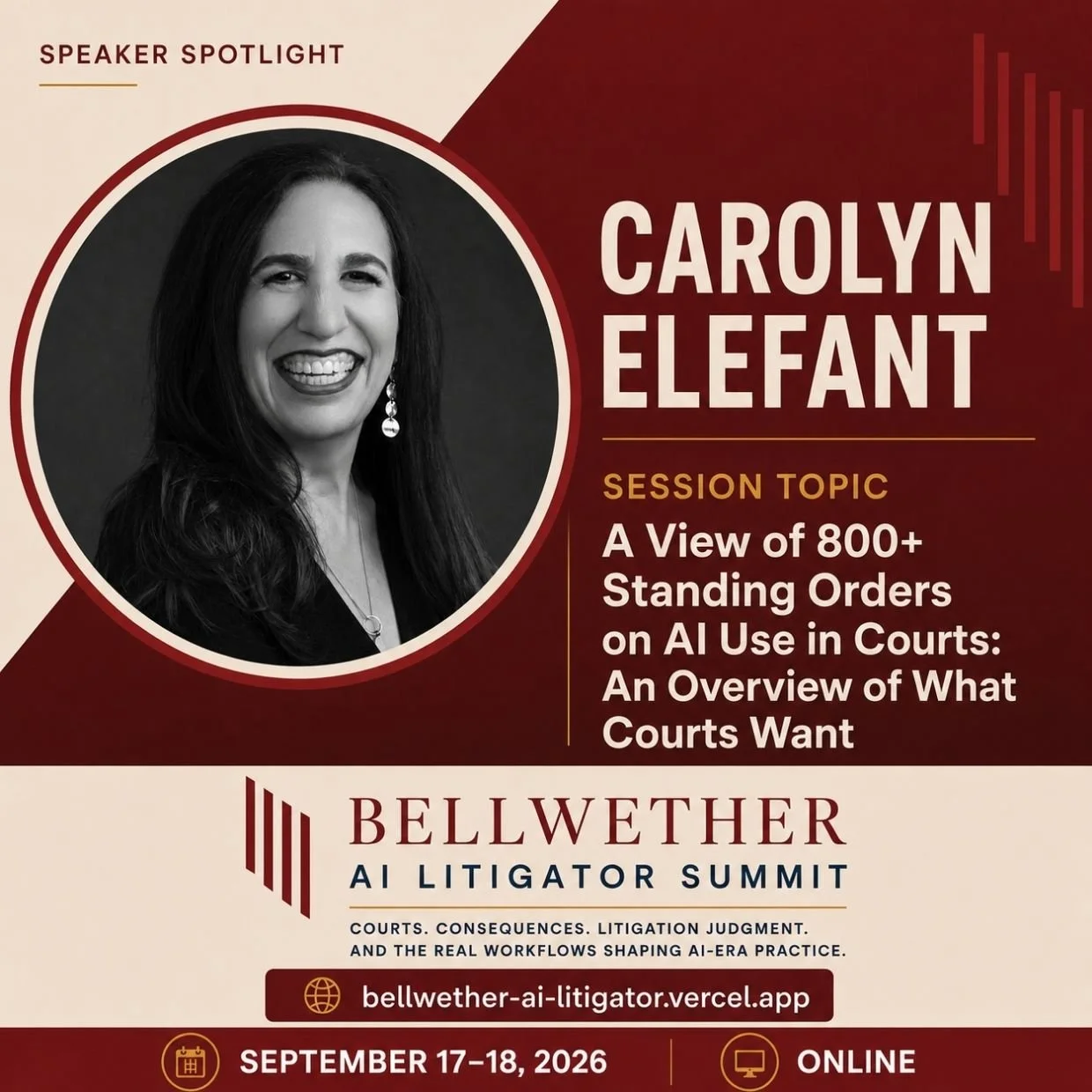
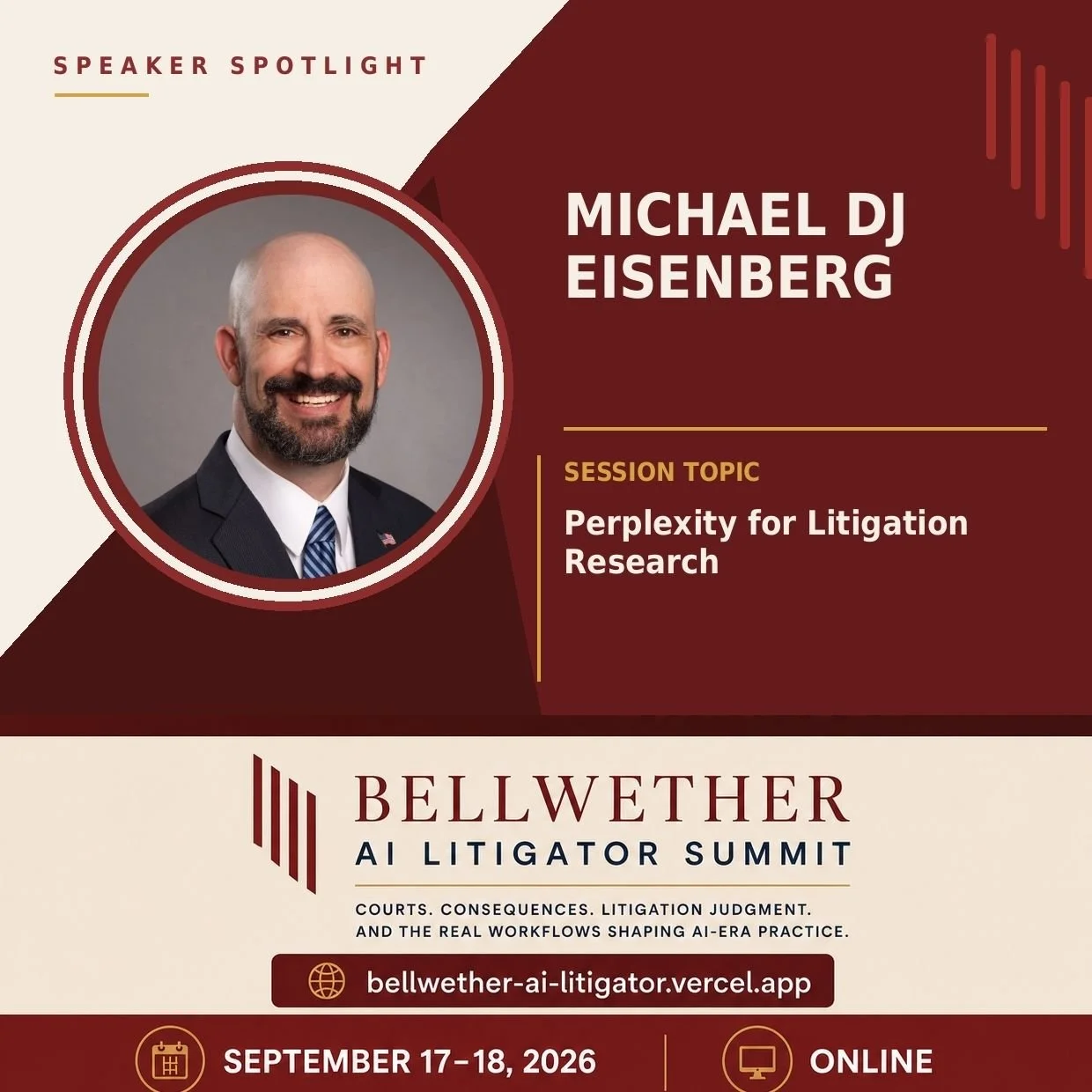
🗣️ Shout Out! Carolyn Elefant’s "Be the Bellwether AI Litigator" Summit — And Why I’m Demonstrating Perplexity for Litigation Research on September 17-18 ⚖️🤖

Every so often a program comes along that treats artificial intelligence the way practicing litigators actually experience it — as an evidence problem, a privilege problem, a candor problem, and only then as a productivity tool. 🎯 Carolyn Elefant’s Be the Bellwether AI Litigator summit is that program. It runs online September 17–18, 2026, and I am delighted to give it a full-throated Shout Out!

I have an interest to disclose. I am one of the presenters. On Day Two, September 18, at 11:00 a.m., I am demonstrating "Perplexity for Litigation Research" — a ten-minute, screen-shared walkthrough followed by five minutes of Q&A. No slides about the future of law. Just the tool, a real research problem, and the verification work that has to follow. You can see the full lineup in the Bellwether AI Litigator Summit agenda and register through the summit program page.

Why Carolyn Elefant Earned This Shout Out 👏

Carolyn has been the standard-bearer for solo and small-firm lawyers for more than two decades at MyShingle.com. She is a Cornell Law graduate, an ABA Legal Rebel, an inaugural Fastcase 50 honoree, and a recipient of the American Legal Technology Lifetime Achievement award. She has trained roughly 2,500 lawyers on AI ethics and policy since ChatGPT arrived. Critically, she still litigates. She fights energy cases at FERC, state PUCs, and in court. That matters. Her programs never drift into vendor theater.

The summit reflects that discipline. It is a day-and-a-half intensive built for solos, boutiques, larger firms, government lawyers, and public-interest litigators — the whole bench, not just BigLaw innovation officers.

Day One: Courts, Consequences, and Judgment ⚖️

Day One is themed "Courts, Consequences, and Litigation Judgment," and the faculty list is genuinely strong.

Carolyn opens at 10:00 a.m. with a survey of 800+ standing orders on AI use in courts. Let that number sit for a moment. Eight hundred. Adam Feldman follows with "What We Learned From the Hallucination Cases." Nathan Gaffney addresses privilege rulings. Hilary Gerzhoy and Professor Jonah Perlin pair scholarship with hands-on confidentiality guidance. Shlomo Klapper and the Hon. Brian D. Palmucci offer the judicial view at 1:00 p.m. Will Moye brings an expert’s ChatGPT war story, Nick Rishwain covers expert prompts and disqualification risk, and Christopher Kercher closes the day with the AI-native litigation firm.

That sequencing is not accidental. It tracks the ethical architecture most of us are still assembling.

The Model Rules Are Not Optional Here 📋

Regular readers know this drum. I keep beating it.

Model Rule 1.1, Comment 8 makes technology competence an ethical duty, not a hobby. Forty-one jurisdictions have adopted it. You cannot supervise what you do not understand.

Model Rule 1.6 governs confidentiality, and ABA Formal Opinion 512 sharpened the point: think hard before client-identifying information enters a public large language model. Gerzhoy and Perlin’s session goes directly at vendor terms, retention, and enterprise-versus-consumer platforms.

Model Rule 3.3 demands candor toward the tribunal. Fabricated citations are the most public failure mode of the past three years, and the duty to correct continues until the proceeding ends. I walked through the remedial protocol in 🪙🪙 MTC: When Reputable Databases Fail: What Lawyers Must Do After AI Hallucinations Reach the Court, where Stanford’s research showed Lexis+ AI hallucinating at 17% and Westlaw’s AI-Assisted Research at roughly 34%. Paid platforms are not a safe harbor. 🚨

Model Rules 5.1 and 5.3 put supervision of lawyers and nonlawyer assistance squarely on you. If your paralegal breaches confidentiality through a chatbot, that is your breach.

Model Rule 8.4(c) covers dishonesty and misrepresentation — increasingly relevant as altered and generated evidence reaches the courtroom. I covered that ground with Professor Jennifer Wondracek’s students in 🎙️ TSL.P EP# 132: AI, Deepfakes, and Metadata, including Mendones v. Cushman & Wakefield and the terminating sanctions that followed.

Day Two: Ten Lawyers, Ten Screens 💻

Day Two is the part I find most valuable, and not because I am on it.

Ten practicing litigators share their screens and run real workflows end to end. Porter Heath Morgan on in-house litigation management. Sarah Bashir on family law. John Stobart using Claude at trial. Regina Edwards on discovery. E. Aaron Cartright III generating thirteen litigation documents from one structured input. Arthur Rothrock running a case start to finish. Jim White on Obsidian. C. Todd Smith on Copilot. Descrybe.ai on emerging research tools.

Each demonstration answers four questions: What problem was the lawyer solving? What did AI actually do? Where did it fail? What did the lawyer have to verify?

That third question is the one vendors never answer. It is the reason this summit is worth your time.

My own segment will show how I use Perplexity to help with litigation research — building queries, evaluating sources, and, most importantly, the verification loop that follows every single output. Reading the underlying authority is not negotiable. If you have followed The Tech-Savvy Lawyer.Page Podcast, you know I treat AI drafts as hypotheses, never as answers. 🧪

Practical Details 📅

Registration is open, early-bird pricing is $249, and every participant receives the Bellwether Litigator Resource Kit — covering court AI-order tracking, pre-filing verification, citation and quotation checking, protective orders, vendor due diligence, and human-review protocols. Tickets are also available via Eventbrite.

Come for the judges. Stay for the screen shares. And please say hello during my Q&A. 👋

Congratulations, Carolyn. This one is going to matter. 🎉

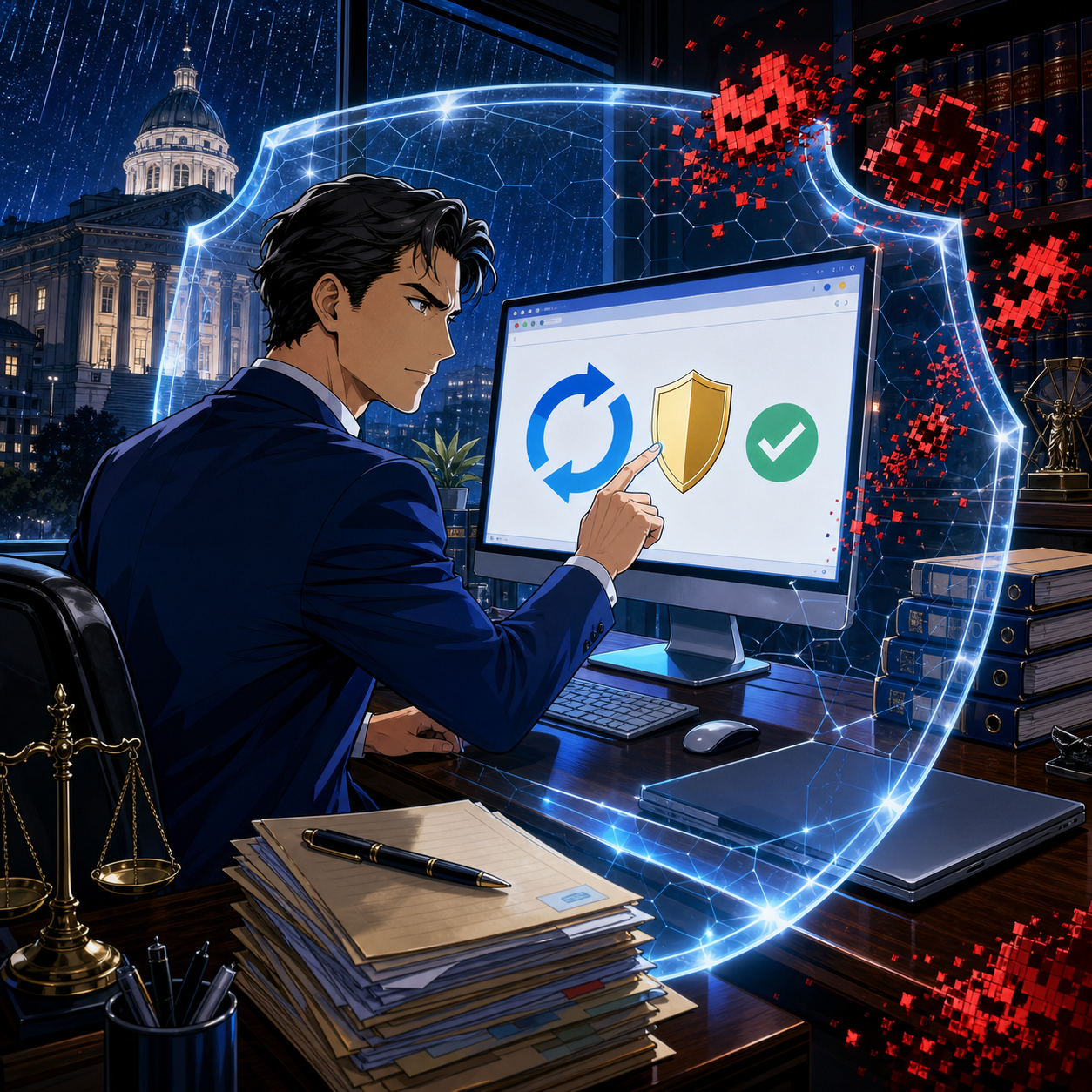
🚨 BOLO: Chrome Security Update: Law Firms Should Patch Before Browsing Again 🚨

lawyers keep your work secure, update your softwarE - update your google chrome browser now!

Solo practitioners and small firms should make updating Google Chrome a same-day task. Malwarebytes reports that Chrome’s current desktop update includes 327 security fixes, including 10 critical vulnerabilities, and that certain flaws can be triggered simply by visiting a malicious website. For a law practice handling confidential client communications, privileged work product, and sensitive financial data, that is a risk worth addressing immediately.

Chrome’s stable release has been updated to version 152.0.7977.64/.65 for Windows and Mac, and 152.0.7977.64 for Linux. The update addresses, among other issues, a critical flaw in ANGLE, Chrome’s graphics translation component, identified as CVE-2026-79282. Malwarebytes says a remote attacker could exploit that flaw through a crafted web page to execute arbitrary code outside Chrome’s browser sandbox.

That phrase—“outside the sandbox”—matters. Browser sandboxing is designed to contain web content so that a malicious site cannot easily reach the rest of the computer. A flaw that permits code execution beyond that boundary can give an attacker a path from a single web visit to the underlying operating system. That is precisely the sort of exposure lawyers should avoid when working in a browser alongside client portals, email, cloud document systems, court filing platforms, banking tools, and AI services. ⚖️

The update also remediates CVE-2026-78899, a use-after-free vulnerability in Chrome’s V8 JavaScript engine. It has a reported CVSS score of 8.8 out of 10. Even though successful exploitation occurs inside the browser sandbox, it should not be dismissed. Attackers frequently combine vulnerabilities in a chain, using one weakness to gain an initial foothold and another to widen access.

Why this is a legal-ethics issue!

its a team effort - remind your fellow lawyers to update their chrome browser today!

Technology hygiene is no longer separate from professional responsibility. ABA Model Rule 1.1 requires competent representation, and Comment 8 specifically calls on lawyers to keep abreast of “the benefits and risks associated with relevant technology.” A lawyer does not need to become a cybersecurity engineer. But maintaining a reasonably secure browser—the primary doorway to modern legal work—is a basic and manageable safeguard.

Model Rule 1.6(c) is equally relevant. It requires lawyers to make reasonable efforts to prevent unauthorized access to, or inadvertent disclosure of, client information. An unpatched browser can become an avoidable weak point in that effort. A compromised browser session could expose client documents, credentials, confidential messages, cloud-storage access, or data entered into web forms. 🔐

For firms, this update is also a reminder to think beyond the individual lawyer’s device. Rule 5.1 requires partners and managers to make reasonable efforts to ensure that firm-wide practices conform to professional obligations. Rule 5.3 similarly requires appropriate oversight of nonlawyer assistants. In practical terms, that means someone should own the checklist: browser updates, operating-system patches, password-manager deployment, multifactor authentication, and employee awareness.

Update Chrome now

On a Windows or Mac computer:

  1. Open Chrome.

  2. Select the three-dot More menu in the upper-right corner.

  3. Choose Settings.

  4. Select About Chrome.

  5. Allow Chrome to download any available update.

  6. Restart the browser to complete installation. 🔄

Chrome typically updates itself, but automatic updates can lag when the browser remains open for days, a restart is postponed, or an extension interferes with the update process. Malwarebytes specifically notes that manually checking can ensure the update is applied rather than merely downloaded.

This is a two-minute task with a potentially significant payoff. Before opening that unfamiliar link, reviewing a shared file, or logging into a client-facing platform, take a moment to confirm that Chrome is current. Security is not a one-time purchase or a single policy document. It is a set of small, repeatable habits that protect the practice and the people who trust it.

Bottom line: update Chrome, restart it, and encourage everyone in your firm to do the same today. ✅

🎙️ Ep. 139, From MyCase to Claude: Building a Secure, AI-Ready Tech Stack for Solo and Small Law Firms.

My next guests are Gabriela “Gabby” Cubeiro, Senior Vice President of Product at 8am — the powerhouse behind MyCase, LawPay, CASEpeer, and DocketWise — and Majo Castro, founder and managing attorney at CastroMand Legal in Austin, Texas. 🌟 Gabby is a 16-year legal tech veteran who co-founded CASEpeer and now drives product strategy across one of the most widely adopted law practice management platforms in the country. Majo is a Venezuelan-born cybersecurity and AI attorney whose solo firm helps growing companies navigate AI implementation, data management, and cybersecurity — and she writes about all of it on her Substack, The Cyber Law Gal. 🛡️ This is a no-fluff, peer-to-peer conversation about the exact workflows that separate a modern LPM from a liability, why the Data Processing Agreement is the most important acronym in your practice right now, and what your employees are almost certainly already doing with AI — whether you've approved it or not.

Join Gabriela “Gabby” Cubeiro, Majo Castro, and me as we discuss the following three questions and more!

  1. What are the top three integrations or workflows a solo, small, or midsize firm should expect from a modern cloud-based LPM platform like 8am — and what's missing that signals a real red flag around efficiency, cash flow, or security?

  2. As AI gets baked into cloud LPM tools like 8am, what are the top three day-to-day tasks that will change most for solo and small firm lawyers — and what basic security or ethical guardrails should they put in place to use those AI features without putting client data at risk?

  3. For solo and small firms without a CISO or CTO, what are the top three cybersecurity mistakes you see over and over again?

In our conversation, we cover the following:

  • [00:00:00] 🪝 Show Hook — Gabby's critical warning: if your firm hasn't "adopted" AI, your employees probably already have — on free consumer tools

  • [00:00:00] Title read — Episode 139

  • [00:01:00] Host intro: why this conversation goes tactical on AI, security, and LPM workflows

  • [00:02:00] Guest introductions — Gabriela “Gabby” Cubeiro (8am/MyCase) and Majo Castro (CastroMand Legal / The Cyber Law Gal)

  • [00:03:00] Majo celebrates 1.5 years as a solo practitioner 🎉

  • [00:03:00] Ad: Five-star review request for The Tech-Savvy Lawyer.Page

  • [00:03:30] Tech setups — Gabby's MacBook Air (M4 chip), iPhone Max, Slack, Zoom, Google Drive, Claude Enterprise

  • [00:06:00] Gabby's portable USB-C external monitor for travel (Amazon, highest-rated)

  • [00:09:00] Majo's MacBook Pro 14" M4 (16GB RAM), performance issues, upgrade path discussion

  • [00:10:00] Michael recommends Onyx (free Mac maintenance utility); Michael's Mac Studio M3 Ultra with 256GB

  • [00:11:00] Mac Mini and Mac Studio as desktop alternatives; MacRumors Buyer's Guide tip

  • [00:13:00] Apple Business Account benefits — small discounts + white-glove service

  • [00:15:00] Majo's full setup: iPhone 16 Pro Max, Google Workspace + Gemini (team account with DPA), DJI Osmo Pocket 3, Hollyland wireless mic

  • [00:16:00] Q1: Top three LPM workflows — intake, secure client communication (client portal), and getting paid (trust accounting + automated invoicing)

  • [00:19:00] Majo on switching from QuickBooks to MyCase after discovering QuickBooks mishandles trust accounting

  • [00:20:00] 🎉 Gabby announces: AI case summary features are now LIVE in 8am/MyCase

  • [00:21:00] Cloud vs. local access debate — SaaS uptime, SLAs, and asking vendors for proof

  • [00:23:00] Michael's redundant backup strategy: Backblaze + Dropbox + local Mac Mini

  • [00:25:00] Cautionary tale: ransomware attack converts a server-based firm to the cloud overnight

  • [00:28:00] Majo's Google Drive third-party backup with 2-hour recovery window

  • [00:29:00] Q2: How AI changes daily workflows — drafting, case summaries, surfacing critical info fast

  • [00:30:00] Why reading vendor Terms of Service and activating Data Processing Agreements (DPAs) is non-negotiable

  • [00:31:00] 8am's SOC 2 Type 2 compliance; updated AI terms and opt-in controls coming

  • [00:32:00] SOC 2, HIPAA, end-to-end encryption as baseline vendor security requirements

  • [00:34:00] AI as the great equalizer — leveling the playing field for solo firms vs. BigLaw

  • [00:35:00] Majo's real data: ~12 hours saved last month across 27 consultations using Gemini for proposals

  • [00:36:00] Plaud and Pocket AI recording devices — data retention, PII, and DPA concerns

  • [00:37:00] Majo's stance on wearable AI recorders; Apple Watch comparison; one-party vs. two-party consent

  • [00:39:00] Plaud's terms say no AI training — but it's not a DPA; terms can change without notice 🚨

  • [00:40:00] Google Workspace DPA must be manually activated — most users don't know; creating user friction around protection

  • [00:41:00] Q3: Top cybersecurity mistakes — shadow AI, no MFA, undertrained employees

  • [00:42:00] Majo's checklist: DPA + no model training on client data + enterprise/team-tier subscriptions + MFA

  • [00:43:00] Gabby: employees are the #1 security risk; fractional IT and CISO options for small firms

  • [00:44:00] AI-powered phishing attacks on law firms will only intensify

  • [00:45:00] Majo's training method: positive AI policies + 45-second staff video explainers 🎬

  • [00:46:00] 🚨 Gabby's shadow AI reminder (Show Hook callback): audit your tech stack — your team already has

  • [00:47:00] Episode originally recorded at ABA Techshow; re-recorded after a technical snafu 😅

  • [00:47:00] Where to find Gabby: LinkedIn, X, 8am.com, Kaleidoscope conference (September — banner at 8am.com)

  • [00:48:00] Where to find Majo: LinkedIn (Majo Castro), CastroMand Legal, Substack: The Cyber Law Gal

  • [00:48:30] Outro — michaeldj@thetechsavvylawyer.page | next episode in ~two weeks

RESOURCES

Connect with Gabriela “Gabby” Cubeiro

Connect with Majo Castro

Mentioned in the Episode

Hardware Mentioned

MTC: When the Search Engine Itself Is the Ethical Issue: What Lawyers Must Know About AI Search vs. Traditional Internet Research

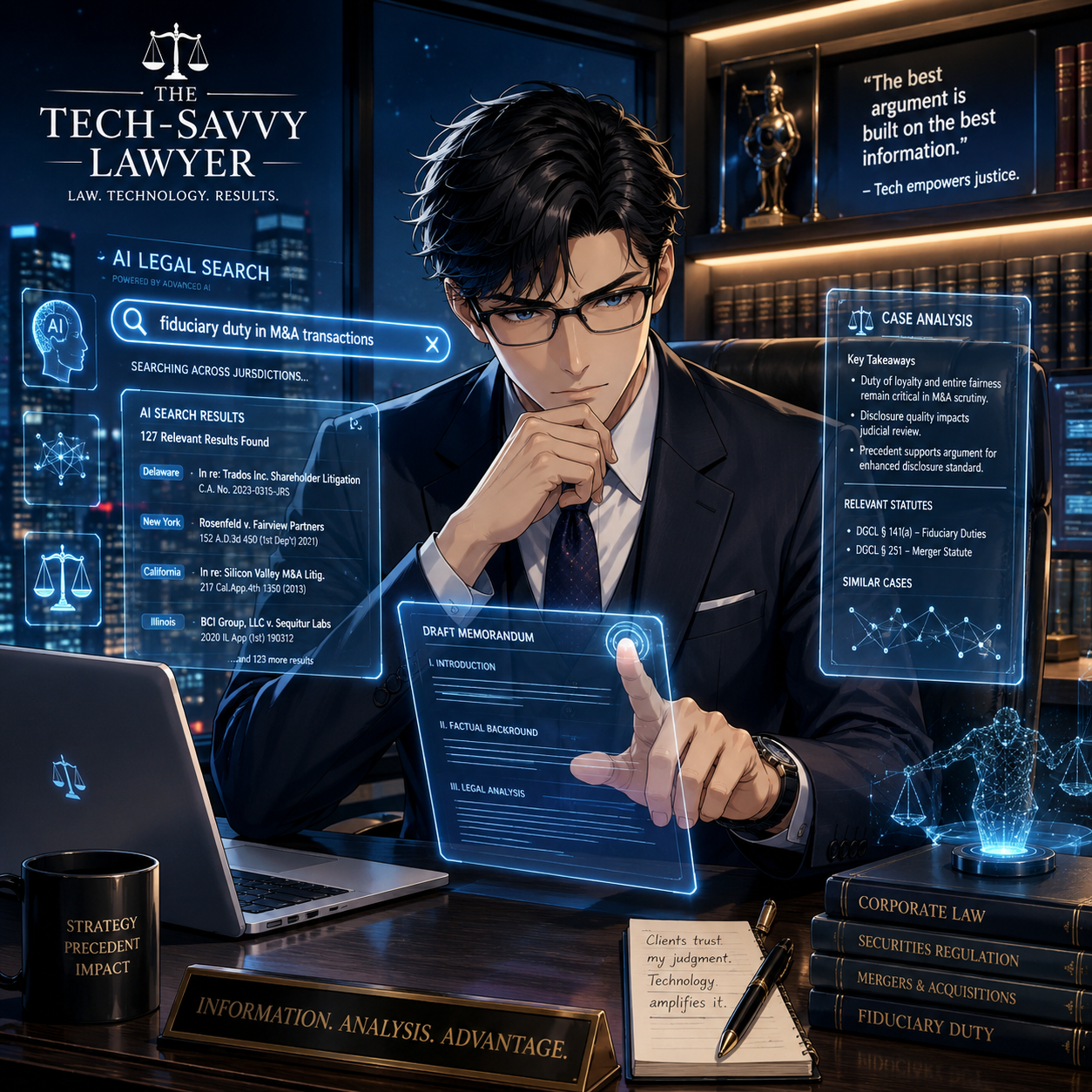
AI Legal Search Transforms Modern Lawyer Research

There is a quiet revolution happening at the very top of your browser, and most lawyers haven't noticed it yet. 🔍

The search box — that deceptively simple rectangle you've used to research case law, check opposing counsel's background, or verify a client's claims — is no longer neutral ground. In May 2026, Google announced a sweeping AI-first reimagining of its search experience, complete with AI-generated answer summaries, "Search agents" that act on your behalf, and deep integrations with Gmail and Google Photos through what it calls "Personal Intelligence."

Almost immediately, something remarkable happened. Privacy-focused search engine DuckDuckGo reported that traffic to its "No AI" search option more than tripled in the days following Google's announcement. Visits averaged 84 percent above baseline — and climbing. Users are voting with their clicks, and lawyers should be paying close attention to why.

Because for attorneys, this isn't just a preference question. It is an ethics question. 🏛️

The Search Box Has Always Been a Legal Tool

Before we talk about AI search, let's be honest about something: lawyers have always used internet research in professionally complex ways. Whether you're doing due diligence on a new client, investigating facts before a deposition, or checking whether a potential expert witness has any embarrassing public statements, search engines are embedded in legal practice.

The ABA has taken note. ABA Model Rule 1.1 on Competence requires lawyers to keep abreast of "changes in the law and its practice, including the benefits and risks associated with relevant technology." The ABA's 2012 amendment to Comment 8 of that rule was, frankly, ahead of its time. Today, "relevant technology" includes the search engine itself — not just the results it returns.

The question lawyers must now ask is not just what a search engine finds. The question is how it finds it — and what it does to the information before it reaches your eyes. 👁️

What "AI Search" Actually Does — And Why It Matters for Lawyers

Google's new AI search doesn't just retrieve pages. It synthesizes, summarizes, and presents information as if it were a fact. The AI generates an "answer" at the top of the results, often without clearly displaying the sources behind it. It uses conversational follow-up prompts and can even tap into your personal data — your Gmail, your calendar, your search history — to "personalize" results through its Personal Intelligence features.

For a casual user looking up a dinner recipe, this may be delightful. For a lawyer performing professional research, this architecture introduces risks that are not hypothetical. They are disciplinary. ⚖️

Consider these practical scenarios:

  • Investigating a witness or opposing party: If AI search synthesizes social media profiles, news articles, and forum posts into a single summary, is the attorney seeing an accurate picture — or an AI-curated composite? Errors of omission matter enormously in litigation.

  • Researching local ordinances or regulations: AI-generated summaries have been documented to cite outdated legal authority or blend jurisdictions. A confident-sounding AI answer about a zoning statute may be silently wrong.

  • Client intake due diligence: If your search engine is pulling from your own Gmail history to "personalize" results, there are immediate questions about information separation and confidentiality walls.

This implicates ABA Model Rule 1.3 (Diligence), Rule 1.6 (Confidentiality), and — for litigators — the broader duty of candor under Rule 3.3. Relying on an AI-synthesized result without independent verification is not diligent research. It is relying on someone else's summary of someone else's sources. 🚩

The Competence Gap Nobody's Talking About

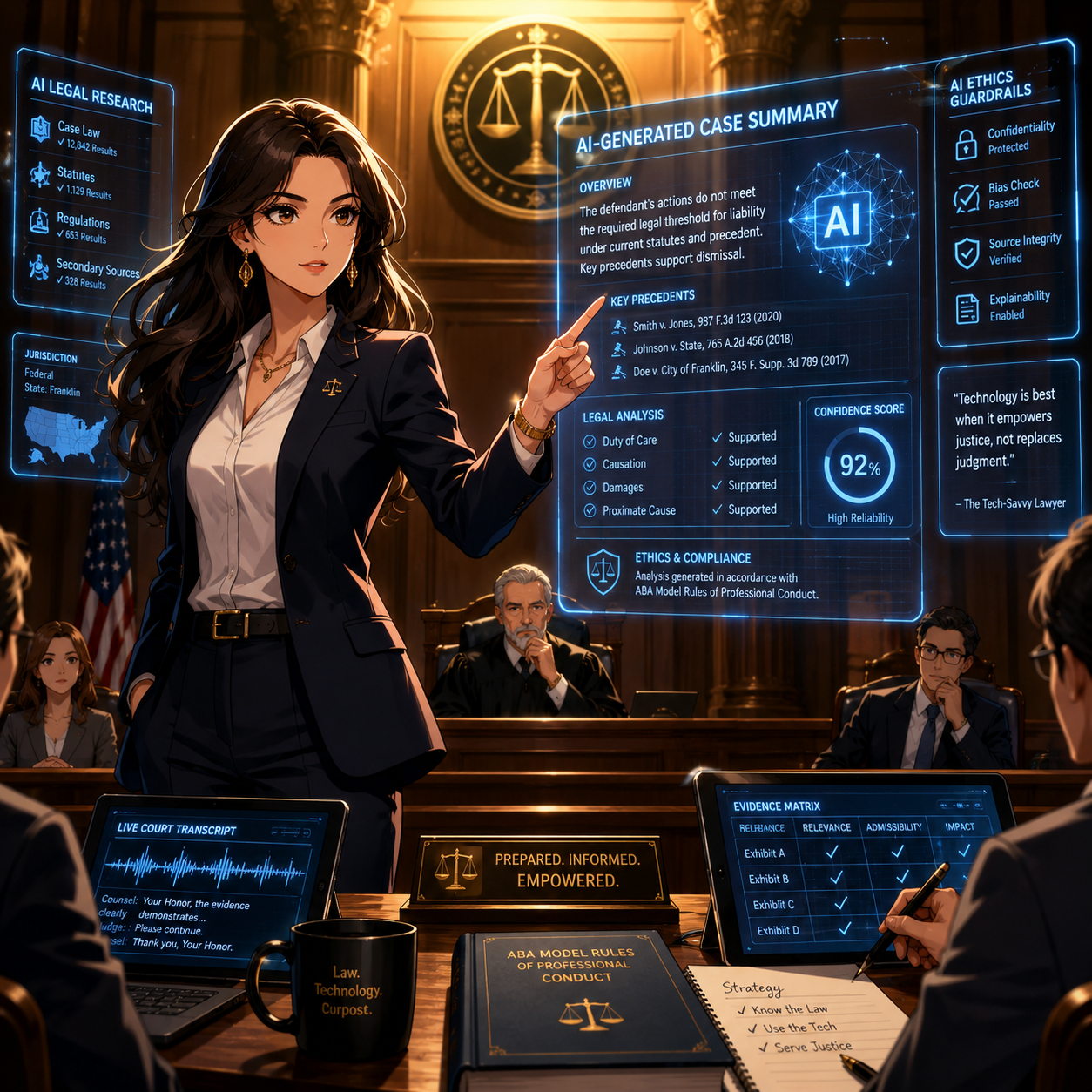
AI Case Summaries Enter the Modern Courtroom

Here is the nuance that most bar ethics opinions haven't caught up to yet: using AI search is not the same as using an AI legal research tool like Westlaw AI and Lexis+ AI. Those platforms are built on curated, citation-verified legal databases, with clear provenance for every source. General-purpose AI search like Google's new paradigm, Bing Copilot, Perplexity AI, is built on the open web, with all of the unreliability that implies.

When a lawyer asks Westlaw AI to find authority on a legal standard, the system is drawing from a professionally maintained legal corpus. When a lawyer asks Google's AI search, "What are the statute of limitations rules in Virginia for contract claims?" — the AI is generating a confident-sounding answer from whatever it found on the open internet, synthesized by a model that does not practice law and has no malpractice insurance. *Note that this does not mean you should not always check your AI work generated from legal-based websites, as they make mistakes too! ALWAYS CHECK YOUR WORK!!!

That distinction is not just academic. It is the difference between competent research and a disciplinary complaint. 📋

ABA Formal Opinion 512 (2023) addressed the use of generative AI tools broadly, emphasizing that attorneys bear full responsibility for the accuracy of AI-generated work product and may not "delegate" verification to a machine. The same logic extends directly to AI-generated search summaries. The attorney who reads an AI answer and relies on it without checking the underlying sources has not completed professional research. 

DuckDuckGo's "No AI" Option: A Signal Worth Heeding

The surge in DuckDuckGo's "No AI" search traffic is instructive for lawyers precisely because the users driving that surge aren't Luddites. They are professionals and technologists who understand the difference between AI-assisted search and raw, unmediated results.

DuckDuckGo's No AI search returns traditional link-based results without AI-generated answer overlays, without a chat interface, and with significantly fewer AI-generated images cluttering the results. For legal professionals performing factual investigation, that architecture has a significant advantage: what you see is a list of sources, not a synthesized narrative. You evaluate the sources. You apply legal judgment. The machine does not pre-filter reality for you.

Alternative privacy-first search engines like Kagi operate on a similar premise — paid, ad-free, with AI tools strictly opt-in. These are not fringe products. They are increasingly mature, professional-grade tools.

The point is not that lawyers must abandon Google. The point is that lawyers must understand what any given search tool is doing with their query and their results — and make a deliberate professional choice. 🎯

Confidentiality Implications Hiding in Plain Sight

Here's a dimension that deserves its own continuing legal education session: what happens to your search queries?

Google's Personal Intelligence features explicitly connect your search behavior to your Gmail, your Google Photos, and your account activity. For most users, this integration is a convenience. For lawyers, it is a potential Rule 1.6 problem.

If you are searching for information related to a client matter using a Google account connected to your professional email, you may be feeding client-related data into a system with its own data retention, analytics, and AI training policies. This is not speculation. It is the documented architecture of modern AI-integrated search.

The same risk applies to any AI search tool that logs, retains, or uses your queries for model training. Before using an AI search tool for client-related research, lawyers should review that platform's terms of service and privacy policy with the same scrutiny they'd apply to a cloud storage agreement.

A Practical Framework for the Ethically Conscious Lawyer

Here's what I recommend to every attorney I speak with — 🛠️

2. Verify every AI-generated summary. If an AI search tool gives you a synthesized answer, treat it as a lead, not a conclusion. Click through to primary sources. Confirm the date, jurisdiction, and accuracy of every material fact.

3. Audit your search tool's data practices. Before using any search engine — AI-powered or otherwise — for client-related research, understand what the platform does with your queries. Update your firm's privacy policy and client engagement letters accordingly.

4. Create a firm search policy. Solo practitioners and small firms alike benefit from a standard for how internet research is conducted, documented, and verified. Ideally it is written as it could be your first line of defense in a grievance proceeding.

5. Distinguish between research and investigation. When using internet research to investigate persons — clients, witnesses, opposing parties — remember that ABA Formal Opinion 466 addresses the ethical limits of reviewing publicly available juror social media. Similar caution applies to using AI-curated profiles of any individual.

The Bigger Picture 🌐

Tech-Savvy Lawyers Blend Tradition With Innovation

The DuckDuckGo story is not really about one search engine. It is about a profession — ours — navigating a moment when the most basic research infrastructure is being restructured around artificial intelligence, without a pause for professional reflection.

Lawyers are custodians of facts, advocates for truth, and officers of the court. The tools we use to find facts are not ethically neutral. They never were. But the gap between "good enough for a general user" and "professionally adequate for a licensed attorney" has never been wider.

The next time you open a browser tab to research something for a client, I want you to pause — just for a moment — and ask yourself: Do I know what this search engine is doing with my query right now? 🤔

If the answer is "I'm not sure," that pause just became an ethical obligation.

MTC.

MTC: 2025 Year in Review: The "AI Squeeze," Redaction Disasters, and the Return of Hardware!

As we close the book on 2025, the legal profession finds itself in a dramatically different landscape than the one we predicted back in January. If 2023 was the year of "AI Hype" and 2024 was the year of "AI Experimentation," 2025 has undeniably been the year of the "AI Reality Check."

Here at The Tech-Savvy Lawyer.Page, we have spent the last twelve months documenting the friction between rapid innovation and the stubborn realities of legal practice. From our podcast conversations with industry leaders like Seth Price and Chris Dralla to our deep dives into the ethics of digital practice, one theme has remained constant: Competence is no longer optional; it is survival.

Looking back at our coverage from this past year, three specific highlights stand out as defining moments for legal technology in 2025. These aren't just news items; they are signals of where our profession is heading.

Highlight #1: The "Black Box" Redaction Wake-Up Call

Just days ago, on December 23, 2025, the legal world learned of a catastrophic failure of basic technological competence. As we covered in our recent post, How To: Redact PDF Documents Properly and Recover Data from Failed Redactions: A Guide for Lawyers After the DOJ Epstein Files Release “Leak”, the Department of Justice’s release of the Jeffrey Epstein files became a case study in what not to do.

The failure was simple but devastating: relying on visual "masks" rather than true data sanitization. Tech-savvy readers—and let’s be honest, anyone with a basic knowledge of copy-paste—were able to lift the "redacted" names of associates and victims directly from the PDF.

Why this matters for you: This event shattered the illusion that "good enough" tech skills are acceptable in high-stakes litigation. In 2025, we learned that the duty of confidentiality (Model Rule 1.6) is inextricably linked to the duty of technical competence (Model Rule 1.1 and its Comment 8). As we move into 2026, firms must move beyond basic PDF tools and invest in purpose-built redaction software that "burns in" changes and scrubs metadata. If the DOJ can fail this publicly, your firm is not immune.

Highlight #2: The "AI Squeeze" on Hardware

Throughout the year, we’ve heard complaints about sluggish laptops and crashing applications. In our December 22nd post, The 2026 Hardware Hike: Why Law Firms Must Budget for the 'AI Squeeze' Now, we identified the culprit. It isn’t just your imagination—it’s the supply chain.

We are currently facing a global shortage of DRAM (Dynamic Random Access Memory), driven by the insatiable appetite of data centers powering the very AI models we use daily. Manufacturers like Dell and Lenovo are pivoting their supply to these high-profit enterprise clients, leaving consumer and business laptops with a supply deficit.

Why this matters for you: The era of the 16GB RAM laptop for lawyers is dead. Running local, privacy-focused AI models (a major trend in 2025) and heavy eDiscovery platforms now requires 32GB or even 64GB of RAM as a baseline (which means you may want more than the “baseline”). The "AI Squeeze" means that in 2026, hardware will be 15-20% more expensive and harder to find. The lesson? Buy now. If your firm has a hardware refresh cycle planned for Q2 2026, accelerate it to Q1. Budgeting for technology is no longer just about software subscriptions; it’s about securing the physical silicon needed to do your job.

Highlight #3: From "Chat" to "Doing" (The Rise of Agentic AI)

Earlier this year, on the Tech-Savvy Lawyer Podcast, we spoke with Chris Dralla of TypeLaw and discussed the evolution of AI tools. 2025 marked the shift from "Chatbot AI" (asking a bot a question) to "Agentic AI" (telling a bot to do a job).

Tools like TypeLaw didn't just "summarize" cases this year; they actively formatted briefs, checked citations against local court rules, and built tables of authorities with minimal human intervention. This is the "boring" automation we have always advocated for—technology that doesn't try to be a robot lawyer, but acts as a tireless paralegal.

Why this matters for you: The novelty of chatting with an LLM has worn off. The firms winning in 2025 were the ones adopting tools that integrated directly into Microsoft Word and Outlook to automate specific, repetitive workflows. The "Generalist AI" is being replaced by the "Specialist Agent."

Moving Forward: What We Can Learn Today for 2026

As we look toward the new year, the profession must internalize a critical lesson: Technology is a supply chain risk.

Whether it is the supply of affordable memory chips or the supply of secure software that properly handles redactions, you are dependent on your tools. The "Tech-Savvy" lawyer of 2026 is not just a user of technology but a manager of technology risk.

What to Expect in 2026:

Is your firm budgeted for the anticipated 2026 hardware price hike?

  1. The Rise of the "Hybrid Builder": I predict that mid-sized firms will stop waiting for vendors to build the perfect tool and start building their own "micro-apps" on top of secure, private AI models.

  2. Mandatory Tech Competence CLEs: rigorous enforcement of tech competence rules will likely follow the high-profile data breaches and redaction failures of 2025.

  3. The Death of the Billable Hour (Again?): With "Agentic AI" handling the grunt work of drafting and formatting, clients will aggressively push back on bills for "document review" or "formatting." 2026 will force firms to bill for judgment, not just time.

As we sign off for the last time in 2025, remember our motto: Technology should make us better lawyers, not lazier ones. Check your redactions, upgrade your RAM, and we’ll see you in 2026.

Happy Lawyering and Happy New Year!