
📢 Library of Congress Recognizes The Tech-Savvy Lawyer Podcasting Guide—and the Conversation Continues at The Tech-Savvy Lawyer.Page 🎙️
/
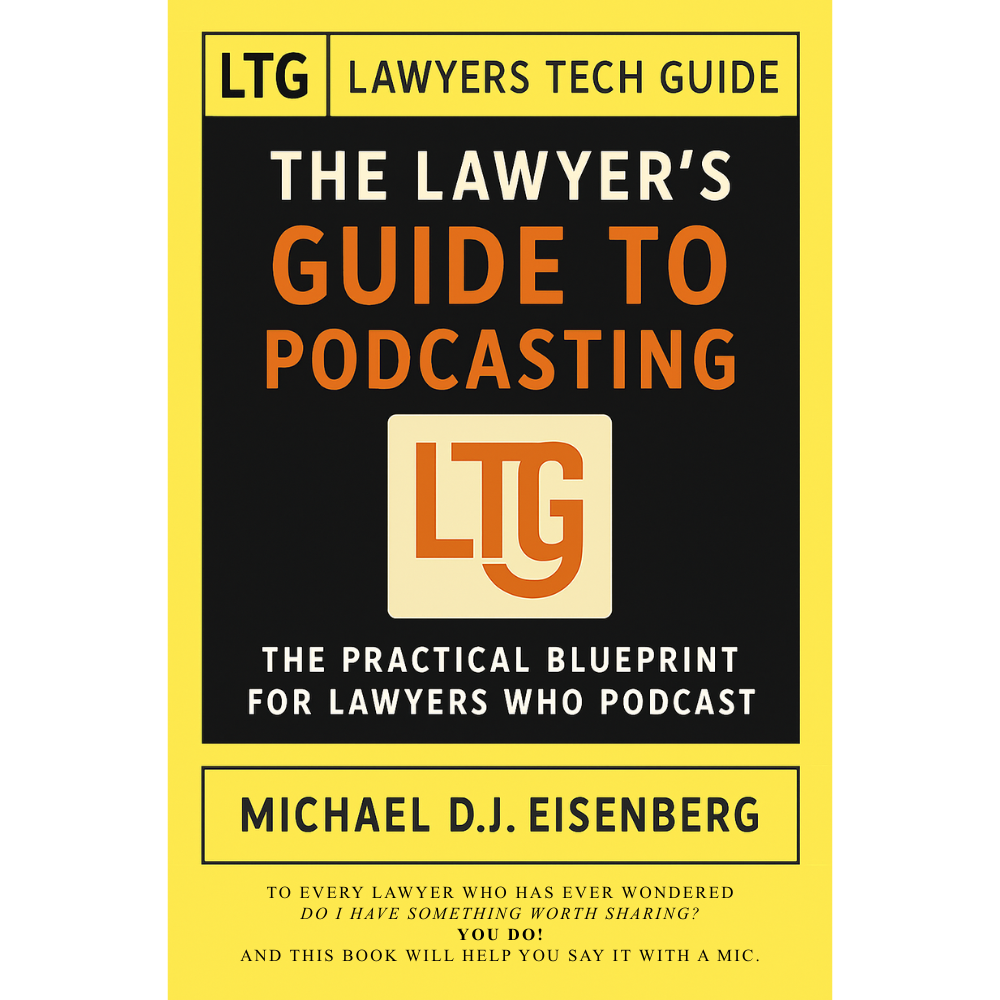
Excited and honored to share that the library of congress has accepted “The Tech-Savvy Lawyer, Lawyer’s guide to podcasting” into its collection!
I am pleased to announce that the Library of Congress has accepted The Tech-Savvy Lawyer: Lawyer’s Podcasting Guide for inclusion in its collection. I am honored for this recognition. It is a meaningful milestone for the guide, for The Tech-Savvy Lawyer, and for the growing community of lawyers who use podcasting to educate, connect, and contribute to the public conversation about law and technology. 📚
Library of Congress Control Number: 2026395311.
For years, The Tech-Savvy Lawyer has focused on practical technology issues that affect real law practices. The goal has never been technology for its own sake. It has been to help lawyers make sound decisions about tools that influence client service, confidentiality, competence, communication, efficiency, and professional judgment.
The Library of Congress acceptance of the Lawyer’s Podcasting Guide recognizes that lawyer-created educational content can have lasting value. A legal podcast may begin as a conversation, an interview, or a short practical lesson. Yet it can become something more durable: a resource for lawyers, clients, students, researchers, and members of the public who want to understand how the profession responds to changing technology.
That work continues at The Tech-Savvy Lawyer.Page. 💻
The site is designed as a practical home for lawyers who want clear guidance on legal technology, AI, cybersecurity, digital communications, ethics, and law-practice management. It is written for solo practitioners, small-firm attorneys, and legal professionals who do not need another abstract discussion of innovation. They need practical analysis that respects both their intelligence and their professional obligations.
Recent coverage has examined the growing risks of autonomous and agentic AI systems in legal practice. In “MTC: Claude Can Answer Your Emails. Why Lawyers Should Not Let AI Just Send Them Unreviewed”, I addressed the danger of allowing an AI system to send substantive communications without lawyer review. The issue is not merely whether a draft is grammatically polished. It is whether the message is accurate, confidential, authorized, and appropriate for the client’s matter.
The related challenge becomes even more serious when AI tools can act through connected systems. As discussed in the recent Tech-Savvy Lawyer analysis of AI agents, these systems may browse the web, access connected accounts, retrieve information, interact with software, and take multistep actions. That potential can improve a workflow, but it also expands the lawyer’s responsibility for access controls, supervision, confidentiality, and final review. 🔒
That is why the Lawyer’s Podcasting Guide is about more than microphones, recording software, and publishing platforms. It is about professional communication. It helps lawyers think through the decisions that make a podcast sustainable and trustworthy:

The library of congress has recognized, “The Tech-Savvy Lawyer, Lawyer’s guide to podcasting” , as a national resource - get your copy today!
Who is the intended audience?
What subject can the lawyer address with genuine experience and consistency?
What format serves listeners without consuming an unreasonable amount of practice time?
How can a lawyer promote educational content without creating unjustified expectations?
What safeguards protect client-related information during recording, transcription, editing, hosting, and promotion?
How should AI-assisted production tools be evaluated before they touch confidential or sensitive material?
Those are legal-technology questions. They are also ethics questions.
ABA Model Rule 1.1 requires competent representation. Comment provides that lawyers should keep abreast of the benefits and risks associated with relevant technology. A lawyer who uses a remote-recording service, transcription platform, cloud-hosting provider, AI-generated show-notes tool, or social-media distribution service should understand enough to make responsible decisions about that tool. The lawyer does not need to be an audio engineer or software developer. The lawyer does need to understand how the technology may affect the practice. ⚖️
ABA Model Rule 1.6 is equally important. It generally prohibits revealing information relating to representation without informed consent, implied authorization, or another applicable exception. It also requires reasonable efforts to prevent unauthorized disclosure or access. That duty does not disappear because a lawyer describes a matter as an “anonymous example” on a podcast. The combination of facts, timing, location, and context may reveal more than the lawyer intended.
The best legal podcasts recognize that responsibility. They do not use client matters as raw material. They use informed analysis, carefully selected hypotheticals, public sources, interviews, and professional experience to help listeners understand an issue.
The Library of Congress recognition also arrives at an important moment for legal podcasting. Lawyers are using audio and video formats to explain developing legal issues, discuss technology, spotlight access-to-justice efforts, and connect with colleagues across practice areas and jurisdictions. The medium is accessible. A lawyer can begin with a focused topic, basic equipment, a repeatable workflow, and a commitment to quality. 🎧
But starting is not the same as sustaining.
That is why I am especially excited to connect this announcement to the Lawyer’s Podcasting Conference. The conference will bring together lawyers, legal-technology professionals, podcasters, and communications leaders to discuss how attorneys can create ethical, effective, and enduring podcasts. Participants will explore strategy, content planning, recording, interviewing, editing, publishing, promotion, accessibility, AI-assisted workflows, and the professional-responsibility issues that shape every stage of the process.
The conference is intended to be practical. It will help lawyers move from “I have been thinking about starting a podcast” to “I have a responsible plan for launching one.” It will also help established podcasters improve their process, sharpen their audience focus, and evaluate emerging technology without sacrificing lawyer oversight. 🤝
For lawyers who are AI-curious, the discussion will be particularly timely. AI can assist with transcripts, summaries, episode outlines, clip selection, metadata, and workflow organization. It cannot replace the lawyer’s duty to verify accuracy, protect confidential information, supervise the work, or exercise professional judgment. The lawyer remains accountable for what is published and how client-related information is handled.

Find “The Tech-Savvy Lawyer, Lawyer’s guide to podcasting” in congress or get your own copy today!!!
The acceptance of the Lawyer’s Podcasting Guide by the Library of Congress is an honor. More importantly, it is an invitation to keep building. The legal profession needs more thoughtful voices. It needs clearer explanations of difficult subjects. It needs lawyers who can use technology with competence, care, and a commitment to public service.
Visit The Tech-Savvy Lawyer.Page to follow the latest analysis, learn more about the Lawyer’s Podcasting Conference, and maybe buy your copy of the Lawyer's Podcasting Guide today to get a head of the conference attendees! I hope you will join the conversation!!!