MTC: When Your CEO Asks ChatGPT How to Take Over: Lessons for Lawyers on Public AI, Ethics, and Confidentiality 🧠⚖️

Lawyers need to evaluate public AI chatbot against ABA confidentiality and privilege rules

In March 2026, the Delaware Court of Chancery in Fortis Advisors, LLC v. Krafton, Inc. handed lawyers one of the clearest cautionary tales yet about public AI chatbots, corporate governance, and the limits of “move fast and break things.” A South Korean gaming conglomerate, Krafton Inc., used an artificial intelligence chatbot to help devise an internal “Project X” takeover plan against its own studio, Unknown Worlds Entertainment, and then tried to defend the fallout in court. The result: a detailed opinion reinstating the studio’s CEO, extending a $250 million earnout period, and spotlighting how AI misuse can become Exhibit A when things go wrong.

If you’re a solo, a small-firm lawyer, or an AI‑curious practitioner dabbling with ChatGPT or similar tools, this case is your wake‑up call. The message is not “don’t use AI.” The message is: treat public chatbots the same way you treat email, cloud storage, or texting — through the lens of ABA ethics, client confidentiality, and privilege. 😬

In this editorial, I’ll unpack what happened, how the court framed the misuse of a chatbot, and what you should do in your own practice to stay on the right side of the rules.

The Case in a Nutshell: AI as a Takeover Co‑Pilot

Krafton bought Unknown Worlds — the studio behind Subnautica — for $500 million upfront plus up to $250 million in contingent earnout payments, with a contractually guaranteed structure: the founders and CEO (the “Key Employees”) retained operational control and could only be fired for defined “Cause.”  As Subnautica 2 approached early‑access launch, internal projections showed the game would easily trigger a massive earnout.

The CEO of Krafton grew concerned he looked like a “pushover” under the deal and turned to a public AI chatbot for advice on how to avoid paying the earnout and seize control of the studio. The chatbot’s “response strategy” included:

  • Locking down publishing rights and code access.

  • Crafting messaging to “secure public support” and undermine the “large corporation vs. indie” narrative.

  • Preparing a “takeover” path that blended hardball legal tactics with PR framing. 

Krafton’s internal team implemented much of that plan — cutting off the studio’s access to its Steam publishing console, posting unilateral public statements, and ultimately terminating the founders and CEO on a pretext of “premature release” risk.  When sued, Krafton tried to pivot to new justifications, including the executives’ role changes and their defensive downloads of company data. 

The court was having none of it. Vice Chancellor Will held that:

  • The terminations were not “for Cause” under the negotiated contract.

  • The “Project X” takeover guided by the chatbot was a pretext to avoid the earnout.

  • The studio’s CEO, Ted Gill, must be reinstated with full operational control, and the earnout period equitably extended by the length of his ouster. 

In other words, the AI‑assisted takeover strategy became part of the factual narrative of bad faith and breach — not a clever workaround.

Public Chatbots and ABA Model Rules: Three Pressure Points ⚖️

Attorneys must consider ethical AI chatbot use for confidential client case analysis

Even though this is a corporate earnout case, the opinion gives lawyers a concrete frame for thinking about public AI tools under the ABA Model Rules.

1. Confidentiality — Model Rule 1.6

Rule 1.6 requires lawyers to keep “information relating to the representation of a client” confidential, absent informed consent or a specific exception. Public chatbots are not your firm’s Document Management System (DMS) — they’re third‑party services that typically ingest prompts for training, quality, and logging. When Krafton’s CEO ran “Project X” through a chatbot, he was effectively outsourcing high‑stakes strategy to a non‑privileged third‑party system that could store and learn from those prompts. 

For lawyers, the parallels are obvious:

  • Dropping fact patterns, names, or deal structures into a public chatbot can mean you’ve disclosed client information to a non‑controlled vendor.

  • Even “sanitized” prompts can be re‑identified when combined with other data.

Under 1.6, that’s a potential confidentiality breach unless you’ve vetted the tool, negotiated appropriate terms (including data handling and retention), and obtained informed client consent for that mode of assistance. Emojis and “it’s just drafting help” don’t change that. 😉

2. Privilege — Model Rules 1.1 and 1.4 (Competence and Communication)

Privilege isn’t framed in the Model Rules, but Rule 1.1 (competence) and 1.4 (communication) require you to understand how your technology choices affect the protection of client communications. When you route strategy discussions through a public chatbot:

  • You may jeopardize attorney–client privilege by involving a third‑party with no need‑to‑know and no formal role in the representation.

  • You may create discoverable records that live outside your control, just as Krafton’s CEO created chat logs he then tried to delete. 

The court noted that relevant chatbot logs were deleted, which did not play well in evaluating Krafton’s narrative.  Privilege analysis is already complex with cloud tools; adding public AI as a “secret co‑counsel” without protections only compounds that risk. 

Competent use of technology now includes understanding whether your AI stack is preserving or eroding privilege and communicating those risks to clients when you propose AI‑assisted workflows.

3. Candor and Misrepresentation — Model Rule 4.1 and 8.4(c) 🚨

Although this case turns on contractual “Cause” and good faith, the court’s language about “pretextual” justifications and manufactured defenses should resonate with litigators. Model Rule 4.1 prohibits knowingly making false statements of material fact to third parties; Rule 8.4(c) bars conduct involving dishonesty, fraud, deceit, or misrepresentation. 

When you:

  • Use a chatbot to generate strategic messaging designed to mislead stakeholders.

  • Craft public statements or demand letters that you know are pretextual, but you’ve optimized with AI for tone and impact.

… you’re still responsible for the truthfulness of that content. The court saw through Krafton’s attempt to re‑frame events after the fact, and its internal AI‑assisted playbooks did not help. 

For lawyers, the lesson is simple: AI‑generated output is yours once you sign or speak it. If it’s misleading, you own the ethics problem — not “the algorithm.”

Practical Takeaways for Solo and Small‑Firm Lawyers 🧩

So what do you do if you’re a tech‑savvy lawyer who likes AI, but doesn’t want your prompts quoted in an opinion like this?

Here are grounded, practice‑ready steps.

1. Establish an AI Use Policy

Even if you’re a solo, write down what you will and won’t do with public chatbots.
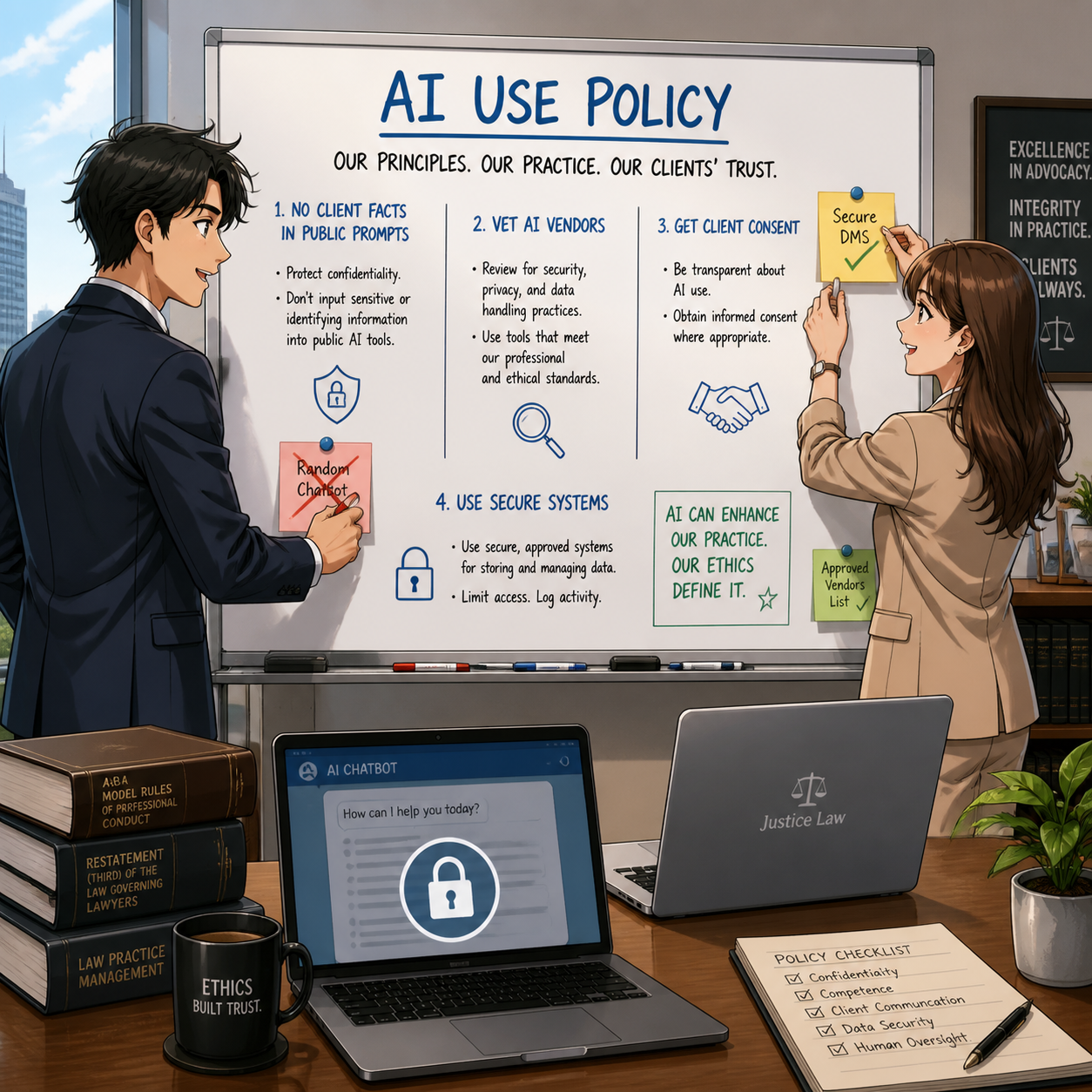
lawyers need to build practical, ethical AI policies for practice.

  • No client names, exact fact patterns, or identifiable deal terms in public tools.

  • Use AI for structure and language, not for strategy or confidential analysis.

  • Prefer client‑specific, non‑logging enterprise tools when handling sensitive material.

Treat this like you treat your cloud storage or remote‑work policy — it’s part of your competence under Model Rule 1.1 and your supervisory obligations under 5.1/5.3 if you have staff.

2. Separate “Public Prompting” from “Privileged Thinking” 🧠

Use public chatbots for:

  • Headline and meta description drafting.

  • Blog outlines, post ideas, or simple explainer language for non‑client scenarios.

  • Rough templates for standard documents that you will heavily edit.

Avoid using them for:

  • Fact‑specific case assessments.

  • Litigation strategy, negotiation plans, or internal “playbooks” like Krafton’s “Project X.” 

  • Anything that feels like the kind of conversation you’d normally have only with a colleague behind closed doors.

This separation keeps your privileged work product inside tools and workflows you control.

3. Vet Vendors Like You Vet e‑Discovery Platforms

If you move beyond public chatbots to paid AI tools, evaluate them as you would any major legaltech vendor:

  • Where is data stored?

  • Is training on your material disabled by default?

  • Can you get a Business Associate Agreement or Data Processing Agreement / Data Protection Impact Assessment that aligns with your jurisdiction’s expectations?

The ABA’s Formal Opinion 477R on secure communications and cloud ethics opinions from state bars all provide analogies: reasonable steps, not perfection, are required — but “type client memo into random website” is not reasonable. 😄

4. Document Client Consent When AI Is Material to the Representation

If you expect to use AI in a way that materially affects how you deliver legal services, communicate that to clients under Rule 1.4:

  • Explain benefits (efficiency, faster drafting).

  • Explain risks (data handling, reliability, hallucinations).

  • Offer an AI‑free option.

Written engagement terms that address AI use can save hard conversations later if something goes sideways.

5. Revisit Your “Bad Facts” Mindset

Reading this Delaware opinion, you see how internal strategy — including AI‑assisted plotting — can become a litigation exhibit.  For lawyers, that’s an invitation to ask: 

“If this prompt or chatbot conversation showed up in an opinion, would I be comfortable defending it under the Model Rules?”

If the answer is no, don’t send it. That simple heuristic scales across tools and platforms.

What This Case Signals for the Next Wave of Legal Tech 🌊
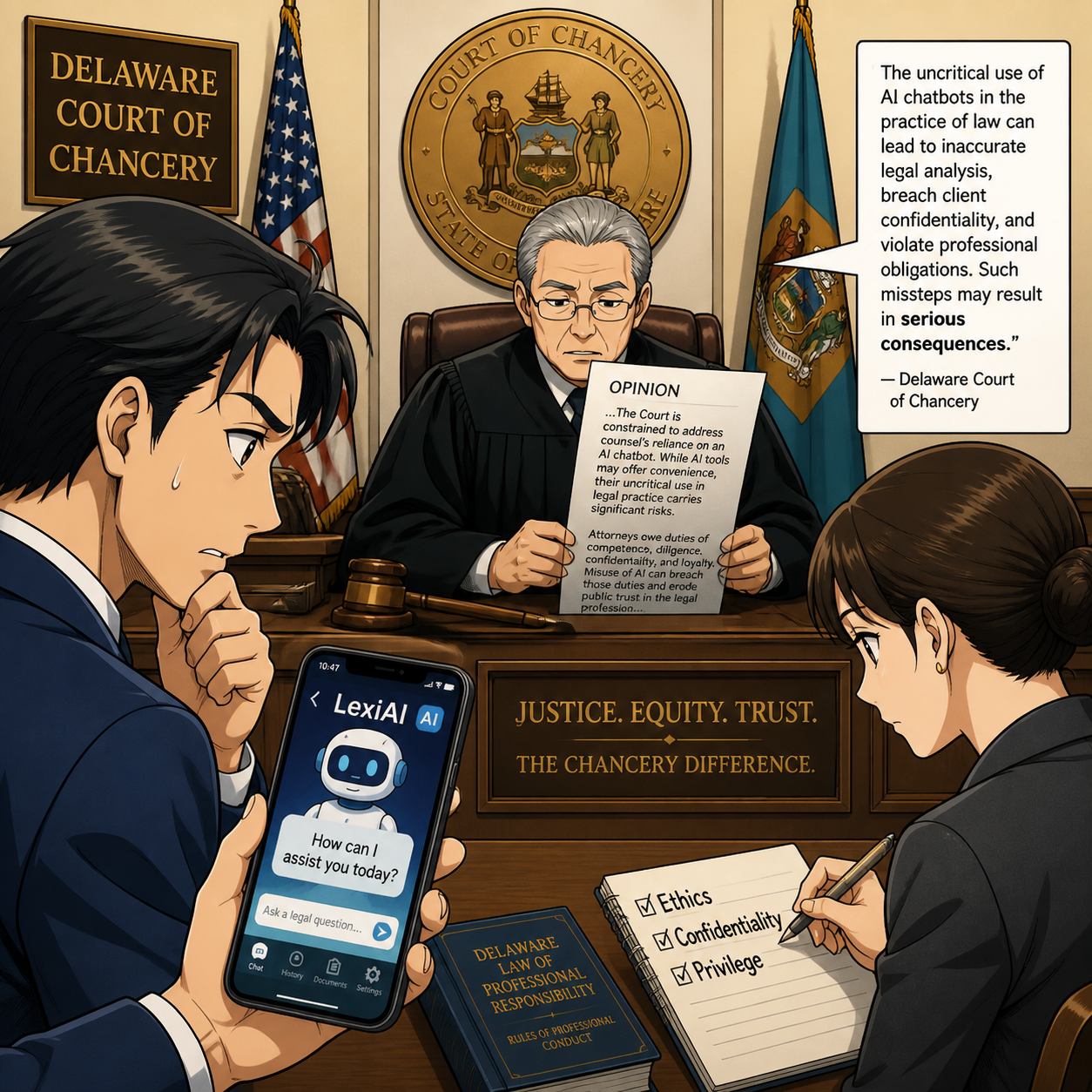
There can be significant legal consequences for AI chatbot misuse in legal disputes.

The opinion in Fortis Advisors v. Krafton is not an ethics decision aimed at lawyers, but it shows courts will:

  • Scrutinize AI‑assisted strategies as part of broader narratives about good faith, bad faith, and pretext.

  • Expect parties — and by extension, counsel — to maintain and produce AI‑related records where relevant.

  • Be unimpressed by attempts to retroactively justify decisions made for economic reasons with thin “quality” or “readiness” arguments. 

As public models get more powerful and more embedded in practice, ABA Model Rules on competence, confidentiality, supervision, and candor apply just as they did when lawyers moved to email, smartphones, and the cloud. AI is just the next tool — but it’s a tool that makes it very easy to generate sophisticated bad ideas quickly.

Your job is to keep your ethical compass steady, even when the chatbot is very persuasive. 🧭

MTC

Shout Out! A Thunderstorm, Three Books, and a Room Full of Lawyers: Shout Out from The Lawyer’s Guide to Podcasting Launch 🌩🎙

Seth price 📒 Carolyn Elefant 📒 Mindy Eisenberg 📒 Michael D.J. Eisenberg 📒 Wendy meadows 📒 scott

On May 20 in Bethesda, we launched The Lawyer's Guide to Podcasting: Building Your Brand, Audience, Tech Stack, and Expertise! with exactly the kind of energy I hoped this book would inspire: lawyers and legal professionals showing up for each other even as a serious thunderstorm rolled through the DMV. 🌧️🔥

Whether you braved the weather to come out, this post is for you. If you could not make it, think of this as your inside look at how a group of solos, small-firm lawyers, and AI‑curious professionals came together to talk about using podcasting as a serious business tool—one that fits comfortably within the guardrails of our ethics obligations under ABA Model Rules 1.1 (Competence), 1.6 (Confidentiality), and 7.1–7.3 (Communications about legal services).

A launch party built for working lawyers!

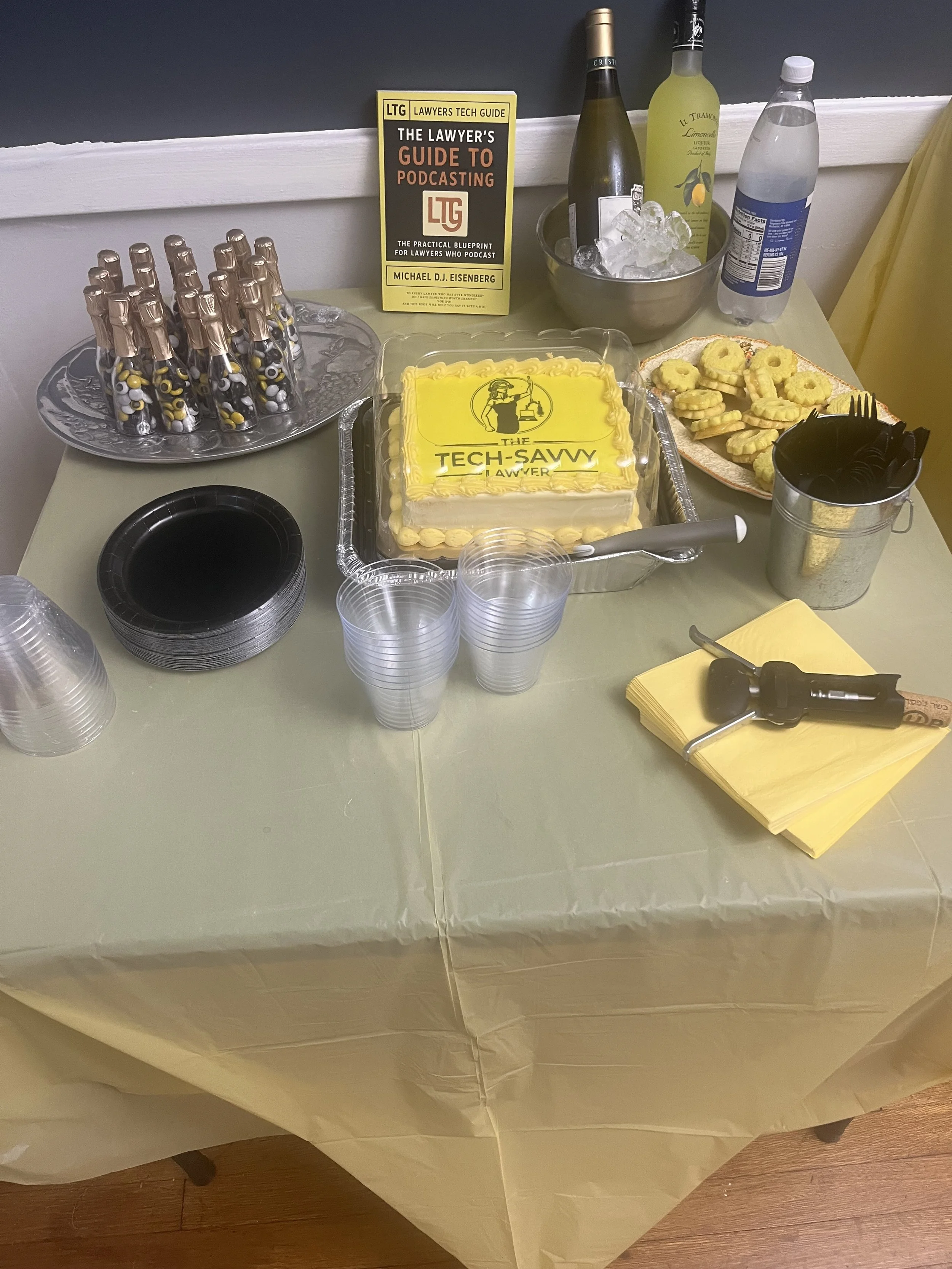
We gathered at the home of Carolyn Elefant in Bethesda—yes, in person, with real conversations and real snacks. 🥂 The goal was simple: make podcasting feel less like a mysterious “tech project” and more like a practical, repeatable part of your practice development strategy.

At the event, I walked through three concrete takeaways that mirror the book:

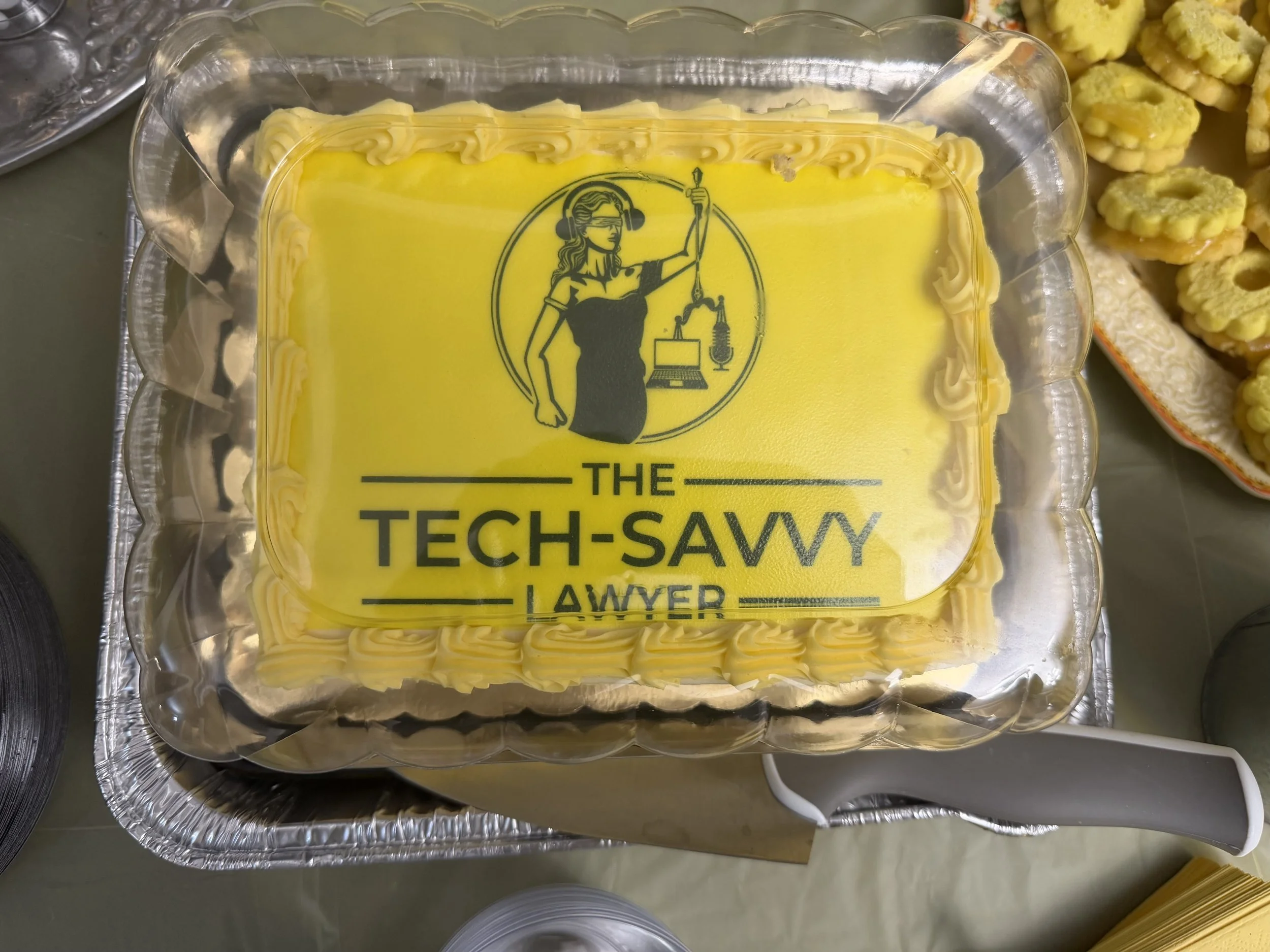
can’t have a launch party without cake!

  • A simple, lawyer‑tested podcast setup that you can actually keep running on a busy docket. 🎧

  • A short checklist of ethical and confidentiality questions to ask before you hit publish.

  • A set of ready‑to‑use episode ideas tailored to your practice area, so you are never staring at a blank calendar.

If those themes sound familiar, it is because they build on what we have discussed in prior posts and podcasts on the The Tech-Savvy Lawyer.Page. Together, they form the groundwork that became The Lawyer’s Guide to Podcasting: Building Your Brand, Audience, Tech Stack, and Expertise! 🎉

Shout Outs to the people who made the night! ⛈️

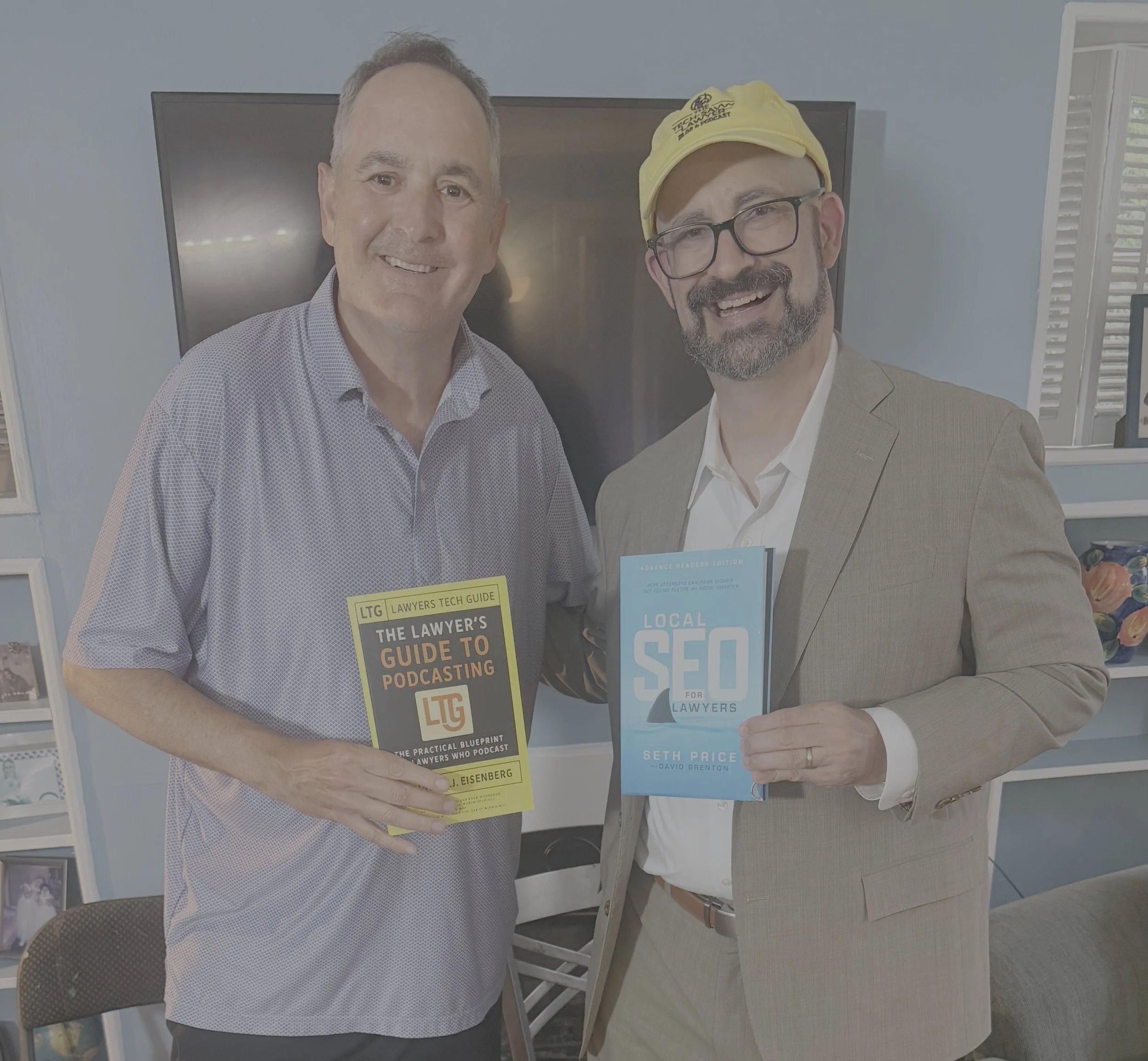
seth price and Michael D.J. Eisenberg exchange copies of their current releases!

A launch is never a solo act, even for a solo practitioner. I want to extend a very public, very appreciative shout out to a few people who made the evening special. 🙌

Finally, a heartfelt thanks to my wife and to every colleague, client, and friend who rearranged schedules and drove through a thunderstorm to be there. That kind of support is not just personally meaningful—it is a reminder that legal tech is at its best when it is rooted in community, not gadgets. 💙

Thank you Carolyn for hosting the book launch!

Why a podcasting book for lawyers—and why now?

If you follow the blog or listened to my guest appearance on Ruby Power’s “Power Up Your Practice”, Ep. 104: Legal Podcasting: The New Networking Standard, you have heard me say that podcasting is no longer a fringe experiment for lawyers. For solos, small‑to‑medium firms, and AI‑curious attorneys, a well‑designed podcast is:

  • An ongoing, searchable FAQ for your ideal clients.

  • A trust‑building channel for referral partners.

  • A training and onboarding tool for your own team.

In The Lawyer’s Guide to Podcasting, I walk through the tech stack and workflows that keep this realistic for a law practice, from microphones and recording platforms to editing, show notes, and ethical review. The idea is not to turn you into an audio engineer. The idea is to give you enough structure and competence that you work the basics yourself and delegate confidently without abdicating responsibility—very much in line with the duty of technological competence that is increasingly recognized under ABA Model Rule 1.1 and its state‑level interpretations.

Ethics, AI, and your voice behind the mic!🎙️

Many lawyers have told me that their hesitation about podcasting is not the microphone; it is the ethics. That is a healthy instinct. 👍

  • Model Rule 1.6 (Confidentiality) means no client can recognize themselves in your war stories without informed consent. In the book, I provide red‑flag questions and anonymization strategies you can bake into your outline before you record.

  • Model Rules 7.1–7.3 (Communications and Advertising) remind us that your podcast is marketing, direct or indirect, even when it feels like pure education. We cover how to structure disclaimers, avoid misleading “results‑typical” language, and respect solicitation limits while still giving real‑world examples.

  • For AI‑curious lawyers using tools like transcription, editing assistants, or AI‑drafted show notes, we address how to keep third‑party tools inside a framework that respects confidentiality and your supervisory responsibilities under the Rules.

If this resonates, you might also enjoy revisiting “Shout Out: Carolyn Elefant’s Review of Casetext v. ChatGPT!”, where she looked at AI in legal research through a similar ethics‑first lens. The same mindset applies here: use the tech, but do not outsource your judgment. 🧠

Where we go from here

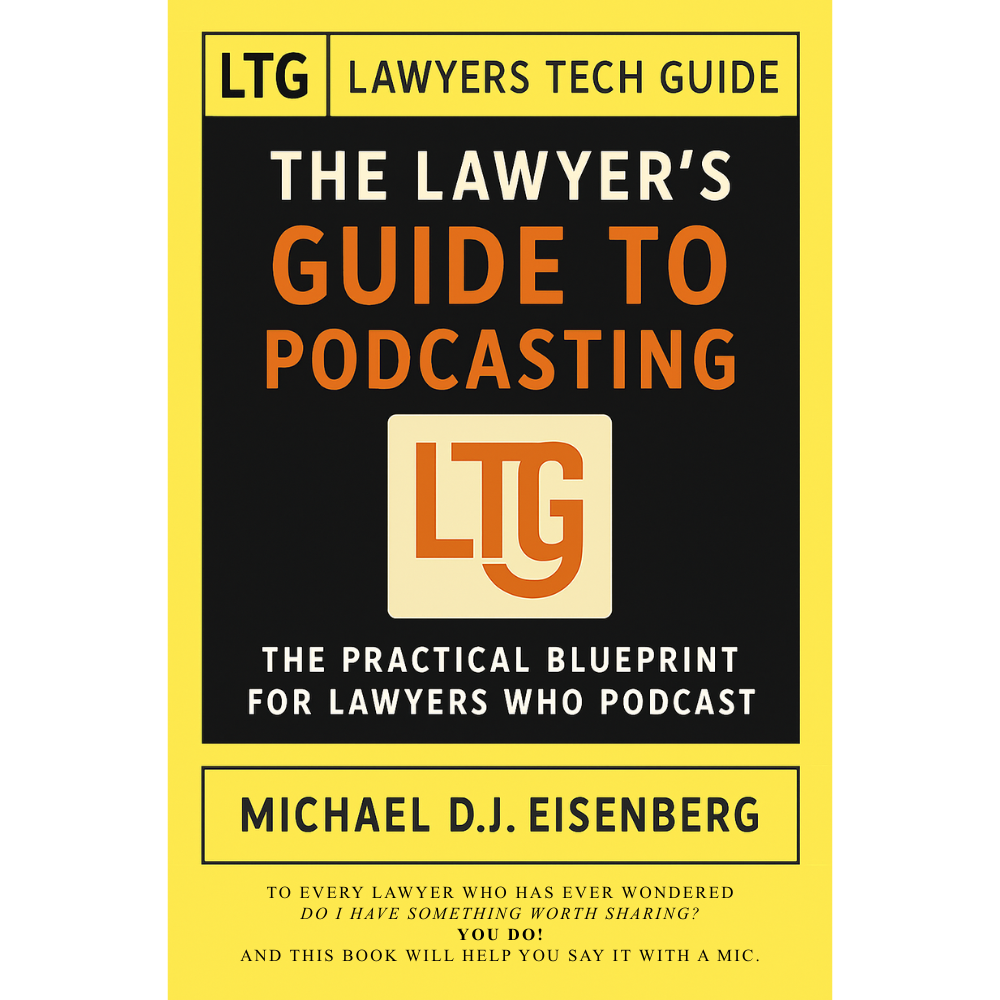
get your copy of The Lawyers tech guide: The lawyer’s guide to podcasting today on amazon!

The launch party was one evening; the conversation will continue in the weeks ahead on this blog and its podcast as we highlight chapters, interview fellow legal podcasters, and share templates you can adapt for your own show.

If you are a solo, a small‑firm partner, or an in‑house counsel looking for a practical roadmap, you can find The Lawyer's Guide to Podcasting: Building Your Brand, Audience, Tech Stack, and Expertise! on Amazon. My hope is simple: the next time a thunderstorm rolls through the DMV—or your own calendar—you will have a system that keeps your podcast, and your practice development, moving forward. 🌩🎙

🎙️ TSL.P Ep. #135: Ethical AI, Paperless Practice, and Smart Hardware Choices with ABA LTRC Chair Alan Klevan ⚖️🤖

My next guest is Alan Klevan, a veteran personal injury lawyer and Chair of the ABA Law Practice Division’s Legal Technology Resource Center (LTRC), known for running one of the first paperless practices in New England and for his clear-eyed approach to AI in law. In this live episode recorded at the ABA Spring Conference in San Diego, Alan and I dig into how solos and small firms can use AI, case management platforms, hardware, and workflows to practice more efficiently while honoring their ethical duties and protecting client confidentiality.

Join Alan Klevan and me as we discuss the following three questions and more!

  • What are the top three ways Alan uses AI and other tech tools to control discovery and document management at scale, protect client confidentiality, and communicate complex case progress to clients who only care that it is accurate and on time?

  • As Chair of the ABA Law Practice Division’s Legal Technology Resource Center, what top three technology practices does Alan wish every small or solo lawyer would adopt in the next 12 months?

  • What were the three most important technology decisions Alan made early in his career around paperless workflows, practice management, automation, and AI‑powered research—and how can today’s practitioners follow that lead?

In our conversation, we covered the following:

  • [00:00:00] Live from the ABA Spring Conference in San Diego, introducing Alan Klevan and the setting of the conversation 🌴

  • [00:00:30] Alan’s mirrored bi‑state setup: two Lenovo i7 laptops in Massachusetts and Florida, dual 24" HP HD monitors, two ScanSnap iX1600 scanners, laser printers, and Microsoft OneDrive syncing between offices 💻📠

  • [00:01:10] Traveling with a third “road warrior” Lenovo laptop, iPhone as primary smart device, and using the reMarkable 2 tablet for handwritten notes that sync into client and ABA files ✍️

  • [00:01:45] Early impressions of the Plaud (AI wearable) device, background-noise muting, and why Alan limits it to non‑critical meetings due to privilege concerns 🎧

  • [00:02:20] Judicial skepticism about AI recording tools in court; motion practice, privilege issues, and a New York judge flatly banning AI recorders in the courtroom 🚫

  • [00:03:10] AI hallucinations in legal practice, roughly 1,300 known hallucination incidents, and why the real problem is lawyers not checking citations—highlighted by a recent Oregon sanctions case 💸

  • [00:04:00] The Oregon lawyer who tried to “fix” hallucinated citations with a motion to refile instead of candor to the court and opposing counsel, and how that became a fraud‑on‑the‑court issue under the Oregon Rules of Professional Responsibility

  • [00:04:45] Using Google Scholar as an AI‑prompting “hack” to verify every citation and case suggested by AI tools 🔍

  • [00:05:20] Question 1 restated: top three ways Alan uses AI and tech to (1) control discovery, (2) protect confidentiality and ethical duties, and (3) communicate complex case progress to clients

  • [00:05:45] Drafting AI and social media policies directly into contingency‑fee agreements so clients do not post about their case or use open‑source AI on case‑related issues 📜

  • [00:06:30] Hepner and Warner: open‑source vs enterprise AI, attorney–client privilege, work product concerns, and emerging discoverability questions for public‑facing AI platforms

  • [00:07:20] Trap for the unwary: why Alan insists clients notify him before using AI on their case and why he prefers enterprise versions of AI for better protection and governance 🧠

  • [00:08:10] The Nippon Life Insurance case: client uploads attorney communications into ChatGPT, asks if her lawyer is gaslighting her, then files 44 AI‑drafted motions—raising product liability and disclaimer questions for AI vendors 🏛️

  • [00:09:30] Court pushback on AI disclaimer language, defective product theories, and the infancy of AI‑related legal liability

  • [00:10:10] Alan’s big personal‑injury “Aaron Brockovich‑type” case with a deep‑pocket defendant and using AI to level the playing field on litigation management and motion practice ⚖️

  • [00:11:00] Feeding facts, parties, defense counsel names, and pleadings into a case management system with a built‑in, highly accurate legal AI component (VL) and generating 50‑state case research for negligent infliction of emotional distress claims 📂

  • [00:12:00] Running the same matter through two AI platforms (case management AI and Claude) to compare outputs, reduce hallucination risk, and mold responses to Alan’s writing style and Massachusetts practice

  • [00:13:00] Using Claude (enterprise tier) to draft an opposition to a motion to dismiss seven emotional‑distress claims, followed by manual review and cross‑checking in the case management AI—leading to the defendant’s motion being denied ✅

  • [00:14:15] Alan’s process for verifying AI outputs: second set of “AI eyes,” Google Scholar citation checks, and lawyer‑level review of every filing

  • [00:15:00] Advice for new attorneys: try AI platforms before buying, choose a tool that fits your workflow, avoid shiny‑object syndrome, and do not over‑commit to annual plans while the market is moving fast 🧩

  • [00:16:00] Michael’s caution about yearly plans, vendor lock‑in, and ensuring your data is nimble enough to move between AI platforms without costly migrations

  • [00:16:45] Alan’s rule: do not chase every AI; become a master of one platform, learn it deeply, and resist the temptation to constantly switch 🧠

  • [00:17:10] Both hosts stress “review, review, review”—AI as a law librarian or 3L intern, not as your practicing lawyer, and the concept that AI does not have a JD 🎓

  • [00:18:00] Anecdote from 1990: Alan is sent to court unprepared, gets sent out of the courtroom to learn his file, and how that story frames his modern view of AI oversight and responsibility

  • [00:19:10] Question 2: as LTRC Chair, Alan’s top three technology practices every small or solo lawyer should adopt in the next 12 months

  • [00:19:30] Tech Practice #1: invest in a fast machine (Windows or Mac) with as much RAM and storage as you can reasonably afford, and strip the “crapware” off box‑store Windows machines 🖥️

  • [00:20:10] Discussion of Apple vs Windows pricing, the need for more than 16 GB of RAM, multi‑core processors, and why Alan buys Lenovo laptops with 32 GB RAM and expects 3–4 year laptop lifespans 💾

  • [00:21:30] Backups and storage: redundant cloud backups, redundant hard drives, using external 5 TB drives from Staples, and keeping active machines “clean” for better AI performance

  • [00:22:30] Tech Practice #2: immerse yourself in what is happening with AI and law practice, become a master of one AI platform, and continuously read ethics and disciplinary decisions about AI use 📚

  • [00:23:15] Tech Practice #3: your head is your most important piece of technology—using judgment, stepping back to assess risks, and making sure anything submitted to court or client is accurate

  • [00:24:00] Economic access, hardware costs, and why Alan still believes lower‑resource attorneys can get workable hardware by being strategic about purchases, specs, and lifecycles

  • [00:25:10] Michael’s storage philosophy: lots of local SSD, multiple backups, and revisiting older briefs and arguments (e.g., mailbox‑rule analysis) to build new work more efficiently

  • [00:26:10] Disk space versus backup strategy, internal vs external drives, cloud vs local files, and disaster recovery considerations

  • [00:27:20] Question 3: top three early technology decisions Alan made around paperless practice, automation, and AI‑powered research

  • [00:27:40] Answer #1: going fully paperless in 2005—the first paperless practice in New England—and eliminating almost all postage costs by sending encrypted electronic communications and demand packages ✉️

  • [00:28:15] Answer #2: becoming a power‑user of Adobe Acrobat and PDF workflows so he can respond to massive production requests (e.g., 10,000 pages) in seconds instead of hours 📑

  • [00:29:00] Answer #3: adopting case management platforms with AI‑driven workflows that automatically assemble record requests, HIPAA authorizations, and certifications for medical providers

  • [00:29:45] Dusty hardware: why Alan’s printer and ScanSnap are seeing less use, yet scanners remain necessary for partners who still prefer paper and non‑electronic delivery 🖨️

  • [00:30:20] Michael’s own shrinking paper consumption, stamps.com, and transitioning to PDF‑based workflows with secure electronic delivery

  • [00:31:00] Adobe Acrobat as “gold standard” for lawyers, why every attorney must understand PDFs deeply, and Alan’s “learn it, love it, live it” mantra 📄

  • [00:31:40] Bonus segment: what the ABA Legal Technology Resource Center (LTRC) is, its role as a “delivery board,” and how it serves both the Law Practice Division and the broader ABA membership 🏛️

  • [00:32:20] LTRC’s four pillars of law practice management—marketing, technology, practice, and finance—and how it delivers content via Law Technology Today, webinars, podcasts, and roundtables

  • [00:33:10] 2024–25 LTRC theme: AI‑centric content from intake through trial, and why Alan believes LTRC may become the ABA’s most important board for practitioners navigating AI

  • [00:34:00] Using AI for law‑firm marketing, content creation, case‑law recaps, and SEO—along with warnings about legal advice, PII, and AI‑generated “SEO articles” that sound inauthentic

  • [00:35:00] Call to action: join the ABA Law Practice Division and LTRC, become one of roughly 30 tech‑focused thought leaders, and help shape AI guidance for the profession 🙌

  • [00:36:00] Where to find Alan: why he is minimizing social presence during a major move and high‑stakes case, and the best way to reach him on LinkedIn

Hardware mentioned in the conversation

Software & cloud services mentioned

🎙️ Ep. #125: Transforming Law Practice: Allison Johs on Legal Tech Productivity, AI Ethics & Automation Strategies.

My next guest is Allison Johs, former Chair of the ABA Legal Technology Resource Center and founder of Legal Ease Consulting. 🎯 Allison has spent nearly two decades helping law firms prevent "lawyer meltdown" by guiding them through digital transformation, boosting productivity, and providing practical tech solutions for modern legal professionals. With 15 years of practicing law and experience growing a firm from 15 to over 50 attorneys, Allison brings real-world expertise to the challenges lawyers face when balancing technology adoption with successful client service.

Join Allison Johs and me as we discuss the following three questions and more! 🤔

  1. What are the top three foundational mistakes lawyers make when implementing new legal technology, and how can solo and small firms avoid these pitfalls to ensure their technology investments actually improve their practice rather than just create additional complexity?

  2. What are your top three recommendations for lawyers who want to responsibly integrate AI into their practice while maintaining ethical compliance and ensuring client confidentiality?

  3. What are the top three technology-driven strategies lawyers can implement immediately to automate routine tasks and reclaim billable hours?

In our conversation, we cover the following: ⏱️

  • [00:00:00] – Episode introduction and guest welcome

  • [00:01:00] – Allison's current tech setup: Dell laptop, HP all-in-one desktop, Logitech Brio webcam, Microsoft 365

  • [00:02:00] – Discussion of portable monitors (INNOCN) and dual-screen productivity setups

  • [00:03:00] – Document scanning workflow with ScanSnap scanner and going paperless

  • [00:04:00] – OCR considerations for different practice areas, Adobe Acrobat for occasional OCR needs

  • [00:05:00]Mistake #1: Not considering roles of all people who will use the technology in the firm

  • [00:06:00] – Including staff input during technology selection and implementation

  • [00:07:00] – Coaching resistant employees through technology adoption

  • [00:08:00] – Addressing legitimate objections vs. fear of change; demonstrating value to staff

  • [00:09:00]Mistake #2: Not checking how new technology integrates with existing systems

  • [00:10:00] – Hidden costs of technology transitions: running parallel systems for 6-8 months

  • [00:11:00] – Budgeting for duplicate CRM/LPM subscriptions during migration

  • [00:12:00]Mistake #3: Failing to appropriately invest in ongoing training

  • [00:13:00] – Training new hires and keeping up with subscription software updates

  • [00:14:00]AI Recommendation #1: Thoroughly investigate how AI tools handle data, security, and training

  • [00:15:00]AI Recommendation #2: Setting and strictly enforcing AI usage policies; mandatory human review

  • [00:16:00] – The importance of reviewing AI outputs—lawyers should know precedents in their practice area

  • [00:17:00]AI Recommendation #3: Start with non-client-facing AI work (internal processes, marketing, financials)

  • [00:18:00] – Ethical considerations: using AI on published court decisions for legal analysis

  • [00:19:00] – Using AI to find contrary precedents and distinguishing cases

  • [00:20:00] – Duty to supervise: real-world consequences when AI use goes wrong

  • [00:21:00]Automation Strategy #1: Appointment booking tools (Calendly, Microsoft Bookings)

  • [00:22:00]Automation Strategy #2: Templates, document assembly, AI chatbots for client intake

  • [00:23:00]Automation Strategy #3: Automated time tracking and AI-powered billing review

  • [00:23:30] – Text Expander discussion: saving 2-5 hours weekly on repetitive typing

  • [00:24:00] – Allison's top automation tools: Calendly, Microsoft Power Automate, Microsoft Bookings

  • [00:25:00] – Discovering hidden features in Microsoft 365 (Ben Schorr webinar reference)

  • [00:26:00] – Using AI for travel planning: Google AI for trip itineraries, Perplexity AI for route optimization

  • [00:27:00] – Maximizing productivity during travel and conference attendance

  • [00:28:00] – Where to find Allison: websites, social media, and YouTube channel

Resources 📚

Connect with Allison Johs:

Mentioned in the Episode:

  • 📖 ABA Legal Technology Resource Centeramericanbar.org/groups/departments_offices/legal_technology_resources

  • 📖 How to Do More in Less Time (2nd Edition, 2023) – ABA Law Practice Division book co-authored by Allison Johs - https://www.amazon.com/How-More-Less-Time-Productivity/dp/1639052283

  • 📖 Make LinkedIn Work for You: A Practical Handbook for Lawyers and Other Legal Professionals – Co-authored with Dennis Kennedy - https://www.amazon.com/Make-LinkedIn-Work-You-Professionals/dp/1734076321

  • 👤 Ben Schorr – Microsoft 365 expert, now with Affinity Consulting Group - https://www.affinityconsulting.com/team/ben-m-schorr/

  • 🏛️ Universal Migrator – CRM/LPM data migration tool - https://www.universalmigrator.com/

Hardware Mentioned in the Conversation:

  • 💻 Dell Laptop - https://www.dell.com/en-us/shop/dell-laptops/scr/laptops?_gl=1*78tbrz*_up*MQ..*_gs*MQ..&gclid=EAIaIQobChMIgerxro6QkQMVdUpHAR0BUBUOEAAYASAAEgJ_R_D_BwE&gclsrc=aw.ds

  • 🖥️ HP All-in-One Desktop Computer - https://www.hp.com/us-en/shop/vwa/desktops/form=All-in-One

  • 🖥️ INNOCN Portable Monitor (1080p mobile screen) – innocn.com

  • 📷 Logitech Brio Webcam (4K with built-in microphone) – logitech.com/brio

  • 🖨️ HP Printer - https://www.hp.com/us-en/shop/vwa/printers

  • 📄 Fujitsu ScanSnap Scanner (duplex document scanner) – scansnap.com

Software & Cloud Services Mentioned in the Conversation: