
There Is an App for That: How the Transit App Helps Lawyers Meet ABA Tech Competence and Protect Client Service 🚆⚖️
/
Smart Transit Planning Helps Lawyers Stay Punctual, Professional, and ABA-Compliant!
For many lawyers, the most stressful part of the day is not the hearing itself but getting to the courthouse, client site, or arbitration on time. 🚇 In transit‑dependent cities, delays can threaten punctuality, strain client relationships, and create avoidable risk, yet the tools to manage this are already in your pocket.
The Transit app is built on a mix of official agency feeds, crowdsourced rider reports, and its own ETA prediction engine, which gives it unusually accurate real‑time arrival data across many cities worldwide. It is designed to be a “one‑stop” view of buses, subways, trains, ferries, bikeshare, scooters, and even some rideshare options, so you are not juggling multiple agency apps or websites to understand how to get from your office to court.🚌 For a practitioner trying to manage hearings in different venues, this unified view reduces friction and the risk of missing a critical transfer.
Key features go well beyond static schedules. You can plan the fastest route from A to B, compare options that mix modes (for example, bus + rail or scooter + metro), save frequent destinations such as courthouses or jails, and receive disruption alerts when there are delays, detours, or service changes. The GO navigation feature adds departure alarms, “time to get off” alerts, and real‑time progress so you are less likely to overshoot your stop while reviewing notes or answering emails. For lawyers new to a region, live crowding reports and rider tips can also help you choose safer, more predictable paths, which ties back to your duty to reasonably safeguard your own security and your clients’ matters under the ABA Model Rules.⚖️
Reliability is strengthened by the app’s business model and data philosophy. Transit is free to use, supported by a paid option called Royale and by partnerships with transit agencies, rather than by selling riders’ personal data. The developer states that it does not link your location history to identifiable personal data and does not sell your data, which reduces some privacy concerns lawyers may have about location tracking. From an ABA Model Rule 1.6 perspective, this kind of transparent, limited‑use data practice is easier to justify than tools that depend heavily on advertising and profiling.🔐

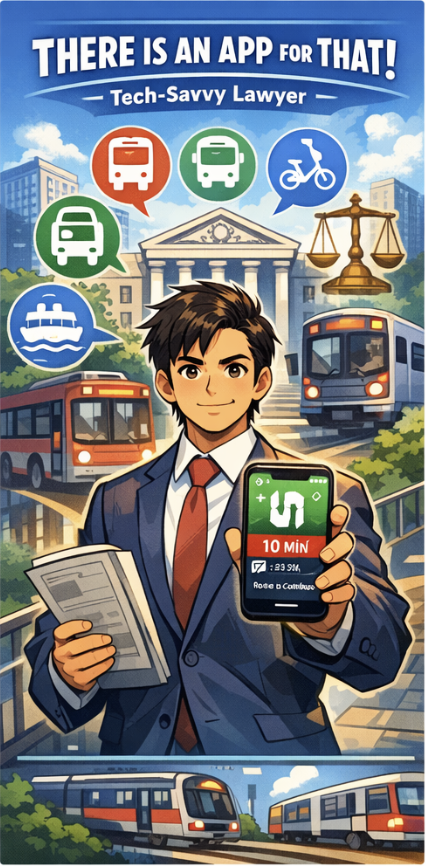
BE the hero! use Transit Apps to help Manage Delays, Deadlines, and Ethical Duties!
From a practical standpoint, Transit runs on iPhone, Apple Watch, and Android, making it accessible for most modern devices in a law office. The core app is free, which means solo and small‑firm lawyers can test it with no up‑front cost; optional Royale subscriptions are available on a monthly or annual basis, adding cosmetic perks and advanced features while leaving the essential planning tools available to everyone. This combination of broad city coverage, accurate multi‑modal data, and a privacy‑conscious, low‑cost model makes Transit a defensible choice when you explain how you are using accessible technology to manage foreseeable transit risks in line with ABA Model Rules 1.1, 1.3, and 1.6.
For solo and small‑firm lawyers, where every hour is critical, this kind of lightweight technology can be as impactful as more expensive practice‑management platforms. It improves reliability, supports ABA Model Rule compliance, and signals professionalism to clients and courts alike. In an era where judges, clients, and opposing counsel expect you to manage foreseeable risks, there truly is an app for that—and it may keep your practice on track in more ways than one. 🚍