
BOLO: Rokarolla Android Banking Malware Is Hunting Lawyers’ Phones—and Your Trust Accounts
/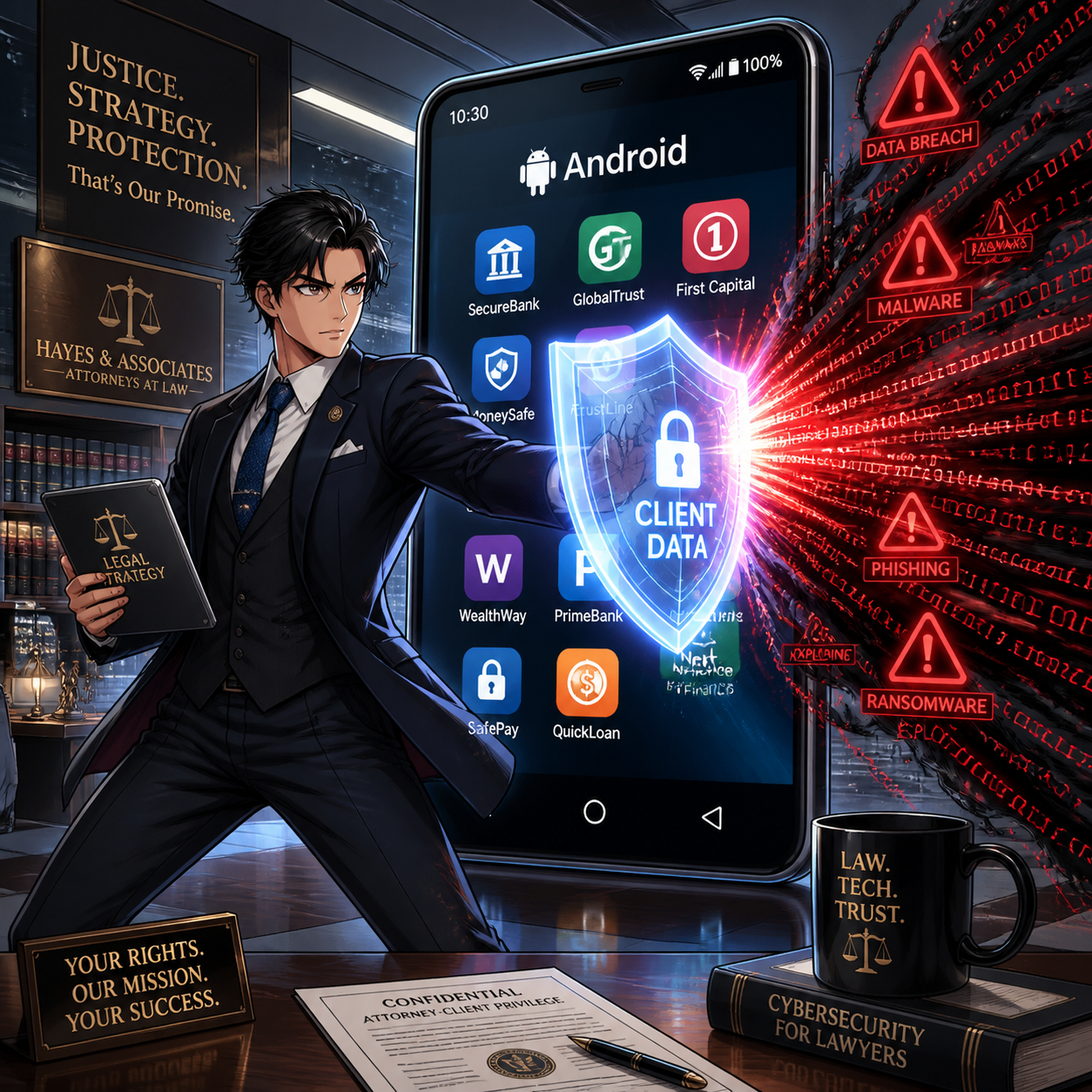
A Tech-savvy lawyer needs to shield client banking data from Android malware attack.
If you use an Android phone for client communications or online banking, it’s time to treat Rokarolla as a real and present danger—not as abstract “security news.” 🚨 This newly uncovered Android malware can silently take over your device, steal your banking logins, and hijack your screen to trick you into handing it the keys to your operating and trust accounts.
Rokarolla is a banking Trojan that abuses Android’s accessibility services and screen overlay capabilities to place fake login pages on top of your legitimate banking apps. The malware is distributed mainly through malicious websites that push users to download “free” or “updated” apps outside the Google Play Store—classic sideloading traps. Once on your phone, Rokarolla can read what’s on your screen, simulate taps, and siphon off your credentials, all while you think you’re securely logging in.
For solo and small‑firm lawyers who often use one device for everything—email, texting, banking, client portals—the risk is amplified. If Rokarolla compromises the phone you use for trust-account access or client billing, your exposure isn’t just financial. It’s ethical. Under ABA Model Rule 1.1, competence today includes understanding the “benefits and risks associated with relevant technology.” Failing to take basic steps to prevent a known mobile banking threat can be viewed as a failure to exercise reasonable competence in safeguarding client property and information.
Rokarolla’s core move is deceptively simple. After infection, it requests broad accessibility permissions. If granted, it can:

Solo attorney need to confront malicious Android apps threatening law firm finances.
Observe what appears on your screen, including banking and financial apps.
Capture input events such as taps, swipes, and text entry.
Draw fake overlays that look like your bank’s login page, convincing you to “re‑authenticate.”
When you type your username, password, or two‑factor codes into this fake screen, Rokarolla sends that data back to its operators, who can then access your real accounts. For a law firm, that could mean unauthorized wire transfers from your trust account, tampering with payroll, or manipulating client refunds—exactly the sort of nightmare that triggers ethics complaints and malpractice claims. 😬
Under ABA Model Rule 1.6, you have an affirmative duty to protect client confidentiality. Client financial data, settlement funds, and trust balances accessed via mobile banking apps fall squarely within that obligation. Using an Android device that you know—or should know—is vulnerable to current banking malware without implementing countermeasures may be viewed as a failure to “make reasonable efforts” to prevent unauthorized access. Integrating mobile security into your practice isn’t optional risk management. It’s part of your professional duty of care.
So what should you do—today—to stay ahead of Rokarolla and similar Android banking Trojans?
Stop sideloading apps. Only install apps from the Google Play Store and avoid downloading Android Package Kits from websites, emails, or messaging apps, no matter how “official” they look.
Scrutinize permissions. When any app asks for accessibility or overlay permissions (for example, “display over other apps”), treat that as a red flag unless you fully understand why it’s needed.
Use a reputable mobile security app. Tools like Malwarebytes for Android can detect and remove many known banking Trojans, including emerging families similar to Rokarolla.
Enable strong multi‑factor authentication (MFA). Use app‑based authenticators instead of SMS codes when possible, and never share MFA codes with anyone who contacts you “from the bank.”
Segregate devices for sensitive banking. Consider using a dedicated, locked‑down phone or tablet for trust‑account access and keep that device free of social media, gaming, and experimental apps.
Train your team. Under ABA Model Rule 5.1 and 5.3, supervising attorneys must ensure that staff and nonlawyer assistants follow security policies. Make Android banking security part of your standard onboarding and training.
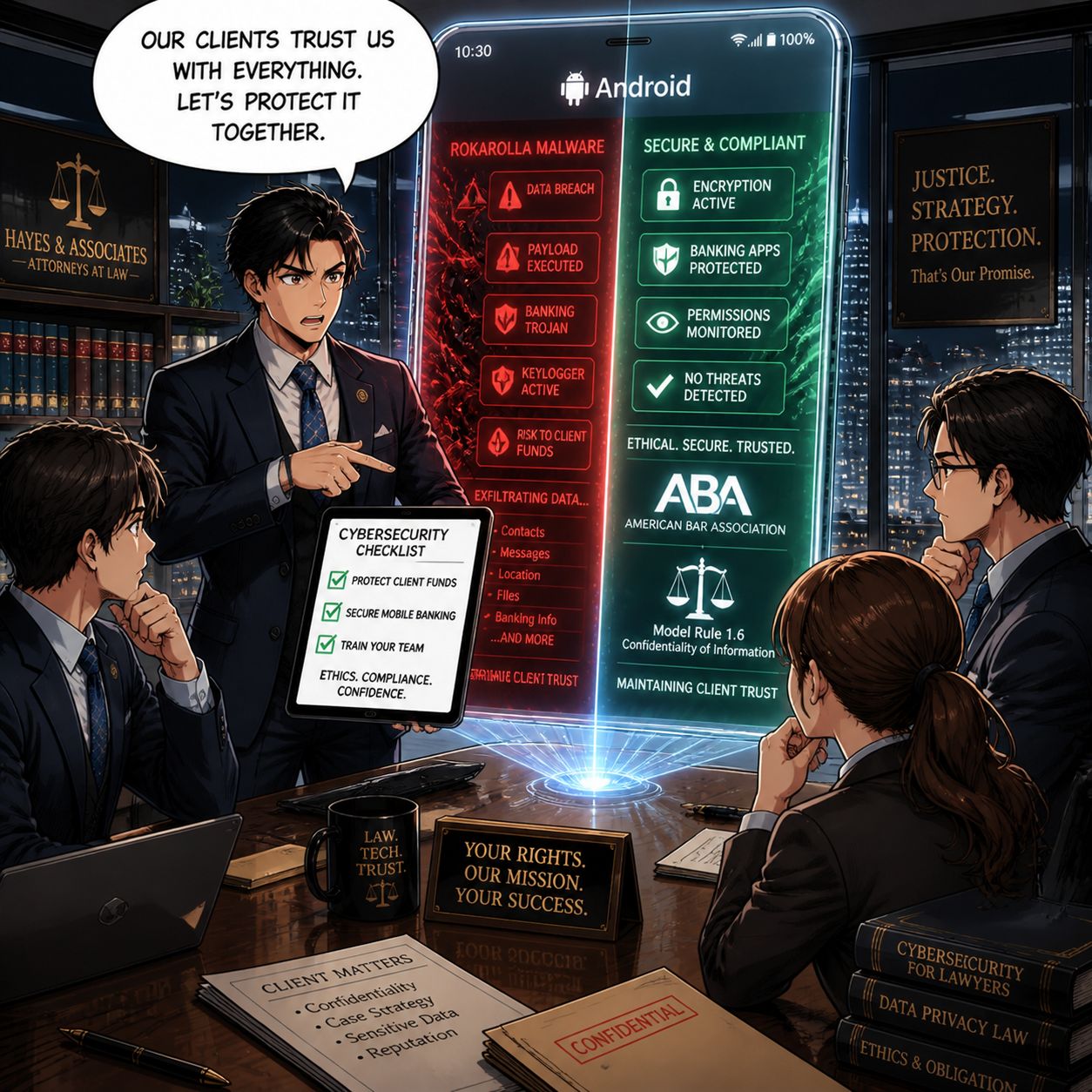
Law firm teams need to review Android security checklist to protect trust accounts.
These steps are not extreme. They are the mobile equivalent of locking your office door and using a shredder. They also help you satisfy your duty of reasonable cybersecurity under ethics opinions like ABA Formal Opinion 477R, which emphasizes the need to match your security practices to the sensitivity of client information. When the stakes involve trust accounts, settlement funds, or client escrow, anything less than actively defending your mobile banking environment is inadequate.
The bottom line: treat your Android device as a first‑class part of your practice infrastructure. Rokarolla and its cousins are designed to exploit lawyers who assume their phones are “personal” and therefore outside the security conversation. As a tech‑savvy lawyer, you know better. Your ethics obligations follow your data wherever it goes—including into your pocket.
Stay Safe Out There!