
BOLO: Gone (Almost) Phishin’: What a Sophisticated Apple Scam Teaches Lawyers About Cybersecurity, Client Confidentiality, and ABA Ethical Duties 🚨📱
/
Lawyers Face Sophisticated Apple Phishing Scam Cybersecurity Risks!
A recent real‑world phishing attempt against a well‑known technology CEO offers an important warning for lawyers and law firms about how modern scams now convincingly mimic “legitimate” security workflows. This attack did not rely on laughable grammar, obvious fake domains, or clumsy social engineering; instead, it weaponized Apple’s genuine password‑reset system, real support case IDs, and realistic phone support to try to compromise the victim’s Apple ID. For lawyers who increasingly rely on mobile devices, cloud services, and multi‑factor authentication for client communications, this kind of scam is not hypothetical—it's a direct threat to client confidentiality and professional responsibility.
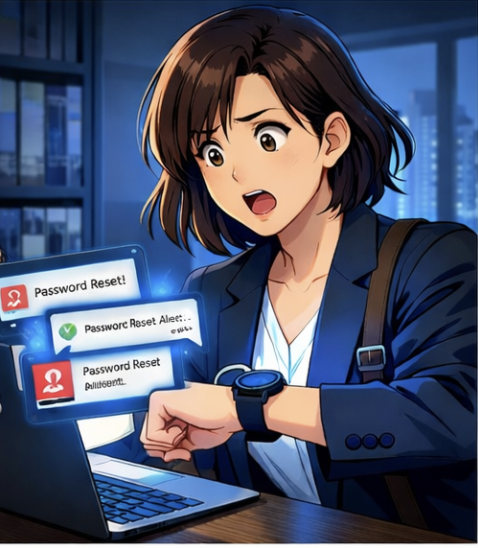
In the incident, the victim’s Apple Watch, iPhone, and Mac all began displaying unexpected prompts to reset the Apple ID password, despite the user running Apple’s Lockdown Mode on all devices. The prompts were not generated by malware on the devices, but by an attacker repeatedly triggering Apple’s legitimate password reset flow, thereby flooding the user with authentic-looking notifications. From the perspective of a busy lawyer, such prompts might be dismissed as an annoyance or, worse, acted upon in haste. Either reaction, without careful verification, can create risk. 📲
The scam escalated when the attacker called, posing as “Alexander from Apple Support,” referencing a real Apple support case that they had opened themselves by impersonating the victim. Because Apple’s own systems generated a valid case ID and corresponding emails, the communications appeared fully authentic; no spam filter or “phishing awareness” toolbar would have flagged them as suspicious. The caller began with correct, even prudent, security advice—check your account, verify nothing has changed, consider updating your password—which is precisely the kind of guidance many lawyers expect from legitimate support channels. This blend of real security language with a fraudulent goal is what makes the scam so dangerous. 🧠

Phishing Lessons for Lawyers Using Apple Devices and Cloud Tools!
The critical moment came when “Alexander” sent a text with a link to “audit-apple.com,” a pixel‑perfect imitation of Apple’s site that displayed the real case ID and even a fake transcript of the attackers’ prior “chat” with Apple. At the bottom of the page sat a “Sign in with Apple” button, intended to harvest the victim’s credentials under the guise of closing a fraudulent request. Only after poking at the site and noticing that any case ID produced the same result did the victim confirm it was a scam and confront the attacker. Many lawyers, particularly those with only moderate comfort with technology, might not test the site this way and could be persuaded by the case ID and realistic presentation. 🕵️♂️
For legal professionals, the ethical implications are significant. ABA Model Rule 1.1 on competence requires lawyers to understand the benefits and risks associated with relevant technology, including the ability to recognize and respond to sophisticated phishing. The duty of confidentiality under Rule 1.6 requires taking reasonable steps to prevent unauthorized access to client information, which includes protecting accounts and devices that store or access client files, email, and messaging. If a lawyer’s Apple ID or similar account is compromised, attackers may gain access to privileged communications, document repositories, calendar entries, and even secure messaging apps that sync via the device.
Model Rule 5.3 extends these obligations to nonlawyer assistants, including staff and outside vendors who may handle client data or access firm systems. If partners and associates are vulnerable to such scams, staff and contractors are as well; firm leadership must implement policies, training, and incident‑response procedures that recognize the new generation of phishing where everything “looks right” until you inspect the URL or underlying flow. This aligns with recognized best practices: anti‑phishing training, simulated phishing exercises, and clear escalation paths for suspicious security communications.
Key practical lessons for lawyers from this incident include:
Do not approve unexpected password‑reset prompts; instead, go directly to your device or account settings via a known‑good path (e.g., Settings → Apple ID on your device).
Treat unsolicited “support” calls with extreme skepticism, even when they reference real case IDs or recent activity; major vendors like Apple will not call you out of the blue to fix a security issue.
Always verify the URL before entering credentials; for Apple, support should live on apple.com or getsupport.apple.com, not look‑alike domains.
Establish a firm‑wide rule: no one—IT, vendors, or support—will ever ask for passwords, one‑time codes, or sign‑in via a link sent in an unsolicited message; any such request must be verified through a separate, trusted channel.

Apple Scam Warning for Lawyers Protecting Client Confidentiality
From an ethical‑risk perspective, a successful attack of this kind could trigger duties to notify clients, insurers, and regulators, depending on your jurisdiction’s breach‑notification regime and professional‑conduct rules. Even an “almost‑breach,” like the one described in this article, is a valuable opportunity for firms to revisit incident‑response plans, document what would happen if a lawyer’s Apple ID or smartphone were compromised, and rehearse the steps for containing damage. Doing so not only supports compliance with Model Rules 1.1 and 1.6 but also demonstrates to clients and courts that the firm takes cybersecurity governance seriously. ✅
The story also underscores that even highly technical users can be momentarily convinced by a well‑crafted scam, which should encourage humility rather than embarrassment among lawyers who worry they are “not technical enough.” The correct response is not shame, but systems: layered security controls, clear verification procedures, and regular training that turn individual vigilance into institutional resilience. Ultimately, as phishing attacks become more sophisticated and exploit real security workflows, lawyers must elevate their cybersecurity awareness to meet their ethical obligations and preserve the trust at the core of the attorney‑client relationship. 💼