
🎙️ Robert Ingalls of Lawpods Joins Michael D.J. Eisenberg at The Tech-Savvy Lawyer.Page Podcasting Conference
/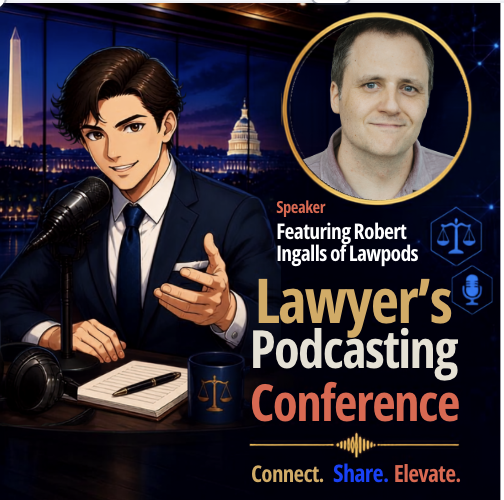
Join us at the lawyers podcasting conference to learn from robert ingalls of lawpods!
I am pleased to announce that Robert Ingalls of Lawpods will join me at The Tech-Savvy Lawyer.Page Podcasting Conference, November 13–14, 2026, in McLean, Virginia. 🎙️
Robert and I will tackle two questions that shape every successful legal podcast:
1. Why should lawyers podcast?
2. When should lawyers outsource production, and how much of the work should they delegate?
Those questions sound simple. They are not. A legal podcast can become a powerful professional asset. It can also become a half-finished project, an expensive hobby, or an ethical problem if a lawyer treats it as ordinary content marketing.
This conference is designed for the lawyer who wants to do it correctly. That includes solo practitioners, small-firm lawyers, in-house counsel, AI-curious professionals, and lawyers who have bought a microphone but have not yet published Episode One. ⚖️
We will meet Friday, November 13, and Saturday, November 14, 2026, at 1765 Greensboro Station Place, 9th Floor, McLean, Virginia 22102. The venue is approximately one minute on foot from the Greensboro Metro station on the Silver Line. 🚇
WHY LAWYERS NEED TO PODCAST
Podcasting is not about becoming famous. It is about becoming known for useful work by the people who need to know you.
A prospective client may not understand your practice area. They may not know which legal term to search. They may not know how to distinguish one lawyer from another. But they understand a helpful voice explaining a difficult problem with clarity and restraint.
That is the strategic value of a well-run show.
A lawyer podcast can:

join your colleagues at the Legal Podcasting Conference: Build a Sustainable Lawyer-Led Show
• Demonstrate knowledge in a focused practice niche.
• Build trust before an initial consultation.
• Create meaningful relationships with guests and referral sources.
• Help lawyers stay current by requiring them to prepare and explain legal developments.
• Produce transcripts, show notes, clips, articles, and newsletter content.
• Improve traditional search visibility through structured, indexable content.
• Strengthen generative-engine visibility when AI systems look for credible, attributable answers. 🔎
A static biography tells the public where you went to school and how long you have practiced. A useful podcast lets people hear how you think.
That distinction matters.
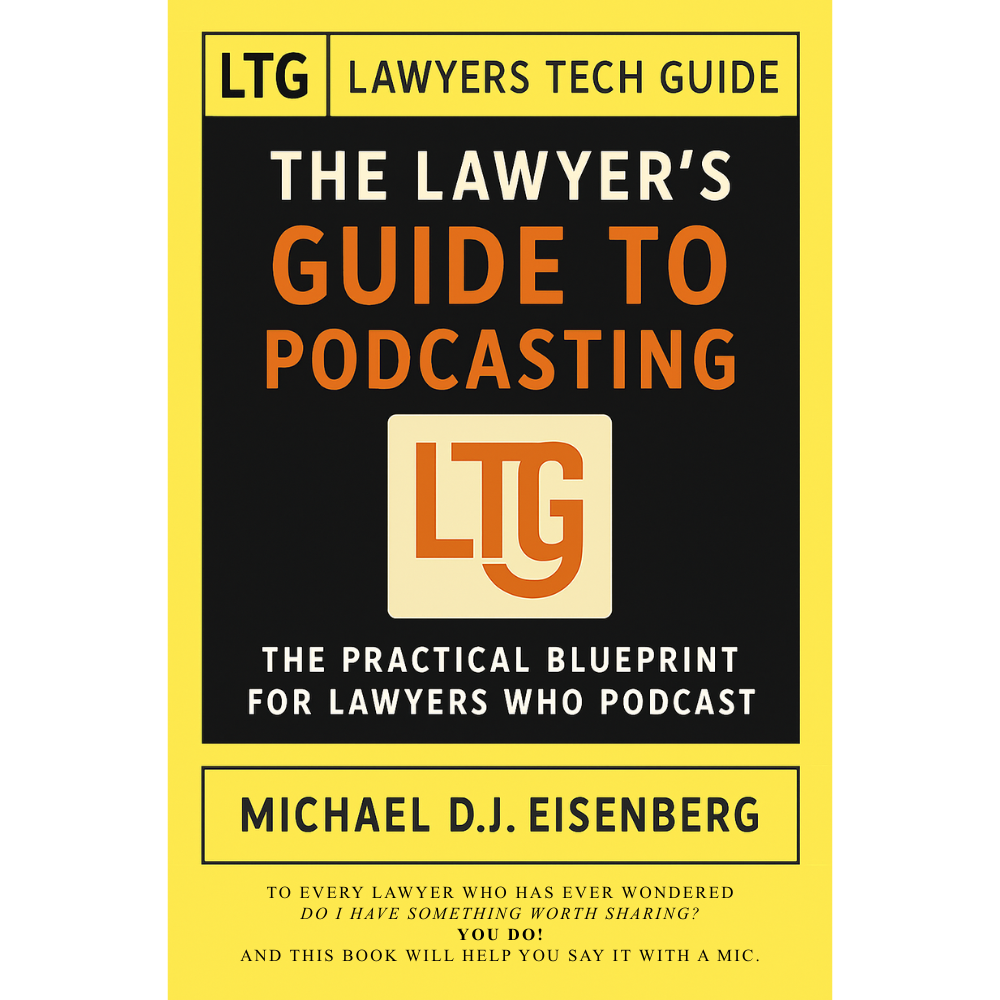
In “The Lawyer’s Guide to Podcasting Is Here: A Practical, Ethical Launch Plan for Busy Lawyers”, I made the case for a practical, ethical approach to legal podcasting. The objective is not to produce a glossy entertainment program. It is to create a show that reaches a real audience, supports professional goals, and can survive a lawyer’s actual calendar.
Robert and I will explore that “why” on Day One. We will talk about identifying the right audience, choosing a workable format, developing a point of view, and setting a publishing cadence you can keep. 🎧
The best podcast is rarely the one with the most expensive gear. It is usually the one with a clear purpose and a host who publishes consistently.
THE PRODUCTION QUESTION
Then comes the question every busy lawyer eventually asks: “Do I really need to do all of this myself?”
The answer is no.
You may be able to handle every step. You can schedule guests, record interviews, edit audio, write show notes, produce social clips, publish the episode, and track analytics. You can also bill clients, prepare for hearings, manage staff, respond to emergencies, and attempt to have a life outside the office.
The more important question is whether you should do every production task yourself.
On Day Two, Robert will lead a practical discussion about outsourcing podcast production. We will examine the continuum between a fully do-it-yourself show and a fully managed production relationship.
A modern podcast workflow may include:
come learn How Lawyers Can Launch Better Podcasts Without Doing Everything!
Show strategy and topic planning.
Guest research, outreach, scheduling, and follow-up.
Pre-interview preparation and release forms.
Recording setup, backups, remote audio, and file handling.
Audio and video editing.
Transcript cleanup and accessibility review.
Show notes, chapters, timestamps, and citations.
Episode titles, artwork, clips, newsletters, and social content.
Hosting, distribution, analytics, and audience engagement. 📡
Some lawyers should begin by doing more of the work themselves. Basic production knowledge helps you make better decisions, recognize quality, and understand what you are paying for.
Other lawyers should outsource much earlier. If editing becomes the reason you miss publication dates, if an episode sits unedited for six weeks, or if the technical work keeps you from serving clients, delegation may be the responsible business decision.
The right model may be hybrid. You retain control over legal analysis, episode themes, client-sensitive material, guest selection, and final approval. A producer handles technical cleanup, publishing, transcripts, graphics, clips, and repeatable administrative tasks.
That division can make a show sustainable. It can also protect the part of the work only the lawyer should perform.
YOU MAY DELEGATE WORK, NOT RESPONSIBILITY
Outsourcing does not erase a lawyer’s professional duties. ⚖️

learn Why Lawyers Should Podcast and When to Outsource Production
ABA Model Rule 5.3 requires lawyers with managerial or supervisory authority to make reasonable efforts to ensure that nonlawyer assistance is compatible with the lawyer’s professional obligations. It also addresses lawyer responsibility when a lawyer orders, ratifies, or fails to mitigate conduct that would violate the Rules if the lawyer had done it personally.
For a podcast, Rule 5.3 can apply to an editor, producer, virtual assistant, transcription company, social-media contractor, marketing consultant, or AI-enabled production platform. If those people or systems handle files, draft descriptions, clip statements out of context, or publish material, the lawyer must establish appropriate expectations and supervision.
ABA Model Rule 1.6 belongs in the conversation before an audio file is uploaded. Client facts that appear anonymous may still identify a client. A producer does not need to know the name of a client to receive confidential information. The context itself may be enough. Lawyers should evaluate what they record, where they store it, what they send to vendors, and what consent is required before discussing any matter publicly.
ABA Model Rules 7.1 through 7.3 matter because a legal podcast often communicates about legal services. A producer should not be left to make unsupervised claims about results, specialties, comparisons, testimonials, endorsements, or invitations to hire the firm. Advertising rules differ by jurisdiction. A nationwide audience does not create a nationwide exemption.
Model Rule 1.1, read with Comment 8, requires lawyers to keep abreast of the benefits and risks associated with relevant technology. That means understanding the tools in your podcast workflow well enough to make informed choices. It does not mean becoming your firm’s full-time audio engineer.
And Model Rule 8.4(c) should guide lawyers who use AI-generated clips, synthetic voices, or automated text. Do not publish content that misleads a listener about what was said, who said it, or how it was created.
I have written about the same verification obligation in “MTC: Even Though AI Hallucinations Are Down, Lawyers Still Must Verify AI, Guard PII, and Follow ABA Ethics Rules”. Human review remains essential before publication. 🎯
A CONFERENCE BUILT FOR PUBLICATION
The Tech-Savvy Lawyer.Page Podcasting Conference follows the practical framework of “The Lawyer’s Guide to Podcasting”.
Day One addresses why lawyers should podcast, what they should talk about, who they should reach, what format fits their goals, and what gear they actually need.
Day Two addresses guests, preparation, recording, editing, show notes, hosting, distribution, promotion, ethics, and sustainable operations. The conference is designed to help attendees leave with a show premise, defined audience, format, realistic production workflow, initial gear plan, and ethical checklist. 📋
Robert’s contribution is particularly important because the production question is where many good ideas fail. Lawyers begin enthusiastically. Then client demands increase. Editing piles up. The hosting platform feels confusing. The social media calendar goes blank. The show stops.
A sensible production plan can prevent that outcome.
You may not need a full studio. You may not need to outsource every task. You do need a process that will still work when your practice becomes busy.
JOIN US IN MCLEAN
📅 Friday, November 13–Saturday, November 14, 2026
📍 1765 Greensboro Station Place, 9th Floor, McLean, VA 22102
🚇 About one minute from Greensboro Metro station on the Silver Line
Whether you are still considering a show, preparing to launch, or trying to make an existing podcast more manageable, this is the conversation you need to have.
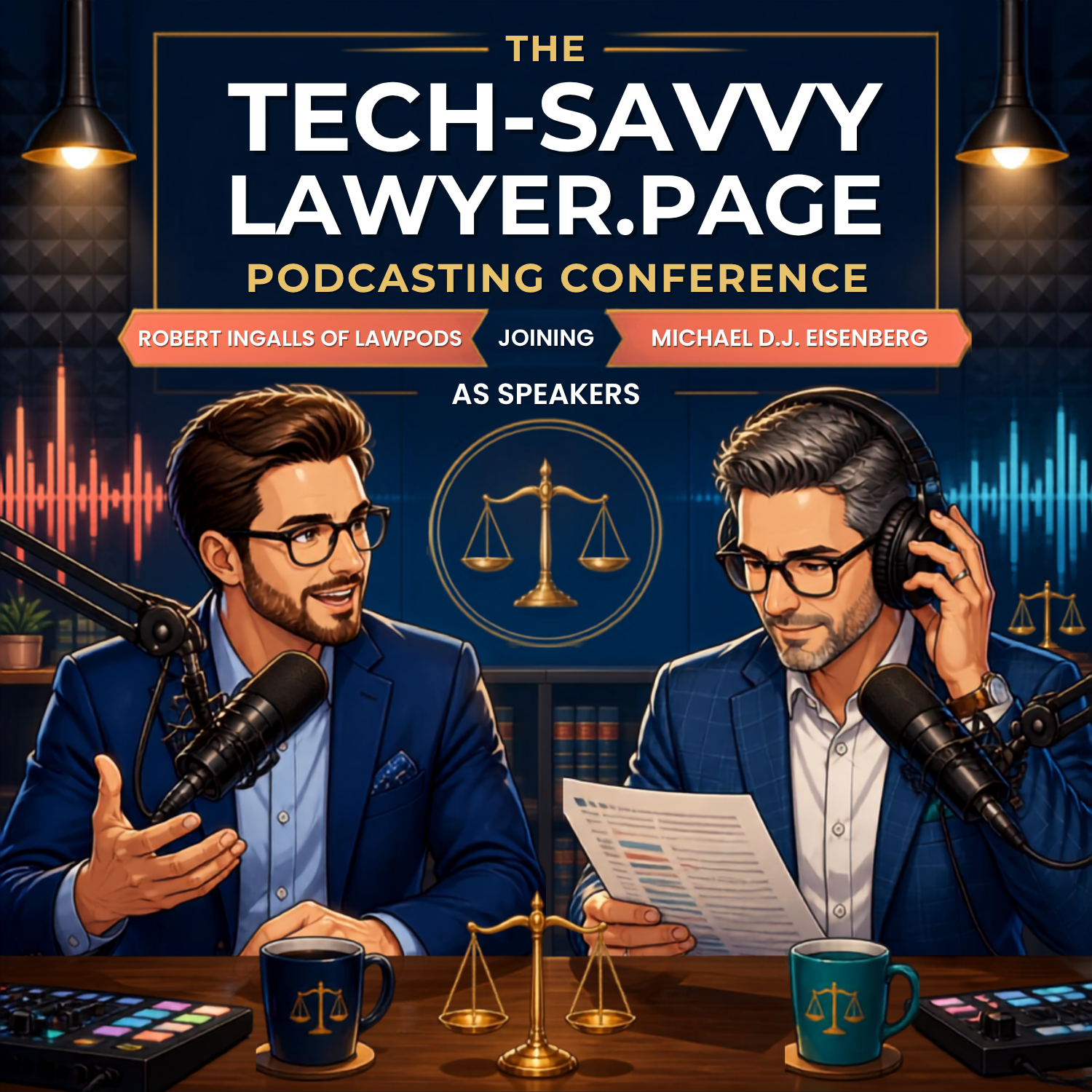
Join Robert Ingalls and Michael Eisenberg for their discussions on Legal Podcasting!
Come ready to examine your audience, your workflow, your budget, and your ethical obligations. Bring the podcast idea you have been postponing. Leave with a plan that fits your practice. 🎤
📌 Program note: The Tech-Savvy Lawyer.Page Podcasting Conference schedule is being fine-tuned. Session order, timing, and length may shift as faculty confirmations and program needs develop. Speaker announcements will continue as faculty confirm, and the final agenda will reflect the strongest possible program for lawyer-podcasters.
Learn more and follow updates at https://www.thetechsavvylawyer.page/lpcinfo.