🎙️ Robert Ingalls of Lawpods Joins Michael D.J. Eisenberg at The Tech-Savvy Lawyer.Page Podcasting Conference

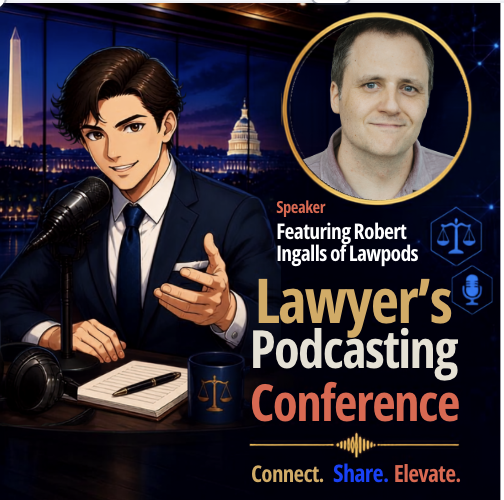
Join us at the lawyers podcasting conference to learn from robert ingalls of lawpods!

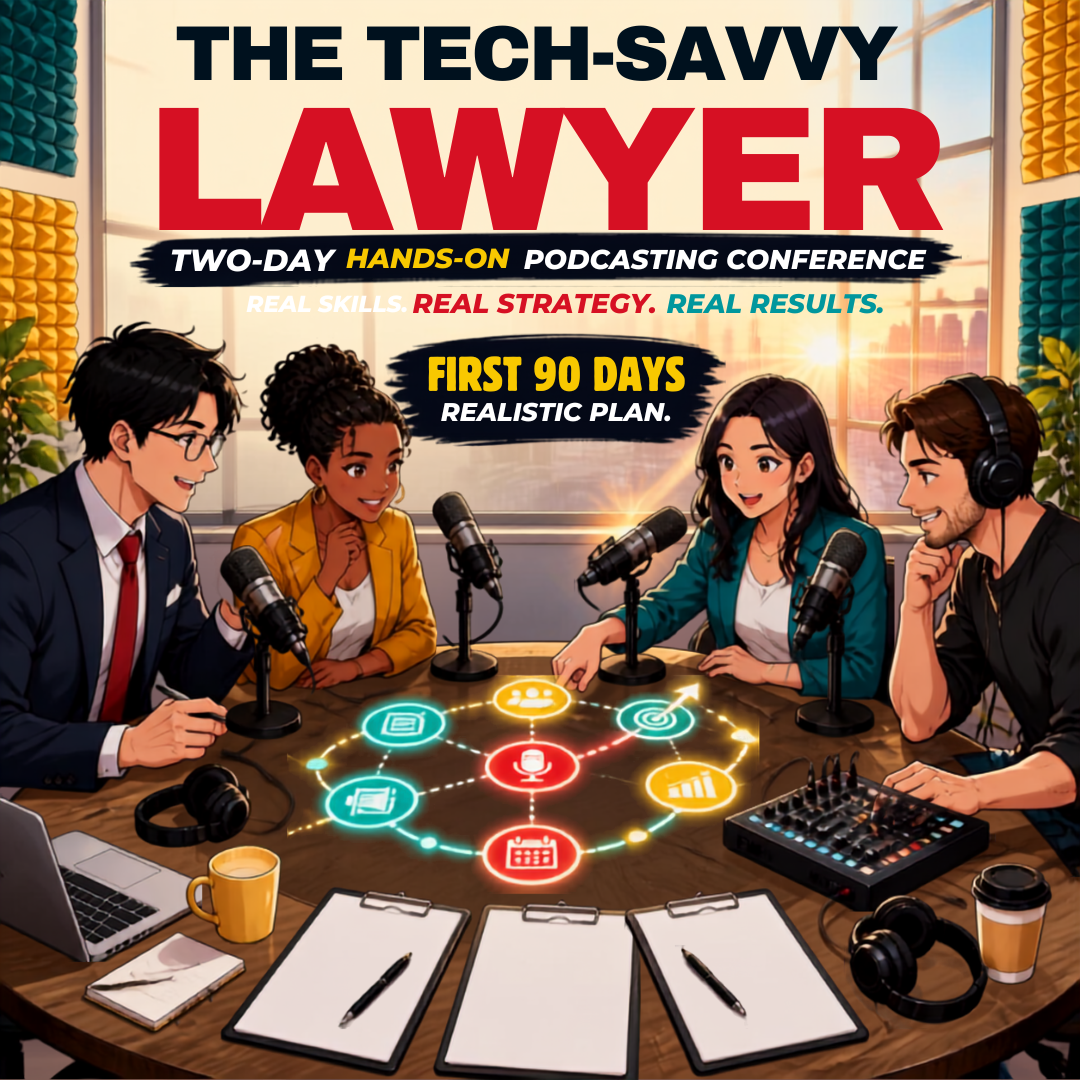
I am pleased to announce that Robert Ingalls of Lawpods will join me at The Tech-Savvy Lawyer.Page Podcasting Conference, November 13–14, 2026, in McLean, Virginia. 🎙️

Robert and I will tackle two questions that shape every successful legal podcast:

1. Why should lawyers podcast?

2. When should lawyers outsource production, and how much of the work should they delegate?

Those questions sound simple. They are not. A legal podcast can become a powerful professional asset. It can also become a half-finished project, an expensive hobby, or an ethical problem if a lawyer treats it as ordinary content marketing.

This conference is designed for the lawyer who wants to do it correctly. That includes solo practitioners, small-firm lawyers, in-house counsel, AI-curious professionals, and lawyers who have bought a microphone but have not yet published Episode One. ⚖️

We will meet Friday, November 13, and Saturday, November 14, 2026, at 1765 Greensboro Station Place, 9th Floor, McLean, Virginia 22102. The venue is approximately one minute on foot from the Greensboro Metro station on the Silver Line. 🚇

WHY LAWYERS NEED TO PODCAST

Podcasting is not about becoming famous. It is about becoming known for useful work by the people who need to know you.

A prospective client may not understand your practice area. They may not know which legal term to search. They may not know how to distinguish one lawyer from another. But they understand a helpful voice explaining a difficult problem with clarity and restraint.

That is the strategic value of a well-run show.

A lawyer podcast can:

join your colleagues at the Legal Podcasting Conference: Build a Sustainable Lawyer-Led Show

• Demonstrate knowledge in a focused practice niche.

• Build trust before an initial consultation.

• Create meaningful relationships with guests and referral sources.

• Help lawyers stay current by requiring them to prepare and explain legal developments.

• Produce transcripts, show notes, clips, articles, and newsletter content.

• Improve traditional search visibility through structured, indexable content.

• Strengthen generative-engine visibility when AI systems look for credible, attributable answers. 🔎

A static biography tells the public where you went to school and how long you have practiced. A useful podcast lets people hear how you think.

That distinction matters.

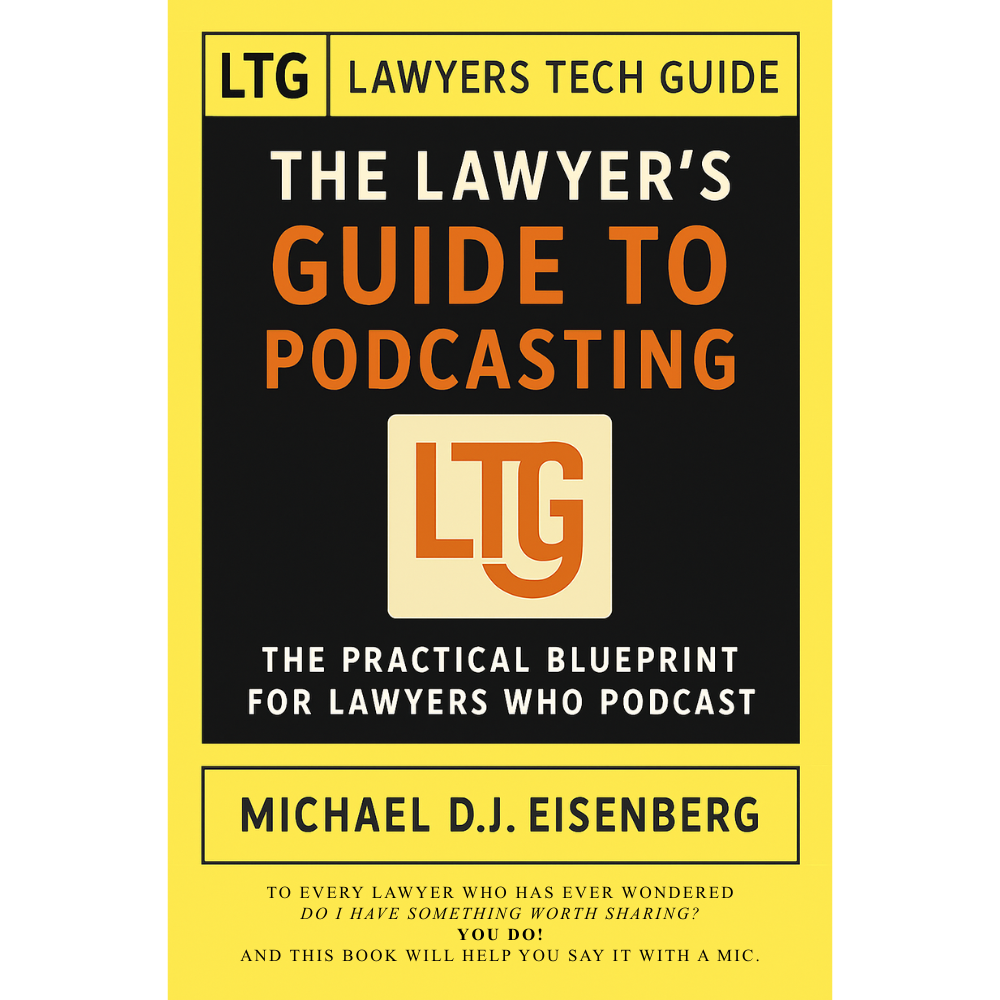
In “The Lawyer’s Guide to Podcasting Is Here: A Practical, Ethical Launch Plan for Busy Lawyers”, I made the case for a practical, ethical approach to legal podcasting. The objective is not to produce a glossy entertainment program. It is to create a show that reaches a real audience, supports professional goals, and can survive a lawyer’s actual calendar.

Robert and I will explore that “why” on Day One. We will talk about identifying the right audience, choosing a workable format, developing a point of view, and setting a publishing cadence you can keep. 🎧

The best podcast is rarely the one with the most expensive gear. It is usually the one with a clear purpose and a host who publishes consistently.

THE PRODUCTION QUESTION

Then comes the question every busy lawyer eventually asks: “Do I really need to do all of this myself?”

The answer is no.

You may be able to handle every step. You can schedule guests, record interviews, edit audio, write show notes, produce social clips, publish the episode, and track analytics. You can also bill clients, prepare for hearings, manage staff, respond to emergencies, and attempt to have a life outside the office.

The more important question is whether you should do every production task yourself.

On Day Two, Robert will lead a practical discussion about outsourcing podcast production. We will examine the continuum between a fully do-it-yourself show and a fully managed production relationship.

A modern podcast workflow may include:
come learn How Lawyers Can Launch Better Podcasts Without Doing Everything!

  • Show strategy and topic planning.

  • Guest research, outreach, scheduling, and follow-up.

  • Pre-interview preparation and release forms.

  • Recording setup, backups, remote audio, and file handling.

  • Audio and video editing.

  • Transcript cleanup and accessibility review.

  • Show notes, chapters, timestamps, and citations.

  • Episode titles, artwork, clips, newsletters, and social content.

  • Hosting, distribution, analytics, and audience engagement. 📡

Some lawyers should begin by doing more of the work themselves. Basic production knowledge helps you make better decisions, recognize quality, and understand what you are paying for.

Other lawyers should outsource much earlier. If editing becomes the reason you miss publication dates, if an episode sits unedited for six weeks, or if the technical work keeps you from serving clients, delegation may be the responsible business decision.

The right model may be hybrid. You retain control over legal analysis, episode themes, client-sensitive material, guest selection, and final approval. A producer handles technical cleanup, publishing, transcripts, graphics, clips, and repeatable administrative tasks.

That division can make a show sustainable. It can also protect the part of the work only the lawyer should perform.

YOU MAY DELEGATE WORK, NOT RESPONSIBILITY

Outsourcing does not erase a lawyer’s professional duties. ⚖️

learn Why Lawyers Should Podcast and When to Outsource Production

ABA Model Rule 5.3 requires lawyers with managerial or supervisory authority to make reasonable efforts to ensure that nonlawyer assistance is compatible with the lawyer’s professional obligations. It also addresses lawyer responsibility when a lawyer orders, ratifies, or fails to mitigate conduct that would violate the Rules if the lawyer had done it personally.

For a podcast, Rule 5.3 can apply to an editor, producer, virtual assistant, transcription company, social-media contractor, marketing consultant, or AI-enabled production platform. If those people or systems handle files, draft descriptions, clip statements out of context, or publish material, the lawyer must establish appropriate expectations and supervision.

ABA Model Rule 1.6 belongs in the conversation before an audio file is uploaded. Client facts that appear anonymous may still identify a client. A producer does not need to know the name of a client to receive confidential information. The context itself may be enough. Lawyers should evaluate what they record, where they store it, what they send to vendors, and what consent is required before discussing any matter publicly.

ABA Model Rules 7.1 through 7.3 matter because a legal podcast often communicates about legal services. A producer should not be left to make unsupervised claims about results, specialties, comparisons, testimonials, endorsements, or invitations to hire the firm. Advertising rules differ by jurisdiction. A nationwide audience does not create a nationwide exemption.

Model Rule 1.1, read with Comment 8, requires lawyers to keep abreast of the benefits and risks associated with relevant technology. That means understanding the tools in your podcast workflow well enough to make informed choices. It does not mean becoming your firm’s full-time audio engineer.

And Model Rule 8.4(c) should guide lawyers who use AI-generated clips, synthetic voices, or automated text. Do not publish content that misleads a listener about what was said, who said it, or how it was created.

I have written about the same verification obligation in “MTC: Even Though AI Hallucinations Are Down, Lawyers Still Must Verify AI, Guard PII, and Follow ABA Ethics Rules”. Human review remains essential before publication. 🎯

A CONFERENCE BUILT FOR PUBLICATION

The Tech-Savvy Lawyer.Page Podcasting Conference follows the practical framework of “The Lawyer’s Guide to Podcasting”.

Day One addresses why lawyers should podcast, what they should talk about, who they should reach, what format fits their goals, and what gear they actually need.

Day Two addresses guests, preparation, recording, editing, show notes, hosting, distribution, promotion, ethics, and sustainable operations. The conference is designed to help attendees leave with a show premise, defined audience, format, realistic production workflow, initial gear plan, and ethical checklist. 📋

Robert’s contribution is particularly important because the production question is where many good ideas fail. Lawyers begin enthusiastically. Then client demands increase. Editing piles up. The hosting platform feels confusing. The social media calendar goes blank. The show stops.

A sensible production plan can prevent that outcome.

You may not need a full studio. You may not need to outsource every task. You do need a process that will still work when your practice becomes busy.

JOIN US IN MCLEAN

📅 Friday, November 13–Saturday, November 14, 2026

📍 1765 Greensboro Station Place, 9th Floor, McLean, VA 22102

🚇 About one minute from Greensboro Metro station on the Silver Line

Whether you are still considering a show, preparing to launch, or trying to make an existing podcast more manageable, this is the conversation you need to have.
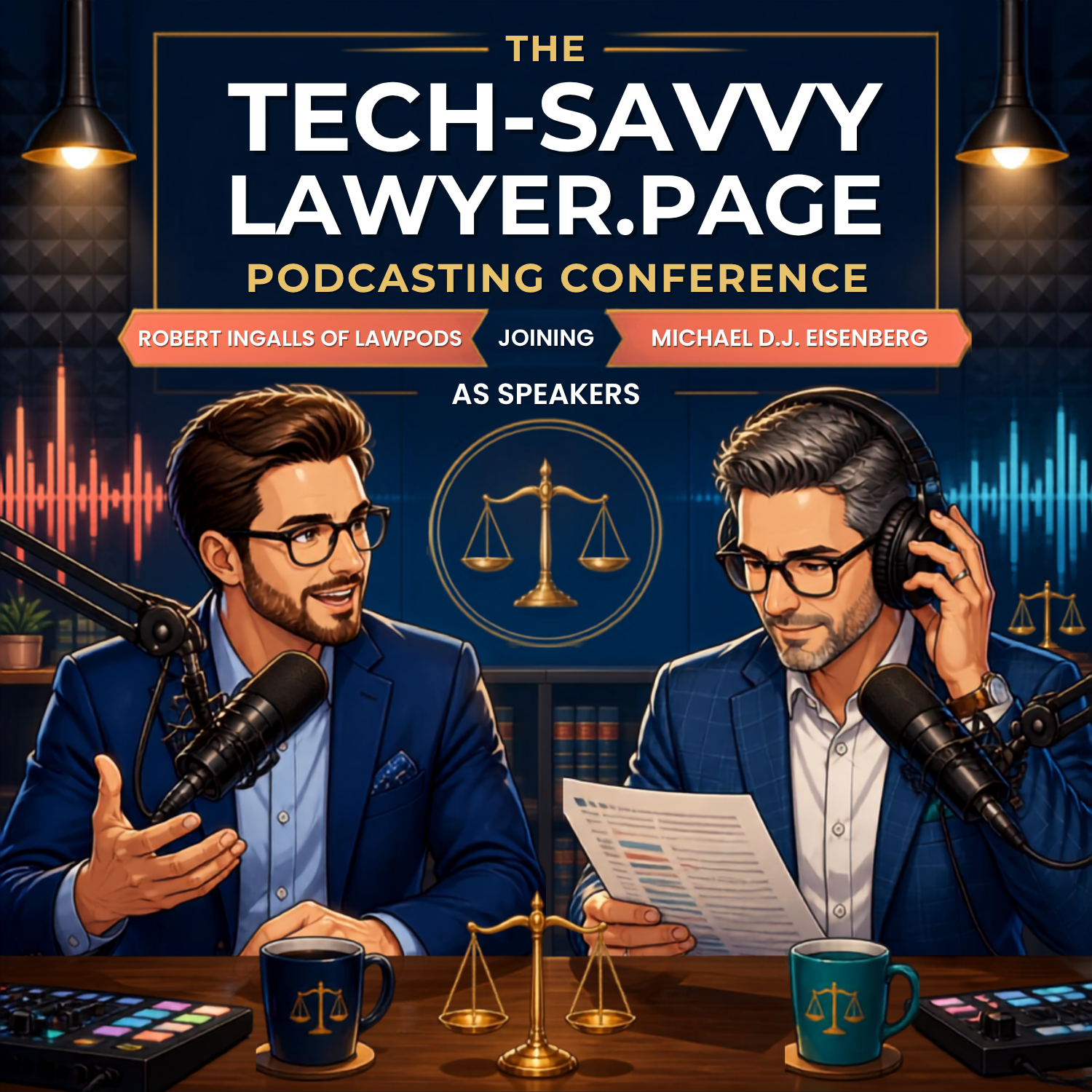
Join Robert Ingalls and Michael Eisenberg for their discussions on Legal Podcasting!

Come ready to examine your audience, your workflow, your budget, and your ethical obligations. Bring the podcast idea you have been postponing. Leave with a plan that fits your practice. 🎤

📌 Program note: The Tech-Savvy Lawyer.Page Podcasting Conference schedule is being fine-tuned. Session order, timing, and length may shift as faculty confirmations and program needs develop. Speaker announcements will continue as faculty confirm, and the final agenda will reflect the strongest possible program for lawyer-podcasters.

Learn more and follow updates at https://www.thetechsavvylawyer.page/lpcinfo.
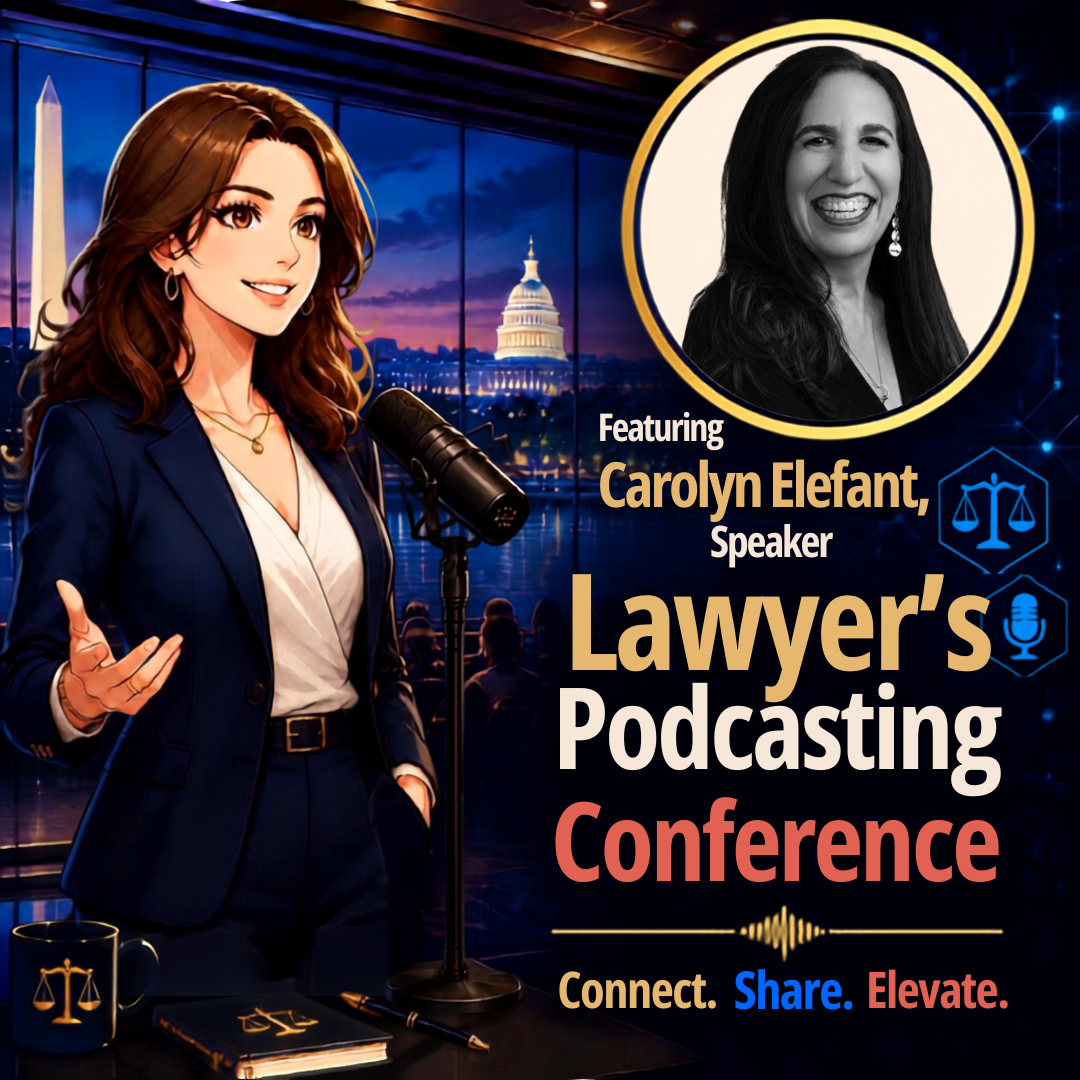
🎙️ Carolyn Elefant Confirmed as First Speaker for The Lawyer’s Podcasting Conference!

I am pleased to announce the first confirmed speaker for The Lawyer’s Podcasting Conference: Carolyn Elefant, the lawyer, author, mentor, and longtime force behind My Shingle. ⚖️

Carolyn will join us in McLean, Virginia, on Friday, November 13, and Saturday, November 14, 2026, for two days devoted to helping lawyers create podcasts that build authority, serve their audiences, and hold up under professional scrutiny.

The event will be held at 1765 Greensboro Station Place, 9th Floor, McLean, Virginia 22102, roughly one minute on foot from the Greensboro Metro station on the Silver Line. That means attendees can arrive from Dulles or Reagan National by train, walk to the venue, and spend their time thinking about their show rather than their rental car. 🚇

Carolyn is the first confirmed faculty member aside from me, your host and presenter, and I could not be more pleased to begin the speaker announcements with her.

Why Carolyn belongs in this room

For decades, Carolyn has provided independent lawyers with serious, practical guidance on building sustainable practices. Through My Shingle, her writing, and her work in the solo and small-firm legal community, she has consistently addressed the questions that arrive after the easy answers run out:

  • How do lawyers build an independent practice without compromising judgment?

  • How do we communicate our value without overselling?

  • How do we adopt new methods and technology without losing sight of professional duties?

  • How do we create work that is sustainable rather than merely busy?

Those questions sit at the center of lawyer podcasting.

A podcast can be a powerful professional platform. It can make a lawyer easier to find. It can demonstrate substantive knowledge. It can introduce a lawyer’s voice and judgment before a prospective client ever makes contact. It can strengthen referral relationships and build a library of useful, durable content.

But the same microphone that helps a lawyer reach an audience can also create ethical problems at scale. A casual client story can disclose more than intended. A promotional claim can travel across jurisdictions. A discussion of a pending matter can create risk. A contractor, editor, virtual assistant, or AI tool can introduce questions of supervision, confidentiality, and verification.

Carolyn’s perspective will help keep the conference grounded in the reality of independent practice. 🎧

The ethics session is the centerpiece

The conference’s ethics block is not an obligatory closing slide. It is being designed as a dedicated CLE-oriented session and working exercise.

We will examine the practical rules that lawyer-podcasters need to understand before they publish.

Model Rule 1.6 is where client stories begin. “Anonymous” does not always mean unidentifiable. Details that feel harmless in isolation can identify a client when assembled by someone who knows the matter. Written informed consent is often the safer choice when a story is recognizable or commercially useful.

Rules 7.1 through 7.3 matter because a podcast can be a communication about a lawyer’s services. The analysis does not stop at federal or ABA language. Lawyers must also examine the advertising and solicitation rules in the jurisdictions where they practice and where their content is directed.

Rule 5.5 matters the moment a locally focused show reaches a national audience. A podcast host should understand the line between legal education and individualized legal advice, especially when listeners begin asking questions in comments, direct messages, or follow-up calls.

Rule 1.1, including Comment 8, addresses technological competence. The duty is not to become an audio engineer. It is to understand the benefits and risks of the technology a lawyer uses. That includes recording platforms, hosting services, transcription tools, AI-assisted editing, synthetic media, and the systems that distribute content beyond the lawyer’s direct control.

Rule 5.3 applies when nonlawyers assist with production. An editor, assistant, agency, or technology vendor can make podcasting manageable. The lawyer still has obligations to choose, instruct, and supervise those providers appropriately. That includes reviewing transcripts and show notes before publication, protecting client information, and maintaining final judgment over the content.

As I discussed in MTC: Hidden AI, GEO, and the ABA Model Rules, the question is not whether AI or discoverability tools are arriving in legal marketing. They are here. The question is whether lawyers will use them with care, transparency, and professional discipline. 🔎

What attendees will build

The conference follows the practical spine of The Lawyer’s Guide to Podcasting, then takes the work beyond the page.

Day One focuses on the strategic foundation: why lawyers should podcast, choosing a viable topic and audience, selecting a format, understanding SEO and GEO, and choosing equipment that fits the lawyer’s actual goals and budget. We are also planning hands-on gear work and a live recording with a candid teardown. 🎛️

Day Two moves from recording to publication: guest preparation and releases, editing and human review, show notes, hosting, RSS ownership, directories, distribution, marketing, repurposing, and the systems that keep a show alive after the initial excitement fades.

Then comes the ethical and operational work. Attendees will identify the rules that govern their own practices, choose a sustainable cadence, and leave with a realistic first-ninety-days plan.

A lawyer with a static bio page is easy to overlook. A lawyer with a thoughtful body of episodes, transcripts, show notes, and professional judgment is building a record that clients, referral sources, search engines, and AI answer tools can discover. The work still must be accurate. It must be ethical. And it must sound like the lawyer behind it. 🎙️

Carolyn’s confirmation is an excellent beginning. More faculty announcements are coming as they are finalized. Registration will open soon.

For now, reserve November 13–14, 2026, and follow the conference updates. Bring the show you have been meaning to start.

🎙️ Ep. #133 | AI Search, GEO & Legal Marketing Tech: How Small Law Firms Win Cases — Not Just Clicks!

My next guest is Nick Cohen, Chief Operating Officer of Matador Solutions — a legal marketing think tank and agency — and a newly minted partner at Cohen Injury Law Group. Nick brings a rare dual perspective: he lives the daily grind of running a law firm AND helps over 170 firms across the country use technology and marketing strategy to grow their practice. With more than $1 billion in case value generated for clients, Nick knows what separates the law firms that thrive from the ones that spin their wheels. 🚀

Whether you are just hanging out your shingle or you have been practicing for years and feel overwhelmed by the alphabet soup of SEO, GEO, PPC, and AI, this episode breaks it all down in plain language. Nick shares actionable steps — some of which cost nothing — to help your firm show up where your next great client is already looking. ⚖️

Join Nick Cohen and me as we discuss the following three questions and more!

  1. 🤔 What are the top three ways a small or mid-size law firm can leverage AI-driven search — like Google AI Overviews and ChatGPT — to reliably generate better cases, not just more clicks?

  2. 💡 For firms that feel overwhelmed by SEO, paid search, and social media, what are the top three pieces of marketing technology or automations they should implement first to turn their website into a true new case acquisition system?

  3. 🏆 Looking across $1 billion+ in case value generated for over 170 law firms, what are the top three technology habits the most successful firms share — and what are their less successful peers simply not doing?

In our conversation, we cover the following:

  • [0:00] 🎤 Introduction & five-star review shoutout

  • [0:45] 👨‍💼 Nick's background: Matador Solutions, Cohen Injury Law Group, and tech stack overview (Jira, Google Suite, Claude, ChatGPT, WordPress, Slack)

  • [1:30] 💻 Hardware setup: MacBook Pro M4, desktop, HDMI monitor — what Nick runs on daily

  • [3:00] 📱 iPhone, planned obsolescence, and the Apple ecosystem slowdown conversation

  • [4:00] ❓ Question 1: Leveraging AI-driven search (Google AI Overviews, ChatGPT) to get better cases — not just traffic

  • [5:00] 🔍 GEO vs. SEO explained — what is Generative Engine Optimization and why it matters for your law firm right now

  • [6:30] 📖 The difference: SEO = Google ranking; GEO = getting cited by ChatGPT, Claude, Perplexity, and Grok

  • [8:00] 🤖 Schema markup, robots.txt, and opening your website to LLM crawlers — practical steps any firm can take

  • [9:00] 📋 Attorney directory listings (Avvo, Super Lawyers, FindLaw) — are they worth the money in 2026?

  • [10:30] ✍️ Tip #2: High-quality thought leadership content as a GEO and SEO powerhouse

  • [11:30] ⭐ Tip #3: Reviews, reviews, reviews — the single highest-ROI, zero-cost activity for any law firm

  • [12:00] 📲 The "one-click review link" strategy: why text beats email every time

  • [13:00] 😬 How to handle negative reviews — call first, respond professionally, and why a 4.9 rating beats a perfect 5.0

  • [15:00] ❓ Question 2: Top three marketing tech tools/automations for overwhelmed firms — CallRail, case management software, and understanding your channels

  • [17:30] ❓ Question 3: The technology habits that separate high-growth firms from stagnant ones — intake systems, engagement, and growth mindset

  • [19:30] 🗺️ How Matador Solutions walks a brand-new firm from zero to a steady stream of cases — step by step

  • [22:00] 📬 Where to find Nick Cohen

RESOURCES

🔗 Connect with Nick Cohen

📚 Mentioned in the Episode (Non-Hardware / Non-Software)

  • 🎙️ Apple Podcasts — podcasts.apple.com ⚖️ Matador Solutions — Legal marketing agency — matadorsolutions.net

  • 📋 Avvo — Attorney directory — avvo.com

  • ⚖️ Cohen Injury Law Group — Nick's law firm — https://cohenandcohen.net/⭐ Facebook Reviews — facebook.com

  • 📊 GEO (Generative Engine Optimization) — The emerging discipline of optimizing for AI-driven search engines

  • ⭐ Google Reviews — google.com/business

  • 📋 FindLaw — Attorney directory — findlaw.com

  • 📋 Super Lawyers — Attorney directory — superlawyers.com

  • ⭐ Yelp — yelp.com

💻 Hardware Mentioned in the Conversation

  • 📱 Apple iPhone 15 — Nick's smartphone (approximate model) — apple.com/iphone

  • 📱 Apple iPhone (latest, annual upgrade) — Michael's smartphone — apple.com/iphone

  • 🖥️ Apple Mac Studio (M3 chip) — Michael's desktop — apple.com/mac

  • 🖥️ Apple MacBook Pro (M4 chip) — Nick's primary laptop — apple.com/macbook-pro

☁️ Software & Cloud Services Mentioned in the Conversation

🎧 Enjoy the episode? Please leave us a ⭐⭐⭐⭐⭐ five-star review on Apple Podcasts or wherever you get your podcast feeds!