
MTC: ChatGPT, Work Product, and Waiver: New Lessons from Tate Group Automotive ⚖️🤖
/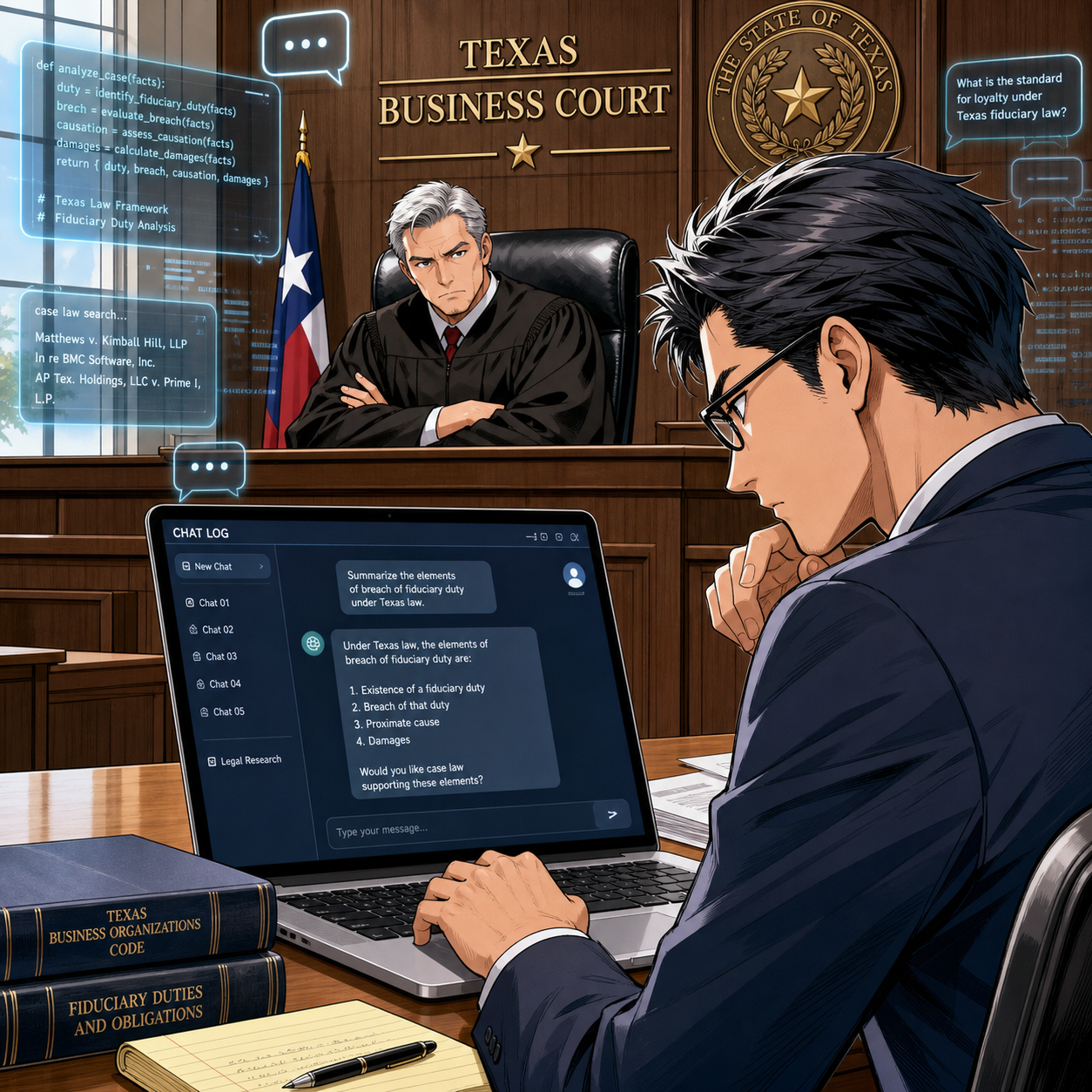
Tech‑savvy lawyerS need to be able to defend ChatGPT work product before Texas Business Court.
On June 3, 2026, the Business Court of Texas issued a minute entry in Tate Group Automotive, LLC v. Legacy Automotive Capital, LLC that every tech‑curious lawyer should know about. As of today, this is one of the first reported decisions to tackle whether a non‑lawyer’s ChatGPT conversations are protected attorney work product and, if so, whether using a public AI tool waives that protection.
The court’s answer is nuanced but important: generative AI does not automatically destroy work‑product protection, at least where the disclosure is not made to an adversary under Texas Rule of Civil Procedure 192.5(a)(1). For solos and small firms experimenting with AI tools, this is both reassuring and sobering.
What Happened in Tate Group Automotive?
The case arises from a dispute in the Texas Business Court’s Eleventh Division, in which Tate Group Automotive sued Legacy Automotive Capital, The Reynolds and Reynolds Company, and individual defendants. During discovery, the plaintiff withheld “Kris Tate–ChatGPT conversations” on the basis of attorney work‑product protection and submitted them to the court for in camera review.
Defendants challenged that claim. They argued that attorney work‑product protection does not extend to a non‑lawyer’s chats with an AI tool, or alternatively, that any protection was waived when Kris Tate used ChatGPT. They also asked the court to order the plaintiff to identify all discovery materials Mr. Tate or Tate Group had shared with ChatGPT.
Judge Grant Dorfman acknowledged that the issue was “novel,” noting that all case law cited by the parties dated from 2026 and that at least one opinion called the question “a first impression nationwide.” Against that backdrop, he evaluated the ChatGPT conversations under Texas Rule of Civil Procedure 192.5(a)(1), which defines work product and addresses waiver.
The key takeaway from the minute entry—based on the Minerva summary—is that the court concluded a non‑lawyer’s chats with ChatGPT did not automatically waive work‑product protection because the disclosure was not made to an adversary. That is a narrow holding, but it marks a significant moment in the emerging law of AI and privilege.
Why This Ruling Matters for Lawyers Using AI
At first glance, Tate Group may look like a niche discovery dispute. In reality, it answers a question many lawyers have quietly asked: “If my client uses ChatGPT, have we blown work product?”
The court’s answer is “not necessarily.” By focusing on whether the disclosure was made to an adversary, Judge Dorfman signaled that the waiver analysis for AI platforms should track the familiar contours of work‑product doctrine, at least in Texas. That gives practitioners a framework instead of a panic button.
At the same time, this is a minute entry in a specific context—not a blanket blessing for all AI use. The court still treated the issue as novel, still conducted in camera review, and still scrutinized how the AI tool was used. For lawyers, that means AI usage is now part of the discovery and privilege landscape, and courts will expect thoughtful, documented positions—not hand‑waving about “just using a tool.”
From an ABA perspective, this aligns with Model Rule 1.1 and Comment 8: competence now includes understanding the “benefits and risks associated with relevant technology,” including how generative AI intersects with privilege and work product. Model Rule 1.6 (confidentiality) and Rules 5.1/5.3 (supervision of lawyers and non‑lawyers) also come into play when clients or staff use tools like ChatGPT in ways that touch litigation strategy.
Lesson 1: Treat Client AI Use as Discoverable Reality, Not a Side Note
One of the most striking aspects of Tate Group is procedural: the court required in camera review of the ChatGPT conversations and entertained requests that plaintiff identify all discovery materials shared with ChatGPT. That tells us courts are prepared to treat AI interactions as real, reviewable artifacts in discovery.
If your clients or internal teams use AI to draft, summarize, or analyze case materials, those interactions can become part of the discovery conversation, just as drafts, notes, and emails have always been. Under Model Rules 1.1 and 1.6, you cannot stay competent or protect confidentiality if you do not know whether and how AI is being used on your matters.
Practically, that means:
Ask clients early whether they have used tools like ChatGPT or other AI services to “get help” on their case.
Document the scope and purpose of any AI use, especially if it involves draft pleadings, strategy, or privileged communications.
Be prepared to defend or adjust your privilege and work‑product positions in light of those uses, as plaintiff did in Tate Group by asserting work‑product and submitting chats for in camera review.
Lesson 2: Public AI Platforms Are Not Automatic Waiver Machines
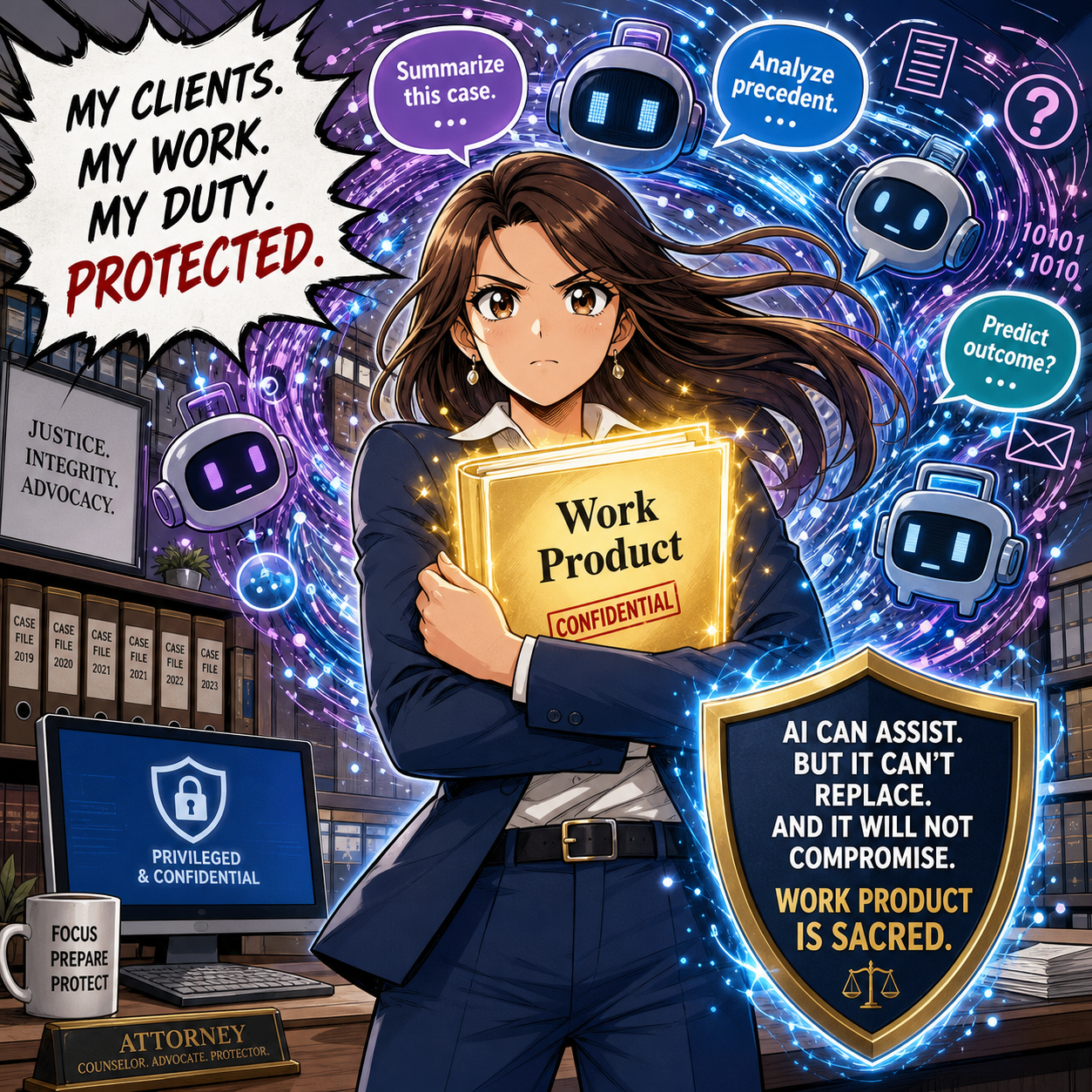
Solo attorneys need to protect their privileged work product from risky AI tools.
Defendants in Tate Group argued that a non‑lawyer’s chats with an AI tool either are not work product at all or, at minimum, effect a waiver. The court rejected the idea that simply using ChatGPT automatically destroys protection under Texas Rule 192.5(a)(1) when there is no disclosure to an adversary.
That matters, because there has been a real fear—sometimes stoked by vendors—that “if anyone touches ChatGPT, all privilege is gone.” This ruling shows courts can adopt a more nuanced view, at least under a work‑product framework.
For ABA‑Model‑Rules lawyers, this should not be read as a free pass. Model Rule 1.6 still requires reasonable efforts to prevent unauthorized disclosure of client information, and using a public AI platform can create confidentiality risk even if work product is technically preserved. But Tate Group suggests that waiver analysis will still look to core principles like whether disclosure reached an adversary.
In practice:
You should not assume that any AI use destroys work product, but you should be ready to explain why your use did not involve disclosure to an adversary or the public.
Engagement letters and internal policies should clarify whether and how you will use AI tools and what safeguards you apply, consistent with Model Rules 1.1, 1.4, and 1.6.
Lesson 3: In Camera Review Will Become Common for AI Disputes
The court’s process—ordering in camera review of the ChatGPT conversations before ruling—signals a likely pattern for AI‑related privilege disputes. Judges will want to see how AI was used, not just hear generalities, before deciding whether protection applies or has been waived.
That has three implications for practicing lawyers:
You should assume that AI‑related materials can be reviewed by courts under appropriate safeguards.
You need internal workflows to collect and present those materials when necessary without scrambling through chat histories.
You should approach AI use with the expectation that a judge, someday, may read the raw prompts and outputs and ask whether your supervision met the standards of Model Rules 5.1 and 5.3.
This is a shift from treating AI as a “black box” helper to treating it as a discoverable component of your litigation process.
Lesson 4: Non‑Lawyers and AI Need Clear Supervision
In Tate Group, the conversations at issue were between Kris Tate—a non‑lawyer—and ChatGPT, yet they were withheld under an attorney work‑product theory. The court’s willingness to consider work‑product protection in that context underscores a point many of us have made: non‑lawyers can participate in the creation of protected material if they are acting at the direction of counsel.
But it also heightens the importance of supervision. Model Rule 5.3 requires lawyers to ensure that non‑lawyer assistants’ conduct is compatible with the lawyer’s professional obligations. When non‑lawyers use AI tools on client matters, they are effectively acting as an extension of the legal team.
Practical steps include:
Training non‑lawyers on what they may and may not share with AI platforms.
Setting clear rules about which tools are approved, for what purposes, and under whose supervision.
Reviewing AI outputs and underlying prompts when they feed into litigation strategy, to ensure accuracy and compliance with Model Rules 3.3 and 4.1.
As we have discussed in episodes of The Tech‑Savvy Lawyer podcast, AI is not just a “lawyer tool”; it is often a staff and client tool. Your ethical obligations follow it wherever it goes. 💼🤖
Lesson 5: This Is Only the Beginning—But You Can Prepare
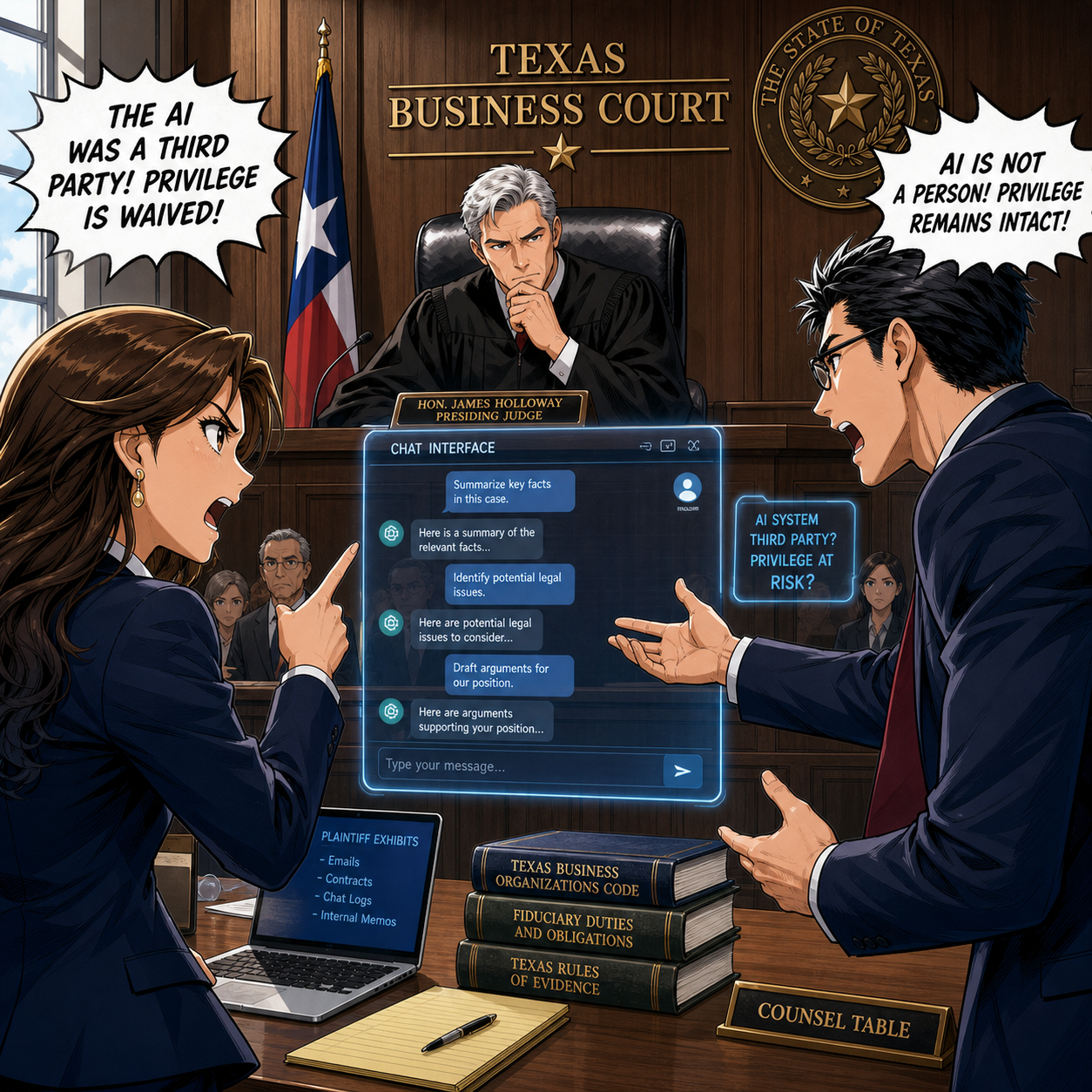
Texas judges along with others will be weighing ChatGPT privilege and waiver in generative AI era.
Judge Dorfman noted that all the case law cited by the parties dated from 2026 and that one authority called its ruling a “question of first impression nationwide.” That means we are at the very start of AI‑and‑privilege jurisprudence, not the end.
Every new decision—whether from Texas Business Courts or elsewhere—will refine the analysis. Some may take a stricter view of waiver for public AI tools; others may distinguish between work product and attorney‑client privilege. Regardless, Model Rule 1.1’s technology‑competence requirement demands that we follow these developments and integrate them into our practice.
You do not need to become an AI engineer, but you do need a plan:
Inventory where AI is used in your matters (by you, your staff, your clients).
Align that usage with your duties of competence, confidentiality, and supervision.
Be prepared for in camera review of AI‑related materials, as in Tate Group.
Update your engagement letters and internal policies to reflect reality, not wishful thinking.
If you approach AI as you approached email, e‑filing, and cloud storage when they were “new,” you will be ahead of many peers—and aligned with the spirit of both the ABA Model Rules and emerging case law.
MTC