
MTC: Why Is AI Slop Still Front-Page News in Law? 🚨 A Florida Bar Referral, the ABA Model Rules, and What Every Lawyer Must Do Now!
/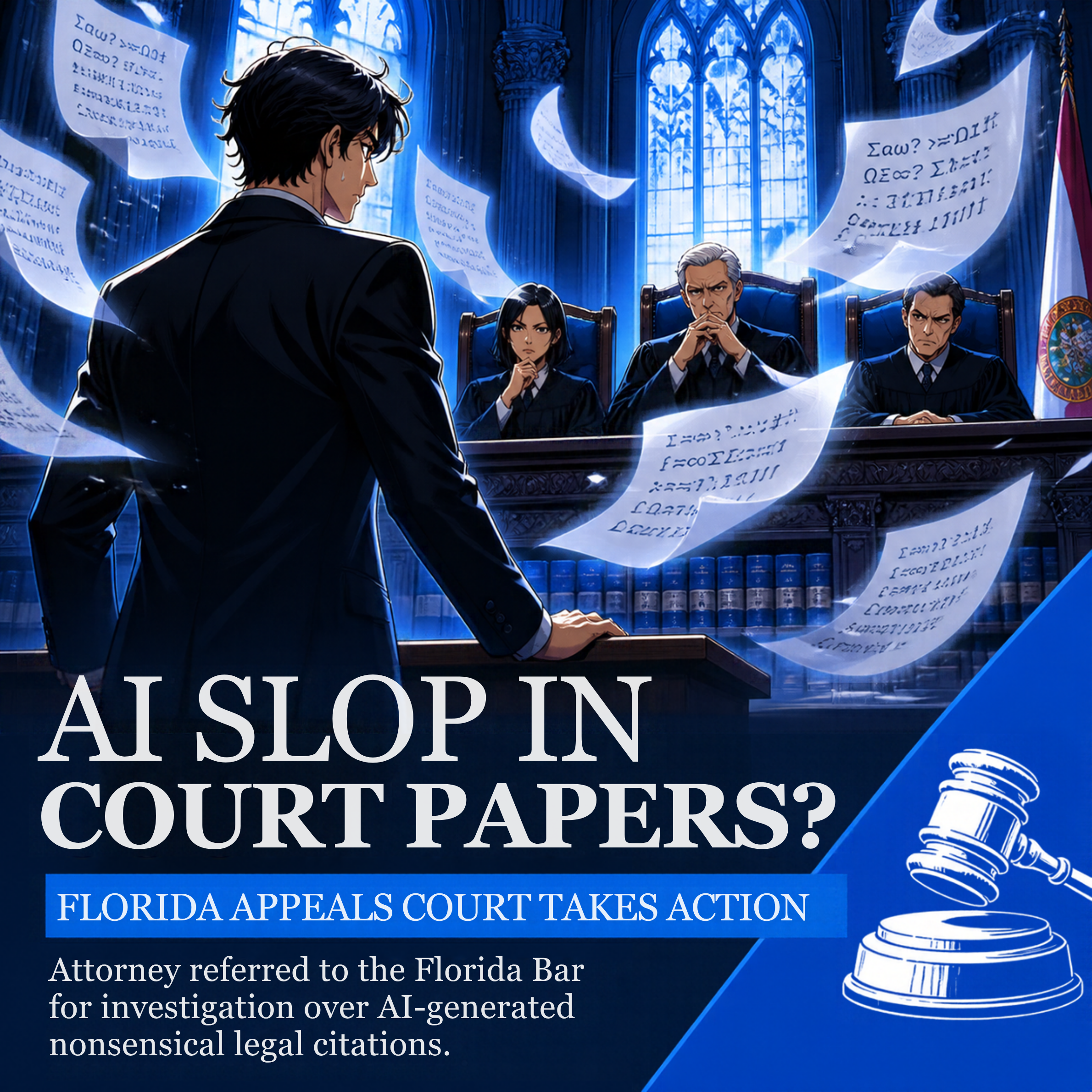
🚨 why are lawyers still using ai slop?!
I keep hoping the AI-hallucination story has run its course. 📰 Then another court opinion lands, and the headline writes itself again. The newest example comes from Joseph A. Corsmeier, whose Lawyer Ethics Alert post, "Florida Appeals court refers lawyer to The Florida Bar for investigation related to AI generated "slop" in court documents," should stop every practitioner mid-scroll. 🛑
So why is AI slop in the practice of law still front-page news in late 2026? After years of warnings, sanctions, and CLEs, it is a fair question.
What Happened in Florida ⚖️
According to Joseph, Florida's Fourth District Court of Appeal issued an opinion on October 21, 2026, referring a lawyer to the Florida Bar for investigation and potential discipline. The case arose from a marriage dissolution involving parenting, visitation, and a guardian ad litem.
The court's September 16 order had already denied the lawyer's petition for a writ of prohibition. It also ordered her to show cause why she should not be sanctioned. The court described her filings as lengthy, unfocused, confusing, and at times inconsistent with the record. The volume was striking. 📚 There was a 41-page request for multiple forms of relief. There was an 11-page emergency motion and three motions in limine. There was a 33-page motion to disqualify the trial judge. The petition itself ran 61 pages. Her response to the show-cause order ran 82 pages.
Here is the detail I cannot get past. The court noted that the cited cases existed. This was not a classic fake-citation case. Yet the motion to disqualify contained a lengthy false quotation attributed to a decision of that very court. The lawyer called it "human error" from drafting under "time pressure." The court responded: "Until AI, and until this case, we never encountered lawyers 'hallucinating' non-existent quotations." 😳
The line that should concern all of us came at the end: "That counsel believes her practice in this case is acceptable raises many issues that the Florida Bar should consider."
Why Is This Still Happening? 🤔

Lawyers who use AI have the Duty to Verify Every Court Filing 🔎
I have written about this problem repeatedly, from "Why Are Lawyers Still Failing at AI Legal Research? The Alarming Rise of AI Hallucinations in Courtrooms" to "MTC: AI Hallucinated Cases Are Now Shaping Court Decisions." Lawyers know the risk. I see five reasons it persists.
Fluency feels like accuracy. 🧠 Generative AI writes with confidence. Polished prose triggers what researchers call automation bias. We trust output that sounds right. A quotation that reads like appellate language feels authentic, even when no judge ever wrote it.
Time pressure is the reason, not the excuse. ⏰ Solo and small-firm lawyers juggle emergency motions, clients in crisis, and thin margins. AI promises relief. But "time pressure" is exactly when verification gets skipped. That is when errors reach the court.
Length looks like effort. 📄 AI makes pages cheap. A judge's time is not. Some lawyers seem to believe more pages signal more advocacy. Courts disagree. Volume without judgment is the very definition of slop.
"The case exists" is not verification. 🔍 Many lawyers now check that a cited case is real. Fewer confirm that the case says what the brief claims, word for word. The Florida opinion shows this gap clearly. Real cases, wrong quotation, same professional failure. I addressed a related blind spot in "MTC: When Reputable Databases Fail: What Lawyers Must Do After AI Hallucinations Reach the Court."
Some lawyers do not know what they do not know. 🎓 Many practitioners learned AI from marketing, not training. They see a tool, not a duty. That is why the court's closing line matters. The most dangerous lawyer is not the one who makes a mistake. It is the one who believes the practice is acceptable.
The ABA Model Rules Already Answer This 📜

lawyers should scruitinize their use of ai like their license depends on it.
The Florida referral will be judged under the Rules Regulating The Florida Bar. Still, the ABA Model Rules frame the same duties every lawyer carries.
Rule 1.1 (Competence) and Comment 8 require understanding the benefits and risks of relevant technology. Using AI without understanding how it fails is not competent practice.
Rule 1.3 (Diligence) requires reasonable care. Reading every case and checking every quotation is the minimum.
Rule 3.1 (Meritorious Claims) bars frivolous positions. Arguments untethered to the record are not saved by length.
Rule 3.2 (Expediting Litigation) and Rule 3.3 (Candor Toward the Tribunal) apply squarely. A false quotation attributed to a court is a false statement to that court, whatever its source.
Rules 5.1 and 5.3 (Supervision) extend these duties to associates, paralegals, and the AI tools you deploy.
ABA Formal Opinion 512 (July 2024) puts it plainly. Lawyers using generative AI must understand its capabilities and limits. They must also independently review its output. As I said in "MTC: Even Though AI Hallucinations Are Down: Lawyers Still Must Verify AI, Guard PII, and Follow ABA Ethics Rules," fewer errors do not mean zero errors.
A Practical Checklist for Monday Morning ✅
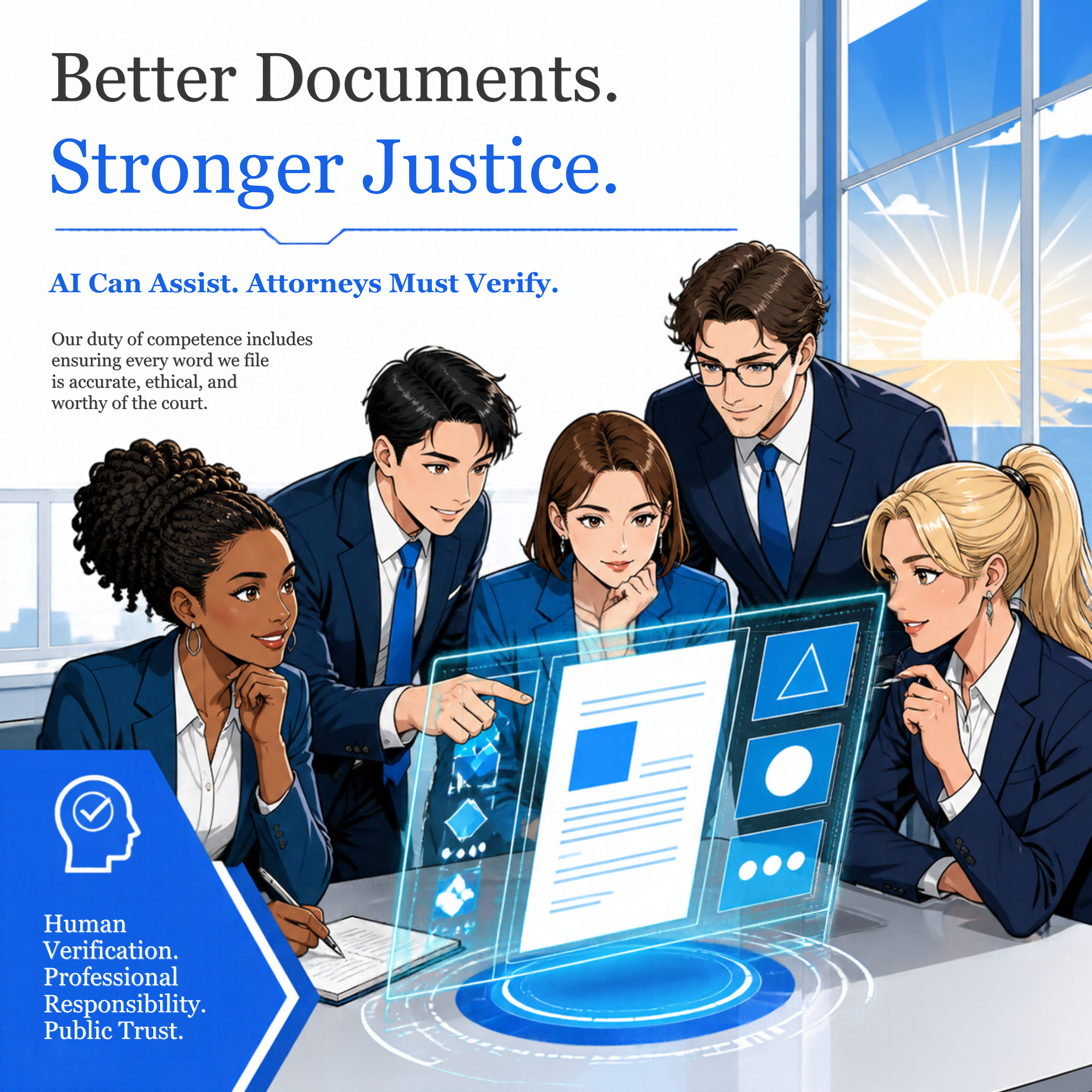
lawyers need to balance Innovation With Professional Responsibility
Read every authority you cite. Pull it from a trusted database or official reporter yourself.
Copy quotations from the source, never from the AI draft. Then compare them word for word.
Cite the record precisely. Unofficial or rough transcripts deserve a clear caveat.
Edit for length. Ask what the judge actually needs to rule. Then cut the rest. ✂️
Build a verification buffer into deadlines. Emergency filings need more review, not less.
Adopt a written firm AI policy. It should cover approved tools, review steps, and supervision.
Check your court's standing orders. Many judges now require AI-use disclosures, as I discussed in "MTC: AI in Court Filings: What Now Are Judges Now Scrutinizing Lawyers and Pro Se Litigants About AI Use."
Final Thoughts 💡
AI slop stays on the front page because it keeps happening. Each new opinion erodes the bar's credibility. The fix is not to abandon AI. It is to treat AI output like a first-year associate's rough draft: useful, fast, and never filed without a careful lawyer's review. 🤝
The lesson remains the same: “Review, Review, Review” your work before you file! 😯
Happy Lawyering! ⚖️
MTC