
Shout Out: Previous Podcast Guest Ruby Powers Invites Your The Tech-Savvy Lawyer.Page Blogger and Podcaster Back on Power Up Your Practice!
/I recently had the honor of joining Ruby Powers on her Power Up Your Practice Podcast, and I could not be more excited about what we covered for fellow lawyers. We talked about legal podcasting as a practical, ethical, and highly effective way for attorneys to build visibility, deepen relationships, and modernize their marketing without needing to be “hardcore tech people.”
On Ruby’s show, I shared why I believe that podcasting is becoming the new networking standard for lawyers. When you regularly publish episodes—whether about your day-to-day practice, a niche topic, or even a related interest—you push your name and your ideas into the online world in a consistent way. Search engines and AI systems notice this. Over time, your name and your content start to surface more often when people search for your practice area, your type of work, or your expertise. That is real SEO, and it comes from steady, quality content rather than tricks or gimmicks.
Another reason I encourage lawyers to podcast is simple: your voice makes you more human. Listeners hear how you think and how you explain things. They hear your tone and your values. That goes far beyond a static bio or a profile page. Whether your audience is potential clients, referral sources, peers, or the broader public, a podcast lets them get to know you in a safe and scalable way. This is networking that keeps working for you even when you are in court, in a hearing, or taking a much-needed break. 🌟
I also understand that many lawyers hesitate because they are concerned about ethics. That concern is healthy. As attorneys, we cannot ignore ABA Model Rules and similar state rules when we put content into the world. On the podcast, Ruby and I discussed that while a show can be an excellent educational and marketing tool, we must avoid giving individualized legal advice and avoid accidentally creating an attorney–client relationship. I strongly recommend clear, prominent disclaimers that explain the podcast is for informational purposes only, does not create an attorney–client relationship, and should not be relied on as legal advice for any specific matter.
This aligns with our obligation of competence under Model Rule 1.1, which now includes understanding relevant technology, and with our duties around communications and advertising under Model Rules 7.1 and following. A well-run legal podcast respects those boundaries. It presents general information and insights, and it invites listeners to seek formal counsel if they need advice for their specific situation. When you treat your podcast as education plus relationship-building, not as a substitute for representation, you are already thinking in the right direction.
In our conversation, Ruby and I also addressed a common fear: “I’m not tech-savvy enough to start a podcast.” As someone known as the Tech-Savvy Lawyer, I want to be clear: you do not need to be a full-time tech enthusiast to do this. You likely already have access to most of what you need. A solid microphone, a decent camera, and a platform like Zoom, Riverside, or StreamYard can take you surprisingly far. Many of these tools are user-friendly and continue to improve. You can start with the basics and then layer on more sophistication as you grow more comfortable. 🎧
Ruby shared her own experience of initially overthinking her podcast. She wanted it to be perfect, and that almost stopped her from launching. I hear that from lawyers all the time. My advice is simple: do not wait for perfect. Your early episodes will probably make you cringe later, which means you are improving. That is a good sign. Focus on clear audio, honest content, and consistent scheduling. Over time, you can refine your editing, your format, and even your branding. You can bring in a contractor or a service to help with editing once you know you want to keep going.
We also discussed the flexibility podcasting offers. You can publish weekly, every other week, or monthly. You can create solo episodes where you explain key topics. You can host interviews with colleagues, experts, or community leaders. You can even experiment with live formats, where audience members submit questions in advance, and you answer them at a general, educational level. The format should fit your bandwidth, your goals, and your audience.
One concept I emphasized is the idea of an “ideal listener” or avatar. Before you hit record, think about exactly who you are speaking to. Is it a potential client in a specific practice area? Other lawyers in your niche? Law students or young practitioners? Having that profile in mind will guide your topic choices, your language, and your examples. It also helps you stay focused on value rather than drifting into random conversations that do not support your goals.
From a business perspective, legal podcasting can support your referral network in powerful ways. Colleagues can share your episodes, which subtly introduce you as a trusted resource. Prospective clients may listen to several episodes before they ever contact you, which means they arrive already familiar with your style and approach. That can shorten the trust-building curve and make consultations more productive.
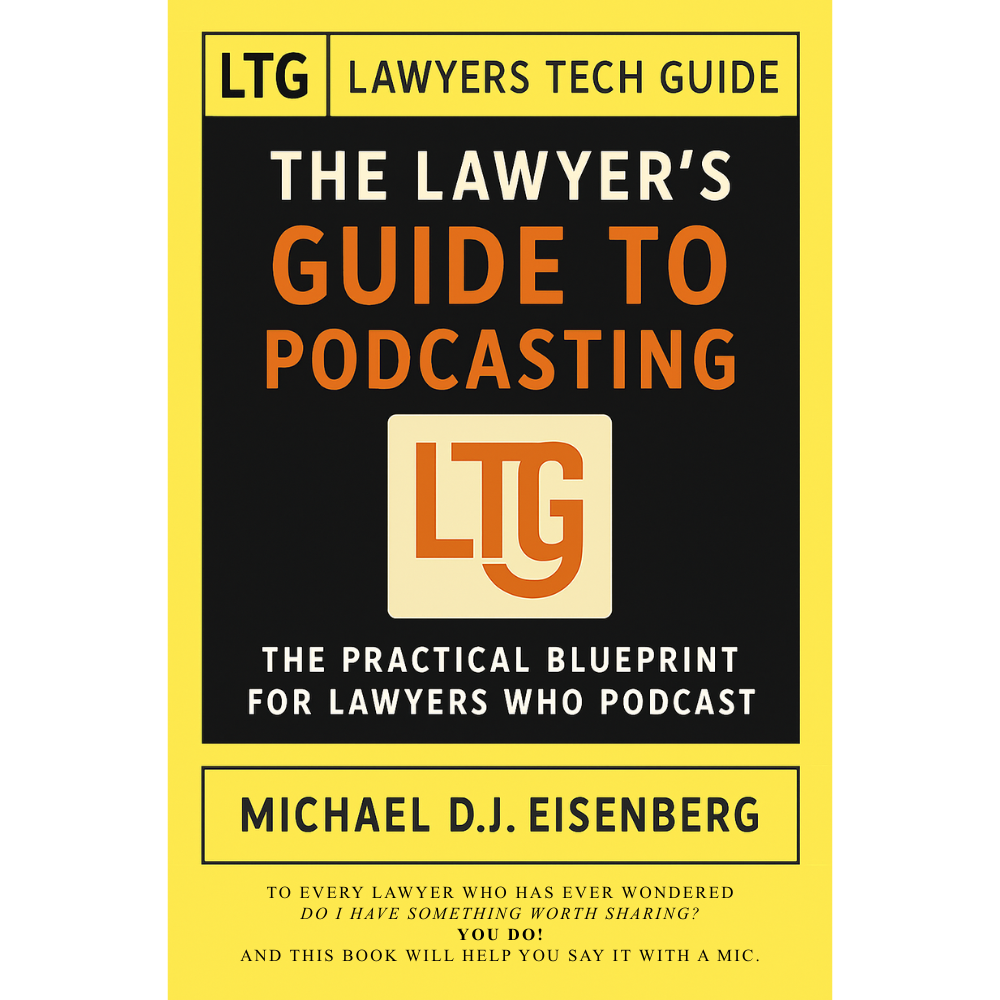
What I appreciate about Ruby’s Power Up Your Practice platform is that it treats podcasting not as a vanity project, but as part of a larger ecosystem of law practice management, technology, and professional development. My appearance on her show gave me a chance to tie together what I see in my own practice, my blog, my podcast, and my book: lawyers do not need to fear technology. We need to engage with it thoughtfully, guided by the same ethics and judgment we apply in every other part of our work.
If you are a lawyer with limited to moderate tech skills and you have been on the fence about starting a podcast, I invite you to listen to my conversation with Ruby and let it serve as a practical, encouraging blueprint. You will hear that you are not alone in your concerns, that there are clear ways to stay compliant with ABA Model Rules, and that the path to becoming a “tech-savvy lawyer” does not require perfection—only willingness, consistency, and a focus on delivering value. 🚀
Enjoy!