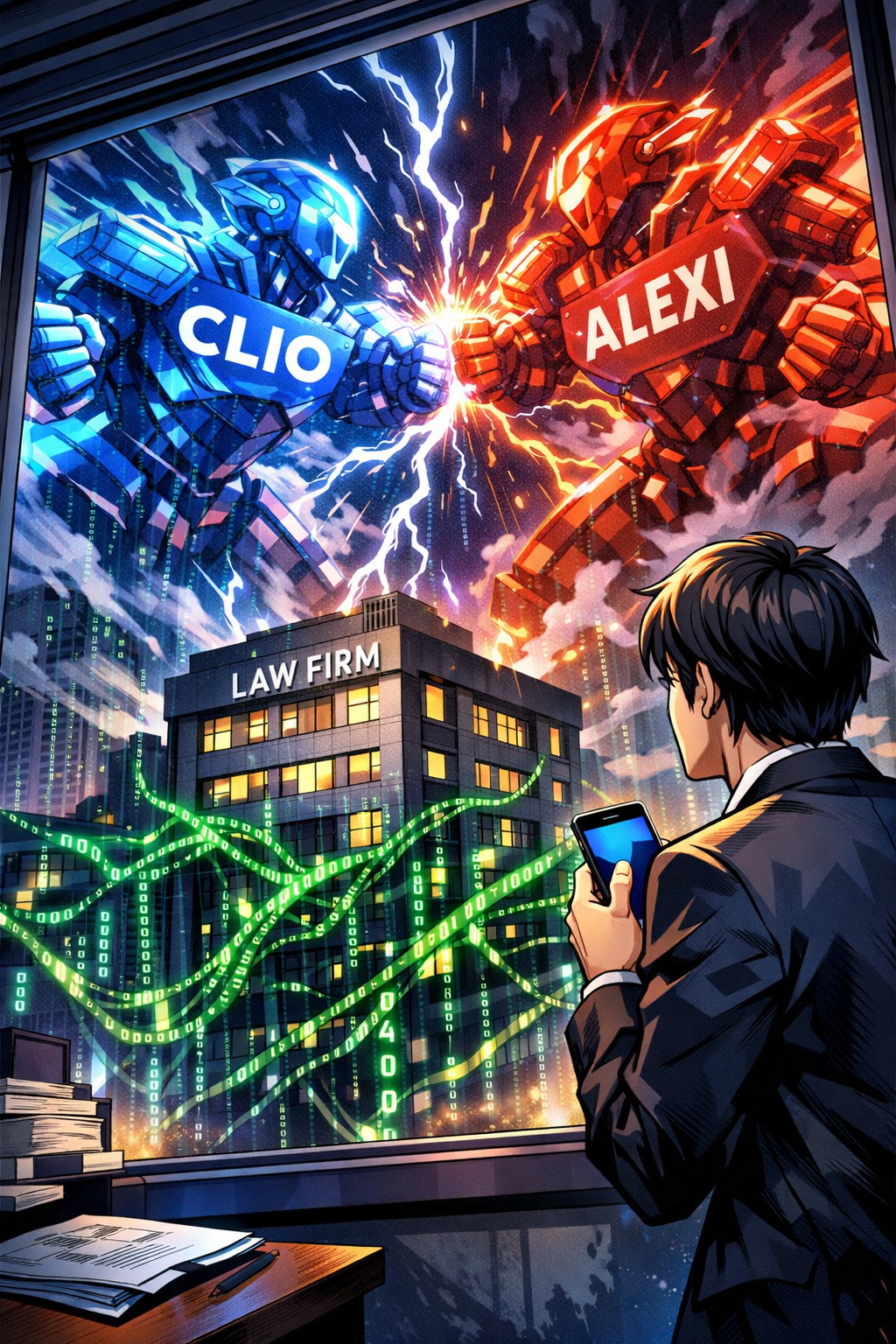

🎙️ TSL Lab’s Deep Dive into Our May 18, 2027, editorial, “AI Won’t Replace Solo and Small Firm Lawyers. It Will Supercharge Them”!
/📌 Too Busy to Read Our May 18, 2026, Editorial?
Join us for an AI-powered deep dive into the ethical challenges facing legal professionals in the age of generative AI. 🤖 This week’s Tech-Savvy Lawyer Lab’s podcast unpacks my editorial, “AI Won’t Replace Solo and Small Firm Lawyers. It Will Supercharge Them,” and translates it into practical, ethics-aware guidance for solo and small firm professionals navigating AI in real time.
We explore why AI is unlikely to replace lawyers but highly likely to transform how legal work is unbundled, priced, and delivered. We walk through Jevons Paradox, ABA rules on competence, supervision, and confidentiality, and the very real risks of hallucinated filings and careless use of public AI tools. You will see how treating AI as a supervised junior associate can expand your capacity, open new micro‑niches, and make your practice more human-centered, not less. ⚖️
In our conversation, we cover the following:
00:00:00 – Why “doom hype” around AI is targeting the legal profession and why the collapse-of-lawyers narrative falls apart in real life.
00:01:00 – Introducing Michael D.J.’s editorial “AI Won’t Replace Solo and Small Firm Lawyers. It Will Supercharge Them.”
00:02:00 – Setting ground rules: educational discussion only and why this episode is not legal advice.
00:02:30 – Rethinking what a “job” really is and the idea that legal work is a bundle of tasks, not one monolithic activity.
00:03:00 – Comparing big-firm specialization to the tightly packed bundle of tasks handled by solo and small-firm lawyers.
00:03:30 – Why AI can pull on individual threads in that bundle, but cannot run the whole practice for you.
00:04:00 – The solo master-chef metaphor: AI as the kitchen machine doing prep work while the human focuses on taste and judgment. 🍲🤖
00:05:00 – How AI can draft preliminary summaries or case law lists while the lawyer still owns strategy and verification.
00:05:30 – The “mental verification” problem: when typing and thinking used to be the same act for lawyers.
00:06:00 – What changes when AI writes the first draft and why verification must become a separate, deliberate step.
00:06:30 – The risk of hallucinated filings and viral stories of fake cases generated by AI. 😬
00:07:00 – Data points showing the profession is adapting, not dying: more lawyers, more bar-required jobs, rising law school interest.
00:07:30 – Revisiting the e‑discovery panic and predictions that predictive coding would wipe out junior associates.
00:08:00 – How cheaper e‑discovery led to an explosion of data and actually increased demand for legal work.
00:08:30 – Introducing Jevons Paradox and why greater efficiency can increase, not decrease, total demand.
00:09:00 – The widened-highway analogy: more lanes, more traffic, and how that maps onto AI in law. 🛣️
00:10:00 – How AI lets small firms tackle big, complex matters and offer more predictable flat-fee pricing.
00:11:00 – Expanding access to legal services for the middle class and why cheaper legal work grows the market.
00:11:30 – Turning to ethics: ABA Model Rule 1.1 on competence and the duty to understand relevant technology.
00:12:00 – The solo’s burden: you are the IT department and the innovation committee, all at once. ☕💻
00:12:30 – A practical definition of technological competence for solos and small firms.
00:13:00 – Starting small with AI: summaries, first-draft emails, and extracting checklists from dense legislation.
00:13:30 – AI as the “junior associate you don’t have to hire but must supervise” under Rules 5.1 and 5.3.
00:14:00 – Why you remain responsible for AI’s output just as you would for a paralegal or junior lawyer.
00:14:30 – The solo’s question: Does it really make sense to write a formal AI policy for just one person?
00:15:00 – How a short written AI policy creates hard boundaries before you are stressed and rushed.
00:15:30 – Defining approved uses, high‑review tasks, and absolute “no-go” zones for AI in your practice.
00:16:00 – Model Rule 1.6 on confidentiality and the special risk solo and small firms face with cloud tools.
00:16:30 – Why pasting sensitive client facts into a generic consumer chatbot is an ethical minefield.
00:17:00 – How consumer AI tools tokenize your text and use it to train future models.
00:17:30 – The “megaphone in a public square” analogy for pasting confidential data into public AI tools. 📣
00:18:00 – Moving from megaphones to soundproof vaults: using enterprise modes or legal-specific platforms.
00:18:30 – Why a single data breach can be existential for a solo firm and why clients should care about tool choices.
00:19:00 – Legislative inflation: constant growth in complex rules, norms, and regulations across jurisdictions.
00:19:30 – How AI helps solos track regulatory change, generate client alerts, and update templates in real time.
00:20:00 – Carving out lucrative micro‑niches with AI, such as hyper‑specific regulatory domains.
00:20:30 – Pairing niche expertise with SEO and content marketing so a solo can compete at scale.
00:21:00 – The junior lawyer dilemma: what happens to entry-level training when AI eats the grunt work.
00:21:30 – Why firms still need junior lawyers to build a future bench, not just to type memos.
00:22:00 – What AI fundamentally cannot do: build trust in person, join community events, or create referral networks.
00:22:30 – How automation pushes lawyers toward more human-centric, relationship-focused work. ❤️
00:23:00 – The core conclusion: the real existential threat is the AI-literate competitor down the street, not the robot.
00:23:30 – Treating AI as a supervised junior associate while protecting ethics, productivity, and client outcomes.
00:24:00 – Final reflections: mapping your own “bundle of tasks” and deciding what to offload so you can supercharge yourself. ⚡
RESOURCES
Mentioned in the episode
“AI Won’t Replace Solo and Small Firm Lawyers. It Will Supercharge Them” – Editorial by Michael D.J. Eisenberg
American Bar Association Model Rule 1.1 – Competence
https://www.americanbar.org/groups/professional_responsibility/publications/model_rules_of_professional_conduct/rule_1_1_competence/American Bar Association Model Rule 1.6 – Confidentiality of Information
https://www.americanbar.org/groups/professional_responsibility/publications/model_rules_of_professional_conduct/rule_1_6_confidentiality_of_information/American Bar Association Model Rule 5.1 – Responsibilities of Partners, Managers, and Supervisory Lawyers
https://www.thetechsavvylawyer.page/search?q=5.1American Bar Association Model Rule 5.3 – Responsibilities Regarding Nonlawyer Assistance
https://www.thetechsavvylawyer.page/search?q=5.3Damien Charlotin on AI and legal jobs (referenced argument on AI creating more legal work)
https://www.washingtonpost.com/opinions/2026/05/17/ai-isnt-end-legal-profession-its-future/Jevons Paradox – economic concept on efficiency and increased demand
https://en.wikipedia.org/wiki/Jevons_paradox
👉 If this episode helps you think more clearly about AI, ethics, and your own “bundle of tasks,” share it with a colleague and subscribe so you never miss a future Tech-Savvy Lawyer deep dive. 🚀