MTC: The Hidden Danger in Your Firm: Why We Must Teach the Difference Between “Open” and “Closed” AI!

Does your staff understand the difference between “free” and “paid” aI? Your license could depend on it!

I sit on an advisory board for a school that trains paralegals. We meet to discuss curriculum. We talk about the future of legal support. In a recent meeting, a presentation by a private legal research company caught my attention. It stopped me cold. The topic was Artificial Intelligence. The focus was on use and efficiency. But something critical was missing.

The lesson did not distinguish between public-facing and private tools. It treated AI as a monolith. This is a dangerous oversimplification. It is a liability waiting to happen.

We are in a new era of legal technology. It is exciting. It is also perilous. The peril comes from confusion. Specifically, the confusion between paid, closed-system legal research tools and public-facing generative AI.

Your paralegals, law clerks, and staff use these tools. They use them to draft emails. They use them to summarize depositions. Do they know where that data goes? Do you?

The Two Worlds of AI

There are two distinct worlds of AI in our profession.

First, there is the world of "Closed" AI. These are the tools we pay for - i.e., Lexis+/Protege, Westlaw Precision, Co-Counsel, Harvey, vLex Vincent, etc. These platforms are built for lawyers. They are walled gardens. You pay a premium for them. (Always check the terms and conditions of your providers.) That premium buys you more than just access. It buys you privacy. It buys you security. When you upload a case file to Westlaw, it stays there. The AI analyzes it. It does not learn from it for the public. It does not share your client’s secrets with the world. The data remains yours. The confidentiality is baked in.

Then, there is the world of "Open" or "Public" AI. This is ChatGPT. This is Perplexity. This is Claude. These tools are miraculous. But they are also voracious learners.

When you type a query into the free version of ChatGPT, you are not just asking a question. You are training the model. You are feeding the beast. If a paralegal types, "Draft a motion to dismiss for John Doe, who is accused of embezzlement at [Specific Company]," that information leaves your firm. It enters a public dataset. It is no longer confidential.

This is the distinction that was missing from the lesson plan. It is the distinction that could cost you your license.

The Duty to Supervise

Do you and your staff know when you can and can’t use free AI in your legal work?

You might be thinking, "I don't use ChatGPT for client work, so I'm safe." You are wrong.

You are not the only one doing the work. Your staff is doing the work. Your paralegals are doing the work.

Under the ABA Model Rules of Professional Conduct, you are responsible for them. Look at Rule 5.3. It covers "Responsibilities Regarding Nonlawyer Assistance." It is unambiguous. You must make reasonable efforts to ensure your staff's conduct is compatible with your professional obligations.

If your paralegal breaches confidentiality using AI, it is your breach. If your associate hallucinates a case citation using a public LLM, it is your hallucination.

This connects directly to Rule 1.1, Comment 8. This represents the duty of technology competence. You cannot supervise what you do not understand. You must understand the risks associated with relevant technology. Today, that means understanding how Large Language Models (LLMs) handle data.

The "Hidden AI" Problem

I have discussed this on The Tech-Savvy Lawyer.Page Podcast. We call it the "Hidden AI" crisis. AI is creeping into tools we use every day. It is in Adobe. It is in Zoom. It is in Microsoft 365.

Public-facing AI is useful. I use it. I love it for marketing. I use it for brainstorming generic topics. I use it to clean up non-confidential text. But I never trust it with a client's name. I never trust it with a very specific fact pattern.

A paid legal research tool is different. It is a scalpel. It is precise. It is sterile. A public chatbot is a Swiss Army knife found on the sidewalk. It might work. But you don't know where it's been.

The Training Gap

The advisory board meeting revealed a gap. Schools are teaching students how to use AI. They are teaching prompts. They are teaching speed. They are not emphasizing the where.

The "where" matters. Where does the data go?

We must close this gap in our own firms. You cannot assume your staff knows the difference. To a digital native, a text box is a text box. They see a prompt window in Westlaw. They see a prompt window in ChatGPT. They look the same. They act the same.

They are not the same.

One protects you. The other exposes you.

A Practical Solution

I have written about this in my blog posts regarding AI ethics. The solution is not to ban AI. That is impossible. It is also foolish. AI is a competitive advantage.
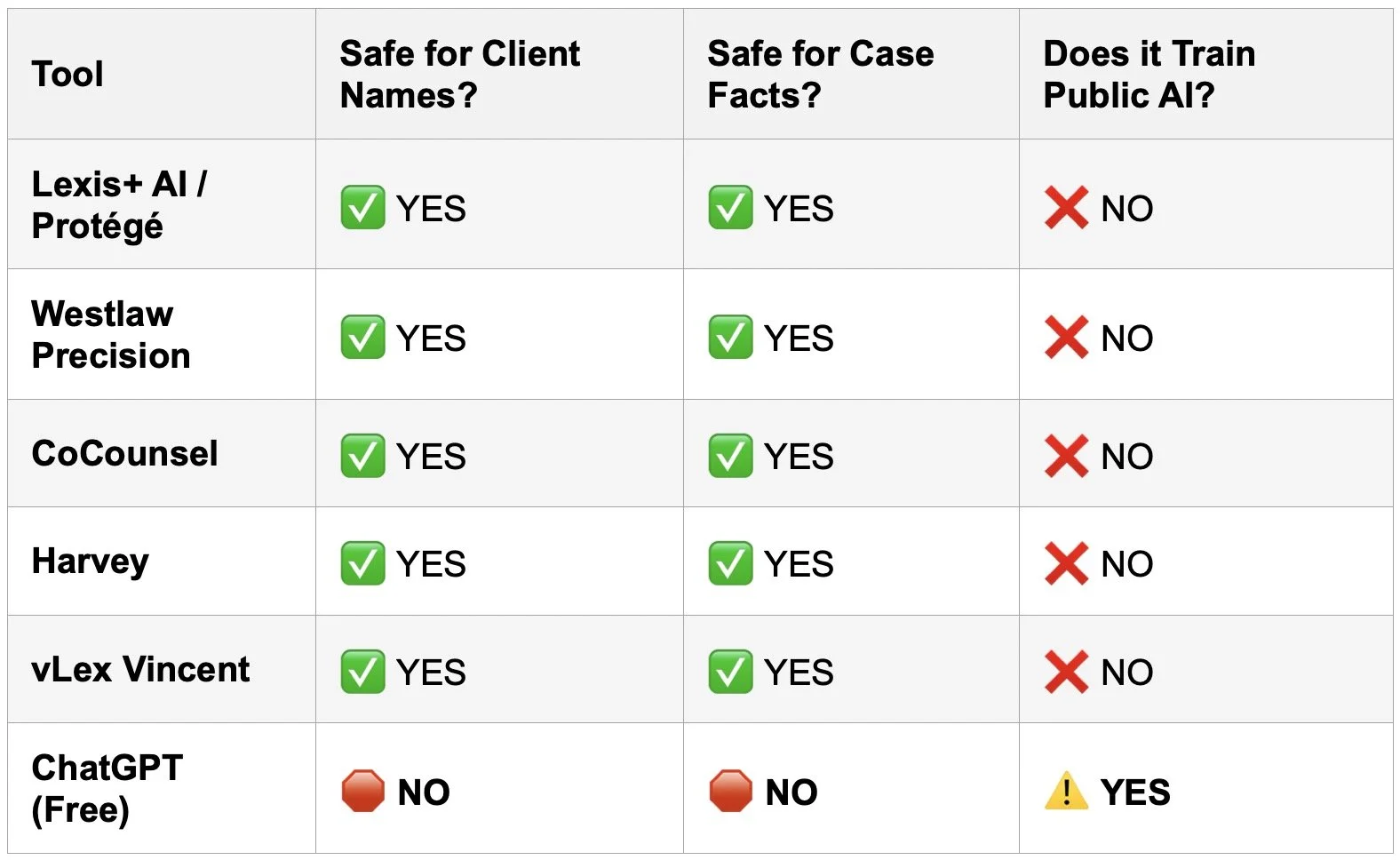
* Always check the terms of use in your agreements with private platforms to determine if your client confidential data and PII are protected.

The solution is policies and training.

  1. Audit Your Tools. Know what you have. Do you have an enterprise license for ChatGPT? If so, your data might be private. If not, assume it is public.

  2. Train on the "Why." Don't just say "No." Explain the mechanism. Explain that public AI learns from inputs. Use the analogy of a confidential conversation in a crowded elevator versus a private conference room.

  3. Define "Open" vs. "Closed." Create a visual guide. List your "Green Light" tools (Westlaw, Lexis, etc.). List your "Red Light" tools for client data (Free ChatGPT, personal Gmail, etc.).

  4. Supervise Output. Review the work. AI hallucinates. Even paid tools can make mistakes. Public tools make up cases entirely. We have all seen the headlines. Don't be the next headline.

The Expert Advantage
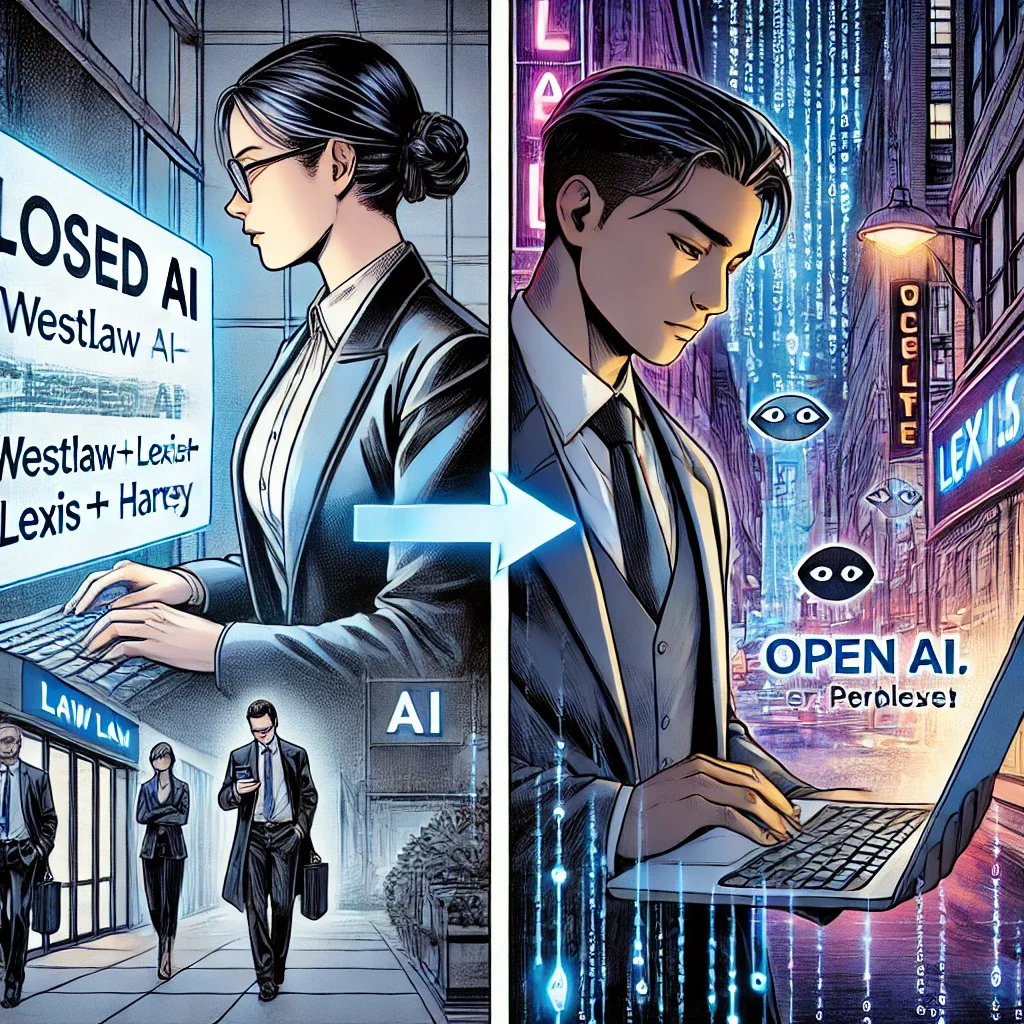
The line between “free” and “paid” ai could be a matter of keeping your bar license!

On The Tech-Savvy Lawyer.Page, I often say that technology should make us better lawyers, not lazier ones.

Using Lexis+/Protege, Westlaw Precision, Co-Counsel, Harvey, vLex Vincent, etc. is about leveraging a curated, verified database. It is about relying on authority. Using a public LLM for legal research is about rolling the dice.

Your license is hard-earned. Your reputation is priceless. Do not risk them on a free chatbot.

The lesson from the advisory board was clear. The schools are trying to keep up. But the technology moves faster than the curriculum. It is up to us. We are the supervisors. We are the gatekeepers.

Take time this week. Gather your team. Ask them what tools they use. You might be surprised. Then, teach them the difference. Show them the risks.

Be the tech-savvy lawyer your clients deserve. Be the supervisor the Rules require.

The tools are here to stay. Let’s use them effectively. Let’s use them ethically. Let’s use them safely.

MTC
MTC: From Cyber Compliance to Cyber Dominance: What VA’s AI Revolution Means for Government Cybersecurity, Legal Ethics, and ABA Model Rule Compliance 💻⚖️🤖

In the age of cyber dominance, “I did not understand the technology” is increasingly unlikely to serve as a safe harbor.

🚨 🤖 👩🏻‍💼👨‍💼

In the age of cyber dominance, “I did not understand the technology” is increasingly unlikely to serve as a safe harbor. 🚨 🤖 👩🏻‍💼👨‍💼

Government technology is in the middle of a historic shift. The Department of Veterans Affairs (VA) stands at the center of this transformation, moving from a check‑the‑box cybersecurity culture to a model of “cyber dominance” that fuses artificial intelligence (AI), zero trust architecture (a security model that assumes no user or device is trusted by default, even inside the network), and continuous risk management. 🔐

For lawyers who touch government work in any way—inside agencies, representing contractors, handling whistleblowers, litigating Freedom of Information Act (FOIA) or privacy issues, or advising regulated entities—this is not just an IT story. It is a law license story. Under the American Bar Association (ABA) Model Rules, failing to grasp core cyber and AI governance concepts can now translate into ethical risk and potential disciplinary exposure. ⚠️

Resources such as The Tech-Savvy Lawyer.Page blog and podcast are no longer “nice to have.” They are becoming essential continuing education for lawyers who want to stay competent in practice, protect their clients, and safeguard their own professional standing. 🧠🎧

Where Government Agency Technology Has Been: The Compliance Era 🗂️

For decades, many federal agencies lived in a world dominated by static compliance frameworks. Security often meant passing audits and meeting minimum requirements, including:

  • Annual or periodic Authority to Operate (ATO, the formal approval for a system to run in a production environment based on security review) exercises

  • A focus on the Federal Information Security Modernization Act (FISMA) and National Institute of Standards and Technology (NIST) security control checklists

  • Point‑in‑time penetration tests

  • Voluminous documentation, thin on real‑time risk

The VA was no exception. Like many agencies, it grappled with large legacy systems, fragmented data, and a culture in which “security” was a paperwork event, not an operational discipline. 🧾

In that world, lawyers often saw cybersecurity as a box to tick in contracts, privacy impact assessments, and procurement documentation. The legal lens focused on:

  • Whether the required clauses were in place

  • Whether a particular system had its ATO

  • Whether mandatory training was completed

The result: the law frequently chased the technology instead of shaping it.

Where Government Technology Is Going: Cyber Dominance at the VA 🚀

The VA is now in the midst of what its leadership calls a “cybersecurity awakening” and a shift toward “cyber dominance”. The message is clear: compliance is not enough, and in many ways, it can be dangerously misleading if it creates a false sense of security.

Key elements of this new direction include:

  • Continuous monitoring instead of purely static certification

  • Zero trust architecture (a security model that assumes no user, device, or system is trusted by default, and that every access request must be verified) as a design requirement, not an afterthought

  • AI‑driven threat detection and anomaly spotting at scale

  • Integrated cybersecurity into mission operations, not a separate silo

  • Real‑time incident response and resilience, rather than after‑the‑fact blame

“Cyber dominance” reframes cybersecurity as a dynamic contest with adversaries. Agencies must assume compromise, hunt threats proactively, and adapt in near real time. That shift depends heavily on data engineering, automation, and AI models that can process signals far beyond human capacity. 🤖

For both government and nongovernment lawyers, this means that the facts on the ground—what systems actually do, how they are monitored, and how decisions are made—are changing fast. Advocacy and counseling that rely on outdated assumptions about “IT systems” will be incomplete at best and unethical at worst.

The Future: Cybersecurity Compliance, Cybersecurity, and Cybergovernance with AI 🔐🌐

The future of government technology involves an intricate blend of compliance, operational security, and AI governance. Each element increasingly intersects with legal obligations and the ABA Model Rules.

1. Cybersecurity Compliance: From Static to Dynamic ⚙️

Traditional compliance is not disappearing. The FISMA, NIST standards, the Federal Risk and Authorization Management Program (FedRAMP), the Health Insurance Portability and Accountability Act (HIPAA), and other frameworks still govern federal systems and contractor environments.

But the definition of compliance is evolving:

  • Continuous compliance: Automated tools generate near real‑time evidence of security posture instead of relying only on annual snapshots.

  • Risk‑based prioritization: Not every control is equal; agencies must show how they prioritize high‑impact cyber risks.

  • Outcome‑focused oversight: Auditors and inspectors general care less about checklists and more about measurable risk reduction and resilience.

Lawyers must understand that “we’re compliant” will no longer end the conversation. Decision‑makers will ask:

  • What does real‑time monitoring show about actual risk?

  • How quickly can the VA or a contractor detect and contain an intrusion?

  • How are AI tools verifying, logging, and explaining security‑related decisions?

2. Cybersecurity as an Operational Discipline 🛡️

The VA’s push toward cyber dominance relies on building security into daily operations, not layering it on top. That includes:

  • Secure‑by‑design procurement and contract terms, which require modern controls and realistic reporting duties

  • DevSecOps (development, security, and operations) pipelines that embed automated security testing and code scanning into everyday software development

  • Data segmentation and least‑privilege access across systems, so users and services only see what they truly need

  • Routine red‑teaming (simulated attacks by ethical hackers to test defenses) and table‑top exercises (structured discussion‑based simulations of incidents to test response plans)

For government and nongovernment lawyers, this raises important questions:

  • Are contracts, regulations, and interagency agreements aligned with zero trust principles (treating every access request as untrusted until verified)?

  • Do incident response plans meet regulatory and contractual notification timelines, including state and federal breach laws?

  • Are representations to courts, oversight bodies, and counterparties accurate in light of actual cyber capabilities and known limitations?

3. Cybergovernance with AI: The New Frontier 🌐🤖

Lawyers can no longer sit idlely by their as cyber-ethic responsibilities are changing!

AI will increasingly shape how agencies, including the VA, manage cyber risk:

  • Machine learning models will flag suspicious behavior or anomalous network traffic faster than humans alone.

  • Generative AI tools will help triage incidents, search legal and policy documents, and assist with internal investigations.

  • Decision‑support systems may influence resource allocation, benefit determinations, or enforcement priorities.

These systems raise clear legal and ethical issues:

  • Transparency and explainability: Can lawyers understand and, if necessary, challenge the logic behind AI‑assisted or AI‑driven decisions?

  • Bias and fairness: Do algorithms create discriminatory impacts on veterans, contractors, or employees, even if unintentional?

  • Data governance: Is sensitive, confidential, or privileged information being exposed to third‑party AI providers or trained into their models?

Blogs and podcasts like Tech-Savvy Lawyer.Page blog and podcast often highlight practical workflows for lawyers using AI tools safely, along with concrete questions to ask vendors and IT teams. Those insights are particularly valuable as agencies and law practices both experiment with AI for document review, legal research, and compliance tracking. 💡📲

What Lawyers in Government and Nongovernment Need to Know 🏛️⚖️

Lawyers inside agencies such as the VA now sit at the intersection of mission, technology, and ethics. Under ABA Model Rule 1.1 (Competence) and its comment on technological competence, agency counsel must acquire and maintain a basic understanding of relevant technology that affects client representation.

For government lawyers and nongovernment lawyers who advise, contract with, or litigate against agencies such as the VA, technological competence now has a common core. It requires enough understanding of system architecture, cybersecurity practices, and AI‑driven tools to ask the right questions, spot red flags, and give legally sound, ethics‑compliant advice on how those systems affect veterans, agencies, contractors, and the public. ⚖️💻

For government lawyers and nongovernment lawyers who interact with agencies such as the VA, this includes:

  • Understanding the basic architecture and risk profile of key systems (for example, benefits, health data, identity, and claims platforms), so you can evaluate how failures affect legal rights and obligations. 🧠

  • Being able to ask informed questions about zero trust architecture, encryption, system logging, and AI tools used by the agency or contractor.

  • Knowing the relevant incident response plans, data breach notification obligations, and coordination pathways with regulators and law enforcement, whether you are inside the agency or across the table. 🚨

  • Ensuring that policies, regulations, contracts, and public statements about cybersecurity and AI reflect current technical realities, rather than outdated assumptions that could mislead courts, oversight bodies, or the public.

Model Rules 1.6 (Confidentiality of Information) and 1.13 (Organization as Client) are especially important. Government lawyers must:

  • Guard sensitive data, including classified, personal, and privileged information, against unauthorized disclosure or misuse.

  • Advise the “client” (the agency) when cyber or AI practices present significant legal risk, even if those practices are popular or politically convenient.

If a lawyer signs off on policies or representations about cybersecurity that they know—or should know—are materially misleading, that can implicate Rule 3.3 (Candor Toward the Tribunal) and Rule 8.4 (Misconduct). The shift to cyber dominance means that “we passed the audit” will no longer excuse ignoring operational defects that put veterans or the public at risk. 🚨

What Lawyers Outside Government Need to Know 🏢⚖️

Lawyers representing contractors, vendors, whistleblowers, advocacy groups, or regulated entities cannot ignore these changes at the VA and other agencies. Their clients operate in the same new environment of continuous oversight and AI‑informed risk management.

Key responsibilities for nongovernmental lawyers include:

  • Contract counseling: Understanding cybersecurity clauses, incident response requirements, AI‑related representations, and flow‑down obligations in government contracts.

  • Regulatory compliance: Navigating overlapping regimes (for example, federal supply chain rules, state data breach statutes, HIPAA in health contexts, and sector‑specific regulations).

  • Litigation strategy: Incorporating real‑time cyber telemetry and AI logs into discovery, privilege analyses, and evidentiary strategies.

  • Advising on AI tools: Ensuring that client use of generative AI in government‑related work does not compromise confidential information or violate procurement, export control, or data localization rules.

Under Model Rule 1.1 (Competence), outside counsel must be sufficiently tech‑savvy to spot issues and know when to bring in specialized expertise. Ignoring cyber and AI governance concerns can:

  • Lead to inadequate or misleading advice.

  • Misstate risk in negotiations, disclosures, or regulatory filings.

  • Expose clients to enforcement actions, civil liability, or debarment.

  • Expose lawyers to malpractice claims and disciplinary complaints.

ABA Model Rules: How Cyber and AI Now Touch Your License 🧾⚖️

Several American Bar Association (ABA) Model Rules are directly implicated by the VA’s evolution from compliance to cyber dominance and by the broader adoption of artificial intelligence (AI) in government operations:

  • Rule 1.1 – Competence

    • Comment 8 recognizes a duty of technological competence.

    • Lawyers must understand enough about cyber risk and AI systems to represent clients prudently.

  • Rule 1.6 – Confidentiality of Information

    • Lawyers must take reasonable measures to safeguard client information, including in cloud environments and AI‑enabled workflows.

    • Uploading sensitive or privileged content into consumer‑grade AI tools without safeguards can violate this duty.

  • Rule 1.4 – Communication

    • Clients should be informed—in clear, non‑technical terms—about significant cyber and AI risks that may affect their matters.

  • Rules 5.1 and 5.3 – Responsibilities of Partners, Managers, and Supervisory Lawyers; Responsibilities Regarding Nonlawyer Assistance

    • Law firm leaders must ensure that policies, training, vendor selection, and supervision support secure, ethical use of technology and AI by lawyers and staff.

  • Rule 1.13 – Organization as Client

    • Government and corporate counsel must advise leadership when cyber or AI governance failures pose substantial legal or regulatory risk.

  • Rules 3.3, 3.4, and 8.4 – Candor, Fairness, and Misconduct

    • Misrepresenting cyber posture, ignoring known vulnerabilities, or manipulating AI‑generated evidence can rise to ethical violations and professional misconduct.

In the age of cyber dominance, “I did not understand the technology” is increasingly unlikely to serve as a safe harbor. Judges, regulators, and disciplinary authorities expect lawyers to engage these issues competently.

Practical Next Steps for Lawyers: Moving from Passive to Proactive 🧭💼

To meet this moment, lawyers—both in government and outside—should:

  • Learn the language of modern cybersecurity:

    • Zero trust (a model that treats every access request as untrusted until verified)

    • Endpoint detection and response (EDR, tools that continuously monitor and respond to threats on endpoints such as laptops, servers, and mobile devices)

    • Security Information and Event Management (SIEM, systems that collect and analyze security logs from across the network)

    • Security Orchestration, Automation, and Response (SOAR, tools that automate and coordinate security workflows and responses)

    • Encryption at rest and in transit (protecting data when it is stored and when it moves across networks)

    • Multi‑factor authentication (MFA, requiring more than one factor—such as password plus a code—to log in)

  • Understand AI’s role in the client’s environment: what tools are used, where data goes, how outputs are checked, and how decisions are logged.

  • Review incident response plans and breach notification workflows with an eye on legal timelines, cross‑jurisdictional obligations, and contractual requirements.

  • Update engagement letters, privacy notices, and internal policies to reflect real‑world use of cloud services and AI tools.

  • Invest in continuous learning through technology‑forward legal resources, including The Tech-Savvy Lawyer.Page blog and podcast, which translate evolving tech into practical law practice strategies. 💡

Final Thoughts: The VA’s journey from compliance to cyber dominance is more than an agency story. It is a case study in how technology, law, and ethics converge. Lawyers who embrace this reality will better protect their clients, their institutions, and their licenses. Those who do not will risk being left behind—by adversaries, by regulators, and by their own professional standards. 🚀🔐⚖️

Editor’s Note: I used the VA as my “example” because Veterans mean a lot to me. I have been a Veterans Disability Benefits Advocate for nearly two decades. Their health and welfare should not be harmed by faulty tech compliance. 🇺🇸⚖️

MTC

ILTACON 2025: Legal AI Revolution Accelerates as Major Providers Unveil Next-Generation Platforms

Lexis, vlex, westlaw highlight their newest ai functions!

The International Legal Technology Association’s 2025 annual conference (#ILTACON2025) in the National Harbor just outside of Washington, DC, became the epicenter of legal AI innovation as Thomson Reuters, LexisNexis, and vLex/Fastcase showcased their most advanced artificial intelligence platforms. Each provider demonstrated distinct approaches to solving the legal profession's technology challenges, with announcements that signal a fundamental shift from experimental AI tools to enterprise-ready systems capable of autonomous legal workflows.

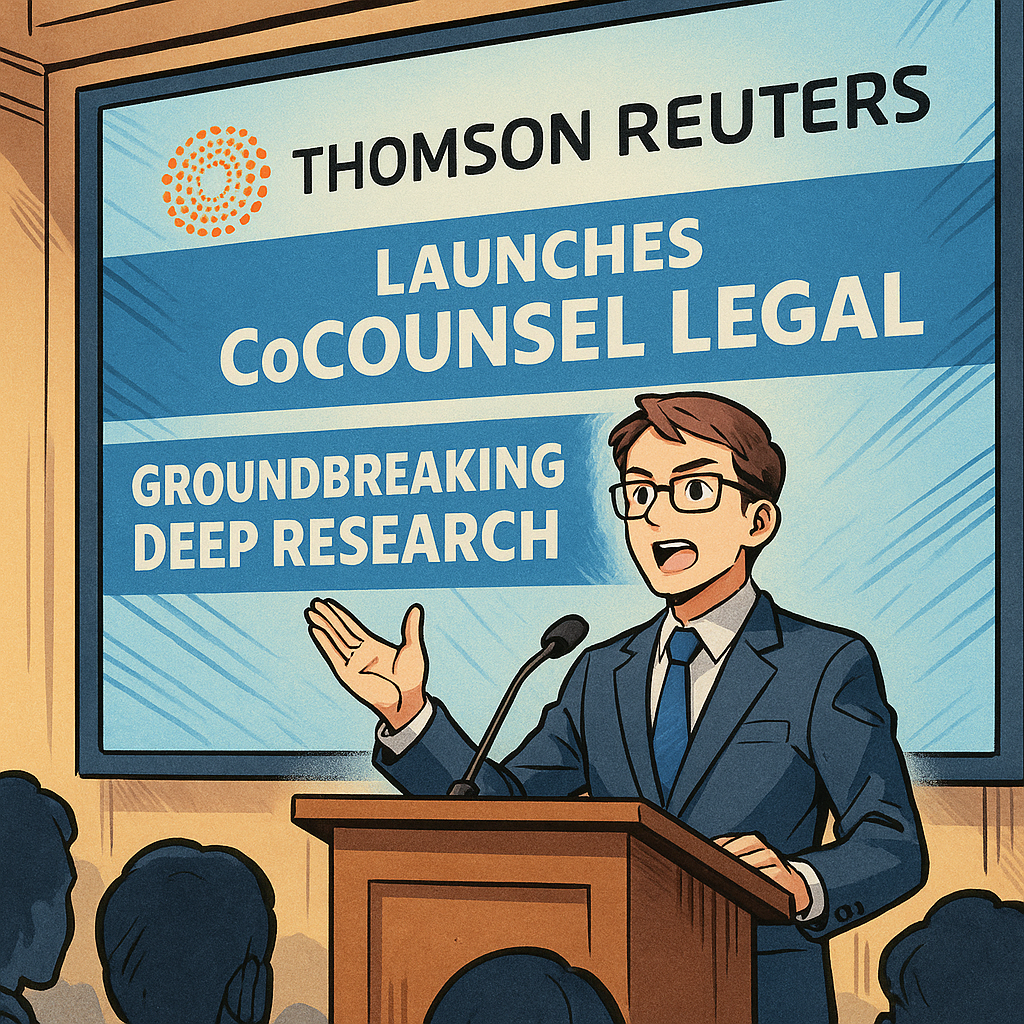
Thomson Reuters Launches CoCounsel Legal with Groundbreaking Deep Research

Thomson Reuters made headlines with the launch of CoCounsel Legal, featuring what the company positions as industry-leading Agentic AI capabilities. This launch represents a fundamental evolution from AI assistants that respond to prompts toward intelligent systems that can plan, reason, and execute complex multi-step workflows autonomously.

The platform's flagship innovation is Deep Research, an AI feature that conducts comprehensive legal research by leveraging Westlaw Advantage’s proprietary research tools and expert legal content. According to Thomson Reuters, CoCounsel Legal combines advanced generative models with the exclusive resources of Westlaw and Practical Law, aiming to deliver trusted, up-to-date, and relevant legal analysis for practitioners. The company emphasizes that its Agentic AI operates directly within Westlaw, making use of the platform’s curated research toolset and authoritative content to enhance accuracy and reliability in legal workflows.

Thomson Reuters Launches CoCounsel Legal with Groundbreaking Deep Research

Key capabilities include guided workflows for drafting privacy policies, employee policies, complaints, and discovery requests, with Thomson Reuters planning incremental releases of new workflows. The platform addresses the critical challenge of document management system integration through federated search technology, which leverages existing Document Management System (DMS) search systems while applying AI for re-ranking and summarization.

The company also introduced Westlaw Advantage on August 13, 2025, positioned as the final versioned release of Westlaw, with future improvements delivered through continuous updates rather than new license agreements. This shift to a traditional Software-as-a-Service (aka SaaS) delivery model includes multi-year subscriptions with automatic upgrades at no additional cost.

Thomson Reuters has invested $10 billion in transforming legal technology foundations, with over $200 million annually dedicated specifically to integrating AI into flagship products. The platform already serves over 20,000 law firms and corporate legal departments, including the majority of AmLaw 100 firms.

LexisNexis Introduces Protégé General AI with Industry-First Voice Capabilities

LexisNexis announced on August 11, 2025, the preview launch of Protégé General AI, expanding its personalized AI assistant to include secure access to general-purpose AI models alongside legal-specific tools. This development builds on the company's March 2025 launch of the legal industry's first voice-enabled AI assistant for complex legal work. This voice feature allows users to interact naturally with the platform, guiding legal research and drafting by issuing spoken requests. The tool is designed to help legal practitioners streamline routine workflows, surface key insights, and perform drafting and search tasks hands-free, all within a secure and integrated environment.

LexisNexis Introduces Protégé General AI with Industry-First Voice Capabilities

Protégé's key differentiator lies in its toggle functionality, allowing users to switch between authoritative legal AI (grounded in LexisNexis content) and general-purpose AI models including GPT-5*, GPT-4o, GPT-o3, and Claude Sonnet 4. This eliminates the need to switch between different AI tools while maintaining enterprise-grade security.

The platform processes documents up to 300 pages long (a 250% increase over previous limits) and offers unprecedented personalization capabilities. It learns individual user workflows, preferences, writing styles, and jurisdictions to deliver customized responses. The system integrates with document management systems to ground responses in firm-specific knowledge while maintaining strict security controls.

Approximately 200 law firms, corporate legal departments, and law schools are participating in the customer preview program, with general availability expected later in 2025.

vLex Showcases Vincent AI Spring '25 with Studio Workflow Creation

vLex presented its Vincent AI Spring '25 Release at ILTACON 2025, highlighting enhanced agentic capabilities and the introduction of Studio, a platform allowing users to create custom workflows without coding. The company emphasized its data-centric approach, leveraging its billion-document global legal database spanning over 100 countries.

vLex Showcases Vincent AI Spring '25 with Studio Workflow Creation

vLex’s Spring ’25 release also emphasizes its Vincent Tables feature, which allows users to extract and compare key data points across large sets of documents and generate structured outputs like memos. Their General Assist capability supports drafting tasks—such as composing emails and summarizing meeting notes—within Vincent’s secure, enterprise-grade environment. Overall, vLex positions Vincent AI as a comprehensive workflow platform that delivers consistent, authoritative legal insights powered by a global database of over one billion documents from more than 100 jurisdictions.

During ILTACON, vLex also announced the 2025 Fastcase 50 awards, recognizing legal innovation leaders who are "engineering the future of legal practice". The company positioned itself as serving the "engineering minds and visionary leaders driving the legal profession's transformation".

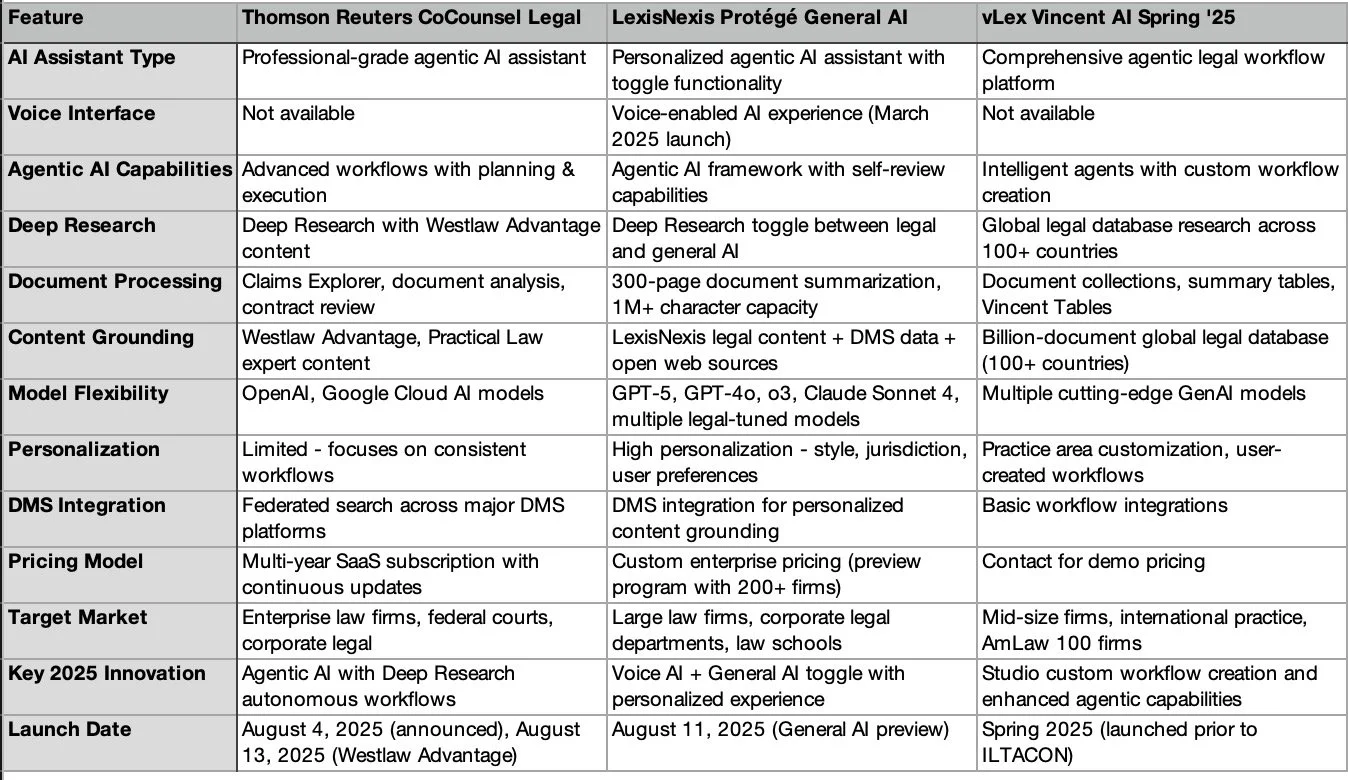
🔎 Feature Comparison: How the Big Three Actually Stack Up

Market Positioning and Strategic Differentiation

The three providers have established distinct market positions based on their 2025 announcements. Thomson Reuters targets enterprise-level implementations, evidenced by multi-year contracts with the U.S. Federal Courts system, including the U.S. Supreme Court, and a focus on consistent, reliable workflows for large-scale legal operations.

LexisNexis emphasizes user experience and personalization, with Protégé designed to understand individual lawyer preferences and adapt to different work styles. The voice interface represents a significant advancement in accessibility and usability, particularly valuable for lawyers with physical accessibility needs or those who prefer natural language interaction.

vLex positions itself as serving both mid-size firms and AmLaw 100 practices, emphasizing comprehensive workflow solutions and global legal coverage. The Studio platform addresses the growing demand for customizable AI workflows tailored to specific practice requirements.

Final Thoughts: Industry Impact and Measurable Results

ILTACON was a great experience - I learned and hope to share a lot!

These ILTACON 2025 announcements demonstrate the maturation of legal AI from experimental tools to platforms delivering measurable business value. Case studies reveal significant cost savings, with startups like OMNIUX reporting monthly savings of $15,000 to $20,000 in legal fees using CoCounsel.

Independent analysis shows that contract review tasks, which previously required two to two and a half hours, can now be completed in 10 minutes, representing productivity improvements of over 90%. Legal professionals report that document analysis tasks requiring days of manual work can now be completed in under an hour.

The competitive landscape now features three mature approaches: Thomson Reuters' enterprise-focused agentic workflows with deep legal research integration, LexisNexis's personalized voice-enabled AI with comprehensive model flexibility, and vLex's comprehensive workflow platform with global legal intelligence.

As legal professionals evaluate these platforms, selection criteria should include firm size, practice areas, existing technology infrastructure, required customization levels, and specific workflow requirements. The legal profession's digital transformation has clearly accelerated beyond the experimental phase, with AI becoming essential infrastructure for competitive legal practice.

But what does this mean for the solo, small-, and medium-size law forms? Stay Tuned as my analysis on that will be posted soon!

Happy Lawyering!

* (Note, the original launch was supposed to include GPT-5 but it has been pulled pending resolution of issues in its program - see MTC: Why "Newer" AI Models Aren't Always Better: The ChatGPT-5 and Apple Intelligence Reality Check for Legal Professionals! for reference).