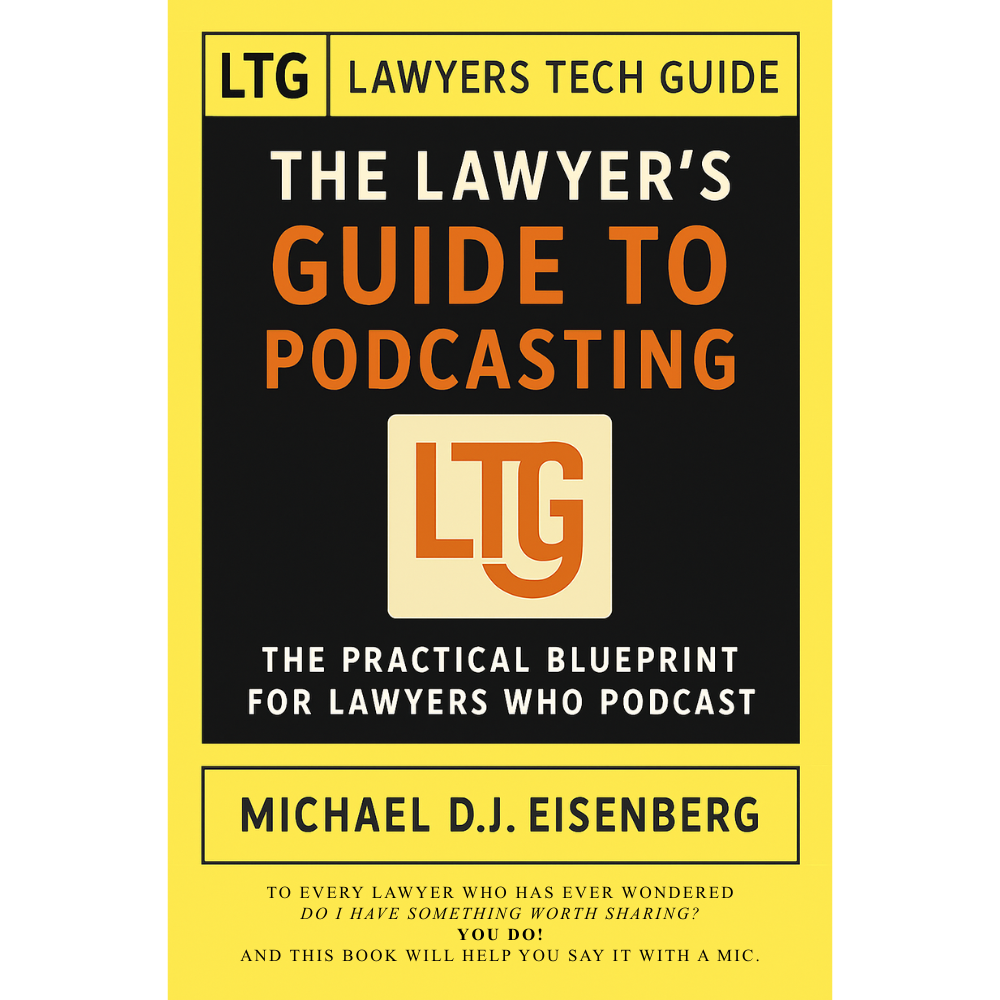
You’re Invited: The Lawyer’s Guide to Podcasting Launch Party in Bethesda!

Come join likeminded legal professionals who want to expand their reach, audience, and clientele through the art of podcasting!

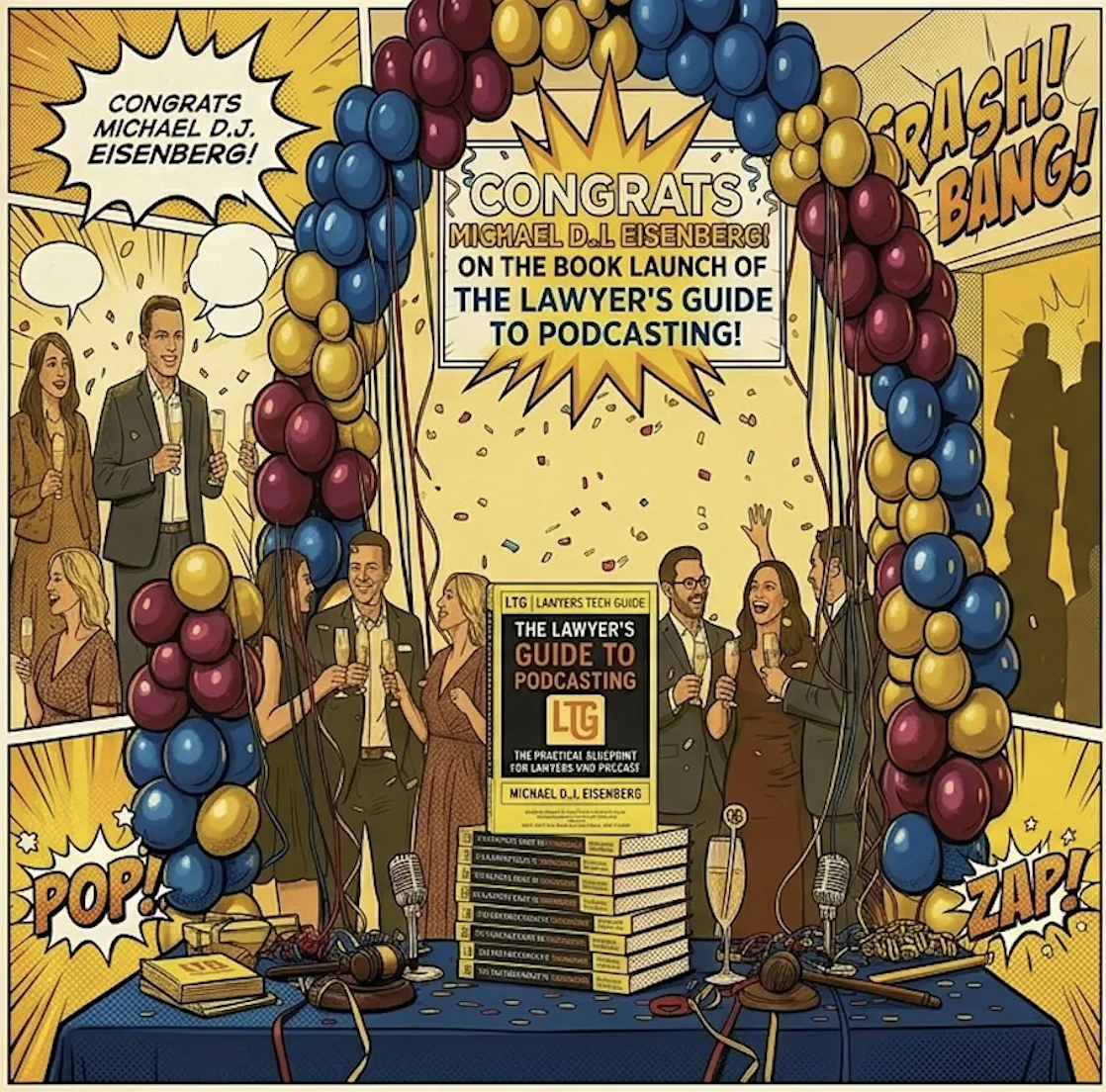
On Wednesday, May 20, 2026, from 5:30–7:30 PM, we’re gathering at 4704 North Chelsea Lane, Bethesda, MD 20814 for an in‑person book launch party for The Lawyer’s Guide to Podcasting.

This guide has already helped lawyers, paralegals, and legal professionals find a clear, practical path into podcasting without needing to be “techy” to get it right. Now we’re bringing the conversation into the same room.

Expect a relaxed evening with DMV‑area lawyers, podcasters, and authors—plus drinks, snacks, and the chance to pick up The Lawyer’s Guide to Podcasting at $5 off (while supplies last) and have it signed.

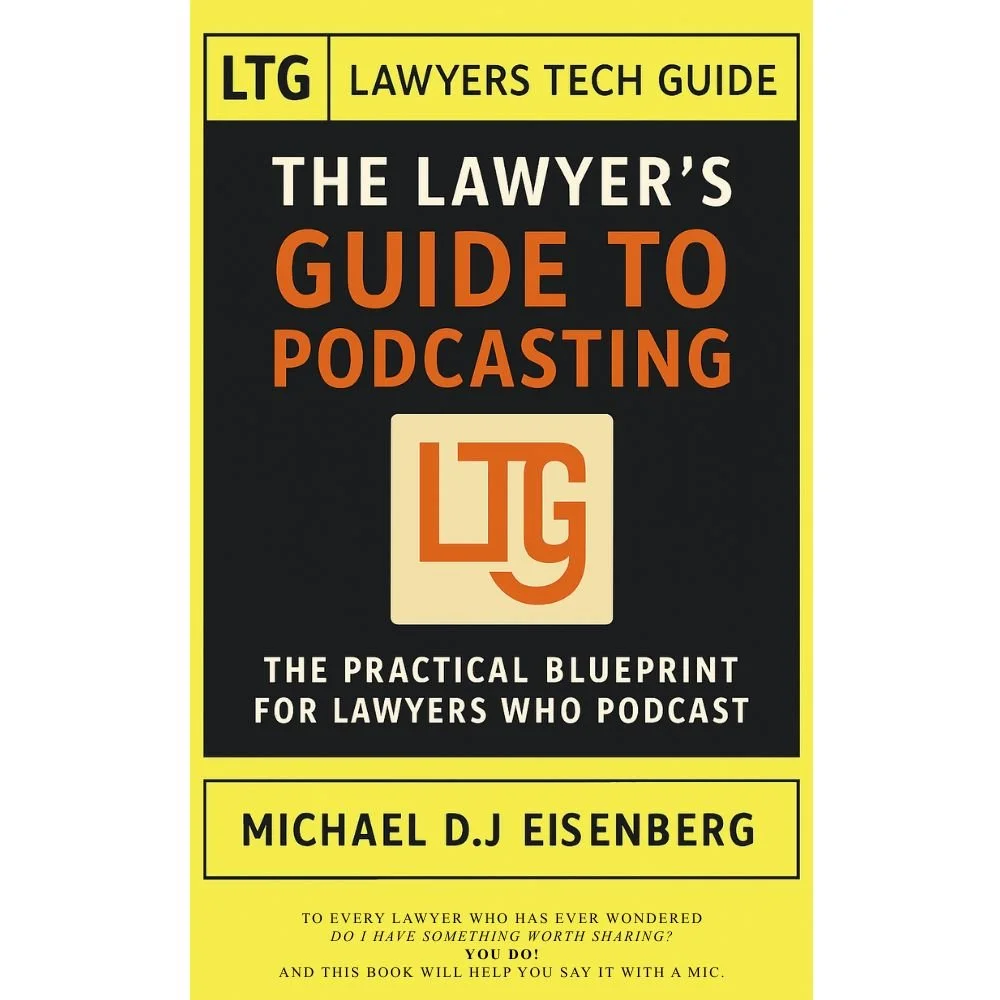
The lawyers’ guide to podcasting will teach you practical ideas for show formats, the right gear for your show, and practical workflows while maintaining your ethics!

  • Who it’s for (lawyers, legal professionals, aspiring podcasters, legal tech community)

  • What you’ll walk away with (practical ideas for formats, gear, ethics, workflows).

Attendance is free, but space is limited. Please reserve your spot by midnight on May 18, 2026, so we can plan food and space.

👉 RSVP on Eventbrite: https://www.eventbrite.com/e/book-launch-party-the-lawyers-guide-to-podcasting-tickets-1988334439834

🎙️ TSL.P Ep. #135: Ethical AI, Paperless Practice, and Smart Hardware Choices with ABA LTRC Chair Alan Klevan ⚖️🤖

My next guest is Alan Klevan, a veteran personal injury lawyer and Chair of the ABA Law Practice Division’s Legal Technology Resource Center (LTRC), known for running one of the first paperless practices in New England and for his clear-eyed approach to AI in law. In this live episode recorded at the ABA Spring Conference in San Diego, Alan and I dig into how solos and small firms can use AI, case management platforms, hardware, and workflows to practice more efficiently while honoring their ethical duties and protecting client confidentiality.

Join Alan Klevan and me as we discuss the following three questions and more!

  • What are the top three ways Alan uses AI and other tech tools to control discovery and document management at scale, protect client confidentiality, and communicate complex case progress to clients who only care that it is accurate and on time?

  • As Chair of the ABA Law Practice Division’s Legal Technology Resource Center, what top three technology practices does Alan wish every small or solo lawyer would adopt in the next 12 months?

  • What were the three most important technology decisions Alan made early in his career around paperless workflows, practice management, automation, and AI‑powered research—and how can today’s practitioners follow that lead?

In our conversation, we covered the following:

  • [00:00:00] Live from the ABA Spring Conference in San Diego, introducing Alan Klevan and the setting of the conversation 🌴

  • [00:00:30] Alan’s mirrored bi‑state setup: two Lenovo i7 laptops in Massachusetts and Florida, dual 24" HP HD monitors, two ScanSnap iX1600 scanners, laser printers, and Microsoft OneDrive syncing between offices 💻📠

  • [00:01:10] Traveling with a third “road warrior” Lenovo laptop, iPhone as primary smart device, and using the reMarkable 2 tablet for handwritten notes that sync into client and ABA files ✍️

  • [00:01:45] Early impressions of the Plaud (AI wearable) device, background-noise muting, and why Alan limits it to non‑critical meetings due to privilege concerns 🎧

  • [00:02:20] Judicial skepticism about AI recording tools in court; motion practice, privilege issues, and a New York judge flatly banning AI recorders in the courtroom 🚫

  • [00:03:10] AI hallucinations in legal practice, roughly 1,300 known hallucination incidents, and why the real problem is lawyers not checking citations—highlighted by a recent Oregon sanctions case 💸

  • [00:04:00] The Oregon lawyer who tried to “fix” hallucinated citations with a motion to refile instead of candor to the court and opposing counsel, and how that became a fraud‑on‑the‑court issue under the Oregon Rules of Professional Responsibility

  • [00:04:45] Using Google Scholar as an AI‑prompting “hack” to verify every citation and case suggested by AI tools 🔍

  • [00:05:20] Question 1 restated: top three ways Alan uses AI and tech to (1) control discovery, (2) protect confidentiality and ethical duties, and (3) communicate complex case progress to clients

  • [00:05:45] Drafting AI and social media policies directly into contingency‑fee agreements so clients do not post about their case or use open‑source AI on case‑related issues 📜

  • [00:06:30] Hepner and Warner: open‑source vs enterprise AI, attorney–client privilege, work product concerns, and emerging discoverability questions for public‑facing AI platforms

  • [00:07:20] Trap for the unwary: why Alan insists clients notify him before using AI on their case and why he prefers enterprise versions of AI for better protection and governance 🧠

  • [00:08:10] The Nippon Life Insurance case: client uploads attorney communications into ChatGPT, asks if her lawyer is gaslighting her, then files 44 AI‑drafted motions—raising product liability and disclaimer questions for AI vendors 🏛️

  • [00:09:30] Court pushback on AI disclaimer language, defective product theories, and the infancy of AI‑related legal liability

  • [00:10:10] Alan’s big personal‑injury “Aaron Brockovich‑type” case with a deep‑pocket defendant and using AI to level the playing field on litigation management and motion practice ⚖️

  • [00:11:00] Feeding facts, parties, defense counsel names, and pleadings into a case management system with a built‑in, highly accurate legal AI component (VL) and generating 50‑state case research for negligent infliction of emotional distress claims 📂

  • [00:12:00] Running the same matter through two AI platforms (case management AI and Claude) to compare outputs, reduce hallucination risk, and mold responses to Alan’s writing style and Massachusetts practice

  • [00:13:00] Using Claude (enterprise tier) to draft an opposition to a motion to dismiss seven emotional‑distress claims, followed by manual review and cross‑checking in the case management AI—leading to the defendant’s motion being denied ✅

  • [00:14:15] Alan’s process for verifying AI outputs: second set of “AI eyes,” Google Scholar citation checks, and lawyer‑level review of every filing

  • [00:15:00] Advice for new attorneys: try AI platforms before buying, choose a tool that fits your workflow, avoid shiny‑object syndrome, and do not over‑commit to annual plans while the market is moving fast 🧩

  • [00:16:00] Michael’s caution about yearly plans, vendor lock‑in, and ensuring your data is nimble enough to move between AI platforms without costly migrations

  • [00:16:45] Alan’s rule: do not chase every AI; become a master of one platform, learn it deeply, and resist the temptation to constantly switch 🧠

  • [00:17:10] Both hosts stress “review, review, review”—AI as a law librarian or 3L intern, not as your practicing lawyer, and the concept that AI does not have a JD 🎓

  • [00:18:00] Anecdote from 1990: Alan is sent to court unprepared, gets sent out of the courtroom to learn his file, and how that story frames his modern view of AI oversight and responsibility

  • [00:19:10] Question 2: as LTRC Chair, Alan’s top three technology practices every small or solo lawyer should adopt in the next 12 months

  • [00:19:30] Tech Practice #1: invest in a fast machine (Windows or Mac) with as much RAM and storage as you can reasonably afford, and strip the “crapware” off box‑store Windows machines 🖥️

  • [00:20:10] Discussion of Apple vs Windows pricing, the need for more than 16 GB of RAM, multi‑core processors, and why Alan buys Lenovo laptops with 32 GB RAM and expects 3–4 year laptop lifespans 💾

  • [00:21:30] Backups and storage: redundant cloud backups, redundant hard drives, using external 5 TB drives from Staples, and keeping active machines “clean” for better AI performance

  • [00:22:30] Tech Practice #2: immerse yourself in what is happening with AI and law practice, become a master of one AI platform, and continuously read ethics and disciplinary decisions about AI use 📚

  • [00:23:15] Tech Practice #3: your head is your most important piece of technology—using judgment, stepping back to assess risks, and making sure anything submitted to court or client is accurate

  • [00:24:00] Economic access, hardware costs, and why Alan still believes lower‑resource attorneys can get workable hardware by being strategic about purchases, specs, and lifecycles

  • [00:25:10] Michael’s storage philosophy: lots of local SSD, multiple backups, and revisiting older briefs and arguments (e.g., mailbox‑rule analysis) to build new work more efficiently

  • [00:26:10] Disk space versus backup strategy, internal vs external drives, cloud vs local files, and disaster recovery considerations

  • [00:27:20] Question 3: top three early technology decisions Alan made around paperless practice, automation, and AI‑powered research

  • [00:27:40] Answer #1: going fully paperless in 2005—the first paperless practice in New England—and eliminating almost all postage costs by sending encrypted electronic communications and demand packages ✉️

  • [00:28:15] Answer #2: becoming a power‑user of Adobe Acrobat and PDF workflows so he can respond to massive production requests (e.g., 10,000 pages) in seconds instead of hours 📑

  • [00:29:00] Answer #3: adopting case management platforms with AI‑driven workflows that automatically assemble record requests, HIPAA authorizations, and certifications for medical providers

  • [00:29:45] Dusty hardware: why Alan’s printer and ScanSnap are seeing less use, yet scanners remain necessary for partners who still prefer paper and non‑electronic delivery 🖨️

  • [00:30:20] Michael’s own shrinking paper consumption, stamps.com, and transitioning to PDF‑based workflows with secure electronic delivery

  • [00:31:00] Adobe Acrobat as “gold standard” for lawyers, why every attorney must understand PDFs deeply, and Alan’s “learn it, love it, live it” mantra 📄

  • [00:31:40] Bonus segment: what the ABA Legal Technology Resource Center (LTRC) is, its role as a “delivery board,” and how it serves both the Law Practice Division and the broader ABA membership 🏛️

  • [00:32:20] LTRC’s four pillars of law practice management—marketing, technology, practice, and finance—and how it delivers content via Law Technology Today, webinars, podcasts, and roundtables

  • [00:33:10] 2024–25 LTRC theme: AI‑centric content from intake through trial, and why Alan believes LTRC may become the ABA’s most important board for practitioners navigating AI

  • [00:34:00] Using AI for law‑firm marketing, content creation, case‑law recaps, and SEO—along with warnings about legal advice, PII, and AI‑generated “SEO articles” that sound inauthentic

  • [00:35:00] Call to action: join the ABA Law Practice Division and LTRC, become one of roughly 30 tech‑focused thought leaders, and help shape AI guidance for the profession 🙌

  • [00:36:00] Where to find Alan: why he is minimizing social presence during a major move and high‑stakes case, and the best way to reach him on LinkedIn

Hardware mentioned in the conversation

Software & cloud services mentioned

TSL Labs 🧪 Bonus: Deep Dive on our April 27, 2026, Editorial, MTC: Smart Recording, Client Secrets, and HeyPocket: What Every Lawyer Needs to Know in 2026 📱⚖️

📌 To Busy to Read This Week’s Editorial?

Join us for an AI-powered deep dive into the ethical challenges facing legal professionals in the age of generative AI. 🤖 In this episode, we unpack how AI note takers and “always-listening” devices can quietly route client secrets to third-party vendors, why that matters under the ABA Model Rules, and how a 2026 federal decision out of the Southern District of New York turned one defendant’s AI chats into discoverable evidence. Whether you are a solo practitioner, in-house counsel, or a tech-curious professional in another field, this conversation will help you balance convenience with confidentiality and avoid turning your favorite AI assistant into your biggest evidentiary risk.

👉 Before your next client meeting, listen to this episode, check out our editorial, and run your current AI tools through the checklist we outline—then subscribe and share with a colleague who is still “just trusting the app.” 🎧

In our conversation, we cover the following:

  • 00:00 – The “ambient microphone” problem: phones, smart speakers, wearables, and connected cars as a continuous surveillance layer around client conversations.

  • 01:00 – How technology competence has shifted from locking file cabinets to understanding data custody, cloud routing, and API-driven services.

  • 02:30 – What makes AI note takers like HeyPocket different from passive telemetry and why capturing the spoken “payload” changes the threat model.

  • 04:00 – The invisible “third party in the room”: routing privileged audio through external AI models and the malpractice risk of default “Allow” clicks.

  • 05:30 – Applying ABA Model Rules 1.1 and 1.6 to AI workflows: competence, confidentiality, and “reasonable efforts” in a world of automated transcription.

  • 07:00 – Risk-based analysis from ABA Formal Opinions 477R and 498: weighing sensitivity, likelihood of disclosure, and available safeguards before using AI.

  • 08:30 – Why secretly recording clients or opponents with AI tools can implicate Rule 8.4(c), even in one‑party consent jurisdictions.

  • 10:00 – Inside United States v. Heppner (SDNY 2026): how public generative AI platforms destroyed privilege and work-product protections for a criminal defendant.

  • 12:00 – How AI training and tokenization work, why “military‑grade encryption” does not save privilege if terms of service allow internal data use.

  • 14:00 – Treating every AI note taker like an outsourced e‑discovery vendor: NDAs, retention policies, security audits, and data destruction timelines.

  • 16:00 – Practical minimization strategies: defaulting to no recording, segmenting AI-generated content by matter, and restricting access via role‑based controls.

  • 17:30 – Establishing bright-line “no‑AI” categories (criminal defense, internal investigations, sensitive family/immigration, high‑value trade secrets).

  • 18:30 – Counseling clients not to “prep their case” with public chatbots after Heppner and why this is now part of competent representation.

  • 19:30 – Building a simple vendor-vetting checklist for law firms and professional practices adopting AI note takers.

  • 20:00 – Looking ahead: when failure to use secure, vetted AI may itself become a competence issue due to inefficiency and overbilling.

  • 21:00 – Rethinking privilege in a world where an algorithmic “third party” is always in the room and devices are never truly off

RESOURCES

Mentioned in the episode

TSL LABS BONUS: Dynamic Random-Access Memory (DRAM): Why It Matters for Law Firm Performance and Data Security ⚖️💻

Join us for an AI-powered deep dive into the ethical challenges facing legal professionals in the age of generative AI. 🤖 In this episode, we break down our April 20, 2026, Tech‑Savvy Lawyer editorial on how a global DRAM shortage and AI data center demand are driving up PC prices, pushing many legal professionals toward Apple hardware, and redefining what technological competence really means. We explore how unified memory, on‑device AI, and long‑term support lifecycles are changing the Mac vs. Windows calculus, and why “cheap but weak” laptops may now create serious competence and confidentiality risks for your clients.

In our conversation, we cover the following:

  • 00:00 – Why upgrading your work laptop in 2026 feels like buying a luxury vehicle, not a routine office expense.

  • 00:45 – Setting the stage: a “seismic shift” in hardware pricing hitting professional industries, with a focus on the legal field.01:30 – Introducing Michael D.J. Eisenberg’s Tech‑Savvy Lawyer editorial and its core thesis about a tech hardware crisis.

  • 02:15 – The global DRAM crunch: how AI data centers are buying up memory like airlines hoard jet fuel, and why PC OEMs are getting squeezed.

  • 03:30 – Microsoft’s April 2026 Surface price hikes and the end of the “Windows is cheaper” assumption for law firms.

  • 05:15 – The “value inversion”: when high‑end Windows laptops now cost more than roughly comparable MacBooks.

  • 06:30 – Why this isn’t a normal tech price cycle and how it breaks 20 years of corporate IT purchasing assumptions.

  • 07:15 – Apple’s structural advantage: vertical integration, unified memory, and shielding itself from spot‑market DRAM volatility.

  • 08:30 – The M‑series (M5) advantage: performance per watt, thermal behavior, battery life, and running local AI plus heavy legal workloads.

  • 09:45 – Yes, Apple prices are rising too—why the relative “security‑to‑cost” and performance story still favors Macs for many professionals.

  • 10:45 – When “cheap but weak” hardware crosses the line: connecting underpowered laptops to ABA Model Rule 1.1 (competence) and Comment 8 on tech competence.

  • 12:00 – From annoyance to ethical exposure: how sluggish systems cripple eDiscovery, AI‑driven research, and document automation.

  • 13:00 – Why laptop purchasing is now core client‑service strategy, not just a back‑office procurement task.

  • 13:45 – On‑device vs. cloud AI: where computation happens, why that matters, and how it ties into ABA Model Rule 1.6 (confidentiality).

  • 14:30 – The role of Apple’s Neural Engine and local processing in reducing reliance on external AI APIs and third‑party servers.

  • 15:30 – Clarifying the security nuance: Windows is not inherently less secure, but comparable on‑device AI capability often costs more.

  • 16:30 – Redefining security in 2026: it’s not just antivirus and passwords; it’s where the AI thinking physically happens.

  • 17:15 – Building a documented purchase matrix: price, performance, storage, memory, security, lifecycle, and critical software compatibility.

  • 18:15 – When you can’t leave Windows: legacy legal software, state e‑filing systems, and the hidden costs of moving to macOS.

  • 19:00 – Survival strategies for Windows‑locked practices: non‑Surface OEMs, staggered refresh cycles, and buying fewer but higher‑quality machines.

  • 19:45 – Treating laptops as long‑term infrastructure instead of disposable commodities.

  • 20:15 – Big‑picture recap: DRAM shortages, unified memory, ethical duties, and shifting hardware norms in law practice.

  • 20:45 – The closing question: will AI‑driven hardware requirements quietly raise the price of access to justice?

RESOURCES

Mentioned in the episode

Hardware mentioned in the conversation

Software & Cloud Services mentioned in the conversation

If you want your next laptop purchase to strengthen—not weaken—your ethical obligations, client security, and AI‑powered workflows, hit play now and learn how to build a smarter, future‑proof hardware strategy. 🎧💡

TSL.P Podcast Special! Podcasting for Lawyers: The Truth Behind the Mic – ABA TECHSHOW 2026 (Special Audio‑Only Episode) 🎙️⚖️

This special episode features the audio‑only release of an ABA TECHSHOW 2026 panel I was excited to be part of: “Podcasting for Lawyers: The Truth Behind the Mic,” with moderator Ruby Powers and fellow panelists Gyi Tsakalakis and Stephanie Everett. 🎧 Instead of our usual one‑on‑one format, you will hear a live, conference‑style conversation about how lawyers can use podcasting, video, and modern legal technology to build authority, strengthen client and referral relationships, and stay aligned with legal‑ethics and professionalism rules.

Join Ruby, Gyi, Stephanie, and me as we discuss the following three questions and more!

  1. How can lawyers design and sustain a podcast that supports their practice goals and speaks to a clearly defined audience?

  2. What practical tech stacks—microphones, recording platforms, hosting services, and workflow tools—are realistic for busy attorneys and legal professionals?

  3. How do podcasting, video, and short‑form content contribute to SEO, GEO, and long‑term business development for law firms?

In our conversation, we cover the following

  • 00:00 – Welcome to ABA TECHSHOW 2026 and introduction of the panel: Ruby Powers (moderator), Gyi Tsakalakis, Stephanie Everett, and Michael D.J. Eisenberg. 🎙️

  • 02:00 – Each panelist explains their podcast, ideal listener, and why they chose podcasting as a medium.

  • 06:00 – Publishing cadence: weekly, bi‑weekly, and how consistency drives listener trust and download growth.

  • 10:00 – Adding video and YouTube to audio‑only shows and how video clips improve discovery on social media.

  • 14:00 – DIY production vs. using producers, internal teams, or podcast networks, including time and cost trade‑offs.

  • 18:00 – Core tech stacks in practice: microphones, Zoom, Riverside, StreamYard, Descript, Libsyn, Calendly, Buffer, and other essentials. 💻

  • 24:00 – Guest selection, outreach, and sound checks; when to decline an appearance or reschedule due to poor audio or bad fit.

  • 30:00 – Using podcast hosting analytics and social‑platform insights to understand who is listening and what resonates.

  • 35:00 – Podcasting as networking and “virtual coffee”: building relationships with lawyers, experts, and vendors. ☕

  • 40:00 – SEO and GEO benefits: how episodes create long‑tail visibility in search, and why attribution still matters.

  • 45:00 – Ethics and professionalism: confidentiality, bar‑advertising rules, disclaimers, and avoiding client‑identifying facts. ⚖️

  • 52:00 – Final advice for lawyers on the fence about starting a podcast and how to improve with each episode instead of waiting for perfection.

RESOURCES

Connect with the panel

Mentioned in the episode (non‑hardware / non‑software)

Hardware mentioned in the conversation

Software & Cloud Services mentioned in the conversation

🎙️ Ep. #134 — AI-Powered Legal Writing: How BriefCatch Helps Lawyers Write Smarter, Not Harder with Ross Guberman.

My next guest is Ross Guberman — founder of BriefCatch, nationally recognized legal writing trainer, and author of several acclaimed books on persuasive legal writing. Ross has trained thousands of lawyers and judges across the country. After years of teaching the craft of legal writing, he channeled that expertise into building BriefCatch — a purpose-built AI writing tool that lives right inside Microsoft Word and Outlook, scanning your legal documents using roughly 17,000 rules to help you write cleaner, sharper, and more persuasive work product. Whether you're a solo practitioner or part of a large firm, Ross brings insights that are immediately practical — no matter your tech comfort level. 🚀

Join Ross Guberman and me as we discuss the following three questions and more!

  1. 🏆 From your vantage point — having trained thousands of lawyers and judges and now running BriefCatch — what are the top three ways lawyers can leverage AI-driven writing tools like BriefCatch inside Word and Outlook to measurably improve the quality and persuasiveness of their briefs without sacrificing their own voice or judgment?

  2. ⚖️ For a tech-curious but time-strapped practitioner, what are the top three everyday workflows beyond traditional brief writing where lawyers are leaving the most value on the table by not using tools like BriefCatch and other legal tech?

  3. 🔮 Looking ahead five years, what are the top three technology competencies every lawyer must develop — not just "nice to have" skills — to collaborate effectively with AI, stay ethically compliant, and turn technology into a genuine competitive advantage rather than a source of risk?

In our conversation, we cover the following:

  • [00:30] 💻 Ross's current tech setup — MacBook Pro M4 Max, macOS, and iPhone 16

  • [01:30] 🔄 Why keeping your OS updated matters — security and performance

  • [03:00] 🖥️ External monitors, portable screens, and traveling with tech

  • [07:00] 📱 Using your iPad as an external monitor via Apple Sidecar

  • [08:30] 🎪 Bonus Question #1 - Ross’s experience in the ABA TECHSHOW Startup Alley

  • [11:00] ✍️ Question #1 — Top 3 ways to use AI writing tools to improve briefs without losing your voice

  • [12:00] 🧑‍⚖️ Using AI to role-play as a skeptical judge or opposing counsel to pressure-test your brief

  • [13:00] 📊 Transforming fact sections into timelines and case law into comparison charts

  • [14:00] 📝 Using AI as a self-check for hyperbole, redundancy, and tone

  • [15:30] 📲 How judges now read briefs on iPads — and what that means for your writing style

  • [17:00] 📂 Using Text Expander to store and deploy your best prompts

  • [18:30] 🎙️ Google Notebook LLM as a learning and podcast creation tool

  • [20:00] 🧩 Bonus Question #2 — What is BriefCatch and why use purpose-built legal AI over general tools?

  • [21:00] 🚀 The origin story of BriefCatch — from side hustle in 2018 to funded legal tech startup

  • [22:30] ⚙️ Workflow, ethics rules, and attorney-specific conventions — why legal-specific AI wins

  • [24:30] 📋 Question #2 — Top 3 underused everyday workflows for lawyers using AI

  • [25:00] 📧 Using AI with your email to surface unanswered messages and unresolved threads

  • [25:45] 📁 Mining your past work product for patterns, style, and reusable language

  • [26:30] 📅 Having AI review your calendar and correspondence for efficiency insights

  • [27:00] 🔒 Data privacy, security settings, and the risks of default AI configurations

  • [28:30] 🏛️ New York State's data protection approach and what more states should do

  • [29:30] 🤖 Question #3 — Top 3 technology competencies every lawyer must master in the next five years

  • [30:00] 🧠 Understanding how LLMs actually "think" — reading the AI's reasoning chain

  • [30:45] 🖊️ Making AI output sound like you — the human voice in an AI-generated world

  • [31:30] 🔧 Integrating AI into your daily workflow while preserving human judgment

  • [32:00] 👏 Closing thoughts and where to find Ross and BriefCatch

RESOURCES

🔗 Connect with Ross Guberman

  • 📧 Email: ross@briefcatch.com

  • 🌐 Website: https://www.briefcatch.com

  • 💼 LinkedIn: Search "Ross Guberman" on LinkedIn at https://www.linkedin.com

📌 Mentioned in the Episode

🖥️ Hardware Mentioned in the Conversation

☁️ Software & Cloud Services Mentioned in the Conversation

Exclusive ABA TECHSHOW 2026 Offer 🎙️⚖️ — $5 Off The Lawyer’s Guide to Podcasting (On-Site Only, While Supplies Last!) + Join Our Live Sessions on Podcasting and Video Presence

Hey ABA TECHSHOW 2026 Attendees! 🎉

I’m thrilled you’re joining us in Chicago to explore how technology can elevate modern law practice. ABA TECHSHOW is one of my favorite spaces for real-world conversations about legal tech, and this year I’m especially excited to connect with those of you who want to put your voice — and your expertise — to work through podcasting and video.

ABA TECHSHOW 2026 attendees get your discounted LTG: The Lawyer’s Guide to podcasting at the techshow while supplies last!!!

To celebrate TECHSHOW and support lawyers who are podcast-curious but not necessarily “tech experts,” I’m offering a special, in-person-only discount on my book, The Lawyer’s Guide to Podcasting. 📚🎙️ During ABA TECHSHOW 2026, attendees can purchase a physical copy on-site for $19.99, which is $5 off the regular $24.99 price, on-site only and while supplies last.

This book is written for lawyers with limited to moderate technology skills who want a clear, practical, ethics-aware roadmap to launching and sustaining a podcast. You don’t need a production team or a studio; you need a realistic workflow, the right level of tech, and an understanding of how the ABA Model Rules apply when your voice becomes part of your marketing and client-education strategy.

Join Me and My Co-Hosts at ABA TECHSHOW 2026 🎤

You’ll find me on the ABA TECHSHOW 2026 program in two sessions that sit right at the intersection of technology, communication, and professional responsibility.

🎧 Podcasting for Lawyers: The Truth Behind the Mic

In this session, I’ll be joined by a powerhouse group of legal podcasters and marketers:

  • Ruby L. Powers – A board-certified immigration attorney, law firm owner, legal innovator, and host of the Power Up Your Practice podcast, Ruby brings deep experience in law firm leadership, remote practice, and legal tech adoption.

  • Gyi Tsakalakis – A well-known legal marketing professional and podcast host, Gyi focuses on helping lawyers understand how digital marketing, SEO, and content (including podcasts) drive real-world client development.

  • Stephanie Everett – Co-author of The Small Firm Roadmap Revisited and host of The Lawyerist Podcast, Stephanie works with small firms on strategy, operations, and building sustainable, client-centered practices.

Together, we’ll discuss how, in a world crowded with blogs and social media, podcasting gives lawyers a unique way to build authority and connect with audiences on a more personal level. You’ll hear from lawyers and experts who actively run podcasts and work with law firms, and we’ll share the exact steps we’ve used to create compelling legal content that resonates, supports branding, and respects ethical boundaries.

🎥 Camera Ready Anywhere: Mastering Video Meetings with Clients, Courts, and Colleagues

In this session, I’ll be co-presenting with Temi Siyanbade:

  • Temi Siyanbade – An attorney, speaker, and author of Show Don’t Tell: How Lawyers Can Use Video to Stand Out, Create More Value, and Revolutionize Their Firms, Temi helps legal professionals strategically use video to build trust and communicate more effectively.

Virtual communication is now a permanent part of practice, whether you’re meeting with clients, negotiating with opposing counsel, or appearing before the court. In this session, Temi and I will share practical best practices for using Microsoft Teams and Zoom, including audio, video, lighting, framing, and on-screen presence, so your tech setup supports — rather than undermines — your advocacy and client service.

Ethics, ABA Model Rules, and Tech Competence ⚖️

Find me at the techshow to get your onsite discount and take home a great guide to get your podcast started!

Podcasting and video both touch directly on your professional responsibilities. In The Lawyer’s Guide to Podcasting, I connect the practical steps of planning, recording, and publishing to the ABA Model Rules of Professional Conduct, including:

I walk through how to use clear disclaimers, separate legal information from legal advice, and avoid inadvertently revealing confidential or identifying information. The goal is to help you become tech-savvy in a way that is realistic, ethical, and sustainable.

What You’ll Get from The Lawyer’s Guide to Podcasting 📘

Inside the book, you’ll find:

  • Plain-language tech guidance: realistic microphone, software, and hosting recommendations for busy lawyers.

  • Step-by-step workflows: planning, recording, editing, and publishing made manageable for your schedule.

  • Ethical “checkpoints”: where to pause and consider confidentiality, advertising rules, and jurisdiction-specific requirements.

  • Integration tips: how to embed your podcast on your website, share it in newsletters, and repurpose episodes for SEO and client education.

This is not a book about becoming a sound engineer; it’s about becoming a tech-savvy lawyer who uses podcasting thoughtfully.

On-Site Only, While Supplies Last 🛍️

Because this offer is tied to ABA TECHSHOW 2026, the $5 discount is available only for on-site purchases by attendees and only while physical copies last. I wanted this to be a tangible benefit for those who make the trip — and a practical next step if one of our sessions sparks your interest in podcasting.

Here’s how to take advantage of it:

  • Add “Podcasting for Lawyers: The Truth Behind the Mic” and “Camera Ready Anywhere: Mastering Video Meetings with Clients, Courts, and Colleagues” to your TECHSHOW schedule.

  • Bring your questions about tech, ethics, workflows, and content.

  • Find me on-site after the sessions or around the conference to pick up your discounted, signed copy of The Lawyer’s Guide to Podcasting for $19.99 (regularly $24.99), on-site only and while supplies last. 📚✍️

SEE YOU AT THE TECHSHOW!!!

ABA TECHSHOW is about practical innovation and ethical implementation. Podcasting and video live right at that intersection — modern tools that, when used thoughtfully and in line with the ABA Model Rules, can enhance your competence, your communication, and your client relationships.

If you’ve been thinking about starting a legal podcast — or want a structured way to decide whether podcasting fits your goals — I’d love for you to join our sessions and pick up the book during the show. 🎧⚖️

🎙️ Ep. #133 | AI Search, GEO & Legal Marketing Tech: How Small Law Firms Win Cases — Not Just Clicks!

My next guest is Nick Cohen, Chief Operating Officer of Matador Solutions — a legal marketing think tank and agency — and a newly minted partner at Cohen Injury Law Group. Nick brings a rare dual perspective: he lives the daily grind of running a law firm AND helps over 170 firms across the country use technology and marketing strategy to grow their practice. With more than $1 billion in case value generated for clients, Nick knows what separates the law firms that thrive from the ones that spin their wheels. 🚀

Whether you are just hanging out your shingle or you have been practicing for years and feel overwhelmed by the alphabet soup of SEO, GEO, PPC, and AI, this episode breaks it all down in plain language. Nick shares actionable steps — some of which cost nothing — to help your firm show up where your next great client is already looking. ⚖️

Join Nick Cohen and me as we discuss the following three questions and more!

  1. 🤔 What are the top three ways a small or mid-size law firm can leverage AI-driven search — like Google AI Overviews and ChatGPT — to reliably generate better cases, not just more clicks?

  2. 💡 For firms that feel overwhelmed by SEO, paid search, and social media, what are the top three pieces of marketing technology or automations they should implement first to turn their website into a true new case acquisition system?

  3. 🏆 Looking across $1 billion+ in case value generated for over 170 law firms, what are the top three technology habits the most successful firms share — and what are their less successful peers simply not doing?

In our conversation, we cover the following:

  • [0:00] 🎤 Introduction & five-star review shoutout

  • [0:45] 👨‍💼 Nick's background: Matador Solutions, Cohen Injury Law Group, and tech stack overview (Jira, Google Suite, Claude, ChatGPT, WordPress, Slack)

  • [1:30] 💻 Hardware setup: MacBook Pro M4, desktop, HDMI monitor — what Nick runs on daily

  • [3:00] 📱 iPhone, planned obsolescence, and the Apple ecosystem slowdown conversation

  • [4:00] ❓ Question 1: Leveraging AI-driven search (Google AI Overviews, ChatGPT) to get better cases — not just traffic

  • [5:00] 🔍 GEO vs. SEO explained — what is Generative Engine Optimization and why it matters for your law firm right now

  • [6:30] 📖 The difference: SEO = Google ranking; GEO = getting cited by ChatGPT, Claude, Perplexity, and Grok

  • [8:00] 🤖 Schema markup, robots.txt, and opening your website to LLM crawlers — practical steps any firm can take

  • [9:00] 📋 Attorney directory listings (Avvo, Super Lawyers, FindLaw) — are they worth the money in 2026?

  • [10:30] ✍️ Tip #2: High-quality thought leadership content as a GEO and SEO powerhouse

  • [11:30] ⭐ Tip #3: Reviews, reviews, reviews — the single highest-ROI, zero-cost activity for any law firm

  • [12:00] 📲 The "one-click review link" strategy: why text beats email every time

  • [13:00] 😬 How to handle negative reviews — call first, respond professionally, and why a 4.9 rating beats a perfect 5.0

  • [15:00] ❓ Question 2: Top three marketing tech tools/automations for overwhelmed firms — CallRail, case management software, and understanding your channels

  • [17:30] ❓ Question 3: The technology habits that separate high-growth firms from stagnant ones — intake systems, engagement, and growth mindset

  • [19:30] 🗺️ How Matador Solutions walks a brand-new firm from zero to a steady stream of cases — step by step

  • [22:00] 📬 Where to find Nick Cohen

RESOURCES

🔗 Connect with Nick Cohen

📚 Mentioned in the Episode (Non-Hardware / Non-Software)

  • 🎙️ Apple Podcasts — podcasts.apple.com ⚖️ Matador Solutions — Legal marketing agency — matadorsolutions.net

  • 📋 Avvo — Attorney directory — avvo.com

  • ⚖️ Cohen Injury Law Group — Nick's law firm — https://cohenandcohen.net/⭐ Facebook Reviews — facebook.com

  • 📊 GEO (Generative Engine Optimization) — The emerging discipline of optimizing for AI-driven search engines

  • ⭐ Google Reviews — google.com/business

  • 📋 FindLaw — Attorney directory — findlaw.com

  • 📋 Super Lawyers — Attorney directory — superlawyers.com

  • ⭐ Yelp — yelp.com

💻 Hardware Mentioned in the Conversation

  • 📱 Apple iPhone 15 — Nick's smartphone (approximate model) — apple.com/iphone

  • 📱 Apple iPhone (latest, annual upgrade) — Michael's smartphone — apple.com/iphone

  • 🖥️ Apple Mac Studio (M3 chip) — Michael's desktop — apple.com/mac

  • 🖥️ Apple MacBook Pro (M4 chip) — Nick's primary laptop — apple.com/macbook-pro

☁️ Software & Cloud Services Mentioned in the Conversation

🎧 Enjoy the episode? Please leave us a ⭐⭐⭐⭐⭐ five-star review on Apple Podcasts or wherever you get your podcast feeds!

Shout Out: Previous Podcast Guest Ruby Powers Invites Your The Tech-Savvy Lawyer.Page Blogger and Podcaster Back on Power Up Your Practice!

I recently had the honor of joining Ruby Powers on her Power Up Your Practice Podcast, and I could not be more excited about what we covered for fellow lawyers. We talked about legal podcasting as a practical, ethical, and highly effective way for attorneys to build visibility, deepen relationships, and modernize their marketing without needing to be “hardcore tech people.”

On Ruby’s show, I shared why I believe that podcasting is becoming the new networking standard for lawyers. When you regularly publish episodes—whether about your day-to-day practice, a niche topic, or even a related interest—you push your name and your ideas into the online world in a consistent way. Search engines and AI systems notice this. Over time, your name and your content start to surface more often when people search for your practice area, your type of work, or your expertise. That is real SEO, and it comes from steady, quality content rather than tricks or gimmicks.

Another reason I encourage lawyers to podcast is simple: your voice makes you more human. Listeners hear how you think and how you explain things. They hear your tone and your values. That goes far beyond a static bio or a profile page. Whether your audience is potential clients, referral sources, peers, or the broader public, a podcast lets them get to know you in a safe and scalable way. This is networking that keeps working for you even when you are in court, in a hearing, or taking a much-needed break. 🌟

I also understand that many lawyers hesitate because they are concerned about ethics. That concern is healthy. As attorneys, we cannot ignore ABA Model Rules and similar state rules when we put content into the world. On the podcast, Ruby and I discussed that while a show can be an excellent educational and marketing tool, we must avoid giving individualized legal advice and avoid accidentally creating an attorney–client relationship. I strongly recommend clear, prominent disclaimers that explain the podcast is for informational purposes only, does not create an attorney–client relationship, and should not be relied on as legal advice for any specific matter.

This aligns with our obligation of competence under Model Rule 1.1, which now includes understanding relevant technology, and with our duties around communications and advertising under Model Rules 7.1 and following. A well-run legal podcast respects those boundaries. It presents general information and insights, and it invites listeners to seek formal counsel if they need advice for their specific situation. When you treat your podcast as education plus relationship-building, not as a substitute for representation, you are already thinking in the right direction.

In our conversation, Ruby and I also addressed a common fear: “I’m not tech-savvy enough to start a podcast.” As someone known as the Tech-Savvy Lawyer, I want to be clear: you do not need to be a full-time tech enthusiast to do this. You likely already have access to most of what you need. A solid microphone, a decent camera, and a platform like Zoom, Riverside, or StreamYard can take you surprisingly far. Many of these tools are user-friendly and continue to improve. You can start with the basics and then layer on more sophistication as you grow more comfortable. 🎧

Ruby shared her own experience of initially overthinking her podcast. She wanted it to be perfect, and that almost stopped her from launching. I hear that from lawyers all the time. My advice is simple: do not wait for perfect. Your early episodes will probably make you cringe later, which means you are improving. That is a good sign. Focus on clear audio, honest content, and consistent scheduling. Over time, you can refine your editing, your format, and even your branding. You can bring in a contractor or a service to help with editing once you know you want to keep going.

We also discussed the flexibility podcasting offers. You can publish weekly, every other week, or monthly. You can create solo episodes where you explain key topics. You can host interviews with colleagues, experts, or community leaders. You can even experiment with live formats, where audience members submit questions in advance, and you answer them at a general, educational level. The format should fit your bandwidth, your goals, and your audience.

One concept I emphasized is the idea of an “ideal listener” or avatar. Before you hit record, think about exactly who you are speaking to. Is it a potential client in a specific practice area? Other lawyers in your niche? Law students or young practitioners? Having that profile in mind will guide your topic choices, your language, and your examples. It also helps you stay focused on value rather than drifting into random conversations that do not support your goals.

From a business perspective, legal podcasting can support your referral network in powerful ways. Colleagues can share your episodes, which subtly introduce you as a trusted resource. Prospective clients may listen to several episodes before they ever contact you, which means they arrive already familiar with your style and approach. That can shorten the trust-building curve and make consultations more productive.

What I appreciate about Ruby’s Power Up Your Practice platform is that it treats podcasting not as a vanity project, but as part of a larger ecosystem of law practice management, technology, and professional development. My appearance on her show gave me a chance to tie together what I see in my own practice, my blog, my podcast, and my book: lawyers do not need to fear technology. We need to engage with it thoughtfully, guided by the same ethics and judgment we apply in every other part of our work.

If you are a lawyer with limited to moderate tech skills and you have been on the fence about starting a podcast, I invite you to listen to my conversation with Ruby and let it serve as a practical, encouraging blueprint. You will hear that you are not alone in your concerns, that there are clear ways to stay compliant with ABA Model Rules, and that the path to becoming a “tech-savvy lawyer” does not require perfection—only willingness, consistency, and a focus on delivering value. 🚀

Enjoy!