TSL.P Labs 🧪 Initiative: Why 96% AI Accuracy Still Fails Lawyers: Ethics, Hallucinations, and the Future of the Billable Hour ⚖️🤖

📌 To Busy to Read This Week’s Editorial?

Welcome to the TSL Lab’s Initiative. 🤖 This weeks episode builds on my March 3rd, 2026, editorial “Even Though AI Hallucinations Are Down: Lawyers STILL MUST Verify AI, Guard PII, and Follow ABA Ethics Rules ⚖️🤖” is a misleading comfort blanket for lawyers, and how ABA Model Rules on confidentiality, competence, diligence, candor, supervision, and client communication must govern every AI prompt you run. Our Google LLM Notebook hosts translate the theory into practical workflows you can implement today—from document grounding and tokenization to vendor due diligence and line‑by‑line verification—so you can leverage AI confidently without sacrificing ethics, privilege, or your professional license.

You will hear how document grounding changes what LLMs actually do, why uploading active case files to cloud AI tools can quietly trigger Rule 1.6 problems, and how cross‑border data flows, vendor training rights, and retention policies can erode privilege if you do not negotiate them carefully. 🔐 We also unpack practical safeguards like tokenization, internal sandbox testing, and bright‑line “danger zones” where AI must never operate unsupervised—especially on open‑ended research, choice of law, and any task that turns statistical text into real‑world legal risk.

Finally, we confront the economic paradox: when AI can compress 100 hours of document review into seconds, but partners must still verify every line to protect their licenses, what exactly are clients paying for—and how does the billable hour survive? 💼

In our conversation, we cover the following

  • 00:00 – Why “96% fewer hallucinations” is still not good enough in law ⚖️

  • 01:00 – How the remaining 4% error rate can trigger malpractice, sanctions, and ethics violations

  • 02:00 – From IT issue to ethics issue: ABA Model Rules as the real constraint on AI adoption

  • 03:00 – Document grounding 101: turning a free‑floating LLM into a reading‑comprehension engine

  • 04:00 – The hidden danger of “just upload the file”: how Rule 1.6 confidentiality is instantly implicated

  • 05:00 – Cloud AI architecture, cross‑border data transfers, GDPR, and privilege risk 🌐

  • 06:00 – Model training nightmares: when your client’s trade secrets leak back out through someone else’s prompt

  • 07:00 – Negotiating no‑training clauses and ring‑fencing vendor data use (before you upload anything)

  • 08:00 – Tokenization explained: turning John Doe into “Plaintiff 01” without losing legal meaning 🔐

  • 09:00 – What AI does well today: grounded summarization, clause extraction, and playbook‑based redlines

  • 10:00 – The “danger zone” of tasks: open‑ended research, choice of law, and abstract legal reasoning

  • 11:00 – Phantom case law: how LLMs manufacture perfect‑looking but fake citations (and Rule 3.3 candor)

  • 12:00 – Sandboxing AI tools internally and measuring real‑world failure rates against known outcomes 🧪

  • 13:00 – Building bright‑line firm policies around forbidden AI use cases

  • 14:00 – Verification as a workflow, not a suggestion: what Model Rules 5.1 and 5.3 demand from supervisors

  • 15:00 – The efficiency paradox: when partner‑level verification erases associate‑level time savings ⏱️

  • 16:00 – Making AI verification as routine as a conflict check in your practice

  • 17:00 – Falling hallucination rates, rising risk: why better AI can still make lawyers more vulnerable

  • 18:00 – Client communication under Rule 1.4: when and why clients may be entitled to know you used AI

  • 19:00 – “You can delegate the task, not the liability”: Rule 1.2 and ultimate responsibility for AI‑assisted work

  • 20:00 – Treating every AI prompt and ToS as a potential ethics document

  • 📝21:00 – The existential question: if AI drafts in seconds, what exactly are clients paying lawyers for?

👉 Tune in now to learn how to stay tech‑forward without becoming the next ethics cautionary tale, and start designing AI policies that actually protect your clients, your firm, and your bar license.

TSL Labs 🧪 Initiative: Attorney-Client Privilege vs. Public AI: The Hoeppner Decision Lawyers Need to Understand in 2026 ⚖️🤖

Join us for an AI-powered deep dive into the ethical challenges facing legal professionals in the age of generative AI. 🤖 We unpack the February 23, 2026, editorial AI may not be your co‑counsel—and a recent SDNY decision just made that painfully clear. ⚖️🤖.  Our Google Notebook LLM hostsbreaks down why a single click on a public AI tool’s Terms of Use can trigger a privilege waiver, and what “tech competence” really means in 2026—especially after United States v. Hoeppner and Judge Jed Rakoff’s wake-up-call analysis of confidentiality and third-party disclosure risk.

🔗 Read the full editorial on The Tech-Savvy Lawyer.Page and share this episode with a colleague who is experimenting with AI in client matters.

In our conversation, we cover the following

  • 00:00 — The “superhuman assistant” promise, and the procedural nightmare risk. 🧠⚖️

  • 00:01 — The core warning: AI use can “blow a hole” in privilege.

  • 00:02 — Editorial overview: “The AI Privilege Trap” by Michael D.J. Eisenberg.

  • 00:02 — The case: United States v. Hoeppner (SDNY) and why it matters.

  • 00:03 — Why Judge Jed Rakoff’s opinion gets attention (tech-literate, influential).

  • 00:03 — The facts: defendant drafts with a public AI tool, then sends outputs to counsel.

  • 00:04 — The court’s conclusion: no attorney-client privilege, no work product protection.

  • 00:05 — Privilege basics applied to AI: “confidential + lawyer” and why AI fails that test.

  • 00:06 — The Terms-of-Use problem: inputs/outputs may be collected and shared. 🧾

  • 00:07 — The “stranger on the street” analogy: you can’t retroactively make it confidential.

  • 00:08 — PII and client facts: why pasting sensitive data into public AI is high-risk.

  • 00:08 — ABA Model Rule 1.1: competence includes understanding tech risks.

  • 00:09 — ABA Model Rule 1.6: confidentiality and waiver risk with public AI.

  • 00:10 — “Reasonable safeguards”: read policies, adjust settings, and know training/logging.

  • 00:11 — Public vs. enterprise AI: why contracts and “walled gardens” matter.

  • 00:11 — Legal research AI examples discussed: Lexis/Westlaw-style AI offerings.

  • 00:12 — ABA Model Rules 5.1 & 5.3: supervise AI like a nonlawyer assistant/vendor.

  • 00:13 — Redefining “tech-savvy lawyer” in 2026: judgment and restraint. 🧭

  • 00:14 — The “straight-face test”: could you defend confidentiality after a judge reads the policy?

  • 00:15 — Client-side risk: clients can sabotage privilege before contacting counsel.

  • 00:16 — Practical takeaway: check settings, read the fine print, keep true secrets offline (for now). 🔒

RESOURCES

Mentioned in the episode

Software & Cloud Services mentioned in the conversation

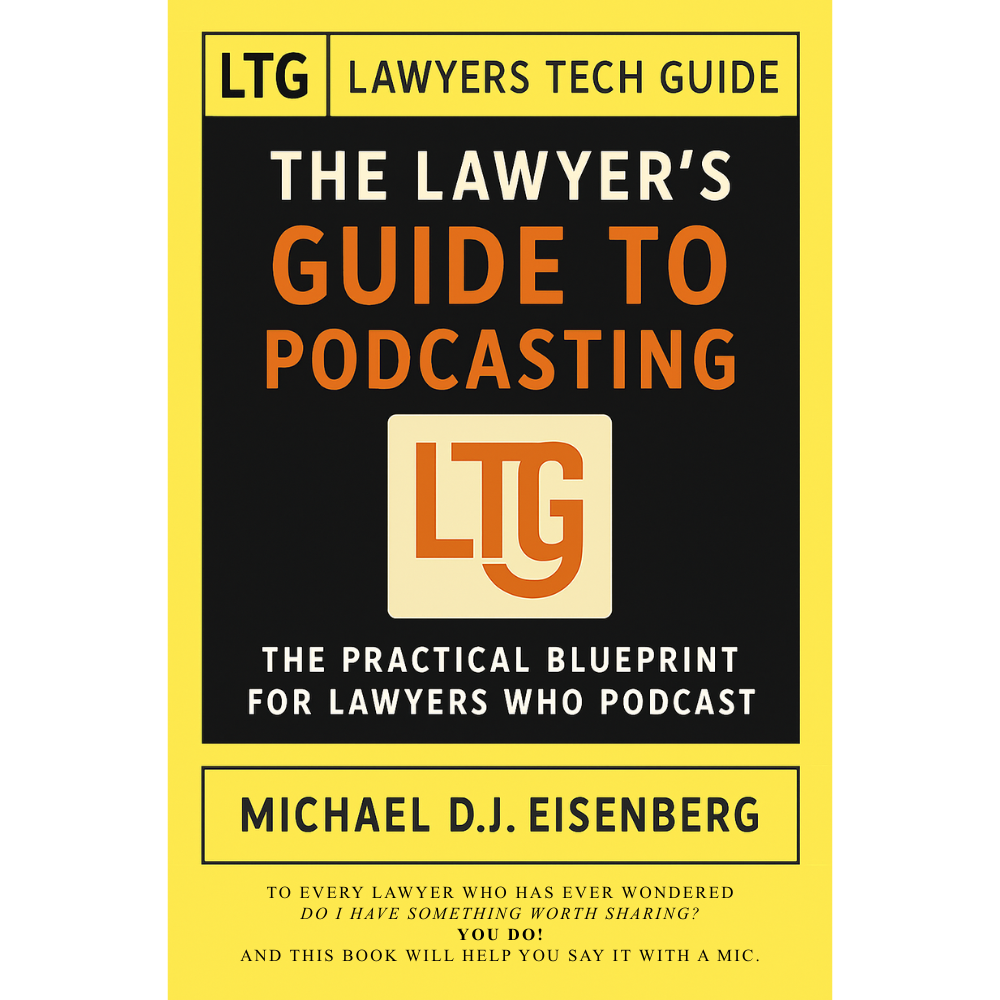
⭐ First Five-Star Amazon Review for “The Lawyer’s Guide to Podcasting” – Why Tech-Savvy Lawyers Should Care About ABA Ethics, Client Trust, and Smart Marketing 🎙️⚖️

“The Lawyer’s Guide to Podcasting” by your favorite blogger/podcaster just earned its first five-star Amazon review, and it’s a milestone worth your attention. 🎉📘 The reviewer highlights what many of us in legal tech have been saying: podcasting is no longer a fringe hobby; it is a strategic, ethics-aware marketing channel for modern law practice. 🎙️

For lawyers with limited to moderate tech skills, this book demystifies microphones, workflows, and publishing tools without assuming you want to become an engineer. Instead, it walks you through practical steps to share your expertise in a format today’s clients already trust—long-form, authentic audio. 🔊

From a professional responsibility perspective, the guidance aligns with ABA Model Rule 1.1 on technology competence and Model Rule 1.6 on confidentiality by emphasizing the use of secure platforms, thoughtful content planning, and careful handling of client-identifying details. The book reinforces that podcasting can showcase your substantive knowledge while staying within the guardrails of Model Rule 7.1, avoiding misleading claims about your services. ⚖️

QR Code for Amazon book link

The first five-star review underlines two themes: listeners want real conversations, and they quickly recognize when a lawyer respects both the audience’s time and the profession’s ethical duties. That is exactly the posture this book encourages—credible, compliant, and client-centered. 🌟

If you are ready to build authority, differentiate your practice, and satisfy your tech-competence obligations without drowning in jargon, now is the perfect time to get your copy of “The Lawyer’s Guide to Podcasting” on Amazon and start planning your first ethically sound episode. 🚀

📌 Too Busy to Read This Week’s Editorial: “Lawyers and AI Oversight: What the VA’s Patient Safety Warning Teaches About Ethical Law Firm Technology Use!” ⚖️🤖

Join us for an AI-powered deep dive into the ethical challenges facing legal professionals in the age of generative AI. 🤖 In this episode, we discuss our February 16, 2026, editorial, “Lawyers and AI Oversight: What the VA’s Patient Safety Warning Teaches About Ethical Law Firm Technology Use! ⚖️🤖” and explore why treating AI-generated drafts as hypotheses—not answers—is quickly becoming a survival skill for law firms of every size. We connect a real-world AI failure risk at the Department of Veterans Affairs to the everyday ways lawyers are using tools like chatbots, and we translate ABA Model Rules into practical oversight steps any practitioner can implement without becoming a programmer.

In our conversation, we cover the following

  • 00:00:00 – Why conversations about the future of law default to Silicon Valley, and why that’s a problem ⚖️

  • 00:01:00 – How a crisis at the U.S. Department of Veterans Affairs became a “mirror” for the legal profession 🩺➡️⚖️

  • 00:03:00 – “Speed without governance”: what the VA Inspector General actually warned about, and why it matters to your practice

  • 00:04:00 – From patient safety risk to client safety and justice risk: the shared AI failure pattern in healthcare and law

  • 00:06:00 – Shadow AI in law firms: staff “just trying out” public chatbots on live matters and the unseen risk this creates

  • 00:07:00 – Why not tracking hallucinations, data leakage, or bias turns risk management into wishful thinking

  • 00:08:00 – Applying existing ABA Model Rules (1.1, 1.6, 5.1, 5.2, and 5.3) directly to AI use in legal practice

  • 00:09:00 – Competence in the age of AI: why “I’m not a tech person” is no longer a safe answer 🧠

  • 00:09:30 – Confidentiality and public chatbots: how you can silently lose privilege by pasting client data into a text box

  • 00:10:30 – Supervision duties: why partners cannot safely claim ignorance of how their teams use AI

  • 00:11:00 – Candor to tribunals: the real ethics problem behind AI-generated fake cases and citations

  • 00:12:00 – From slogan to system: why “meaningful human engagement” must be operationalized, not just admired 

  • 00:12:30 – The key mindset shift: treating AI-assisted drafts as hypotheses, not answers 🧪

  • 00:13:00 – What reasonable human oversight looks like in practice: citations, quotes, and legal conclusions under stress test

  • 00:14:00 – You don’t need to be a computer scientist: the essential due diligence questions every lawyer can ask about AI 

  • 00:15:00 – Risk mapping: distinguishing administrative AI use from “safety-critical” lawyering tasks

  • 00:16:00 – High-stakes matters (freedom, immigration, finances, benefits, licenses) and heightened AI safeguards

  • 00:16:45 – Practical guardrails: access controls, narrow scoping, and periodic quality audits for AI use

  • 00:17:00 – Why governance is not “just for BigLaw” and how solos can implement checklists and simple documentation 📋

  • 00:17:45 – Updating engagement letters and talking to clients about AI use in their matters

  • 00:18:00 – Redefining the “human touch” as the safety mechanism that makes AI ethically usable at all 🤝

  • 00:19:00 – AI as power tool: why lawyers must remain the “captain of the ship” even when AI drafts at lightning speed 🚢

  • 00:20:00 – Rethinking value: if AI creates the first draft, what exactly are clients paying lawyers for?

  • 00:20:30 – Are we ready to bill for judgment, oversight, and safety instead of pure production time?

  • 00:21:00 – Final takeaways: building a practice where human judgment still has the final word over AI

RESOURCES

Mentioned in the episode

Software & Cloud Services mentioned in the conversation

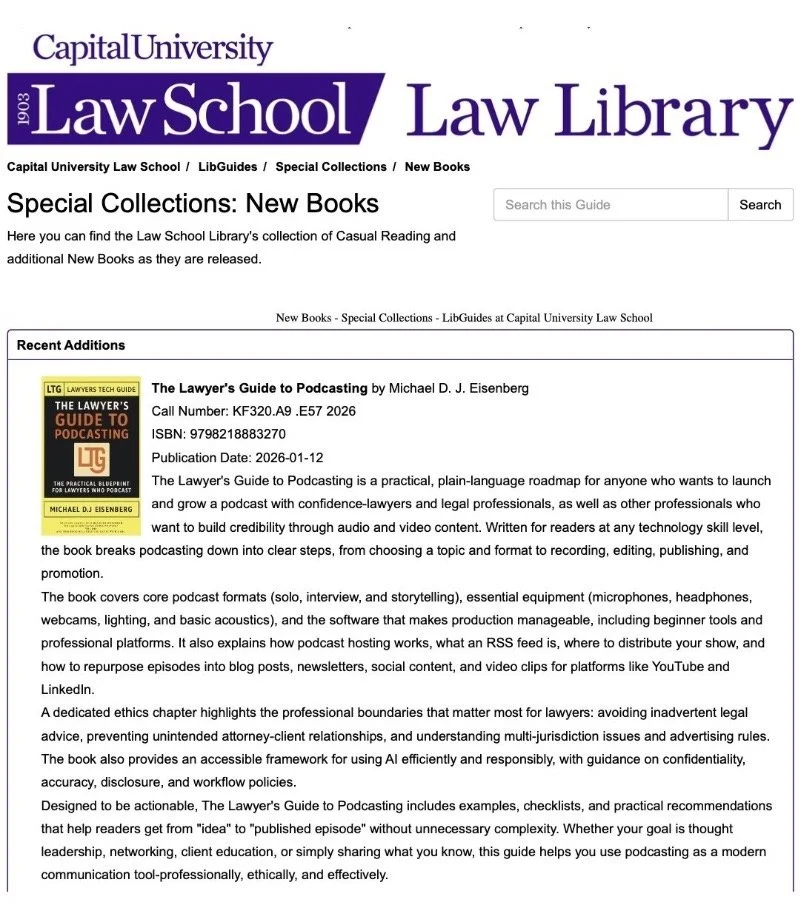
🎙️ My Law School Library Adds The Lawyer’s Guide to Podcasting to Empower Ethical, Tech-Savvy Attorneys ⚖️

https://law-capital.libguides.com/SpecialCollections/NewBooks

I’m thrilled to share that my alma mater, Capital University Law School, has added my book, The Lawyer’s Guide to Podcasting, to its Law Library Special Collections. 🎉📚 Seeing this guide on the same shelves where I learned to think like a lawyer underscores how central ethical technology use has become to modern advocacy. 🎙️ Written for attorneys with limited to moderate tech skills, it walks readers through planning, recording, and promoting a law‑firm podcast while honoring ABA Model Rules on technology competence, confidentiality, and attorney advertising, helping you communicate confidently, credibly, and compliantly. ⚖️🚀

You can pick up your copy on Amazon Today!

🎙️ Ep. #131, Supercharging Litigation With AI: How StrongSuit Helps Lawyers Transform Research, Doc Review, and Drafting 💼⚖️

My next guest is Justin McCallan, founder of StrongSuit, an AI-powered litigation platform built to transform how litigators handle legal research, document review, and drafting while keeping lawyers firmly in control. In this episode, Justin and I dig into practical, real-world workflows that solos, small firms, and big-firm litigators can use today and over the next few years to change the economics, pace, and strategy of litigation—without sacrificing accuracy, ethics, or the quality of advocacy.

Join Justin and me as we discuss the following three questions and more!

  1. What are the top three ways litigators should be using AI tools like StrongSuit right now to change the economics and pace of litigation without sacrificing accuracy, ethics, or quality of advocacy?

  2. What are the top three mistakes lawyers make when adopting AI for litigation, and what practical workflows help lawyers stay in the loop and use AI as a force multiplier instead of a risk? 

  3. Looking ahead to 2026 and beyond, what are the top three AI-driven workflows every litigator should master to stay competitive, and how can platforms like StrongSuit help build those capabilities into day-to-day practice? 

In our conversation, we cover the following

  • 00:00 – Welcome and guest introduction

    • Justin joins the show and shares his current tech setup at his desk. 

  • 00:00–01:00 – Justin’s current tech stack

    • Lenovo laptop, ultra-wide monitor, and regular use of StrongSuit, ChatGPT, and Gemini for different AI tasks.

    • Everyday tools: Microsoft Word and Power BI for analytics and fast decision-making.

  • 01:00–02:00 – Android vs. iPhone for AI use

    • Why Justin has been on Android for 17 years and how UI/UX familiarity often drives device choice more than AI capability.

  • 02:00–05:30 – Q1: Top three ways litigators should be using AI right now

    • Using AI for end-to-end legal research across 11 million precedential U.S. cases to build litigation outlines and identify key authorities.

    • Scaling document review so AI surfaces relevant documents and synthesizes insights while lawyers focus on strategy and judgment.

    • Leveraging AI for drafting and editing—improving style, clarity, and consistency beyond traditional spelling and grammar checks.

  • 05:30–07:30 – StrongSuit vs. basic tools like Word grammar check

    • How StrongSuit aims to “up-level” a lawyer’s writing, not just catch typos.

    • Stylistic improvements, clarity enhancements, and catching subtle inconsistencies in legal documents.

  • 06:00–08:00 – AI context limits and scaling doc review

    • Constraints of large models’ context windows (around ~1M tokens ≈ ~750 pages).

    • How StrongSuit runs multiple AI agents in parallel, each handling small page sets with heuristics to maintain cohesion and share insights.

  • 08:00–09:00 – Handling tens of thousands of documents

    • How StrongSuit can handle between roughly 10,000–50,000 pages at a time, with the ability to scale further for enterprise matters.

  • 09:00–11:30 – Origin story of StrongSuit

    • Why Justin saw a once-in-a-generation opportunity when large language models emerged and how law, with its precedent and text-heavy nature, is especially suited to AI.

    • StrongSuit’s focus on litigators: supporting lawyers from intake through trial while keeping them in the loop at every step.

  • 11:30–13:30 – From intake to brief drafting in minutes

    • Generating full litigation outlines, research, and analysis in about ten minutes, then moving directly into drafting memos, briefs, complaints, and motions.

    • StrongSuit’s long-term goal: automating 50–99% of major litigation workflows by the end of 2026 while preserving lawyer control and judgment.

  • 12:00–14:30 – How StrongSuit tackles hallucinations

    • Building a full database of all precedential U.S. cases enriched with metadata: parties, summaries, holdings, and more.

    • Validating citations by checking whether the Bluebook citation actually exists in StrongSuit’s case database before surfacing it to the user.

    • Why lawyers should still review cases on-platform before filing, even when AI has filtered out hallucinations.

  • 14:30–16:30 – Coverage and jurisdictions

    • Coverage of all U.S. jurisdictions, federal and state, focused on precedential cases.

    • Handling most regulations from administrative agencies, and limits around local ordinances.

    • Uploading your own case files and using complaints and prior research as inputs into StrongSuit workflows.

  • 15:00–17:00 – Security and confidentiality for litigators

    • SOC 2 compliance and industry-standard encryption at rest and in transit.

    • No model training on user data.

    • Optional end-to-end encryption that can even prevent developers from accessing case content, using local encryption keys.

  • 16:30–20:30 – Q2: Top mistakes lawyers make when adopting AI for litigation

    • Mistake #1: Talking about AI instead of diving in with structured experiments and sanitized documents.

    • Using a framework to identify high-impact tasks: high volume, repetitive work, and heavy data/analysis (e.g., doc review, research, contract drafting).

    • How to shortlist tools: look for SOC 2, real product depth, awards, and a focus on your specific workflows.

    • Mistake #2: Expecting immediate mastery instead of moving through predictable adoption stages—from learning the tool, to daily use, to stringing workflows together.

  • 20:30–22:30 – Building firm-wide AI workflows over time

    • Moving from isolated experiments to integrated, low-friction workflows, such as automatic intake-to-research pipelines.

    • Using client intake audio or transcripts to automatically extract facts, issues, and research paths.

  • 22:30–24:30 – Time constraints and “no-time” lawyers

    • Why lawyers don’t need to be “technical” to use StrongSuit.

    • Reframing AI as text-based tools where lawyers’ writing skills and analytical thinking are assets, not obstacles. 

  • 24:00–26:00 – Practical workflows beyond intake

    • Using AI to prepare for expert depositions, including reviewing valuation analyses, flagging departures from market consensus, and generating targeted questions.

    • Reinforcing the value of AI-enhanced legal research and drafting as core litigation workflows.

  • 26:00–29:30 – Q3: 2026 and beyond – AI-driven workflows every litigator should master

    • Rapid improvement of baseline models (e.g., jumping from single-digit to high double-digit performance on difficult benchmarks year over year). 

    • The idea of “tipping points,” where small performance gains turn AI from marginally useful to essential in specific tasks.

    • Why legal research is a great training ground for understanding where AI excels, where it falls short, and how to divide labor between human and machine.

    • The value of learning basic prompting skills to get more from AI systems, even when platforms offer visual workflows.

  • 29:30–32:30 – Will workflows actually change—or just get better?

    • Why Justin expects familiar litigation workflows (doc review, research, drafting) to remain structurally similar, but become far faster and more sophisticated.

    • AI agents handling the grind work while lawyers focus on synthesis, judgment, and strategy.

    • A future where “AI + lawyer vs. AI + lawyer” resembles high-level chess: same rules, but much deeper thinking on both sides.

  • 32:30–End – Where to find Justin and StrongSuit

    • How to connect with Justin and learn more about StrongSuit’s litigation tools.

Resources

Connect with Justin

Hardware mentioned in the conversation

Software & Cloud Services mentioned in the conversation

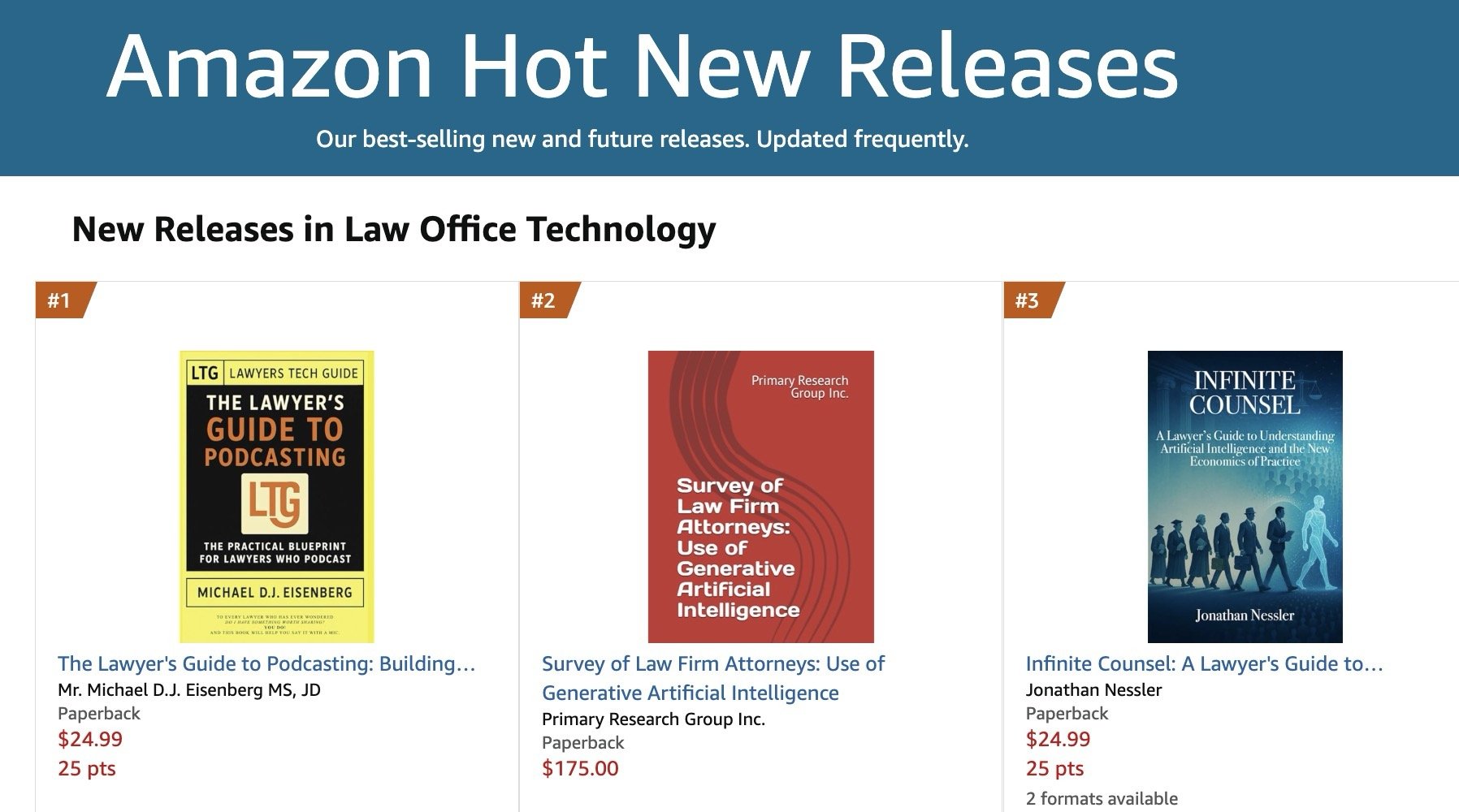
ANNOUNCEMENT: My Book, “The Lawyer’s Guide to Podcasting,” is Amazon #1 New Release (Law Office Technology)

I’m excited to report that The Lawyer’s Guide to Podcasting ranked #1 as a New Release in Amazon’s Law Office Technology category for the week of February 07, 2026, and sales have already doubled since last month. 🎙️📈

For lawyers with limited-to-moderate tech skills, the book focuses on practical, repeatable workflows for launching and sustaining a compliant podcast presence. ⚖️💡

As you plan content, remember ABA Model Rule 1.1 (technology competence) and the related duties of confidentiality (Rule 1.6) and communications about services (Rule 7.1): use secure tools, avoid accidental client disclosures, and ensure marketing statements are accurate. 🔐✅

Get your copy today! 📘🚀


TSL.P Labs 🧪: Legal Tech Wars, Client Data, and Your Law License: An AI-Powered Ethics Deep Dive ⚖️🤖

📌 To Busy to Read This Week’s Editorial?

Join us for an AI-powered deep dive into the ethical challenges facing legal professionals in the age of generative AI. 🤖 In this Tech-Savvy Lawyer Page Labs Initiative episode, AI co-hosts walk through how high‑profile “legal tech wars” between practice‑management vendors and AI research startups can push your client data into the litigation spotlight and create real ethics exposure under ABA Model Rules 1.1, 1.6, and 5.3.

We’ll explore what happens when core platforms face federal lawsuits, why discovery and forensic audits can put confidential matters in front of third parties, and how API lockdowns, stalled product roadmaps, and forced sales can grind your practice operations to a halt. More importantly, you’ll get a clear five‑step action plan—inventorying your tech stack, confirming data‑export rights, mapping backup providers, documenting diligence, and communicating with clients—that works even if you consider yourself “moderately tech‑savvy” at best.

Whether you’re a solo, a small‑firm practitioner, in‑house, or simply AI‑curious, this conversation will help you evaluate whether you are the supervisor of your legal tech—or its hostage. 🔐

👉 Listen now and decide: are you supervising your legal tech—or are you its hostage?

In our conversation, we cover the following

  • 00:00:00 – Setting the stage: Legal tech wars, “Godzilla vs. Kong,” and why vendor lawsuits are not just Silicon Valley drama for spectators.

  • 00:01:00 – Introducing the Tech-Savvy Lawyer Page Labs Initiative and the use of AI-generated discussions to stress-test legal tech ethics in real-world scenarios.

  • 00:02:00 – Who’s fighting and why it matters: Clio as the “nervous system” of many firms versus Alexi as the “brainy intern” of AI legal research.

  • 00:03:00 – The client data crossfire: How disputes over data access and training AI tools turn your routine practice data into high-stakes litigation evidence.

  • 00:04:00 – Allegations in the Clio–Alexi dispute, from improper data access to claims of anti-competitive gatekeeping of legal industry data.

  • 00:05:00 – Visualizing risk: Client files as sandcastles on a shelled beach and why this reframes vendor fights as ethics issues, not IT gossip.

  • 00:06:00 – ABA Model Rule 1.1 (Competence): What “technology competence” really entails and why ignorance of vendor instability is no longer defensible.

  • 00:07:00 – Continuity planning as competence: Injunctions, frozen servers, vendor shutdowns, and how missed deadlines can become malpractice.

  • 00:08:00 – ABA Model Rule 1.6 (Confidentiality): The “danger zone” of treating the cloud like a bank vault and misunderstanding who really holds the key.

  • 00:09:00 – Discovery risk explained: Forensic audits, third‑party access, protective orders that fail, and the cascading impact on client secrets.

  • 00:10:00 – Data‑export rights as your “escape hatch”: Why “usable formats” (CSV, PDF) matter more than bare contractual promises.

  • 00:11:00 – Practical homework: Testing whether you can actually export your case list today, not during a crisis.

  • 00:12:00 – ABA Model Rule 5.3 (Supervision): Treating software vendors like non‑lawyer assistants you actively supervise rather than passive utilities.

  • 00:13:00 – Asking better questions: Uptime, security posture, and whether your vendor is using your data in its own defense.

  • 00:14:00 – Operational friction: Rising subscription costs, API lockdowns, broken integrations, and the return of manual copy‑pasting.

  • 00:15:00 – Vaporware and stalled product roadmaps: How litigation diverts engineering resources away from features you are counting on.

  • 00:16:00 – Forced sales and 30‑day shutdown notices: Data‑migration nightmares under pressure and why waiting is the riskiest strategy.

  • 00:17:00 – The five‑step moderate‑tech action plan: Inventory dependencies, review contracts, map contingencies, document diligence, and communicate with nuance.

  • 00:18:00 – Turning risk management into a client‑facing strength and part of your value story in pitches and ongoing relationships.

  • 00:19:00 – Reframing legal tech tools as members of your legal team rather than invisible utilities.

  • 00:20:00 – “Supervisor or hostage?”: The closing challenge to check your contracts, your data‑export rights, and your practical ability to “fire” a vendor.

Resources

Mentioned in the episode

Software & Cloud Services mentioned in the conversation

#LegalTech #AIinLaw #LegalEthics #Cybersecurity #LawPracticeManagement